

How America and the CIA Helped Get Ramon Magsaysay Elected As President

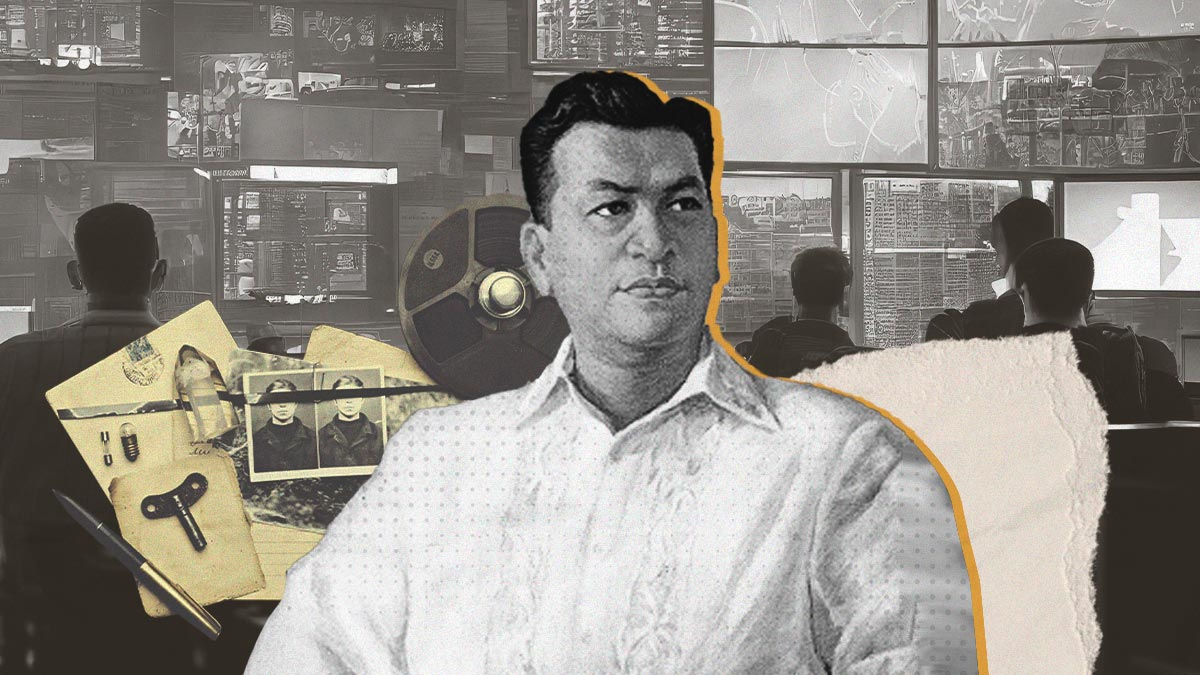
If there's one thing that the United States of America knows, it's that it can't help but meddle in other nations' politics. Long is the list of U.S.-backed leaders and campaigns in various countries in modern history. By way of U.S. big business, the Central Intelligence Agency (CIA), and U.S. bases, America has a way of maintaining some form of power over nations. That applies to the Philippines, too.
During a lecture at the University of the Philippines-Manila back in 2000, Roland Simbulan, Coordinator of the Manila Studies Program, said of the CIA's presence in the Philippines: "The CIA in the Philippines has engaged in countless covert operations for intervention and dirty tricks, particularly in Philippine domestic policies."
One such incidence of U.S. lobbying and intervention is the case of President Ramon Magsaysay during his eventual presidential campaign in the '50s. Best known as "The People's President," Magsaysay was a force of life on the campaign trail, earning the adoration of Filipino voters from the city to the countryside. He would be viewed as a great reformer by the public, a champion of the masses.
Magsaysay on the cover of Time in 1951.

As a defense minister, he fought and carried out institutionalized social programs to end the Hukbong Bayan Laban sa Hapon, or Hukbalahap, resurgence. Nationalists and members of the media back home had already been pushing for him as president even before the U.S. entered the picture. In 1951, during the Senate elections, Magsaysay's image was slowly crafted as the country's next leader. He was "Man of the Year," said the Philippine Free Press, exhibiting quite the character and charm. The future president would be called the "Eisenhower of the Pacific" and a hero. Time even had his picture on its cover during that same year.
All this would help him sway votes in his favor when he defeated incumbent Elpidio Quirino. "Mambo Magsaysay," he went. But we simply can't ignore the other parts of his legacy. Magsaysay was also subtly criticized for being "America's boy." When he won in 1953, he was featured in Time magazine, framing him in an interesting way. "In many ways," it wrote, "the Magsaysay victory was a U.S. victory."
ALSO READ:
How a President's Dream of the Perfect City Became Quezon City
Here's Why So Many Men Fear Having a Female President
There have been plenty of them, as we all know. The U.S. has a way of greatly changing the course of other countries' histories. Manipulated elections are well-documented and the CIA has mostly been in the middle of them, installing leaders left and right with more pro-American stances. Washington Post columnist Max Boot notes that the CIA manipulated its first foreign election in 1947, when Christian democrats faced communist front organizations in Italy in the months leading up to the 1948 elections.
He wrote:
“The CIA provided as much as $10 million in cash to finance the Christian Democratic campaign. The result was a victory for the Christian Democrats, although “it is not clear how much of the outcome was due to CIA efforts.”
Large amounts of cover cash have been coursed through the likes of Lebanon, Nepal, and, yes, the Philippines, among other countries, too. In Magsaysay's case, it is a proven fact that the U.S. funded and supported his bid through CIA operations in the region. And it all was made possible thanks to a man named Edward Lansdale.
Ramon Magsaysay, Edward Lansdale, and the CIA
Col. Lansdale and Philippine defense minister Ramon Magsaysay in October 1952.

Colonel Edward Lansdale, only the fourth recipient of the National Security Medal in the U.S., would arrive in Manila around the time Magsasay had been appointed by Quirino to be Defense secretary. The two would form quite a partnership, to say the least. Lansdale would prove to be a strong adviser to the Joint US Military Assistance Group, and by extension, Magsaysay, during those days.
Of course, his advisory work wasn't limited to military affairs. Lansdale was actually head of the CIA's Office of Policy Coordination in the Philippines, too. When Magsasay resigned from his post in 1953, his path to the presidency was starting to take shape, and Lansdale was there to give him a boost, so to say. Magsaysay would also meet up with Claro M. Recto and Lorenzo Tañada, suggesting that he run under the Nacionalista ticket. In the end, he got it.
Lansdale would help organize the Magsaysay for President movement. From pushing the "Magsaysay is my guy" tagline to collaborating with Raul Manglapus to compose "The Magsasysay Mambo" campaign song (one of the first instances when jingles were used for presidential campaigns), he sort of became his de facto campaign manager. He would even tap David Sternberg, the wheelchair-bound CIA officer, to become the president's speechwriter soon enough.
An excerpt from the book, Killing Hope by William Blum. Available in the CIA's digital library.

The CIA operative was criticized by pundits back home for his, uhm, activities. Undersecretary of State David Bruce wanted to call back Lansdale for being too closely associated with the Filipino candidate. Then-head of the CIA Far East Division, George Aurell, questioned the CIA's extended role in the campaign. That didn't stop the money from coming in for the campaign. The CIA donated considerable amounts of agency money to Magsaysay's bid, with estimates projecting as much as $1 million, including additional funds from the Coca-Cola Company.
Time magazine also wrote in a report:
"In spite of a Filipino law which forbids foreigners to contribute to election campaigns, US business interests in the islands anted up some $250,000 at a time when Magsaysay's (Nacionalista) Party was seriously short of funds."
Lansdale was also said to have aided civic groups, including National Citizen's Movement For Free Elections, to ensure a clean and fair election. How rich, we know.
Also to be noted is how Magsasysay, Lansdale, and his cohorts were prepared for a coup in the event that a "fraudulent" Quirino victory. Recto's book, The Making of a Filipino: Story of Philippine Colonial Politics, details how the belated coup was planned for election day. Magsaysay was to go to the Zambales headquarters and announce that the nation would go through a provisional government. Quirino would then be put to jail.
Fortunately, there was no need for such. Come November 12, 1953, Magsaysay and Lansdale were on the yacht “Margueritte" when they heard the news that Quirino conceded. Out of it came one of our most celebrated presidents. Four years later, Magsaysay would meet his shocking demise in a plane crash. His loss would be mourned for generations.
Edward Lansdale would return from the Air Force and would pass away himself on February 28, 1987. Former CIA director William Colby once claimed that Lansdale had been one of the "10 greatest spies of all time.” The relationship between the U.S. and the Philippines would remain strong for years to come. Whether that's a good or bad thing for our patrimony is a different story.
And here we are, dissecting this lost narrative. Surely, something to be considered is how Lansdale might have embellished his role in Magsaysay's image and presidency. It may well just be another case of an American taking too much credit for the rise of a man who actually was a person of great character.
All these shouldn't take anything away from Magsaysay. He reflected the qualities of the common Filipino, and demonstrated grace, compassion, and humility that is so rare in a politician. He remains one of the most revered presidents in Philippine history because of these, almost mythological in stature. While he did harbor pro-American sensibilities, he was a true leader and patriot, someone who embodied the kind of optimism Filipinos yearned for in the early days of our young, modern, post-war democracy. It just so happened that he had a little help from some nosy Americans along the way.
Sources:
- US electoral interference in the Philippines, Part 3 and 4, Ken Fuller, Manila Daily Tribune (2017)
- Orientation of Philippine President Ramon Magsaysay, CIA Report (1957)
- Political Meddling by Outsiders: Not New for U.S., New York Times (1997)
- Monching, Ed and Patching (2), Ramon Farolan (2018)
- The Contested State: American Foreign Policy and Regime Change in the Philippines. Rowman & Littlefield. p. 94. ISBN 9780847699346, Amy Blitz (2000)
- In The Midst Of Wars. Fordham University Press. p. 93. Edward Lansdale (1991)
- THE CIA IN THE PHILIPPINES: A BRIEF HISTORY, Roland Simbulan (2001)
- America's Boy? Ramon Magsaysay and the Illusion of Influence, Nick Cullather (1993)
