

Who Was Benson Flores, the First Filipino in Canada?

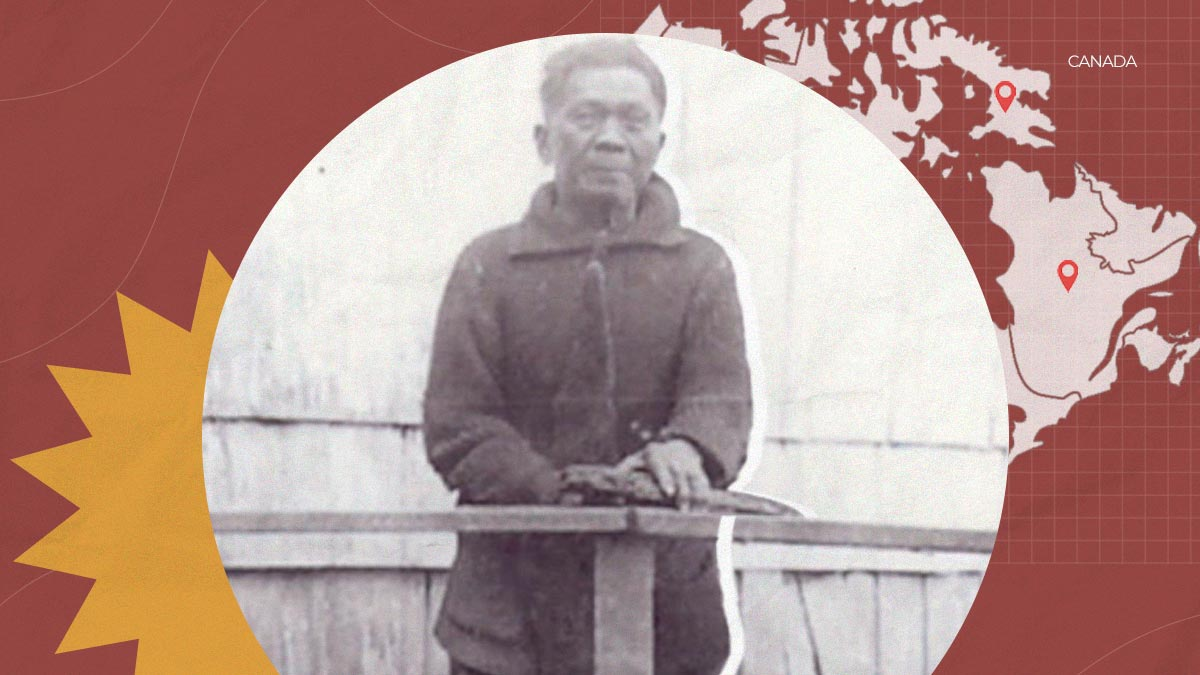
It was a chance discovery that turned Filipino print journalist and radio host Joseph Lopez into an accidental historian. During a long weekend on May 2011, he decided to visit Bowen Island, a quiet municipality just a 20-minute ferry ride away from Horseshoe Bay, West Vancouver. He’d heard about a popular hiking spot at Mount Gardner and decided to try the experience.
Also read:
Mt. Mani: The Lost Mountain of Metro Manila
Lost Footnotes in History: Why Texas Was Once Called New Philippines
Upon arriving at the dock, he went to the island’s public library, wanting to know the history of the place he was about to explore. There, the librarian showed him a book called Bowen Island 1872 – 1972 by Irene Howard. He was in for a huge discovery.
Searching for the First Filipino in Canada
Tucked within Howard’s book, on page 36, is one brief line that will rewrite the long-established history of Canada’s first Filipino immigrants. It reads,
“From the Philippines, Benson, Matilda and William Flores (DL 1426), the men beachcombers and fishermen.”
And on page 42,
“…and Ben Flores, who had a float house in the Cove, and liked to play the concertina and sing, could make a little money renting boats.”
See, up until Lopez’ breakthrough, history books and online sources alike report that Filipinos first settled in Canada, particularly Winnipeg, Manitoba, in the 1930s.
But in March 2021, journalist and publisher Ted Alcuitas sent Lopez a newsletter from the Bowen Island Historians “Historiana” dated June 2001 that would change history as we remembered it. Inside it was an excerpt from a short article titled “Some Notes on Bowen Island’s Pioneers …”:
“The census (1901) disclosed that a small Filipino community resided on Bowen, probably engaged in both fishing and farming. It included Fernando Toreenya, a fisherman who came to Canada from the Philippines in 1886 with his wife Mary. They lived at ‘Bowen Island Bay’ (probably Deep Bay or Snug Cove) and had three other Filipino boarders living with them, William Matilde, Antoni Bentorre and Castro Ricardo. Others included fisherman William (Benson) Flores, who lived on a barge in Snug Cove; Bastino Pasento, who called his home Pasento Ranch and died in February 1904, John Delmond, and Jose Garcia.”
This begs the question, how did these Filipinos end up in Canada? In his four-part series for Canadian Filipino Net, Lopez writes: “Possibly they were crew members of a ship that traveled across the Pacific and called on the bustling timber port of Vancouver. Since immigration rules were more lax then, these Filipinos might have decided to settle in Canada.”
Lopez spent the following decade diving deep into this story, flinging himself into a rigorous research expedition he hoped would further unfold the accounts of Ben Flores’ life on the tiny island. He combed through national and provincial census records, library archives, land titles, books, directories, newspapers dating back to the mid-1800s, and personal interviews with authors. Then finally, a breakthrough.

Unearthing William 'Benson' Flores
The Census of Canada, available online under Library and Archives in Canada, has been conducted every 10 years since 1851. However, it was only five decades later, in 1901, when the term “Filipino”—referring to both ethnic origin and place of birth—was first used. This census also notes the Year of Immigration for the first time. Here, Lopez confirmed the details found in the Historiana.
It detailed that Antoine Bentorre, William Matilde, Castro Ricardo, Fernando and Mary Toreenya, and John Delmond were all settlers in Bowen Island after immigrating between the years of 1870-1895. Strangely, William (Benson/Ben) Flores did not appear until the 1911 census, which recorded his arrival at the island as 1861–years before other Filipinos settled on the island. This confirms that he was the first among the Filipino nationals to arrive and eventually settle in British Columbia.
According to Lopez’s exhaustive research, Benson Flores was born in May 1846, which means he was only 15 years old when he landed. And because boys as young as 12 were recruited to work as ship crew during this era, it is believed that Flores might have been one of them.
As it turns out, Flores brought that innate Filipino hospitality with him to the foreign land. He was a generous friend to everybody, even dubbed “Old Ben” in his later years. In an audio recording, his neighbor George Dorman said, “Ben Flores was a coloured boy and was my greatest friend. I don’t think I have met anyone who is his equal. He was such a good friend. He was genuine – he would share, share and share alike – in all the work we did together. He was really a good person. He knew people before they even came to Bowen Island. As far as I know, he was a Filipino - from the Philippine Islands. He was a fisherman.”

Based on Howard’s book Bowen Island 1872 – 1972, Flores lived in a float house in Snug Cove, Bowen Island. Apart from being a fisherman, he also worked as a beachcomber and a trapper, and operated boat rentals for the increasing number of tourists visiting Bowen Island.
And while he passed away on April 11, 1929 (he was 81 years old by then) with no next of kin, his legacy will always remain a significant fragment of Philippine heritage, especially for today’s teeming Filipino-Canadian diaspora.
