

This Labor Leader Made Sure We All Get Paid for Working Overtime
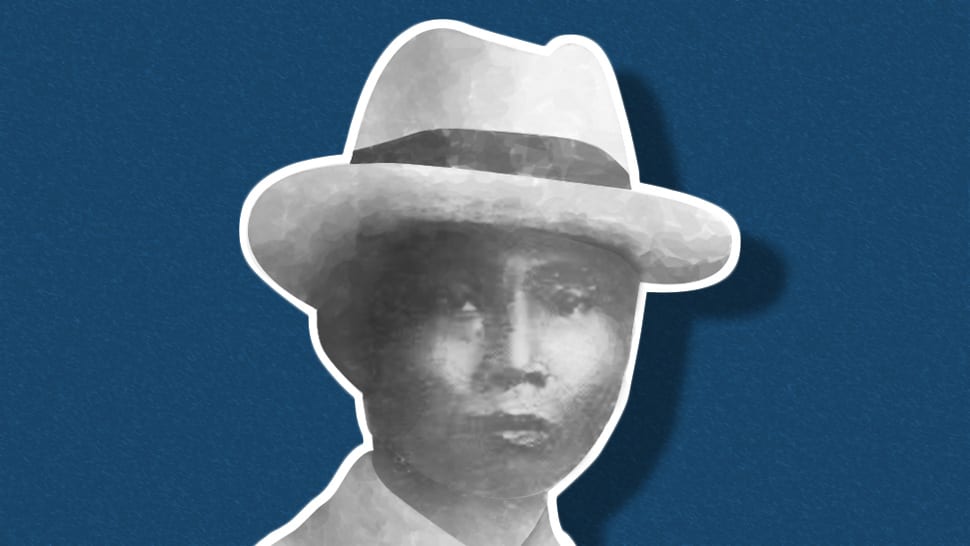
The early years of the 20th century were some of the most important ones for Philippine society. The revolution failed to remove colonial influence; it only replaced it with American imperialism. New movements were springing up. People were becoming conscious of their place in a society that was rapidly transforming, and at the forefront was Crisanto Evangelista.
Becoming a Labor Leader
Born in Meycauayan, Bulacan in 1888, Evangelista led a life typical of many poor Filipinos at the time. He had to work at a young age to afford
He continued to work, however. Throughout his life, he was in the newspaper industry as a proofreader. He even taught himself Spanish and English through proofreading.
Evangelista was well-acquainted in the labor movement, starting in 1906 when he enrolled in a night school called the “School of Socialism” and got his first taste of Marxism, socialism, communism, and class struggle. He became a great student and learned from both theory and
As a labor leader, he was militant to the hilt. He rejected the shallow unionism of the time and stressed that the workers’ struggle is connected to the wider concerns of society. The real concern of the working class was not jobs or wages, but an end to the colonial system that enslaved them. To this end, he organized strikes and directed labor disputes aimed at giving workers fair wages and overtime pay, while also empowering unions to engage in politics.
Forming a workers’ party
But Evangelista knew that a labor federation was simply a means to an end. The working class, he thought, must take a more active role and engage in politics. He was an active member of the Nacionalista Party, but slowly grew disillusioned by its lukewarm stance on the question of independence.
He eventually joined the Partido Obrero Filipino, running in 1925 for a shot at the Manila city council in a losing bid. His dabbling in politics and prominence as a labor leader led him to people who profoundly changed his life, including Tan Malaka, founder of the Communist Party of Indonesia, Earl Browder, from the Communist Party of the U.S., and Zhou Enlai, a top official from the Chinese Communist Party and a friend of Mao Tse Tung.
These meetings shaped Evangelista’s ideology. After a labor conference in Shanghai that Browder helped organize, Evangelista came back with a clear vision: The workers’ party cannot simply be run by workers. It must also champion a workers’ ideology. Returning to Manila, he conferred with his peers and began to plan.
He started with the COF. The labor federation had long strayed from Evangelista’s original vision and turned moderate. Disgruntled, Evangelista and his faction tried to enact reforms but were blocked by the conservatives who stuffed the ballots during an assembly. In a rage, Evangelista, along with over half of the delegates, left and formed their own federation, the Katipunan ng
The labor base secure, he began to prepare for the next step: creating a workers’ party with a clear ideology. The Partido Obrero was all but dead and so would not do. On August 26, 1930, a date
Leaving a legacy
The PKP became instrumental in shaping the rest of Philippine history. Though banned less than a year later, it was quickly pardoned, grew strength throughout the ’30s, and even fielded a candidate in the 1935 elections.
During the Second World War, the PKP was the only organization strong enough to field a legitimate challenge to the Japanese in the form of the Hukbalahap, though sadly, Evangelista did not live to see this. Shortly after the Japanese invaded Manila, Evangelista was captured and summarily executed.
His party and its ideology continued, however. Academic circles became more open to discourse on socialism and communism. In the ’60s, the Cold War scare and mistakes in PKP leadership ensured that the Party would practically die. The Marcos regime, however, pushed thousands of student activists to radicalism, and eventually, a young man named Jose Maria Sison went on to re-establish the PKP in 1968.
For better or worse, history was shaped by people like Crisanto Evangelista. It seems hard to believe now, but if you work eight hours a day with overtime, then you have him to thank for that.
Sources:
Richardson, J. Komunista: The Genesis of the Philippine Communist Party 1902-1935. Ateneo de Manila University Press.
Saulo, A. Communism in the Philippines. Ateneo de Manila University Press.
