There are a million and one ways to spend a few days in Mumbai, India’s commercial capital. You could go on one of those Bollywood tours and experience what the world’s largest film industry is really like. You could go on a stroll along Marine Drive, or even visit Elephanta Island and pay homage to Lord Shiva. Or you could just hang out and enjoy a cup of tea at the majestic Taj Mahal Palace Hotel and walk over to the Gateway of India across the street.
But when I found myself in the city for a few days in April and had only one morning off, I ended up booking a guided tour to visit one of the world’s largest slums.
It seems absurd when you think about it; it’s not like there aren’t any slums where I come from (Manila is not lacking in communities with informal settlers a.k.a. “squatters”), there were plenty of other things to see and do in the city I was visiting for the first time (see first paragraph), and I was keenly aware of the ethical debate surrounding so-called “poverty tourism.” What sort of realizations was I hoping to glean from spending a few hours in an actual slum in another country?
ADVERTISEMENT - CONTINUE READING BELOW
Dharavi is the largest slum in Mumbai and one of the largest in the world
But if I’m being honest, curiosity got the better of me. Here was an actual opportunity to go off-the-beaten path, and to experience something unexpected and real. The tour operator I looked into said it funnels 80 percent of its proceeds back into the slum community, into development projects meant to improve the lives of the residents. That could have been just marketing, but it sounded better than the other regular tour groups, so I confirmed my slot and hoped for the best.
It was not my first time in India (I had previously been to New Delhi) so I knew what to expect in Mumbai’s loud, cramped, and chaotic city streets. With one hand on the steering wheel and the other constantly pressing the horn, my Uber driver zigged and zagged on the road and it felt like we were always 10 millimeters away from disaster. But eventually I did make it to the Churchgate train station in one piece, where I was to meet the tour guide. He appeared right on time and looked exactly as he was described in the website: wearing a blue shirt with the operator’s name and logo emblazoned on the front.
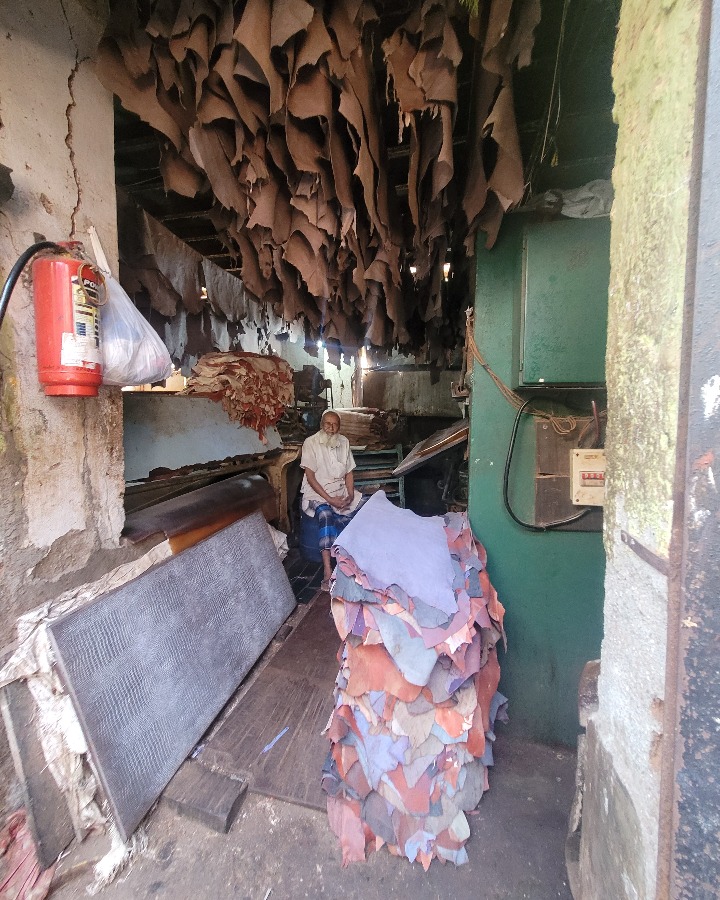
An old man working in Dharavi's leather trade
ADVERTISEMENT - CONTINUE READING BELOW
PHOTO: PJ Caña
Post a Comment
The guide, whose name was Javed, led me and two others in the group to the train platform where we hopped on for a 30-minute ride to Dharavi, which, he would tell us later, was the biggest slum not just in Mumbai but in the whole world. (A quick search later told me otherwise as Orangi Town in Pakistan is supposedly bigger, but who’s really keeping track?)
Measuring about 2.16 square kilometers and with an estimated one million people living within its borders, Dharavi is one of the most densely populated areas in the world. (That fact, at least, is undisputed). That’s about 570,000 people per square kilometer. Imagine the entire population of the country of Cyprus packed into an area the size of 500 football pitches or half the size of New York’s Central Park. Or three Mall of Asias.
Just before we exited the train station, Javed explained what was different about this particular slum. While many other similar areas in India and the rest of the world were primarily residential, this one has a commercial area with thriving businesses.
“There are about 10,000 small scale businesses here,” Javed said. “The area generates about $1 billion annually. So it’s actually a very important part of India.”
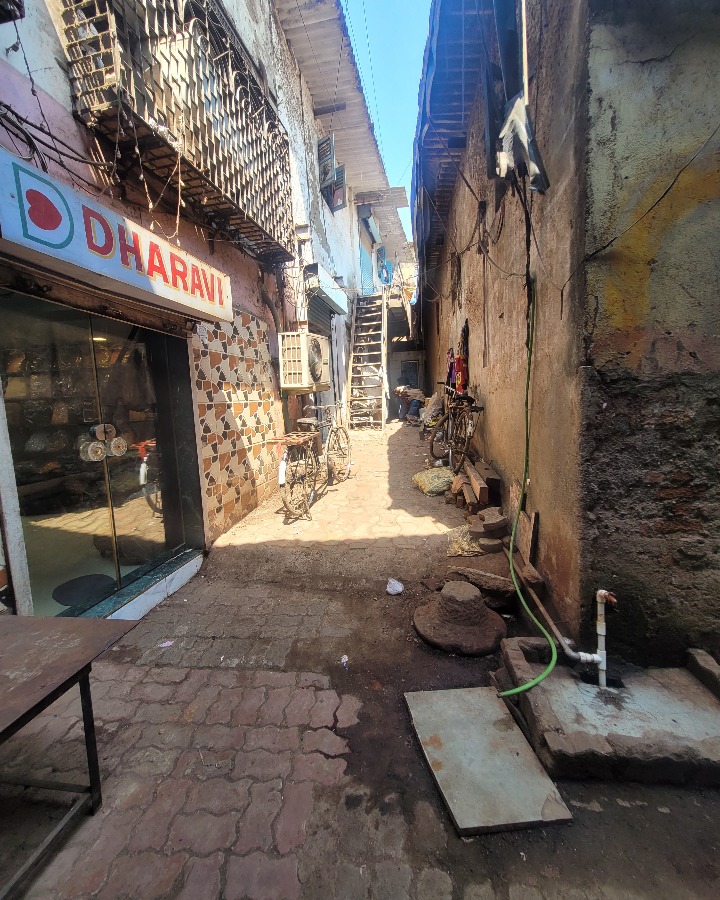
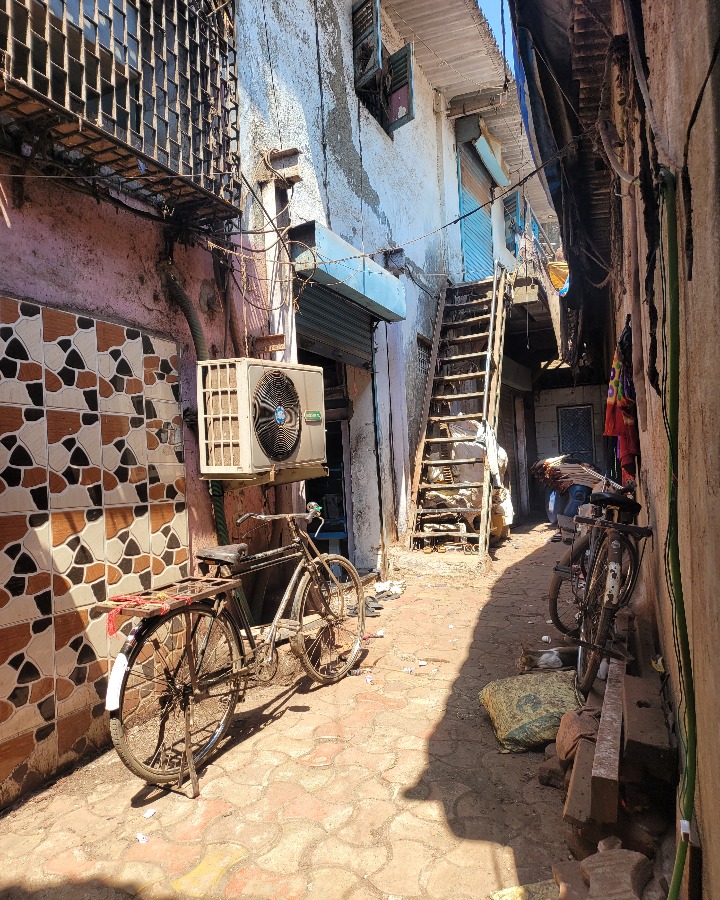
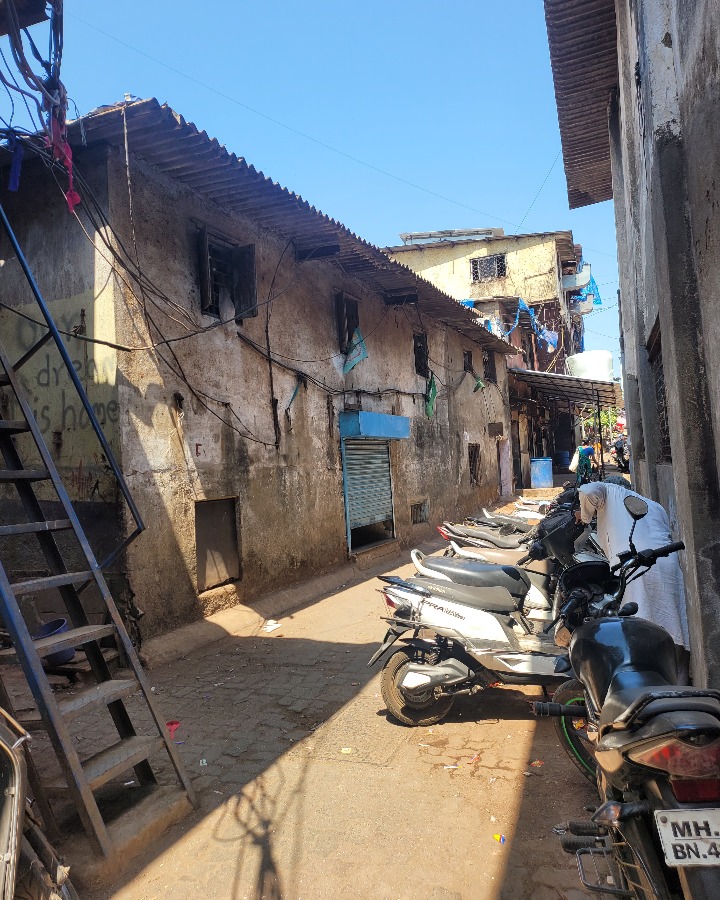
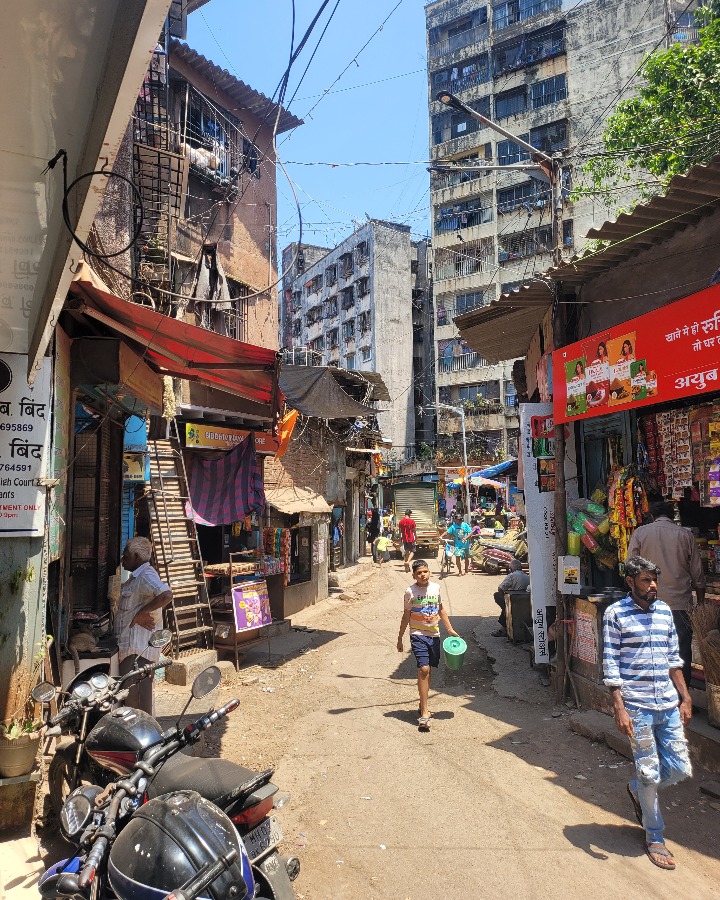
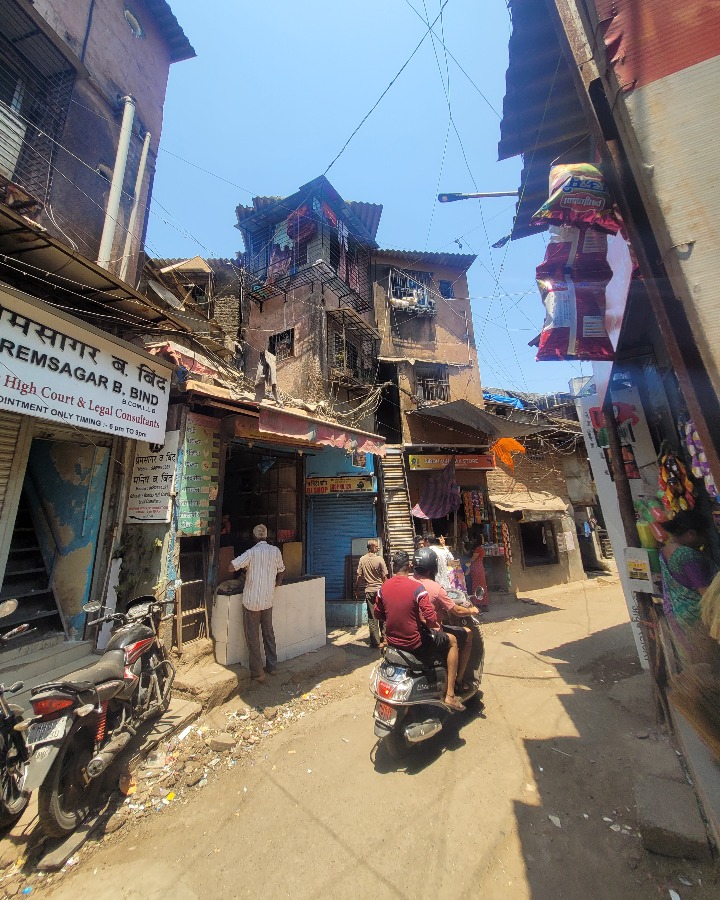
A typical alley in Dharavi
ADVERTISEMENT - CONTINUE READING BELOW
Javed said we would first visit the commercial part of Dharavi, making stops in major industries in the area. Besides myself, the group included two others from Indonesia, a guy from Germany, one from Australia, and a woman from the Netherlands.
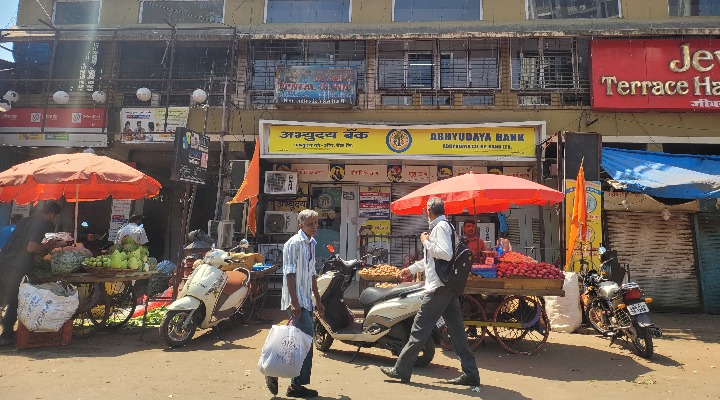
Entering Dharavi itself wasn’t unlike walking around a typical low-income urban community in the Philippines: smoke rose up from vendors’ stalls hawking typical Indian street food; pedestrians walked hurriedly this way and that, avoiding beat-up old cars and delivery trucks squeezing themselves through the narrow, pockmarked streets; and onlookers raised their heads up just long enough to follow our group with initially suspicious but eventually disinterested eyes.
One million people live within the boundaries of Dharavi in Mumbai
The first stop was an alleyway that our guide said housed several plastic recycling facilities. Mumbai recycles up to 60 percent of its plastic—over 1,000 tons—in Dharavi every day. The industry alone employs about 12,000 people in the slum area. In the quiet alley, we witnessed workers sorting through enormous mountains of plastic waste before they are broken down into tiny pieces, processed, and sent to packing facilities where they are sold and eventually reused.
Our guide also explained to us how workers in Dharavi live. Many of them come from all over India and end up staying in the same place where they work. Most of these buildings do not have working toilets, so the workers have no choice but to use one of the 700 community toilets spread out all across Dharavi.
“As many as 1,400 people are forced to share one toilet every day,” Javed said.
PHOTO: PJ Caña
Post a Comment
Our guide then led us through even narrower alleyways where we passed people quietly working, several barefoot children running around the damp streets, and a huge goat tied up outside someone’s home. Javed said the goat will most certainly be slaughtered in a few days and will be served to the workers who pay a certain amount to a food provider.
After a few minutes of walking, we stopped outside a shop where the unmistakable scent of baking bread temporarily masked the undeniable stench of human settlement that, strangely, I had quickly grown accustomed to. Javed said about 3.5 tons of food is produced in Dharavi daily, and much of it eventually make their way to other parts of Mumbai and India. A few workers at the bakery stood quietly to the side and occasionally glanced at our tour group, as Javed explained more about the process of food production in Dharavi.
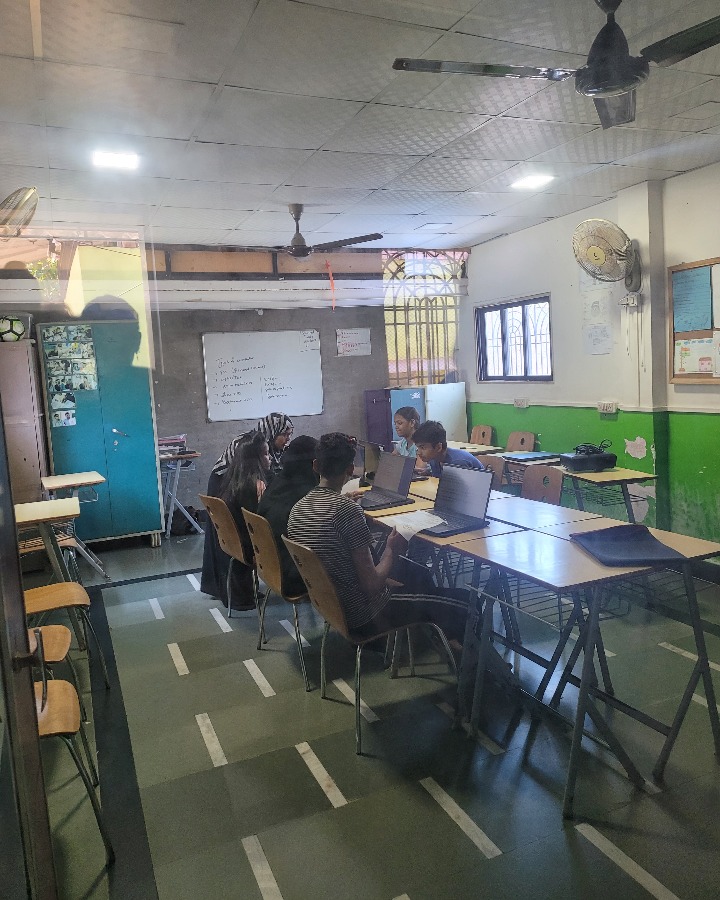
A basic computer class in Dharavi's community center
Afterwards our guide led us to an even narrower alley that was just big enough for one person to walk through. Before proceeding he asked us to mind our head and our step as it wasn’t uncommon for some people to slip or hit their foreheads on dangling wires or an open window. Daylight barely penetrated the alleyway so we had to make our way slowly guided only by thin slivers of sunlight and the occasional bulb inside people's homes.
As we walked through I couldn’t help but peek inside some of the houses: while they were understandably tiny and just big enough for maybe a table and a couple of chairs, most looked clean and tidy, with clear attempts at adornments such as curtains or the occasional religious image of Hindu deities plastered on the walls. Again, not unlike the houses of informal settlers I’ve seen in Manila.
We emerged from the darkness of the single file “tunnels” into a relatively wide concrete space where children were playing ball beside a stagnant and heavily polluted river. From there it was a short walk to a small boutique store that sold leather goods. Javed explained that leather is another industry in Dharavi. Goat, sheep, lamb, and buffalo hides are collected from butcher houses, salted, and processed in places like Chennai in southeast India, and then shipped to Dharavi where they are processed further and then turned into finished products such as bags, belts, wallets, and the like. He encouraged us to look through and touch the products and said we weren’t obligated to buy any of them. None of us did.
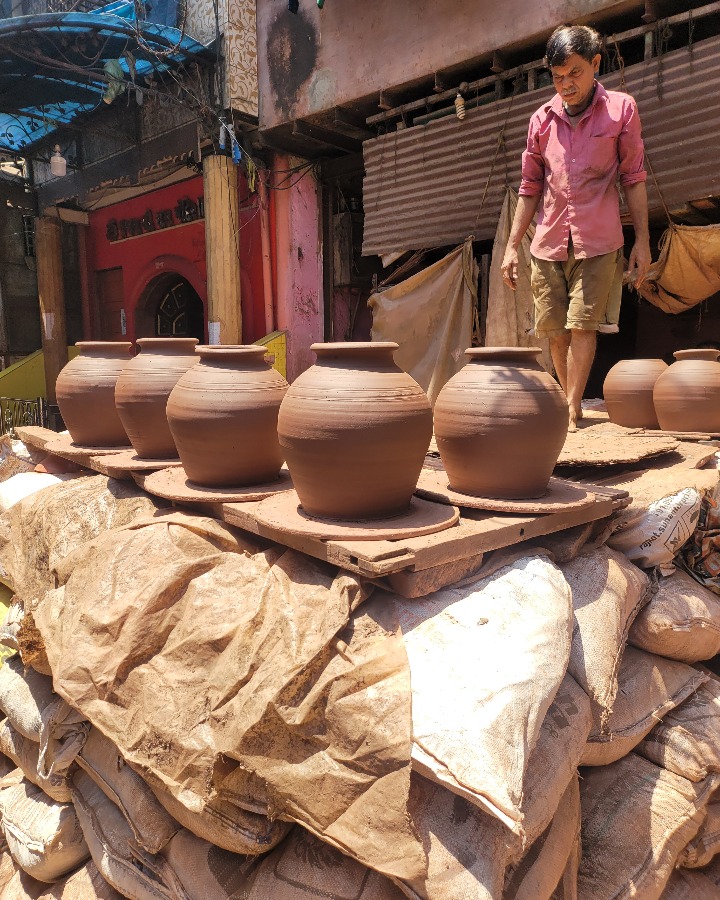
Pottery is one of the major industries in Dharavi, which includes recycling, leather, and textiles
For the first time during the tour, Javed said that it was okay for us to whip our phones out and take snapshots of our surroundings. At the beginning of our tour, the guide explained that there was a strict no-photography rule throughout the slum area. The reason was clear: it was a sign of respect for the residents and workers in Dharavi that tourists like us don't treat them like sideshow attractions. In this part of the slum, however, a man in the leather facility beside the shop was kind enough to grant permission for us to photograph him as he worked.
We passed a bustling fruit and vegetable market on our way to a little open area where a group of male teenagers were in the midst of playing street cricket. Older women, meanwhile, were busy placing papad dough on top of upturned baskets which they would then leave under the sun to dry. Here Javed stopped us again and explained that, in recent years, people living in the rest of Mumbai have started to think differently about those that reside in Dharavi.
“The stereotype before is that people who live in Dharavi were thieves (and criminals),” the guide said. “I used to be so shy about telling people that I live here. But that’s no longer true today. Now I don’t have a problem telling people this is where I live.”
High-rises are slowly being built in Dharavi
Final stop
Our final stop was the Dharavi community center, which the company that Javed works for supports. Up a steep flight of metal stairs, we entered a small room adjacent to a larger one where a class on basic computer skills was in session. The guide explained that kids and adults alike were welcome to enroll in any of the center’s classes, although it became harder now after the pandemic as the number of full-time teachers has been whittled down to just six from 25.
“We want to dispel the negative image of the slums that people here are just sitting around doing nothing,” the community center head told us.
“(The locals) feel comfortable now (about tourists coming in) because we have rules and regulations,” Javed added. “Before they were asking, ‘Why are you bringing people here, just to show our poverty?’ So we discussed it with the commercial people and the residential people, and we explained to them that we wanted to show how people are living here, how they’re working, with all the facilities. They know that we are helping the community. Ninety-five percent of the people we ask are happy (with what we’re doing), and the other five percent, they just ask us again and again and again. And we answer.”
We ended the tour at the operator’s headquarters at the edge of Dharavi. We paid the fee (1,350 Indian rupees, or about P900) and gave Javed a well-deserved tip. We were given a cold bottle of Sprite that I drank greedily as it was already noon by then and it was sweltering hot outside.
Life goes on for the people of Dharavi in Mumbai
There are still difficult questions about the ethics of turning a slum area into what essentially amounts to a tourist attraction, and I don’t believe there are any easy answers. But it occurred to me then that I appreciated the glimpse into a side of India that many guidebooks and travel sites don’t necessarily recommend. I could just as easily have chosen to spend my limited days in Mumbai doing all of the other “touristy” things, but I chose to place value in the experience I just went through, no matter how brief and superficial it might seem to other people.
The people of Dharavi are no different from those living in many other places elsewhere on the planet, including the Philippines: hardy workers just trying to live their lives as best as they can in the situation they find themselves in. What I felt was a quiet dignity and an almost palpable sense of hope for something better—for themselves and for their loved ones. And, really, that’s something we can all relate to, no matter where in the world we are.
All photos were taken with the approval of the tour guide and the main subject of the photo.
We use cookies to ensure you get the best experience on Esquiremag.ph. By continued use, you agree to our privacy policy and accept our use of such cookies. Find out more here.