He was born in 1876, 13,000 kilometers from the Philippine highlands where he would die, in the town of Sabetha, Kansas. Hammond Hall Buck was raised in a farmer’s cabin of retrieved timber, dried mud and straw, amidst a rolling sea of prairie grass. The Bucks lived a hard frontier life, raising wheat and corn, chickens and hogs at their bottomland homestead. They had a stand of cherry trees on the bank of the stream, where there were snapping turtles, summer catfish and trout.
Who was Hammond Buck?
Little Hammond Buck was early musical. His father gave him a wooden mouth harp when he was barely more than a toddler. Soon the child could accompany the family singing favorites, including Stephen Foster’s lament.
'Tis the song, the sigh of the weary
Hard times, hard times, come again no more
Many days you have lingered around my cabin door
Oh hard times come again no more
ADVERTISEMENT - CONTINUE READING BELOW
The boy also learned to play an enthusiastic “Garry Owen,” the rousing anthem of George Armstrong Custer’s storied 7th Cavalry. Custer earned his reputation as an Indian-fighter in Kansas, against the same Sioux and Cheyenne who would later massacre his entire vainglorious command just before Hammond was born.
Hammond dreamed of becoming an Indian-fighter himself. For there were Indians about. Not those drunks staggering about the town, but real wild Indians, on prancing warhorses, fierce-painted for battle. Though the Indian Wars were ending, there were brief, ultimately tragic, flarings of resistance against the United States. When Hammond was small, a band of brutalized Cheyenne Indians murdered the officers and guards on their Oklahoma prison-reservation and broke free. They rode across Kansas headed for their tribal homelands to the north.
There is no choice: we are ourselves or we are dead, the Cheyenne declared.
Though they were less than a hundred warriors, with many women and children to protect, the Cheyenne attacked isolated Kansas settlements, raided and burned remote farms and ranches, killing many. There were sleepless nights at the Buck homestead, when men and boys kept watch at their rifle loopholes while unseen beings that purported as wolves howled in the darkness. Pursuing US troopers caught up with the Cheyenne on the high plains and fought them in a daylong battle. The Indians won, killing many soldiers, including their commander, before finally escaping.
CONTINUE READING BELOW
watch now
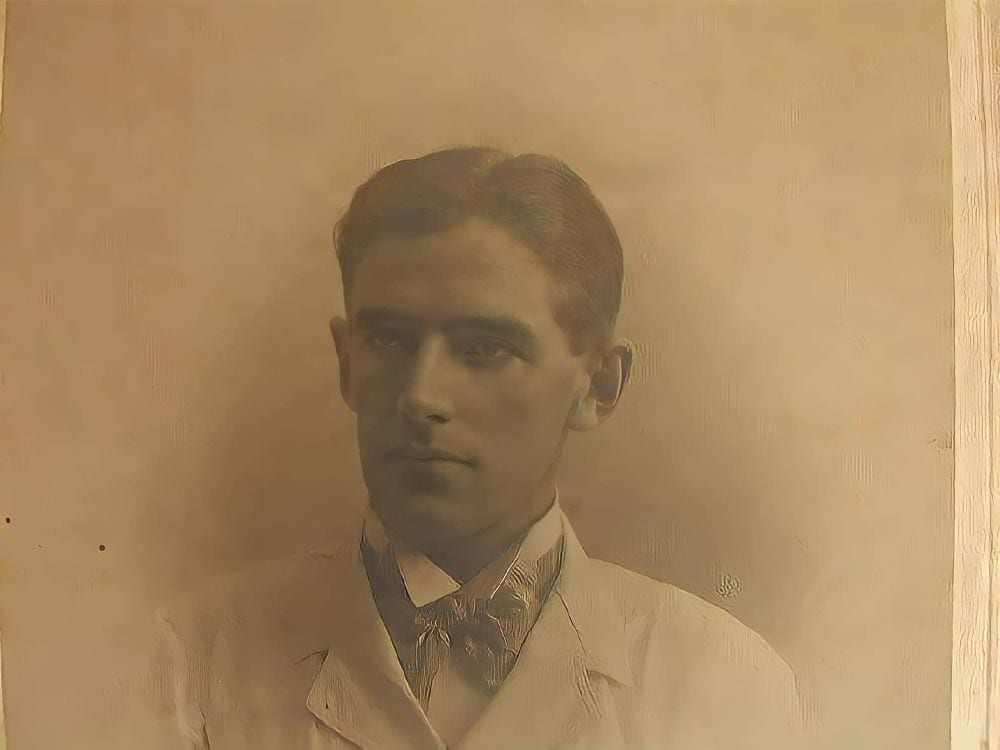
A portrait of the young Hammond Buck
PHOTO: Facebook / Family of Hammond Buck
“Did you see them?” the boys in town pestered Hammond eagerly, jealously. “Did you really see them?”
Clearly as I see you, boasted young Hammond. Bronze warriors crowned with gorgeous war-bonnets that sprouted horns and feathers. They brandished decorated coup-sticks, shields and lances. They had rifles cut short for fighting on horseback, that were studded with brass nails arranged into amuletic designs. Of course, I saw them, Hammond laughed. He fished out his wooden harmonica and blew the “Gary Owen” that set the town boys huzzaing, marching, throwing their caps and hats into the air.
But Hammond’s Indian-scourged Kansas was tame compared to the “Bleeding Kansas” of the Civil War era, when bands from both sides of the slavery debate made war on each other and the hapless collaterals. The few federal army troops, supported by a rabble of local militias, were hard-pressed by pro-slavers such as Willian Clarke Quantrell and Bloody Bill Anderson. The brothers Jesse and Frank James fought under them, as did the Younger brothers and the Coles. Many hundreds were murdered in Kansas before the war even began.
ADVERTISEMENT - CONTINUE READING BELOW
Kansas entered the Union during the reconstruction. The new state and its strategic railheads became the wealthy destination of great cattle drives from Texas. From Kansas, beef-on-the hoof went north on trains to Chicago, to be processed then sent to the meat-hungry, industrial eastern seaboard. Abilene was foremost among these cowtowns, but other municipalities sprouted to contain the spillover of the herds: Dodge City, Kansas City, Wichita, Hays. The tough Texans who drove the herds were paid off at trail’s end. Then the cowboys went looking for whiskey, gambling, women and fights. The town fathers supplied most of the cowboys’ needs. But to limit the incidental damage the cowboys caused, they hired the most famous gunfighters of that era to impose local order. The legendary Wild Bill Hickock was marshal at Abilene. So was the renowned gunfighter Wyatt Earp, who was marshal of Abilene, Dodge City and Kansas City one after the other from 1874 to 1878.
The Kansas railroads were also central to the near-extermination of the American buffalo by market hunters, that reduced their number from around 60 million to just a few hundred protected animals by the 1880s. As the free-roaming buffalo was a main staple of Indian life, this slaughter finally broke Indian resistance in the plains. Buffalo products transported by Kansas trains were made into fashionable apparel, rugs, leather goods, into furniture and fertilizer They were sewn into the heavy-duty belts that spun the mechanical gears of industry.
Indian raids and cowtown gunfights were part of Hammond’s young play fantasies. He and his buddies assumed roles as gunfighter lawmen or outlaws, happy-go-lucky cowboys, as cavalry troopers, buffalo hunters, or wild Indians. Wild West shows that featured Cowboys-and-Indians in theatrical and park presentations traveled across the continent to enthusiastic audiences. These entertainments were foundational in the creation of the American West of popular culture. This far-reaching international phenomenon enraptured many and affected famous lives and careers: Theodore Roosevelt himself, certainly. But also Mark Twain, Jack London, Ernest Hemingway, Gary Cooper, Akiro Kurosawa, Sergio Leone, Clint Eastwood, Fernando Poe Jr. The western as popular genre, taken with stern seriousness, would be accused by some as an enabler of a dangerous sort of toxic masculinity, and of violent infantilism.
ADVERTISEMENT - CONTINUE READING BELOW
Buck, the soldier
Hammond Buck was, in his own words, a “farmer, hobo, sailor, cowboy;” a proto-typical western roustabout. He broke wild horses, hunted, worked traplines in the winter snow. He herded cattle and sheep. In May 1898, when Commodore Dewey destroyed the Spanish fleet at Manila Bay in the Philippine Islands, Hammond was a callow 22-year old tending sheep at Sioux Falls, South Dakota. He and his fellows enthusiastically enlisted to fight the Spanish with the 1st South Dakota Volunteer infantry regiment, Colonel Alfred B. Frost, commanding. Hammond mustered in as a private with the regimental band, the corps of the fifes-and-drums. Buck understood that their exotic, wartime destination was perhaps the last American frontier: so far West it became the East.
But when the 1st South Dakota Volunteers arrived at the Philippine port of Cavite in August 1898, the Spanish had already surrendered. Colonel Frost recognized that the immediate threats to his command were the devil in idle hands, and the oppressive, unhealthy weather. He kept the soldiers busy at drill exercises, on patrol, on guard duty or at target practice. Colonel Frost rejected issue British-style pith helmets and instead had his troops equipped with cooler, locally-woven straw hats. But the volunteers were continually attacked by unknown, exotic diseases.
To fill up a depleted duty roster, young Hammond Buck was reassigned from the fifes-and-drums to a rifle company. Filipinos flinched at the thunder of guns at the target range that they assumed would soon be pointed at them. That happened on February 4,1899, one night after the full moon, when the jumpy 1st Nebraska Volunteers, deployed along the San Juan river at the outskirts of Manila, were provoked to fire the first salvo of the Philippine-American War. Private Hammond Buck and the 1st South Dakota Volunteers were on their right flank, and seconded the fusillade. Thus were these two regiments conjoined as “The Fighting Firsts”—first in the fight against the Filipinos. The Fighting Firsts marched together along the railroad to take the enemy capital of Malolos on March 31. Hammond Buck had become an authentic, blooded Indian-fighter of his boyhood ambitions.
Buck was promoted lance corporal after the heavy action at the Filipino’s vaunted frente de Baliuag, primera linea de fuego. The Fighting Firsts then turned towards Calumpit and General Antonio Luna’s field headquarters. Opposition slackened along the way and many volunteers began to think that US military conduct was more like exterminating vermin than waging war. But Calumpit was surprisingly well-protected. It was moated by a wide river. It had new, well-emplaced fortifications. It had better armed and disciplined defenders.
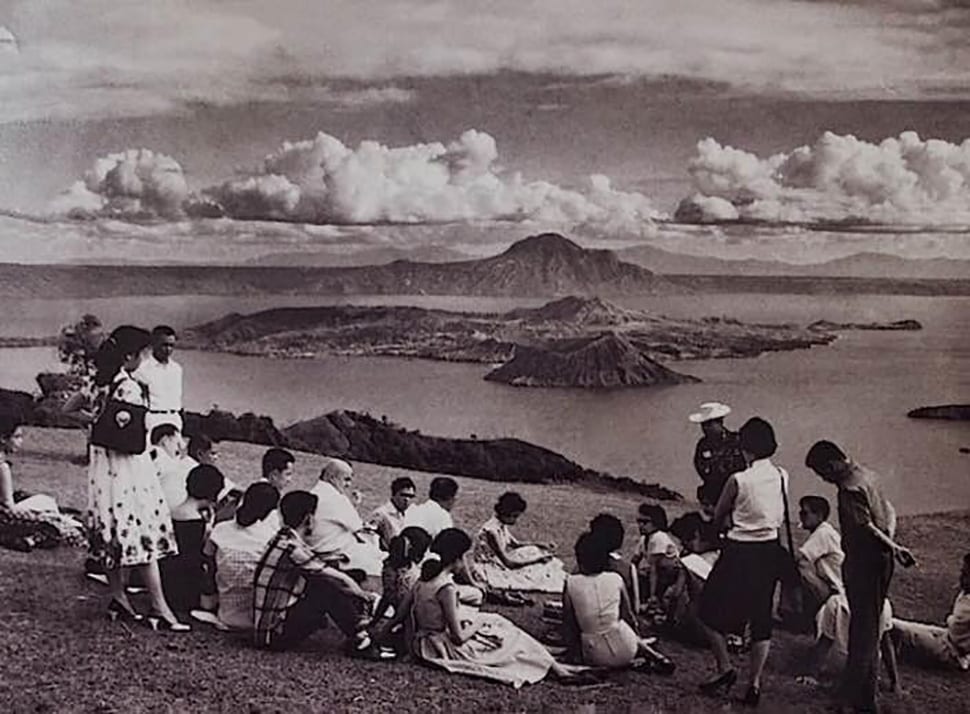
Vintage photo showing Taal Lake and Voclano from the Tagaytay Ridge
PHOTO: Taal Vista Hotel
On April 27, after crossing the river under fire, Buck and his company charged over a row of parallel Filipino trenches. He was shot atop the third and final trench. Because they believed Buck was dying, a frontline surgeon operated immediately. The surgeon recognized the bullet he extracted and dropped into the metal tray with a clang. It was the dreaded Spanish Reformado, its copper jacket stained green with verdigris, reputed to be a poison bullet. Delirious, Buck lost even more blood on the mule-drawn ambulance-wagon bouncing to hospital in Manila.
A Tagalog girl
Like most of the American volunteers, Buck thought little of the natives he encountered. He thought them common, dirty, stupid, dishonest. Unlike the Sioux or the Cheyenne in his mind they were totally unworthy of the epic American might they dared. Like most volunteers, Buck preferred the casual company of the Spanish and their Chinese half-castes. But the Tagalog servant girl assigned to him was very clean, very smart, very distant. She dressed his wounds with an intense, light-handed delicacy. She never called attention to herself. She did not smile.
When the fevered Hammond Buck fought the tangle of river reeds that was his death, it was her face that welcomed him, breathless, upon the surface. She would let him slow himself from panic with his arms tight about her hard-muscled peasant’s shoulders. She hummed softly and tapped him softly to her heart’s rhythm, as she might a nightmared child.
Hammond was soon well enough to play his harmonica again. He blew softly while reclined against the ward wall, in the half-light before the electric lamps brightened. His cupped hands would quaver over the instrument as it trilled his pain and loneliness, the chasmic emptiness of the Kansas plains, with the flowers of the grass purple and yellow to the horizon. His Tagalog servant girl would turn discreetly away, that he might not catch her black eyes sparkling. He managed to communicate with the servant girl with gestures and a few words. He called her “Cheyenne” in homesick tribute to her dignity in tatters. Her name was garbled to “Tsina” at the hospital ward, which amused her, as she was a bronzed island Indian.
“Hoy Tsina! Hinahanap ka nang tatay mo,” the other servants joked when Hammond, pale and frail but back in uniform, loaded with his rolled half-a-pup tent, his woolen blanket, his haversack and rifle, inquired after her to say thank you and goodbye.
Hammond Buck rejoined the 1st South Dakota to fight in Pampanga and the desolate swamplands, where the muddy ditches were clogged with the rain-sogged bodies of the enemy. Buck was dismayed to see women, young boys and even little girls among the slain. Bone-tired, sleepless and in tears, he stumbled among the corpses, masked against their unrelenting stench, startling away the swarming flies, the rats, the dogs and the lizards. He peered frantically into the rotting faces, crying for his lost, his proud, his irrecoverable Cheyenne.
His empty eyes squinted, his gaunt face tremoring, Buck soon received another battlefield promotion, this time to the rank of sergeant. When the 1st South Dakota Volunteers mustered back to the US in August 1899, exactly one year after their arrival, Sergeant Hammond Buck, the decorated, veteran Indian-fighter, was not among them. He made the roustabout’s decision to stay, to look over America’s new and disputed Philippine possession, to seek absolution and to heal.
Buck, the teacher
In 1900, Buck turned up at the poor, seaside Pasay district as a volunteer elementary school teacher. He was among the hundreds of Americans who signed up to be teachers in the Philippines after their stint as soldiers. M. A. Cotton, the newly named Philippine Superintendent of Schools, gave Hammond Buck the prestigious job as teacher-in-charge of Taal, in Batangas, where guerilla war was raging. Buck was well-liked by his pupils, by the eager Batangueña assistant teachers and their elders. On November 6, 1901, Buck was promoted Deputy Superintendent of Schools of the looming province of Cavite, a hotbed of the Filipino insurrection.
The Cavite highlands were especially hazardous for Americans. Pointedly, the military line of victory skirted these mountains, that had been the legendary roost of outlaws and malcontents since before Spanish times. There, patrols from the US army and the newly formed Insular Constabulary were liable to be ambushed. Lone troopers were assassinated. Volunteer teachers did not fare much better. Henry Hawkins, American teacher-in-charge of Silang, was captured on a field trip to the nearby town of Amadeo. His captors were a handful of peasants, but counted officially as 30 heavily-armed ladrones. Hawkins was relieved of his money, his pocket watch, his Colt revolver, and his train of horses.
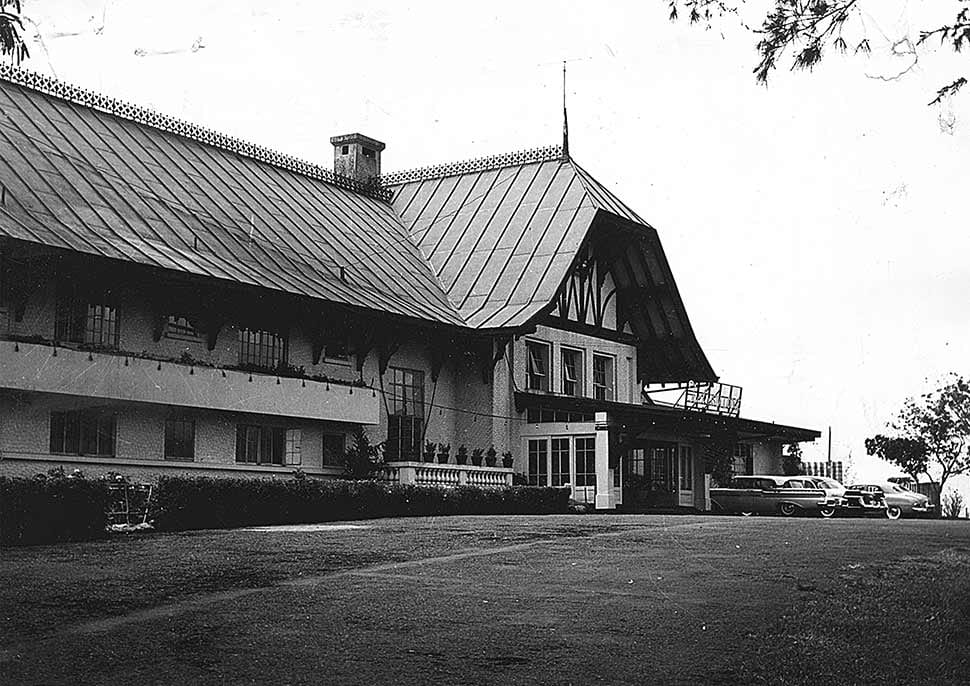
Taal Vista Hotel
PHOTO: Taal Vista Hotel
“They were very polite,” Henry Hawkins reported of his tormentors. “Very formal. They claimed they belonged to the society of the Masons, and are brothers to George Washington.”
In 1902, Hammond Buck was promoted Superintendent of Cavite schools. He quickly set up a central provincial school, also agricultural, arts and trades schools, and the first normal school for Filipinos. He welcomed, briefed and assigned American volunteer teachers called the Thomasites to Cavite towns. And he continued his easy rapport with all kinds of Filipinos, including high-ranking officers of the defeated Filipino army who were being amnestied into the civil service. These amigos found a sympathetic ear in the young schoolmaster, to whom they brought complaints against the US military’s mistreatment of suspected insurrectos. As the war was officially over, Filipino soldiers were no longer considered legitimate combatants. They were ladrones. The citizens of the towns called them after the song they hummed as they staggered along: Portimorir!
We are ourselves or we are nothing, rasped the Portimorir.
The most senior of these amigos was General Marcelino Aure Alapaap, the newly-designated mayor of greater Mendez-Nuñez, an artificial confederation of most of the highland towns. At the start of the revolution against Spain, Marcelino acquired his war-name after a spectacular victory celebrated in folk story and song, when he descended from the clouds upon the Spanish in Talisay, Batangas. Aure Alapaap was older than Buck by 13 years, but the pair soon developed a special friendship.
Alapaap agreed to instruct Buck on the traditions and myths of the Cavite highlanders. The Aure clan traced part of their lineage to corsairs on the Tanza seacoast, whose deep-water prahu once plundered coastal villages and merchant shipping across the China sea. Though Christians for centuries, Aure chieftains might have also belonged to a suppressed priesthood that antedated the Spanish. They were ritual animists, fetishists, and ancestor-worshippers whose belief systems appear to be heavily influenced by Vedic religion. Shy, fire-colored creatures inhabited their dark forests and their minds. Their humble flower oblations, their animal sacrifices and firewalking rites were approximations of Brahmanical festivities whose glory persists in Bali, Indonesia. Even the names of the rituals are the same. It is speculated from the evidence of Buck’s later published stories that Aure Alapaap might have actually allowed Buck to witness secret ceremonies of tribal prophecy and power-acquisition: ecstatic firewalking, healing and exorcism, the sanghiyang, the anting-anting, the bloody subok ng anting-anting.
The pair went on extended baykot, treasure-hunting expeditions. They hunted game birds in the grassland meadows, or deer and boar in the tropical jungle. Here they might have occasionally encountered a few hollow-eyed, disheveled men whose martial bearing would not be disguised, and who rendered the Alapaap furtive salute. Buck found it curious that the Aure owned no real holdings in the Spanish civil registry. They had no land but the solares where their houses stood, often dowries brought by their wives into their conjugal arrangements.
Staying in the Philippines
Many Americans were surprised at Hammond Buck’s 1903 report to the US commission on education. The report listed many complaints about the severe treatment of alleged guerillas by the US army and the Insular Constabulary. The military’s rebuttal was swift and threatening. Cavite Provincial Commander Colonel Russell Sutter accused Buck of being “a strong Filipinista” who was “in league with the ladrones.” This was treason, punishable by death, though Colonel Sutter offered no evidence and preferred no charges. The education authorities hastily transferred Buck back to Batangas.
Hammond Buck left public service shortly after. He was hired to manage the Caridad Estate in Cavite City, where he honed his skills as a land administrator and realtor. Then the 28-year-old struck out on his own. He chose to reside in Alfonso, the highland hometown of his new bride Dolores Aviñante Angeles. American gossips referred condescendingly to Dolores as a “quality” Filipina, perhaps meaning she was partially white. The newlyweds took advantage of the Philippine Organic Laws of 1902 and 1904, that made former Augustinian friar lands in Cavite available for purchase by Americans and Filipinos. Over the next four decades, the Bucks acquired many parcels of fertile land along the Tagaytay Ridge. There they established their home farm called Buck Estate where they successfully grew traditional crops such as citrus fruits, coffee and cacao. They experimented with new products such as avocados. They made bee-farms and sold honey. They raised a large and handsome family.
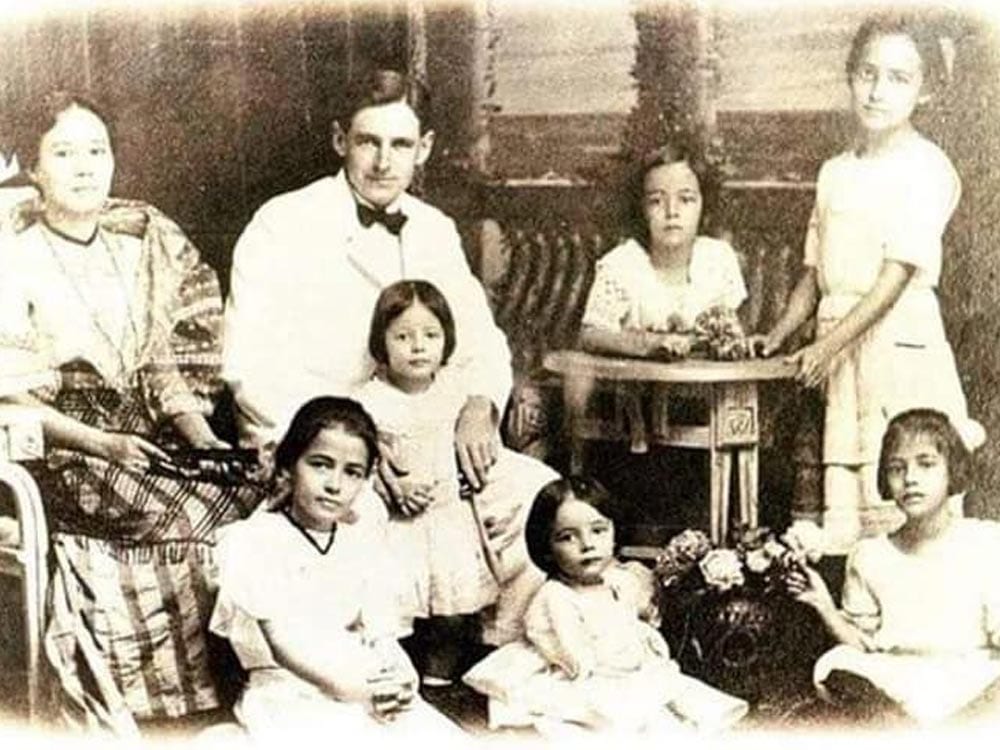
Hammond Buck and his family in the Philippines
PHOTO: Facebook / Family of Hammond Buck
Hammond Buck continued to pursue his interest in the mountain’s pre-history, folk traditions and indigenous cultures. He explored and mapped the Cavite highlands, its forests, streams, waterfalls and caves—including Saluysuy, Lucsuhin, Esperanza. He found many specimens, human remains and artifacts for his collection, including a porcelain jar he tentatively, perhaps naively, labelled Ming.
Hammond Hall Buck and General Marcelino Aure Alapaap became affines when Buck’s daughter Nelly married the Alapaap’s eldest son Gabriel Anloague Aure, a flamboyant lawyer and dandy, later a member of the Philippine Assembly. A Presbyterian minister performed the marriage ceremony at the town hall of Mendez-Nuñez, with General Aguinaldo as principal sponsor. At the wedding reception Buck took his good-natured, much-applauded turn with his harmonica, performing marches and waltzes with the Banda San Agustin of Mendez in gala dress. A beaming General Marcelino Aure Alapaap conducted his bright-eyed and mischievous family rondalla playing “Home On The Range,” the state anthem of Kansas.
‘The man who owned Tagaytay’
Hammond Buck studied law at Liceo de Manila. He began to write and publish material in Philippine newspapers and magazines that attracted general and academic interest. He wrote about Cavite’s fabled firewalkers, its tradition of the anting-anting and the sanghiyang. He branched into fiction: bandit tales and stories, even a novel, Capitan Baltazar, about rebel fighters against the Spanish and Americans. In 1929, Buck proposed that Tagalog be made the national language. He lobbied for Tagaytay to become a chartered city.
Buck’s business efforts fortuitously dovetailed with President Manuel Quezon’s own political and personal interests in the area. Buck became such an acquisitive and manipulative real-estate speculator he was able to convince General Aguinaldo—Quezon’s rival and opponent—to come and be photographed horseback on the ridge, like any modern-day tourist!
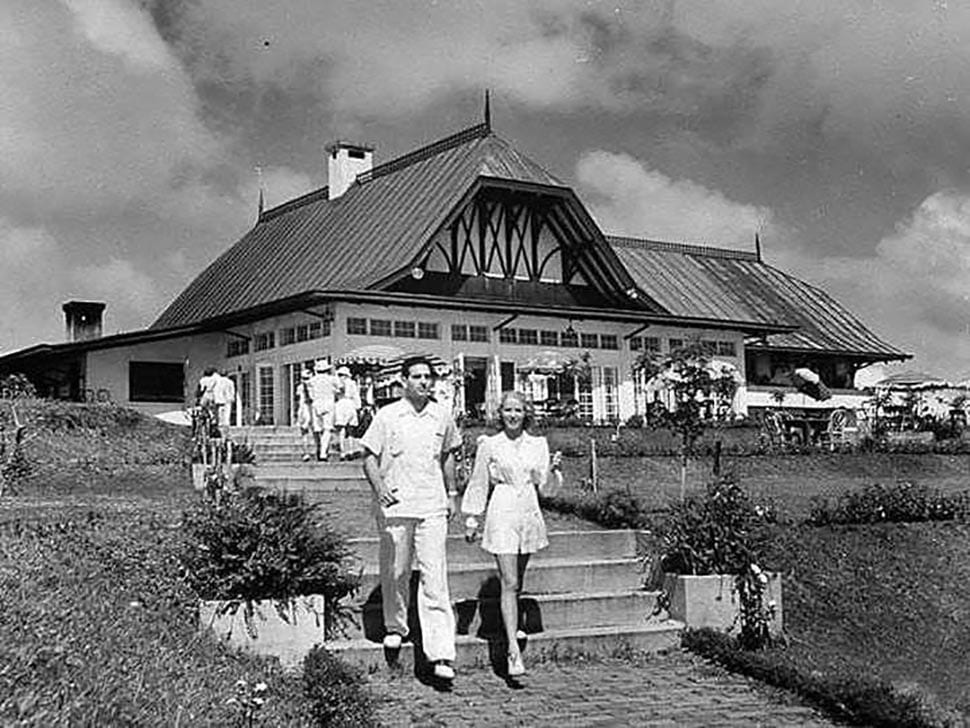
The Bucks put up cottages to house the increasing numbers of visitors. In 1937, a new road called Route 17 was built by convicts to extend the Manila road through Silang to Tagaytay. In 1938, Tagaytay became a chartered city. In 1939, the government-owned Taal Vista Lodge was opened to offer luxury accommodations to high-end vacationers. People began to refer to Hammond Buck as “the man who owned Tagaytay,” and only half-in-jest.
The Japanese arrested the newly widowed Hammond Buck in 1943, more than two years after the invasion. Buck’s tenants, workers and townmates, some of whom were guerillas, lined the road bareheaded as the Japanese truck took him away. He was interned with the rest of the Americans at the grounds of the University of Santo Tomas. There, Buck played the harmonica to accompany the captives singing. Stephen Foster’s songs were special favorites and often moved the inmates to tears.
Oh hard times, hard times, come again no more
Oh hard times come again no more!
Buck recognized another latterly incarcerated inmate, the famous anthropology professor Henry Otley Bayer. He was flattered when Bayer complimented him on his published essays on the pre-history of Cavite. “Mere amateur work, professor,” Buck blushed. The two men were Midwesterners, nine years apart in age, with hometowns just hours apart by train. As the younger Otley Bayer was a much-credentialed, Harvard-trained academic, Buck deferred to him in most matters of anthropology. In turn Bayer respected Buck’s military and civil service, his business and political acumen.
A beautiful place
The man who returned to his long-neglected home at Buck Estate after Liberation looked much older than his years. Hammond Buck’s best plans for Tagaytay appeared to have been thwarted by the late war, by Quezon’s death and the re-direction of interest and capital to other places. In 1945, Hammond Buck invited Otley Beyer to look over what remained of his collection of prehistoric artifacts, and to explore the cave where he had unearthed them.
“What a beautiful place,” Otley Beyer admired. He had been to the Cavite highlands before. He returned to see beneath the apparent; he wanted the bone heaps and the graves. “The government should make all of this a national park. To make all the contiguous woods a national forest. To keep it like this in perpetuity! You know, like Yellowstone. Like Yosemite.”
“The government does not own it,” Buck said. “I do.”
Guests outside Taal Vista Hotel, which was built along the Tagaytay Ridge
Taal Vista Hotel
But after hours in the jungle, Buck could not find the cave they sought. It seemed the earth had buckled and twisted in paroxysm, and raised tall walls of primeval trees and unfamiliar columns of grey volcanic tuff. Hammond Buck tottered at the edge of the rushing stream, looking up at the circling hawks, listening, shaking his head.
Naligaw, whispered the townspeople. Na-inkanto. Na-tikbalang He was lost. He was enchanted. He was taken.
The people, too, were different. A strained distance separated Buck and his workers and tenants, especially former guerillas, who had become less respectful, more surly and demanding. They would not be pried from the privileges and premiums they had arrogated from the estate during Buck’s incarceration. Buck blamed the patrols of the Hukbalahap, the assemblies of communist agitators for aggravating the situation.
The death of Hammond Buck
On a bright morning thereafter, Hammond Buck was being driven by motorcar through the sleepy barrio of Lalaan, the town of Silang, on Route 17, the concrete road to Manila, three hours away. His ambushers were on both sides of the road. One group squatted by the roadside, with their US Army-issue grease guns flat beneath the flutter of butterflies skimming over the fragrant grass. The other group was directly across, on the little hillock, looking down the road from behind the hibiscus and the sunflowers.
“Na-lintikan na!” Buck’s driver shouted, stomping strongly on the pedals. “Lightning upon us!” The killers rose together into place. They triangulated the car, now screeching sidewise, in their enfilading, automatic fire. Hammond Hall Buck, 70 years old, the Kansas Indian-fighter who owned Tagaytay, was dead.
For a long time afterwards, the near-empty Cavite highlands were half-forgotten, with only phantom bands of outlaws to scare the curious away. Martial Law broke the illusion and loosed ravenous progress upon their last stands of wilderness, to defile the sacred caves and meadows, bulldoze its burials and scatter its ghosts.
We use cookies to ensure you get the best experience on Esquiremag.ph. By continued use, you agree to our privacy policy and accept our use of such cookies. Find out more here.