There is an imposing mollusk that roams the coastal oceans of the Philippines: the helmet snail, or Cassis cornuta. Growing to about the size of a volleyball, this snail resembles an ancient classic Greek helmet—hence the name. Even though the creature moves at snail-like-speed, encountering it during a scuba dive never fails to impress.
Almost all other marine snails a scuba diver will encounter are ping-pong to billiard-ball sized only; the sheer size, and the resemblance to an archaic piece of armor give this invertebrate a striking appearance.
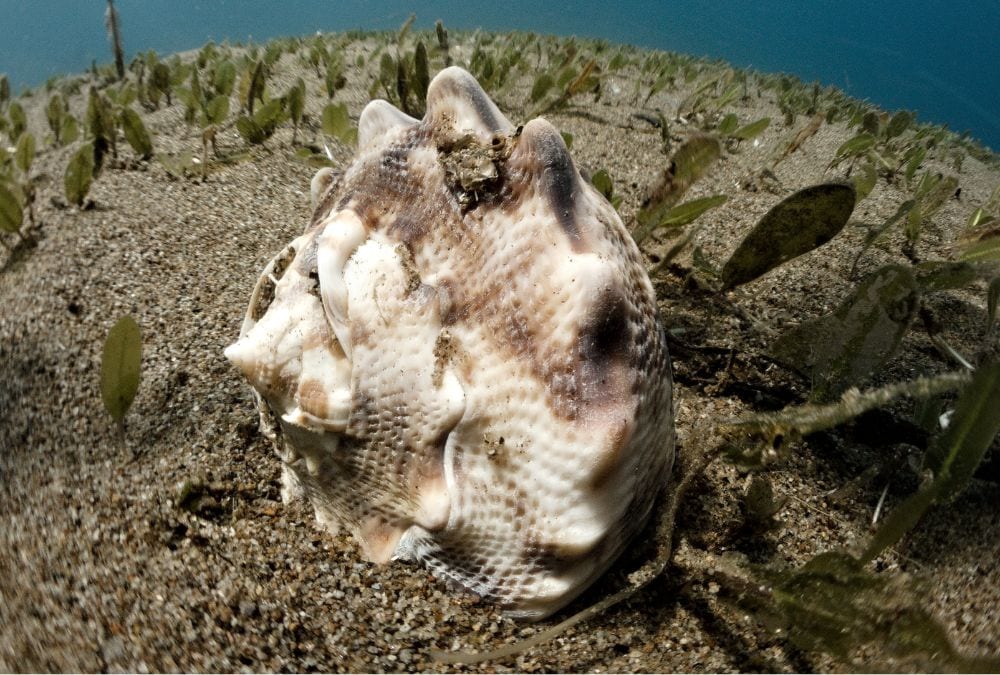
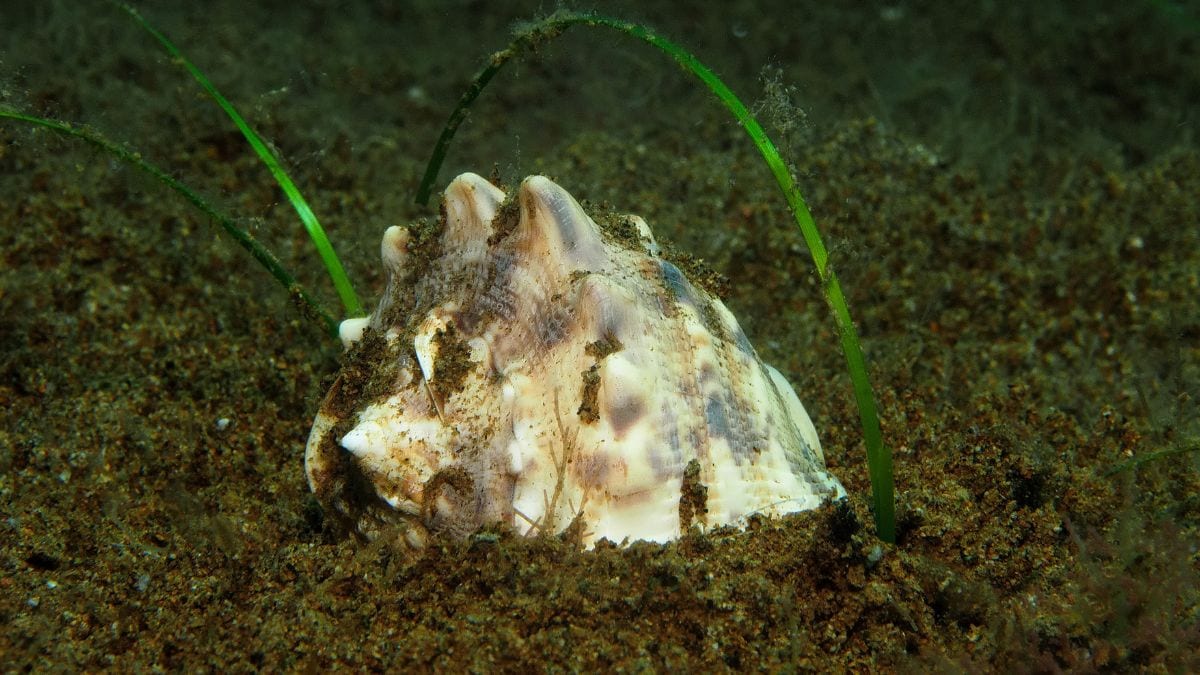
A Cassis in the sea grass
PHOTO: Klaus Stiefel
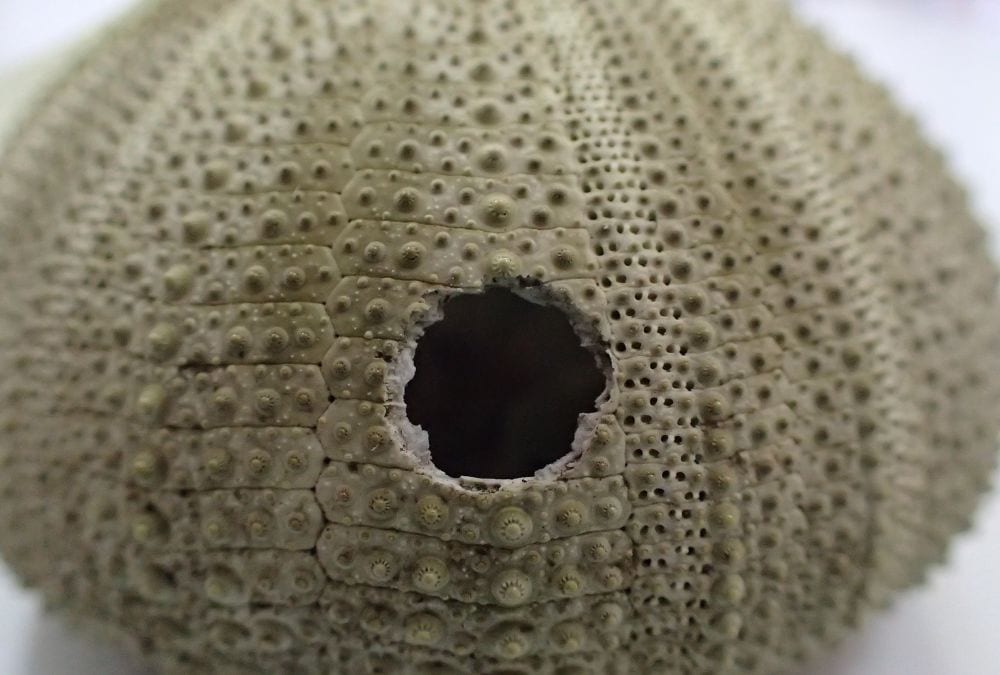
How do the helmet snails grow to such respectable sizes? They feed on sea urchins, a readily available prey in the shallow waters of the Philippines. To slay them, the Cassis rise slightly above the sand, and then crash into the prey urchin from above. At that point, the snail penetrates the hard skeleton of the urchin with its powerful protrusive tongue. It then proceeds to suck the urchins empty, and the shells of urchins which had become victims of Cassis show a typical round hole, where the tongue entered.
Sea urchins are rich food, especially when they are full of eggs. While the helmet snails don’t have to spend energy on maintaining their body temperatures, like us humans, and while they don’t waste energy on moving fast, they still need a hefty energy intake: fixating the carbonates from the seawater to build their massive shells takes a lot of calories.
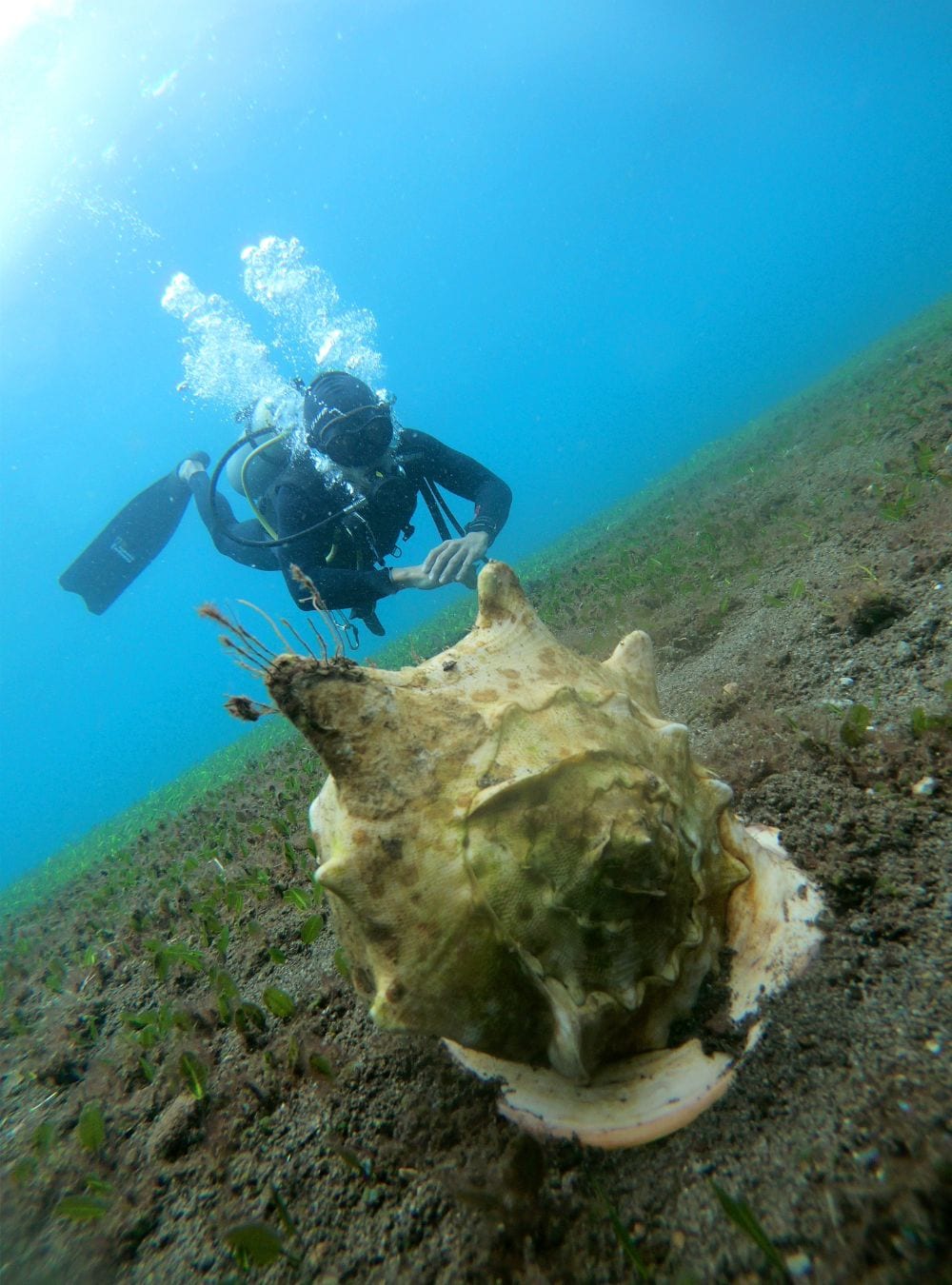
Diver behind a helmet snail
Klaus Stiefel
CONTINUE READING BELOW
watch now
On a side note, Visayan has two names for sea urchins, “tuyom” for the long-spined species, and “salawaki” for the short-spined ones. This fits well with the Sapir-Whorf hypothesis in linguistics, which says that cultures that encounter a certain creature or object more often will have a more developed vocabulary for this kind of entity.
Naturally, the seafaring and fishing peoples of the Visayas have words to distinguish between different types of sea urchins, while English uses the term for a spiny land-mammal (“urchin” is the Middle English term for "hedgehog"). German uses its modern word for hedgehog, “Igel,” combined with “sea” into “Seeigel,” hedgehog of the ocean. These northern European languages hence have no unique words for sea urchins, versus two such words in Visayan. Our friends the Cassis prefer to feed on the short-spined salawaki, more so than on the long-spined tuyom; they are easier to break into.
ADVERTISEMENT - CONTINUE READING BELOW
The helmet snails hide under the sand during the day, with often no part or only the tip of the shell sticking out. They are more active at night, when they hunt for their sea urchin prey. This hunt by a snail of a sea urchin—both equally not known for their speed—is somewhat of an ultra-slow-motion version of lions versus zebras. It seems that the helmet snails hunt by using their sense of smell. (See the video below, where I sped up the footage, so that a barely escaping sea urchin seems to sprint away from an oncoming Cassis. A little bit of video editing turned a rather slow process into a nature action-saga).
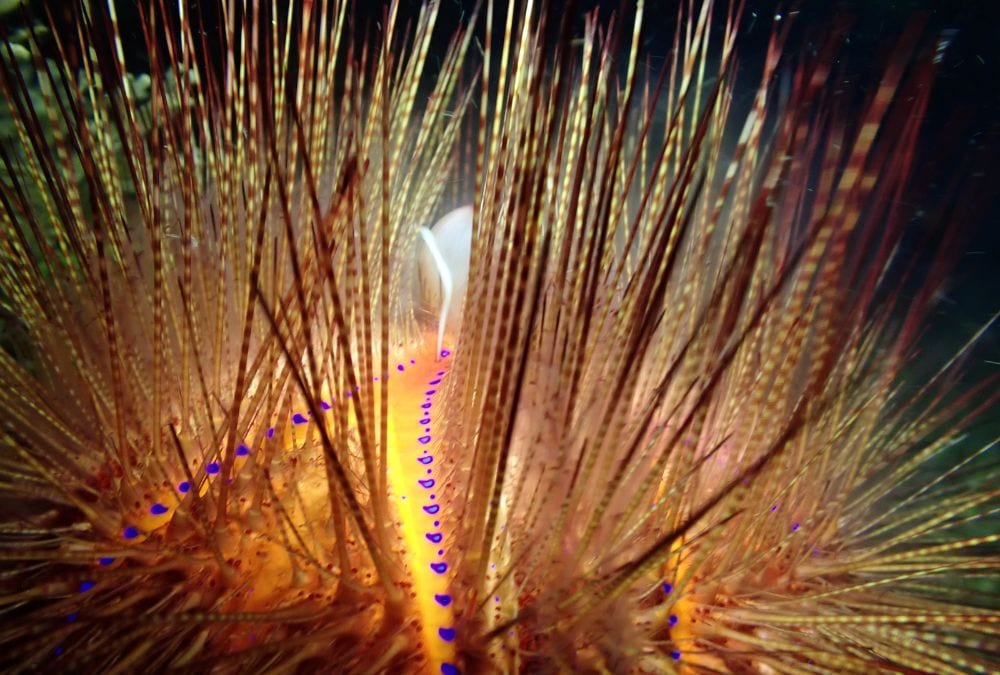
A long-spined tuyom
PHOTO: Klaus Stiefel
The “Muck Diving” ecosystems, for which Philippine diving destinations like Dauin and Anilao are so well known, is where these predatory encounters often happen. It’s these sandy underwater habitats, and not so much the coral reefs, where the Cassis thrive the most.
These sandy habitats are also the homes to the “Sand dollar” or “heart urchin” types of sea urchins: flat, oval animals which bury themselves into the sand. These seems to be another preferred prey of the helmet snails. If you see the broken-up shells (“tests” is the correct biological term) of these sand dollars either during a scuba dive, or washed up on the beach, a Cassis is the likely culprit who killed them.
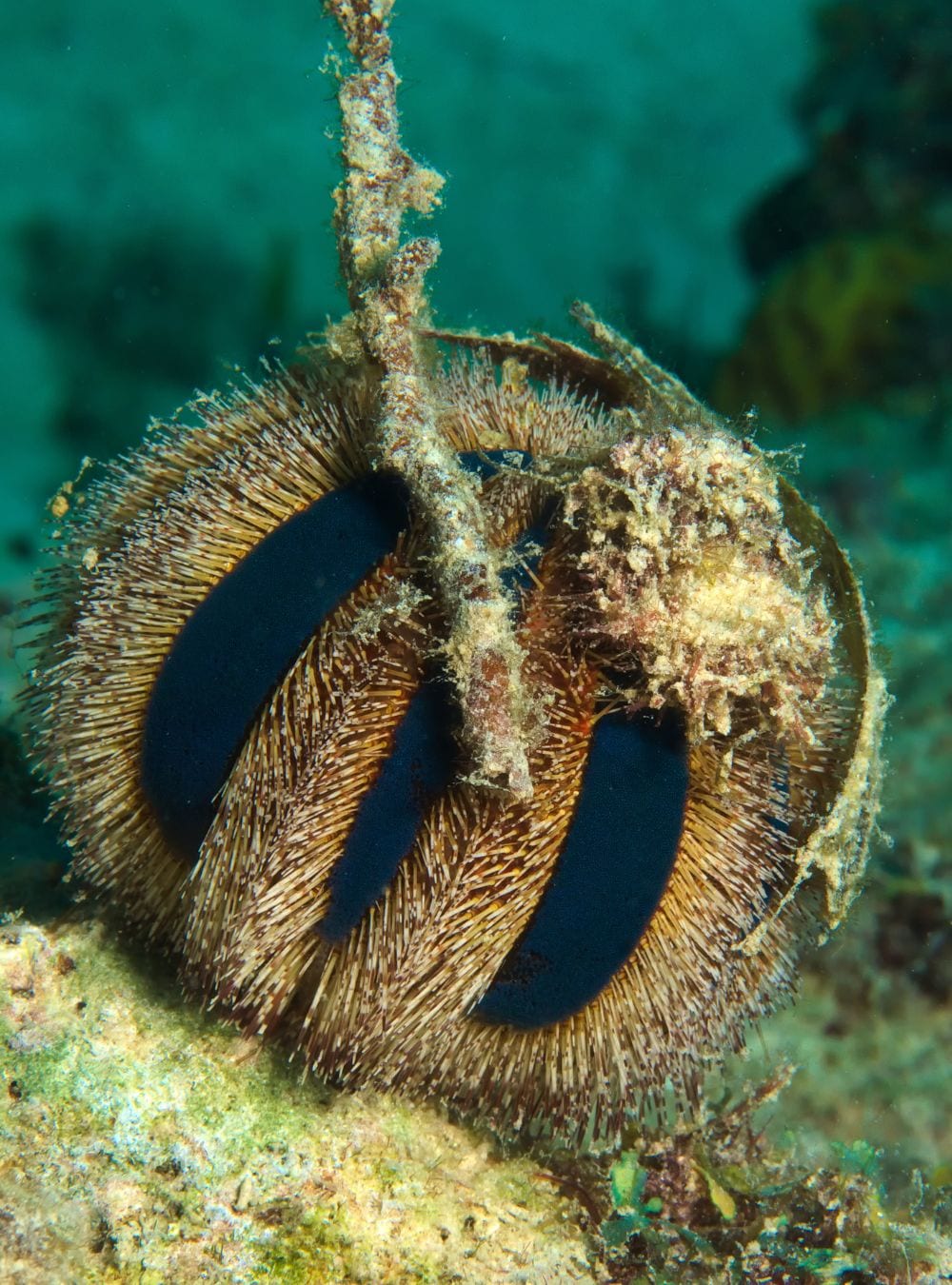
A short-spined salawaki
Klaus Stiefel
ADVERTISEMENT - CONTINUE READING BELOW
Urchin which became victim of a Cassis
Klaus Stiefel
Helmet snails are at times real moving “mini reefs” in the otherwise featureless sandy planes which they inhabit: hydroids and algae grow on the back of the Cassis, and small wrasses, gobies or lionfish hide under that growth. The fairly large shell turns into a protective home for much smaller animals, which would otherwise be exposed to the eyes and teeth of predatory fishes.
Sadly, no essay about a marine creature is complete these days without a description of the environmental problems the species is facing. The misfortune of this impressive snail is twofold: it’s edible and its shell is pretty. While helmet snails are protected under Philippine law (trade is prohibited; BFAR put together a nice infographic about protected marine snails), it’s still occasionally seen on wet markets awaiting its fate in a kitchen, and more often as decoration in restaurants and resorts.
Cassis in the sand
PHOTO: Klaus Stiefel
It’s possible to run into shells of dead Cassis on beaches, though they are often broken up or at least somewhat damaged. Intact helmet snail shells are probably from animals taken alive. It’s noticeable that in some museums old helmet snail shells, collected decades ago, are massive, much bigger that the ones found these days. The fishing pressure has rendered older, larger Cassis rare.
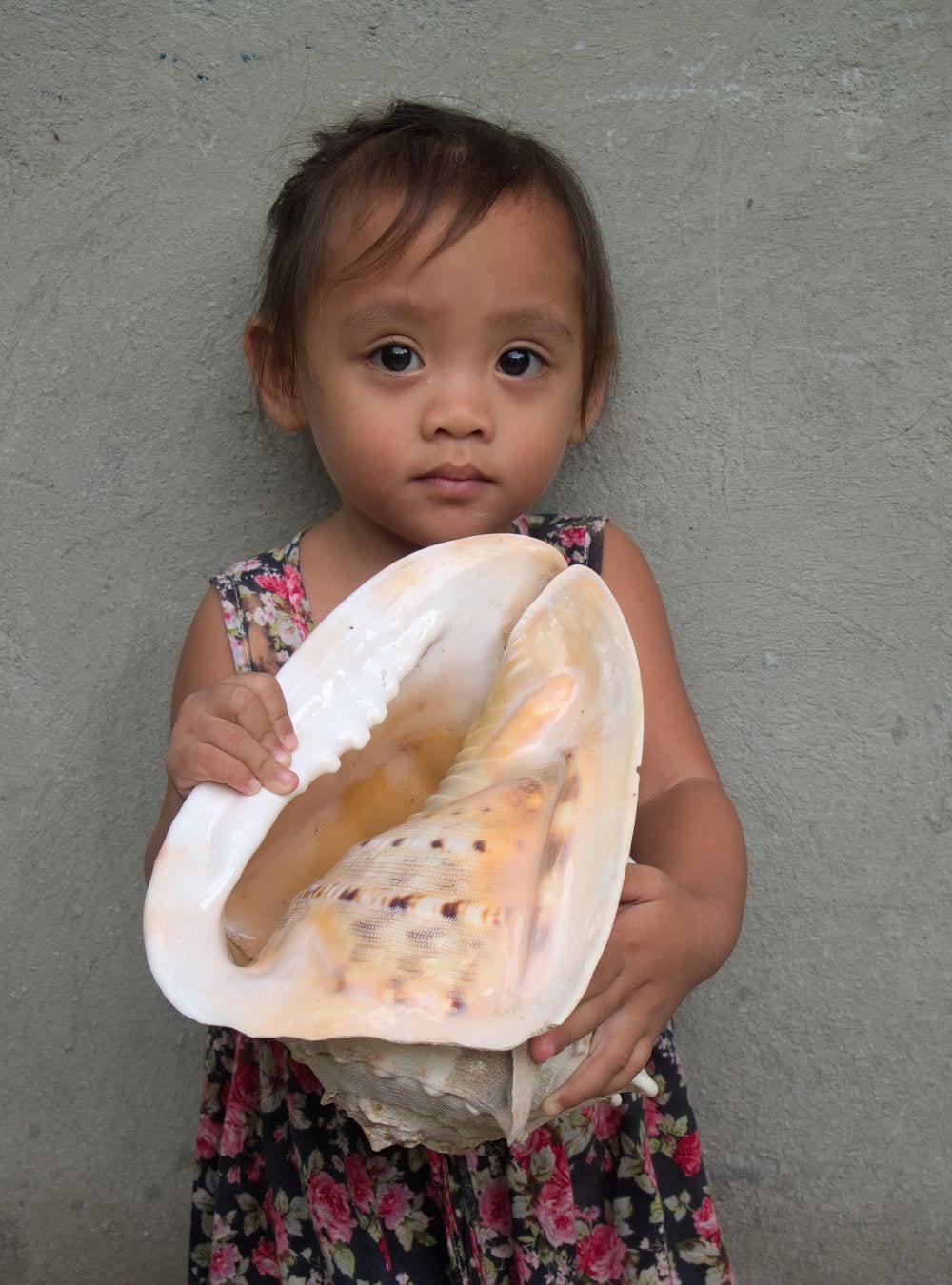
Young girl proudly holding a Cassis
Klaus Stiefel
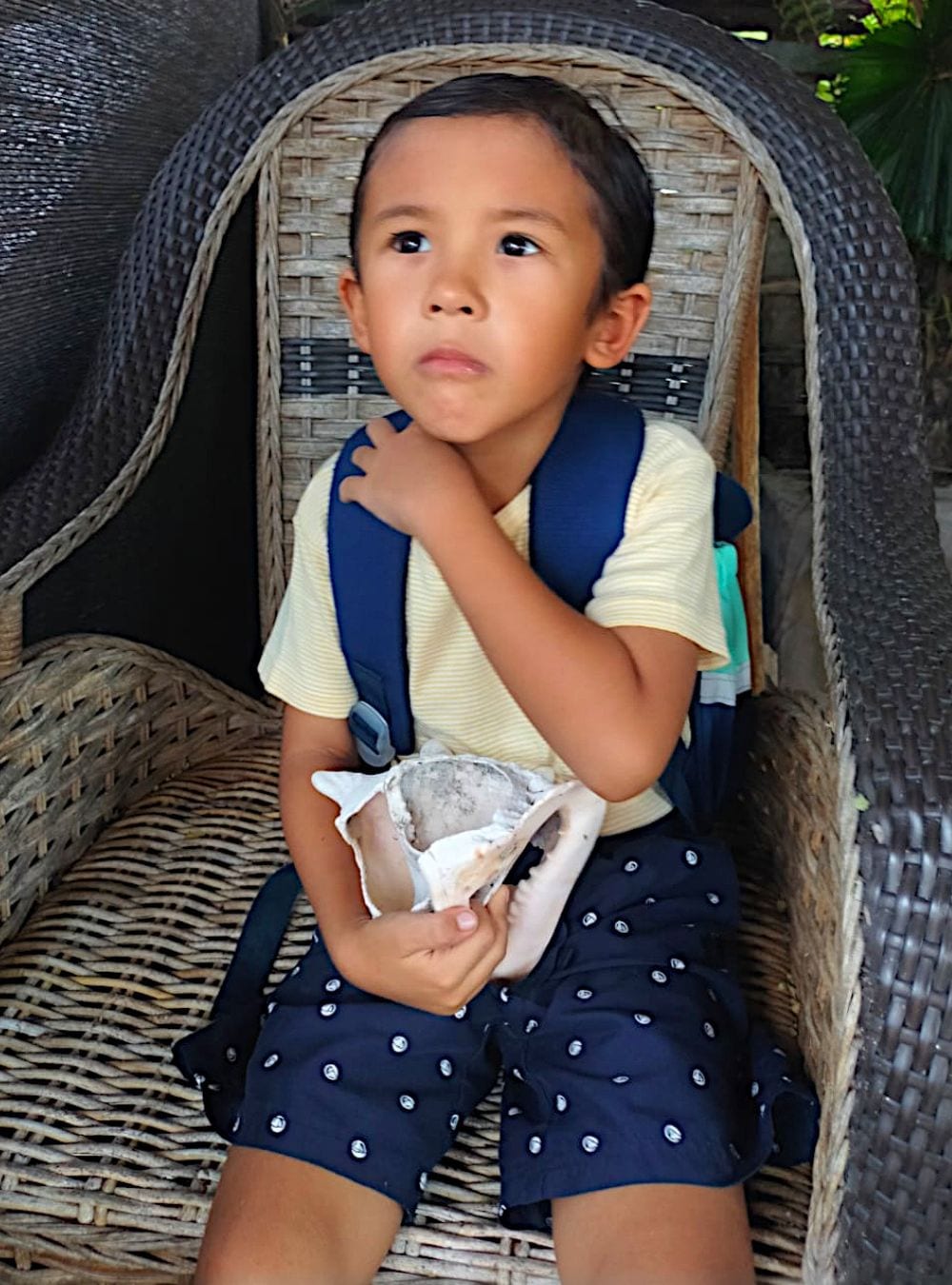
Clearly, “educate, not hate” must be the motto here, and spreading the word about the protected status of this mollusk in a tactful manner is the thing to do. A restaurant decorating its entrance area with Helmet Snail shells might just need a tip which local artist to commission, who can create appealing decorations without killing marine fauna. As usual, educating the next generation is the most productive way in environmental education, so let’s hope that the two kids presenting Cassis shells in the photos in this essay will inherit Philippine seas where these massive mollusks still roam the nights, underwater.
We use cookies to ensure you get the best experience on Esquiremag.ph. By continued use, you agree to our privacy policy and accept our use of such cookies. Find out more here.