

How Filipinos Helped Mexicans Invent Tequila


The Philippines is known to be a melting pot of cultures, largely attributed to our centuries-long history of colonization. We have a national language that can be traced to Spanish roots, an education system imparted by Americans, dishes that are of Chinese origin, and many other practices that we adapted from neighboring countries. As far as diversity goes, we have it covered.
Not much can be said for the opposite. Most of the time, we’re the ones immigrating to other nations and inheriting their way of life. But there’s a small corner of the Philippine past that proves a rather intoxicating fact—Filipinos helped Mexicans discover how to make Tequila, their national drink.
Also read:
A Crash Course on Good Tequila From a Tequila Expert
Cheers to That: Our Very Own Lambanog Is Apparently the 10th Best Spirit in the World
It all traces back to the history of trade between Manila and Acapulco (in present, Mexico). The Manila-Acapulco trade, better known as Galleon Trade, saw the Manila Galleon sailing vessel make an annual round trip across the Pacific during the period 1565–1815. The galleons carried precious treasures like rolls of silk, Chinese porcelain, Persian carpets, Indian cotton, spices, ivory, spices, and many other exotic goods in exchange for large quantities of Mexican silver. Twa’s a pirate’s wildest dream.
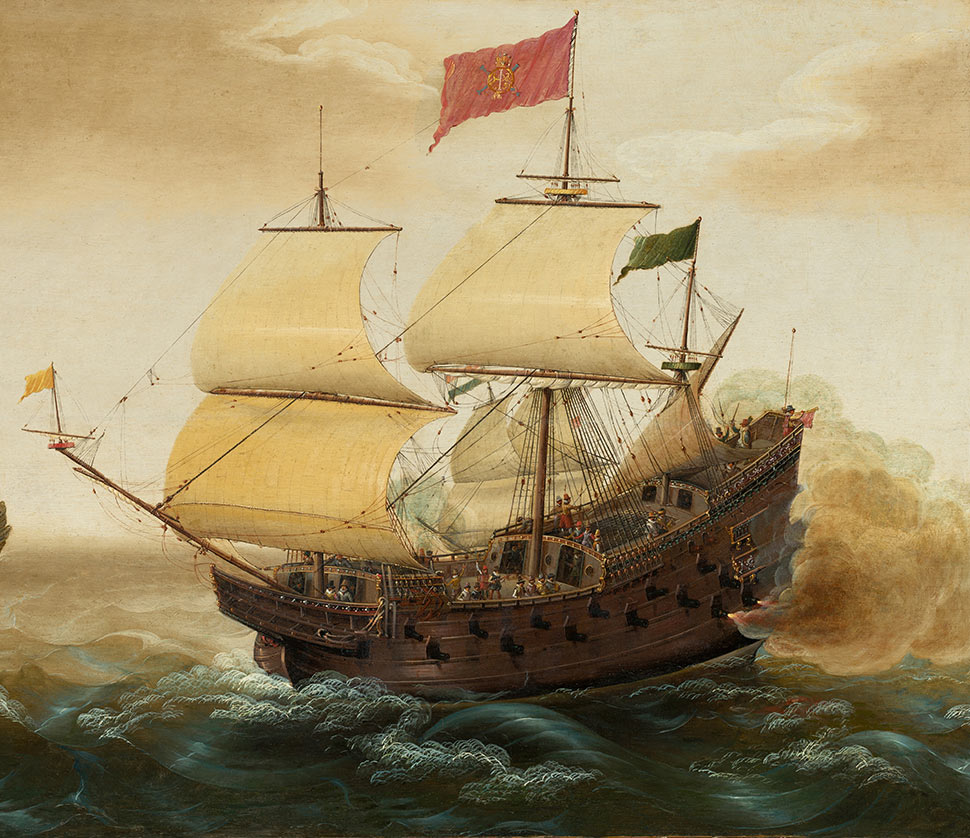
During the heyday of the galleon trade, Manila became one of the world’s greatest ports, focusing primarily on the trade between China and Europe. The Spaniards, who were then still ruling the Philippines, even came to depend on it so much that one ship wreckage would lead the colony to economic collapse.
The trade’s success yielded no positive outcome for native Filipinos, however, because most of the Spanish capital was either devoted to the ruling power or the speculation of more Chinese goods. Those skilled Filipinos who made up the galleon crew were mostly slaves or unpaid navigators, all of whom had to battle scurvy, starvation, and dehydration onboard. Back then, the chances of making it to Mexico alive were indefinite.
.jpg)
According to Rudy Guevarra Jr., an associate professor of Asian Pacific American Studies at Arizona State University, “[Upon arrival,] sometimes whole crews would abandon ship and desert and then mix into the local population. It’s a testament to the cruelty of Spanish colonialism.” Scholars estimate around 75,000 Filipinos to have settled in western Mexico, particularly the hills of Colima, during the Galleon era.
The settlers brought with them tamarind, rice, mango de Manila, and most consequential of all, coconuts. Coconuts have an unlauded value to the Philippines, both then and now. Its fronds are used for clothing, shelter, and tools; its meat and water serve as food; and various parts of the tree are made into medicinal supplies. True to its moniker, the Tree of Life.
A landmark study by researchers Daniel Zizumbo-Villarreal and Patricia Colunga-GarcíaMarín for the Yucatan Scientific Research Center found that these weren’t the only things brought by Filipinos to the foreign land. The sailors had also invented the technology to ferment coconut sap into tuba—an alcoholic beverage sometimes distilled into an even stronger liquor known as lambanog.

The scholars also documented that the ancient distillery mechanism is made of hollow tree trunks the size of a man. Inside, at the bottom, is a bowl where tuba is heated over a fire. The liquid turns into vapor, rises, and settles into another bowl at the top. This process is repeated several times to achieve the ideal composition, and lo and behold, the modern mezcal. It’s this very technique of fermentation and distillation that Mexicans applied to their native agave plant, eventually becoming what we now know and (mostly) love as tequila.
For some, the mere mention of tequila is enough to conjure fleeting memories of nights barely remembered and days spent nursing a colossal headache. This is ceremoniously followed by vows to never drink again, soon to be broken. At least, the next time you have one too many margaritas, you have a new excuse to give: It’s a tribute to the genius of our ancestors. Still, make sure to ‘lick, sip, and suck’ responsively.
