3 Ways Pope Francis Set Himself Apart From Previous Popes

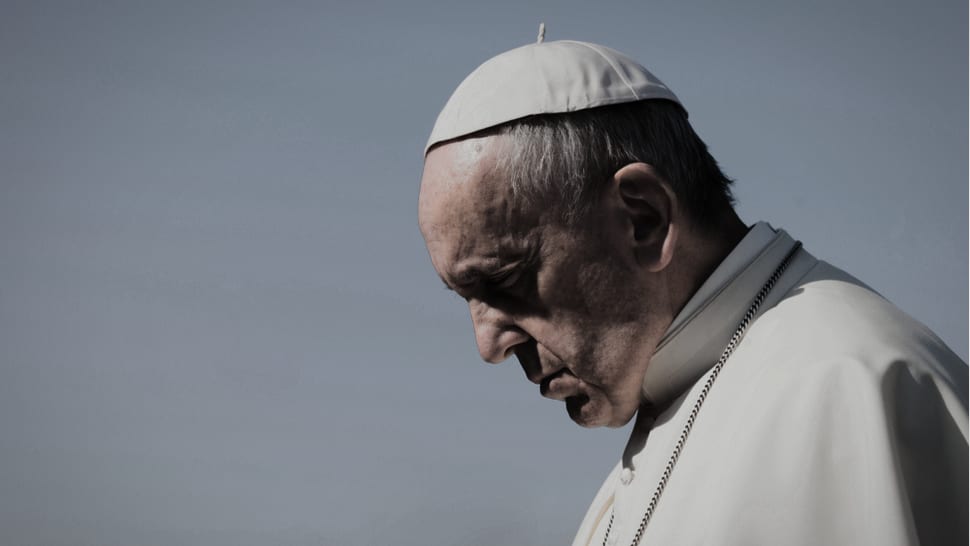
Pope Francis will go down in history as the leader of the Catholic Church who was quite a bit different than many of his predecessors. His time as pope had been unique from the beginning—he rose to the papacy in 2013 after the surprising resignation of his predecessor Pope Benedict XVI (the first papal resignation in nearly 600 years).
Besides being the first pope from the Jesuit order, the first Argentinian, and the first from the Southern Hemisphere to rise to the papacy, Pope Francis’ policies, outspokenness on many different socio-political issues, and general demeanor and personality outside of his official functions have distinguished him from popes of the recent past.
Having been pope since 2013, the former Jorge Mario Bergoglio led the world’s approximately 1.4 billion Catholics for 12 years. Throughout that time, he has displayed many qualities that have both endeared him to many of the world’s faithful, and enraged those who do not quite agree with his pronouncements.
ALSO READ:
Just How Close Is Cardinal Tagle to Becoming the Next Pope?
Being Homosexual Isn't a Crime, But It's Still a Sin, Says Pope Francis
Here are three ways that Pope Francis set himself apart from past popes:
1| He chose to live a simple and humble lifestyle
While many previous popes moved into the grand Apostolic Palace (or the Vatican Palace) within Vatican City as soon as they were elected, Pope Francis eschewed the traditional luxuries granted the papacy in order to live a simpler lifestyle. He chose to live in the Domus Sanctae Marthae, also known as the Casa Santa Marta, which is a guesthouse within Vatican City. In addition, there have been multiple reports that he enjoyed eating his meals with staff and other clergy, and often queued in the communal canteen himself, declining offers to jump the line.
According to Vatican insiders, Pope Francis liked to sit with other diners in the canteen and often joined conversations and joked around with staff. He was also an ardent supporter of the Vatican City United football team, and liked to attend home matches when he had time. He also chose to get around using a small Fiat car, instead of luxury brands like Mercedes-Benz and even the so-called “popemobile.”
And, according to reports, while some of his predecessors spent the summer at Castel Gandolfo, a retreat house in the Italian region of Lazio, Pope Francis himself never used it.
ALSO READ:
A Brush with the Divine: Remembering Pope Francis’ Visit to Manila
From Buenos Aires to the Vatican: The Unexpected Papacy of Pope Francis
2| He was not afraid to speak up about many different issues, even if they attracted controversy
While many other popes in the past chose to “stay in their lane,” or limit their words and actions to the religious or spiritual, Pope Francis proved many times that he was willing to speak up about many other issues. In 2015, for example, he published his first encyclical that was devoted entirely to caring for the environment, and framed ecological destruction as a moral and spiritual crisis. While this was met with support and encouragement from many different factions across the world, critics said he was overstepping his bounds as a spiritual leader and venturing into political territory.
Before this, in 2013, Pope Francis famously asked, “If someone is gay and is searching for the Lord and has a good will, then who am I to judge him?” A year later, in 2014, a Vatican document had some surprisingly compassionate things to say about gay people: “Homosexuals have gifts and qualities to offer the Christian community: are we capable of welcoming these people, guaranteeing to them a further space in our communities?” it said. “Often they wish to encounter a Church that offers them a welcoming home. Are our communities capable of proving that, accepting and valuing their sexual orientation, without compromising Catholic doctrine on the family and matrimony?”
In 2020, he sent shockwaves around the world when he said in a documentary that he supported civil unions for same-sex couples, saying they “have the right to be in a family.” And, as recently as 2022, Pope Francis voiced his support for LGBTQ kids, urging their parents to offer them support instead of condemnation. “Parents who see that their children have different sexual orientations should not hide behind a condemning attitude," the Pope said. News reports said the comments were unscripted and were spoken in reference to difficulties that parents can face in raising their children.
In addition, Pope Francis has also spoken out about capitalism and economic inequality (he called capitalism “an economy of exclusion” and criticized “the idolatry of money);” immigration and refugee rights (he has consistently urged nations to welcome migrants and refugees, saying their dignity must be upheld); war and global conflict (he has condemned the global arms trade as “a business of death” and spoken out against wars in Syria, Ukraine, and Gaza); and sex abuse within the Church (he has spoken with remorse about the Church’s failures and has pushed for more accountability).
3| Many of his policies challenged convention and centuries of tradition
As leader of the Catholic Church, Pope Francis was in a position to steer his flock toward many different directions through his doctrines and policies. His words and actions often veered toward the progressive. In a piece for the New Yorker to mark 10 years since he assumed the papacy, writer Poul Elie enumerated some of the ways Pope Francis changed the way the Vatican operated, including assembling a council of advisory cardinals, making it clear that he would consult with others; launching an investigation of the Vatican Bank, which was long suspected of corruption and money laundering; making efforts to streamline the Vatican administration, called the Roman Curia; and appointing a woman, Sister Nathalie Becquart, of France, to a key role in the Dicastery for Bishops, one of the most influential Curial offices.
“These were not giant steps, but they were steps beyond those that his two predecessors had taken during their combined thirty-four years in office,” Elie wrote.
In the end, Pope Francis’ willingness to be more open, to listen to a wide variety of people, and see the world as it is rather than how the Church would like it to be, set him apart from popes from years past. No, it’s not easy to even attempt to alter or question centuries of Catholic doctrine, but Pope Francis did what he could despite the incredible and often insurmountable odds. For his legion of followers—believers and non-believers alike—that was more than enough.