
The Unreported Ineptitudes of General Douglas MacArthur

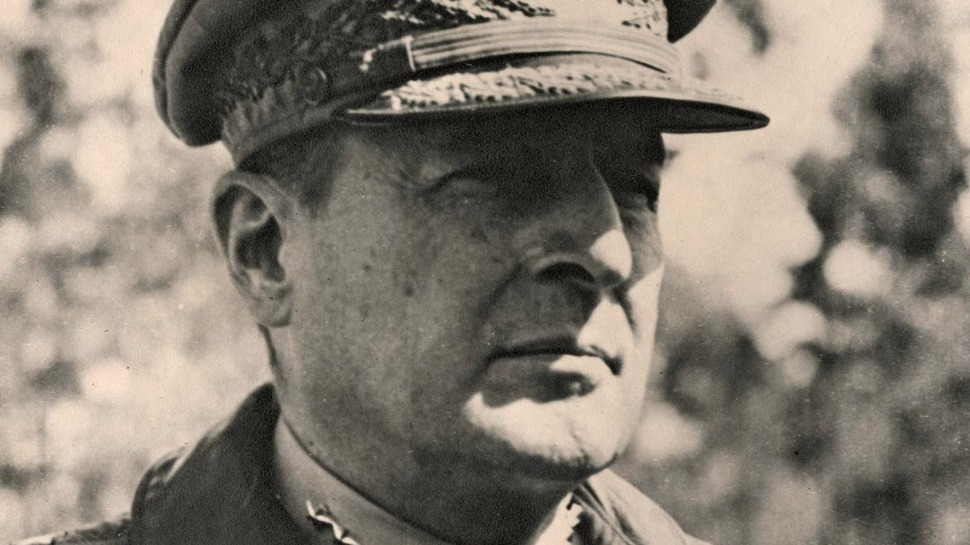
“I came through and I shall return.”
Exactly 77 years ago today, General Douglas MacArthur fulfilled that promise to Filipinos. He returned to liberate the islands from its Japanese occupiers.
General Douglas MacArthur

General Douglas MacArthur is arguably the most celebrated war hero of World War II. He is largely credited for the Allies’ victory in the Pacific Theater, which started with the Battle of Leyte Gulf on October 20, 1944.
But many history books fail to mention the miscalculations and bad decisions MacArthur had before finally liberating Manila, and it was costly.
In a 2019 interview with James M. Scott, author of Rampage: MacArthur, Yamashita, and the Battle of Manila, it was revealed that MacArthur allowed his personal biases to affect his decisions as the most important general in the Pacific.
MacArthur’s Obsession With Manila Clouded His Judgement
“His father helped to capture Manila in the Spanish-American War,” says Scott.
“He met his wife in Manila, their child was born in Manila, his mother had died here. Manila was the one place in his life where he found happiness, and the war took that all away from him, and he had to evacuate to Australia and leave his house hoping to return. He literally fights the rest of the war just to get back to Manila.”
“As a result of that obsession of coming back, he misreads some of the intelligence,” says Scott.
And that misreading proved deadly.
General Douglas MacArthur Ignored Filipino Guerillas’ Reports
While Macarthur was liberating Leyte, reports were coming in from the Filipino guerilla forces around Manila. The reports contained crucial intelligence on the strength of the Japanese forces in Manila, as well as how they riddled the city with numerous booby traps.
On top of that, the guerillas also reported how Manila’s buildings were heavily fortified with mud walls and more traps.

In short, the Japanese were prepared to dig in and die in Manila—the opposite of what MacArthur was convinced would happen.
Rather than relying on accurate reports on the ground, MacArthur allowed his personal bias to dictate his actions. He ignored the guerillas’ reports.
“Filipino guerillas were reporting that the Japanese fortified the city. MacArthur disregarded that intelligence and trusted his own instincts. He’s convinced that the Japanese are going to do what he did with the city—evacuate Manila,” said Scott.
In fact, he was so convinced the Japanese would hand Manila on a silver platter, he decided to plan for a parade upon entering it.
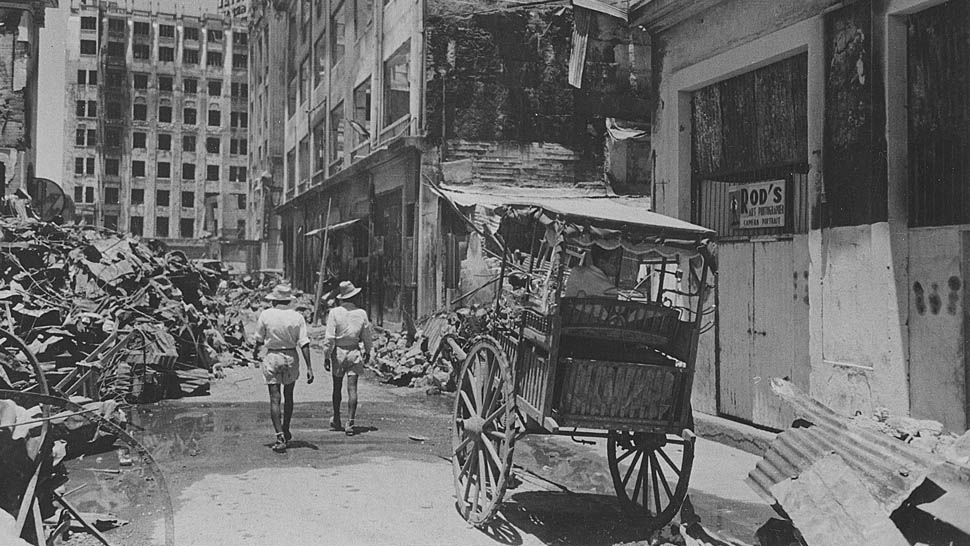
Destruction of Manila, 1944
“You can’t have a parade—the city is on fire!”
In a painfully ironic turn of events, MacArthur learned of Manila’s true state from a radio reporter, not from his generals.
“No, you can’t have a parade—the city is on fire!” said a CBS Radio reporter to MacArthur.
According to Scott, that conversation reveals just how disorganized MacArthur’s operation was in terms of maintaining open lines of communication between him and his generals.
“It was a journalist who was telling him what’s going on in the city—not his own generals. That comes down to the way he ran his operation,” says Scott.
American Soldiers with the Pasig River in the Background, Circa 1944

According to Scott, MacArthur’s senior generals were not transparent in relaying information to MacArthur and were more of “Yes Men”—more concerned with pleasing him than telling him the truth.
They did not tell him how bad things were in Manila and kept him in the dark the day of his arrival in the city.
Part of what led to that blind audacity of having a parade was MacArthur’s confidence in American firepower—which was much, much more than what the Japanese had brought when they invaded the Philippines years earlier.
When they eventually discovered just how every inch of Manila was fortified and booby-trapped, MacArthur just decided, against his heart, to just bomb the hell out of Manila and flush the Japanese out.
Aftermath: Manila After the War

The Americans fired 43,000 rounds of artillery on every inch of the city. When the dust settled and Manila was officially retaken, it was not much of a victory for either side.
At least 100,000 civilians were killed, 11,000 historic buildings pulverized, and an area spanning over 600 blocks completely destroyed.
It would take decades for the country to recover. The Battle of Manila left the city as the second most devastated Allied city in World War II after Stalingrad.
General Douglas MacArthur did return to the Philippines, but the cost of his ineptitude as well as the height of his ego seems impossible to measure.
Source:
How Manila Was Destroyed in a Bloody, Brutal Battle That Killed 100,000 Civilians
