

Today I Learned: A Kalinga Town Served as the PH Capital for 73 Days


Lubuagan, Kalinga, may be the furthest from people's minds when it comes to thinking about the Cordilleras. The popular ones, after all, are the Banaue Rice Terraces in Ifugao, the Hanging Coffins of Sagada in the Mountain Province, and the City of Baguio in Benguet. But the municipality actually holds a unique place in both our national history and local cultures. It’s a town where the echoes of the Philippine-American War still resonate, and where the rich traditions of the Kalinga people are kept alive.
ALSO READ:
From Kalinga's Fields to Your Plate: Discovering the Slow Food Community in Pasil
Beyond the Plate: Mangan Taku Reintroduces Cordillera's Culinary Roots
The municipality of Lubuagan is located in the southern part of Kalinga.
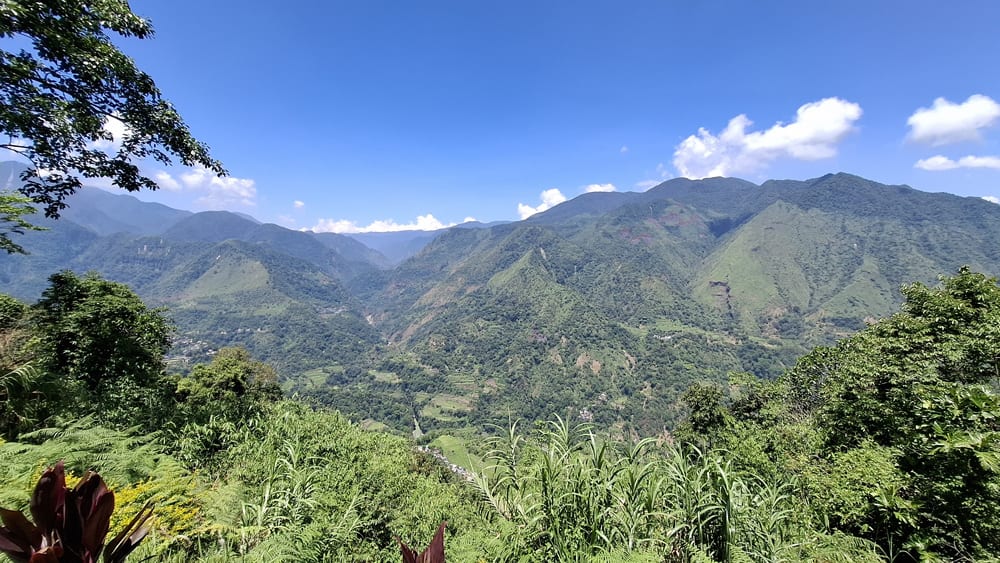
Lubuagan, Kalinga, in History
During the Philippine–American War (1899-1902), which followed the Spanish-American War (1898) when the U.S. annexed the Philippine Islands under the Treaty of Paris, American forces relentless pursued Emilio Aguinaldo, who was president of the Revolutionary Government of the Philippines (1898-1899) and first president of the First Philippine Republic (1899-1901). He and his government sought refuge in the rugged terrain of the Cordillera mountains. For 73 days, from March 6 to May 17, 1900, Lubuagan became the headquarters and seat of government of the First Philippine Republic.
As Rebecca Saclag, co-owner of Awichon Cultural Village with National Living Treasure Alonzo Saclag Sr., recounts from her community’s oral history, the sequence of the republic's capitals. "First, Cavite. Second, Malolos, Bulacan. Third, Lubuagan, Kalinga," she tells Esquire Philippines. This is a rough sequence, of course, as we know from history that the revolutionary period had San Francisco de Malabon, Cavite, as the seat of the Tejeros Revolutionary Republic (March to November 1897); San Miguel, Bulacan, as the capital of the short lived Republic of Biak-na-Bato (November 1897 to April 1898); Cavite El Viejo for 30 days after Aguinaldo's declaration of the independence on June 12, 1898; Bacoor, Cavite as the seat of the Revolutionary Government (July to September 1898); and Malolos, Bulacan, as the official capital of the First Philippine Republic or the Malolos Republic (six months from 1898 to 1899). For a period of nine months following the Americans' occupation of Malolos on March 31, 1899, Aguinaldo transferred his headquarters to several towns in Nueva Ecija, Pampanga, Tarlac, Nueva Vizcaya, and Pangasinan.
Finally, on March 6, 1900, he established his headquarters in Lubuagan, Kalinga, for 73 days before heading to Palanan, Isabela, on May 18, 1900.
Rice terraces cut into the mountains, with the Chico River passing through most of the Cordilleras and Cagayan Valley.
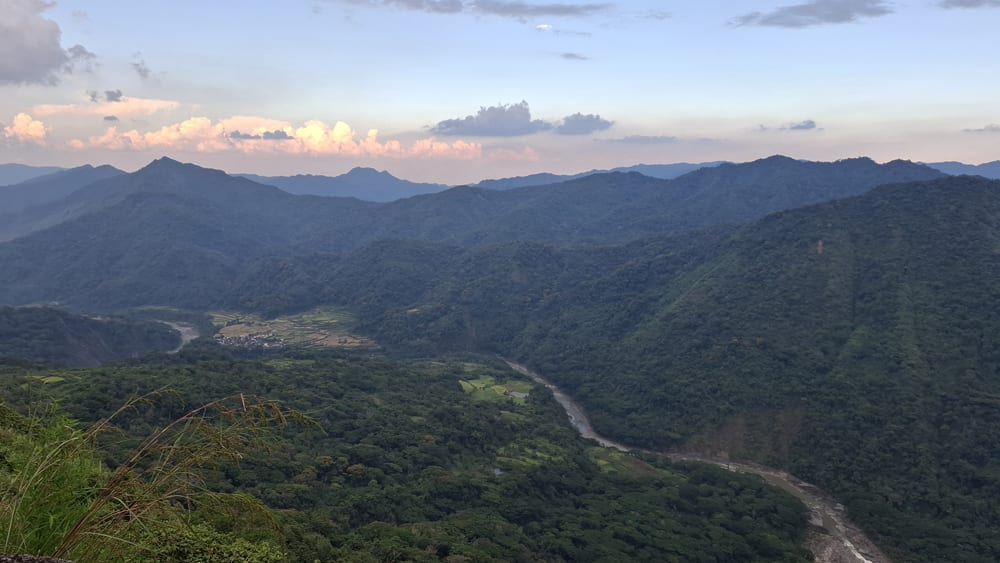
Saclag explained how Aguinaldo's strategic retreat was supported by the locals. "Pag may kalaban, aakyat siya doon sa taas," pointing to the mountain range. "Pag wala na, bababa sila kasi pinapakain ng mga taga-Lubuagan sila at saka 'yung mga sundalo." This historical footnote, which she said isn't often mentioned in history books, highlights the symbiotic relationship between the national resistance and the indigenous community that offered them shelter and sustenance. The story culminates with Aguinaldo's eventual capture: "Nung nandun na yung kalaban nila na Americans, umakyat sila, dumaan sila, lakad hanggang nahuli sa Palanan, Isabela."
Palanan, Isabela, was Aguinaldo's last hideout until he was captured nine months later.
Preserving a Culture for Generations
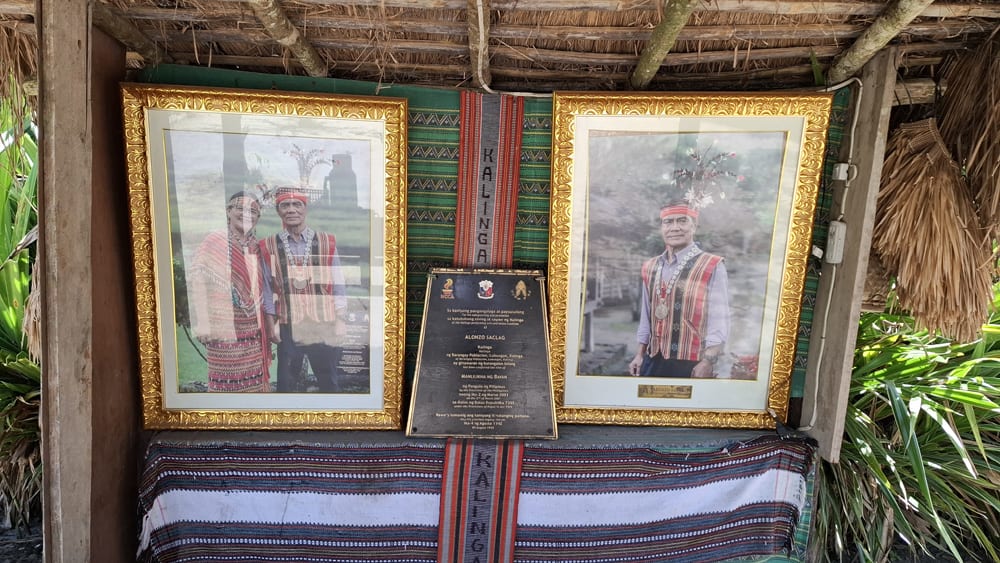
Today, this reverence for national history as well as Lubuagan's culture is preserved in Awichon Cultural Village. The cultural and arts center was founded by Rebecca's husband and Lubuagan local, Alonzo Saclag, who was awarded the Gawad sa Manlilikha ng Bayan in 2000, for his efforts in preserving the local performing arts through the formation of the Kalinga Budong Dance Troupe. After receiving the award, he continued and expanded his advocacy by establishing the Awichon Cultural Village. More than an accommodation option up in the mountains, it gives guests a glimpse of the Kalinga way of life—from the overflowing Kalinga coffee to the cultural performances.
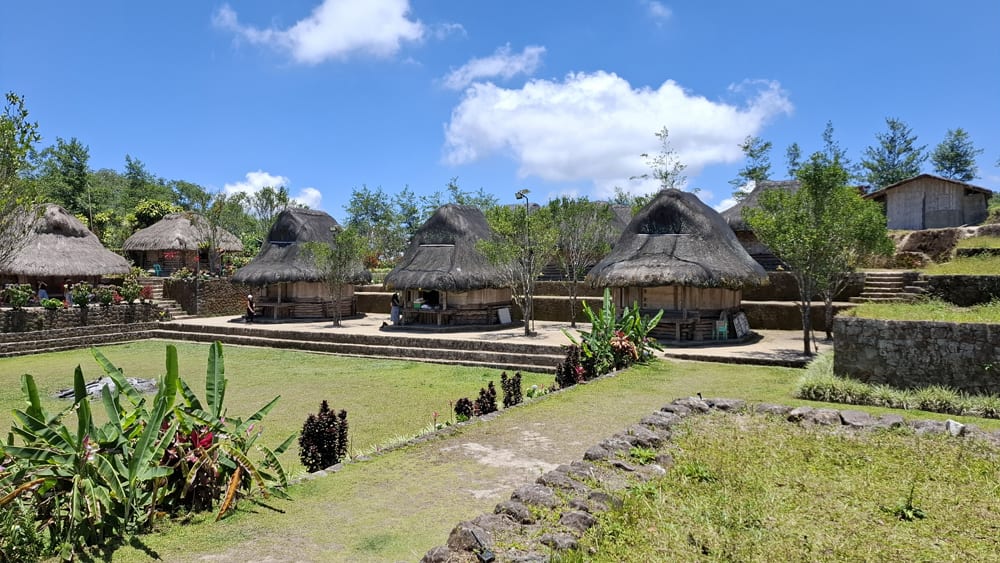
Awichon Cultural Village in Barangay Upper Uma
2000 Gawad Manlilikha sa Bayan: Alonzo Saclag from Kalinga
"'Yung mga bahay doon, 'yan ang mga bahay noong unang panahon sa Lubuagan. Lahat ay Kalinga." She points out a key feature of the architecture: "Pero walang ginamit na pako kasi walang pako noon." The homes, built from interlocking wood, feature a central hearth and a clever storage system. The elevated platform for sleeping was the Kalinga's version of a refrigerator or pantry, where meat and other food items were stored underneath.
Awichon’s mission is to be a living, breathing part of the community, not a static museum. Initially, for over 20 years, the village was free and open to all. "Noon free ang pumasok. Pag gusto nilang matulog, matulog sila. Kain na libre." However, the sheer effort required to maintain it took a toll on Rebecca and her husband. "Sabi ko sa asawa ko, anong ba itong ginagawa natin, napapagod ako."
Early Kalinga houses were perched on stilts, made of wood or flattened woven bamboo, and with cogon grass roofs.
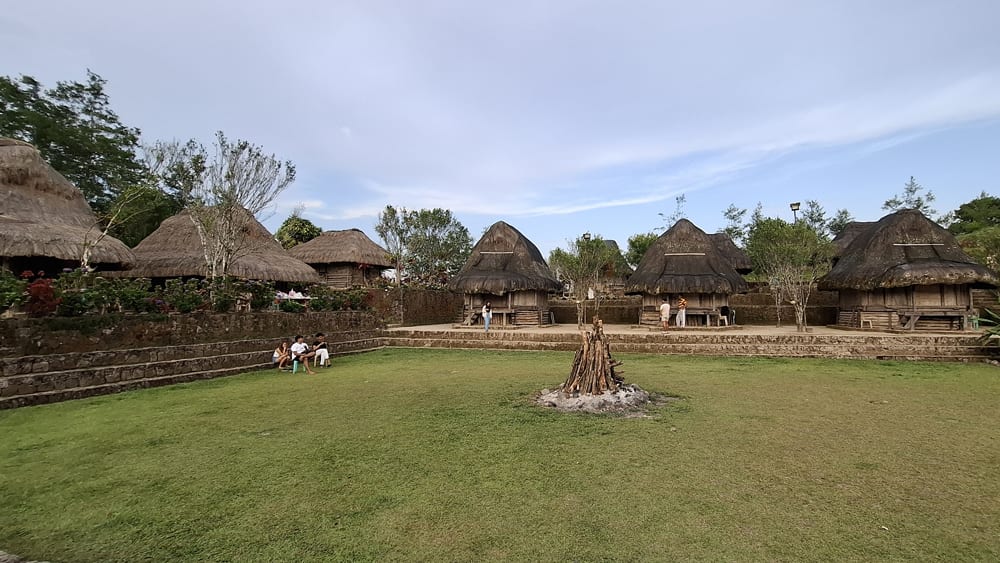
View from the cottage for the day tour
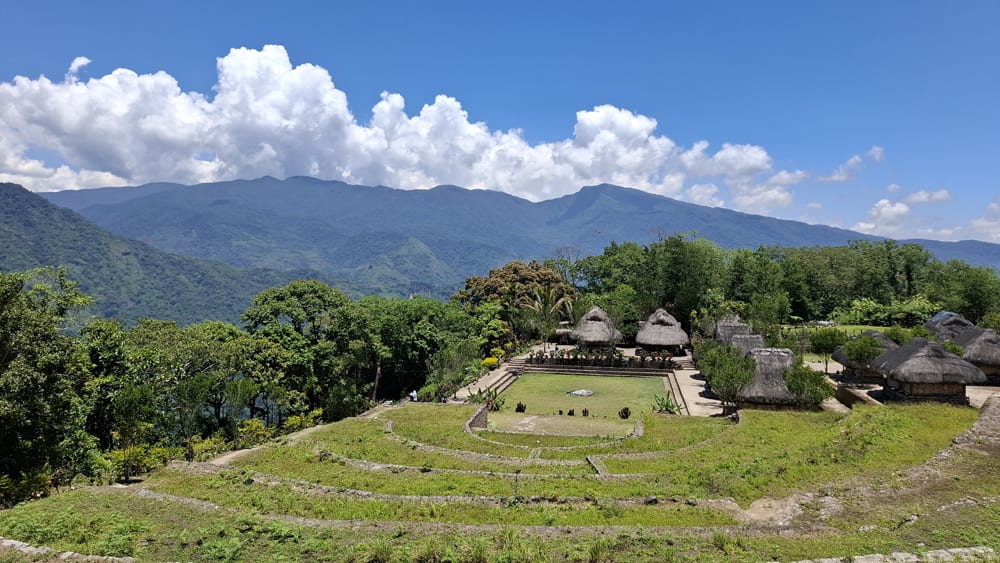
The turning point came when a law student from Manila, who had found a stress-free sanctuary in the village, returned and encouraged them to charge an entrance fee to ensure its survival. "Kayo ang iniisip ko, nanay, sayang lang ito pag naisara," Rebecall recalls the student's suggestion.. He explained the value of the place, saying, "May mga resort, pero walang ganitong nature." The student even provided a tarpaulin, which they eventually hung up despite Rebecca's initial reluctance to charge visitors. The decision not only helped with maintenance but also provided jobs for the community, a win-win situation for all.
Rent for each hut costs P3,000 (for six pax). Note that this is, more or less, a mountain resort. Expect all kinds of animals, from birds to cockroaches, waking you up in the morning or in the dead of the night (read: "flipis").
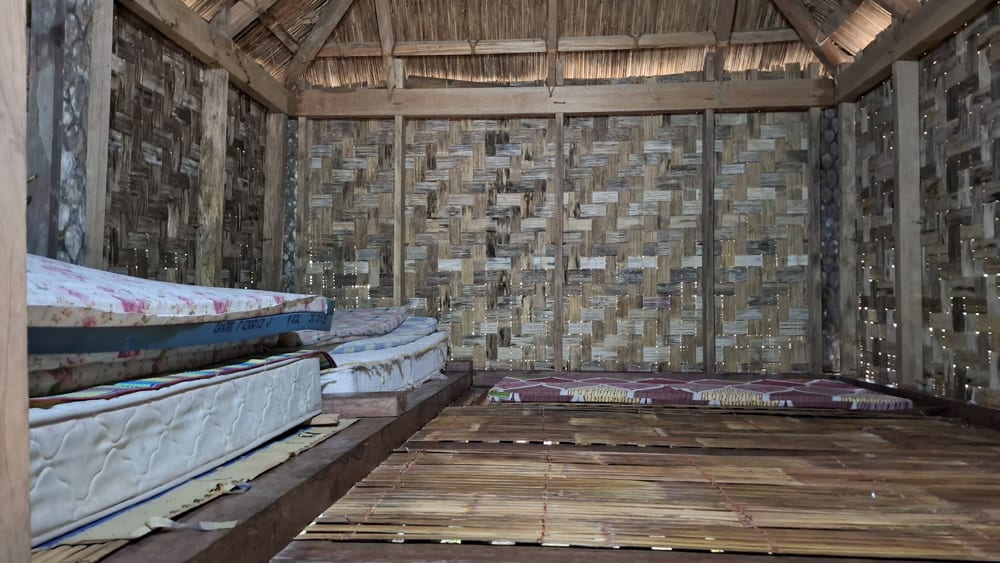
Now, Awichon Cultural Village charges guests with a minimal fee: P100 for the whole day, which can be spent just strolling around patches of green or eating with the whole family at the cottages above ground with a view of the surrounding mountains. Cottage for day tour is P500, while the overnight rate at the Kalinga huts is P3,000, which is good for six people.
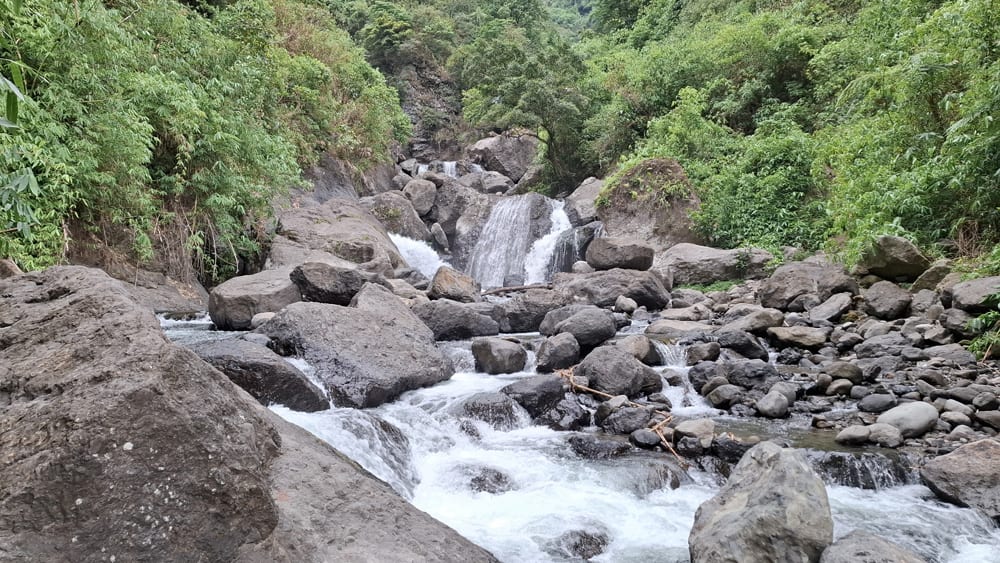
Kadamayan Falls
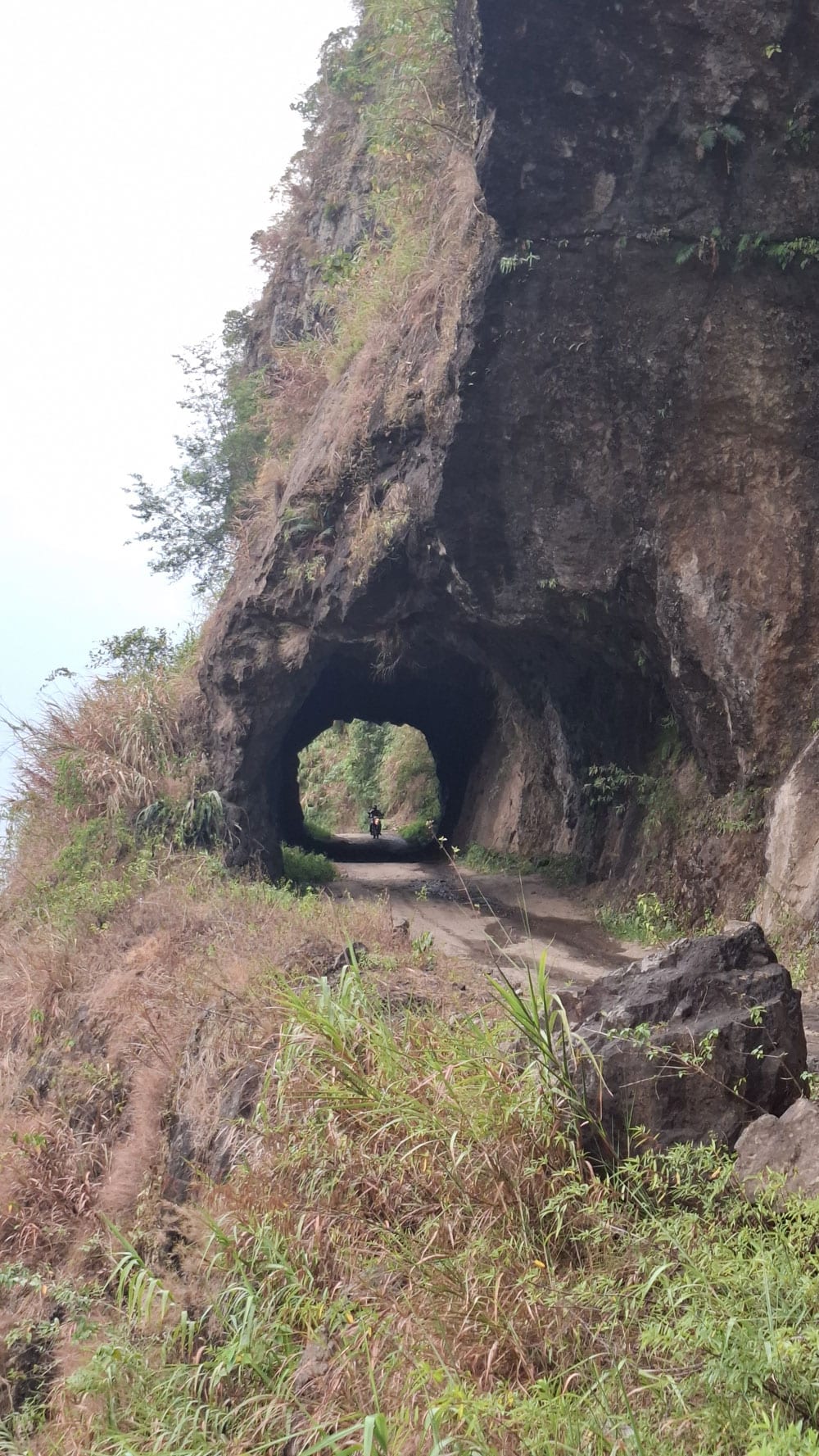
Uma Twin Tunnels
A visit to Lubuagan and its many overlooked sites offers a journey through two narratives. One, it has a brief, 73-day chapter in the revolutionary period. Two, its important role not only in the preservation of Kalinga traditions but also in keeping the Kalinga's way of life alive.
