

Teresita Basa: The Filipino Nurse Who Solved Her Own Murder

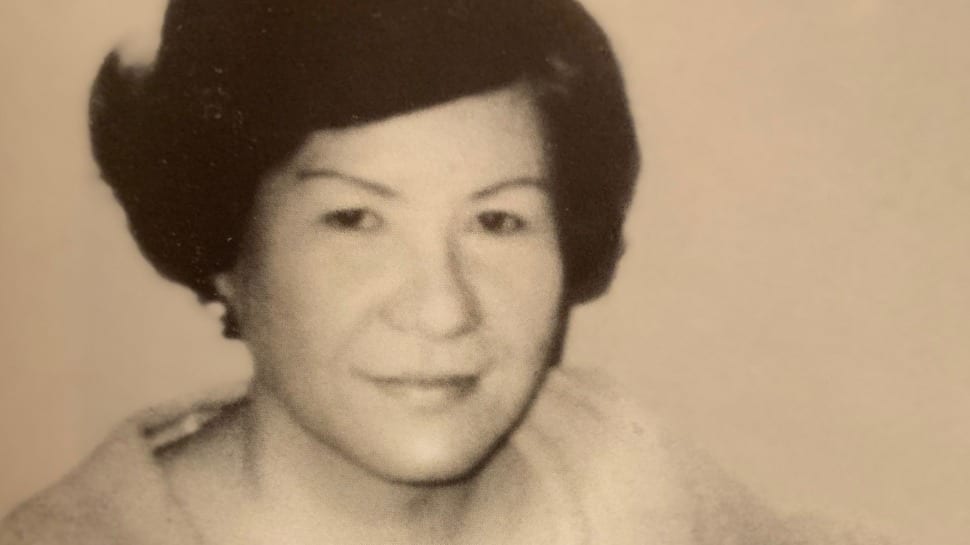
The protocol for solving a murder mystery is pretty straightforward. Police and forensics would arrive at the crime scene, identify the victim, hunt for clues, and chase any leads that may point them toward the assailant. The officers in charge of the case would then interview possible witnesses, family members, and friends of the deceased in hopes of getting more clues about the suspect’s motive. It’s a process we’ve seen over and over again in movies and television.
Sadly, unlike the formulaic justice-is-eventually-served arc in fiction, crimes like these do not always get solved in real life. But in the peculiar case of Teresita Basa, the mystery revolves not in the identity of the murderer or the context of the crime, but in the circumstances that led to its resolution.
Also Read:
Corazon Amurao: The Filipino Nurse Who Survived a Massacre and Put a Mass Murderer Behind Bars
The Most Shocking and High-Profile Unsolved Crimes in the Philippines
The fire department in Chicago, Illinois responded to an early morning call on February 21, 1977 when residents at the Pine Grove Avenue apartments reported smelling smoke in the building. When firemen traced the source of the fire, they found the lifeless body of 48-year-old Teresita Basa. Police were immediately alerted to the scene.
She had been stabbed in the chest, the butcher knife used to take her life still lodged in her flesh. Her naked body was covered with a mattress, which prompted the authorities to assume that sexual assault was the motive, but her autopsy results proved otherwise. There was only one clue: a note that reads “Get theater tickets for A.S.” It was unclear whether the initials stood for a name or a company.
Basa was an immigrant from the Philippines who moved to the United States to pursue music. Born in 1929 to prominent business couple Pedro and Socorro Basa, she left her home country after graduating from the University of Assumption, Manila in 1960. However, this passion for music was soon overshadowed by the desire to help people. She eventually ended up working as a respiratory therapist at Edgewater Hospital in Chicago.
According to her friend Ruth Loeb, Basa went to work as usual before the hours leading to her murder. She reportedly left the hospital at 5:30 PM and spoke to Loeb for about 30 mins before ending the conversation to receive a male guest, whose identity she never mentioned.
During the investigations, it was also concluded that the victim had no known enemies—colleagues described her as intelligent and unassuming—and lived a quiet life. And since most of her belongings were destroyed by the fire, the case quickly reached a dead end. Or so they thought.
Four months later, in August, the lead detective for the case, Joseph Stachula received a phone call that would unravel the mystery altogether. It was from Jose Chua, a doctor who also worked at Edgewater. He told the detective that his wife, Remy, was having visions about Basa’s murder. And if that’s not bone-chilling enough, he added that Remy would go into a trance-like state and Basa’s spirit would speak through her.
"Doctor, I would like to ask for your help. The man who murdered me is still at large. I am Teresita Basa."
The couple, also Filipino natives who migrated to America, claimed that they delayed talking to the police for fear of looking ridiculous. They didn’t think anyone would believe their story. But when Basa’s visits would not stop coming, they decided to tip off the police. Especially after the deceased gave them a name—Allan Showery.
Showery was an orderly who also worked at the same hospital. During one of Basa’s alleged possessions of Remy’s body, she told that Showery came over the night of her murder to fix her broken TV. But what was initially a friendly visit took a turn for the worse when Showery decided to steal an expensive pearl ring from France, passed down from the victim’s mother. The ghost even gave them the phone numbers of those who can help identify the jewelry.
As bizarre and illogical as the situation seems, the investigators thought there would be no harm in following up with the story. Perhaps, they had a gut feeling. At the suspect’s home, they found his girlfriend, Yanka Kamluk. And then, a breakthrough. Not only did they see the stolen jewelry in Yanka’s possession, but they were also able to confirm it with Basa’s cousin—just as the ghost had said.
Backed into a corner with no way to account for the pile of evidence against him, Showery gave in and confessed to the crime. This admission would earn him a 14-year sentence in prison. However, he only ended up serving five years after being granted parole in 1983.
It’s hard to say with absolute certainty that it was really Teresita Basa who brought herself justice. After all, there are other theories that could refute the involvement of the supernatural. Did Teresita really come back from the dead? Or did her friends and family coordinate to solve her murder? And if they did, why would they do so pretending to be Basa's ghost instead of going to the cops directly with their knowledge? Unless it really was Teresita Basa's spirit all along. Only the dead know the real answer. Unfortunately, this case is another mystery that will remain unsolved.
