
Today I Learned: Treadmills Began as a Form of Punishment

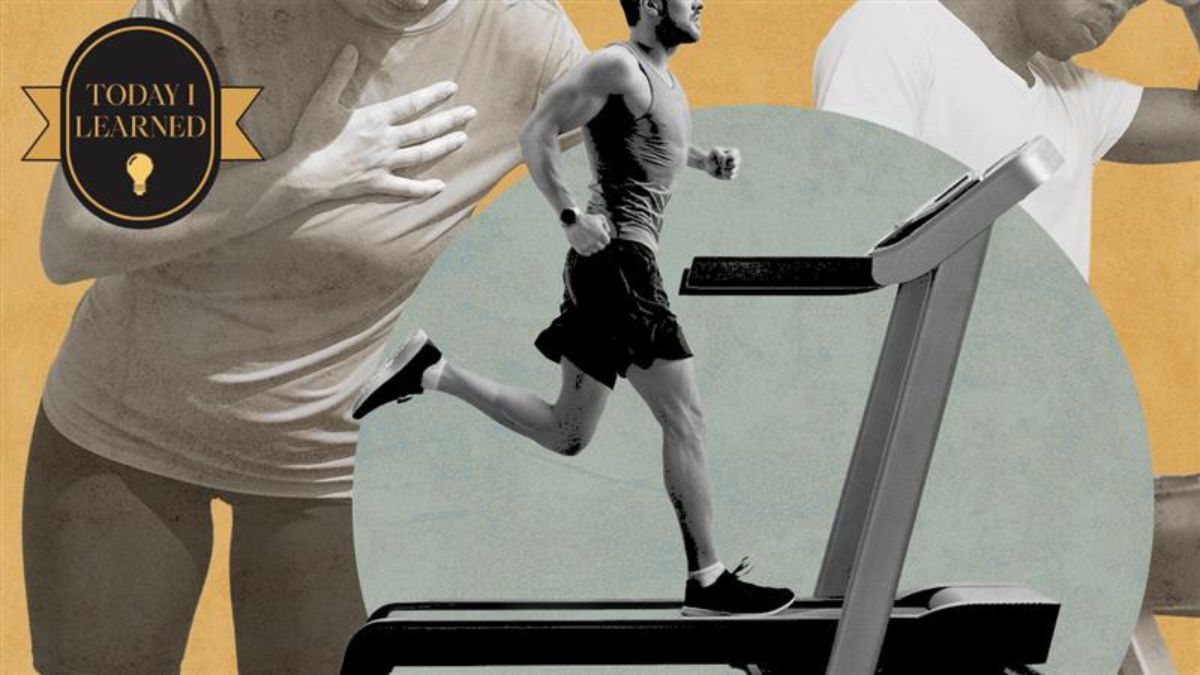
Does anyone truly enjoy the treadmill? It’s perfectly fine if you don’t; most people just tolerate it. We convince ourselves it’s convenient: it’s indoors, so we don’t have to worry about the weather. Rain or shine, we can still hit our steps. Our schedules might only allow exercise late at night or early in the morning, and working out indoors feels safer, especially if we’re alone.
Then there are numerous accoutrements to make it all the more appealing: a cup holder for your drink, a place for your iPad (some treadmills even have their own built-in screens with Wi-Fi connection, entertainment and streaming apps, and fitness programs), and AI-powered technology to create immersive running experiences.
But at the end of the day, it always just feels like you’re punishing yourself. Well, it’s not just you, and it’s not just in your head. Historically speaking, treadmills were invented as a form of punishment.
Long before it became a common fixture in gyms, the treadmill was literally a device designed to break prisoners. Not just physically, but also mentally. Created by 19th-century penal reformers as a tool to instill discipline through exhausting (and often pointless) labor, the treadmill (then called a “tread-wheel”) was a machine meant to inspire nothing but monotony, misery, and mind-numbing repetition.
William Cubitt’s Demented Vision
It all started in 1818 with Sir William Cubitt, a British civil engineer. While Cubitt would later be lauded for building London’s Crystal Palace and even be knighted by Queen Victoria, his earlier claim to fame was inventing the treadmill, a machine meant not to inspire fitness, but to break people’s spirits.
Inspired (in a twisted way) by the sight of idle prisoners at Bury St. Edmunds County Gaol, Cubitt sought a way to instill discipline and reform character through sheer physical exhaustion. His solution, the treadwheel, was a massive rotating cylinder lined with steps that inmates would climb endlessly, not unlike hamsters on a wheel.
As Professor Vybarr Cregan-Reid said, the treadmill was not meant to be efficient, nor even useful in any real sense. “It was a useless but exhausting task that fitted with Victorian ideals about atonement achieved through hard work,” read one BBC article.
The cruel brilliance of Cubitt’s design was that it required no training, no tools, and no social interaction. Just time, sweat, and silence. For them, this simple formula should result in reform somehow, especially since prisoners were made to ride the treadwheel for six to 10 hours a day.
At prisons like Brixton, where Cubitt installed his infamous treadwheel, up to 24 prisoners could be lined up side by side on the same device. To keep them from communicating, dividers were placed between each man, forcing them to stare at the wall or the wheel in front of them. They climbed the equivalent of 10,000 to 14,000 feet per day—roughly the height of Mt. Everest—and were given only 12 minutes of rest per hour.
Early on, treadmills were sometimes connected to machinery to grind corn or pump water, but over time, this functionality was dropped. In many cases, inmates were quite literally producing nothing—just sweat and suffering. As historian U.R.Q. Henriques noted, “It soon became a mere method of punishment, ‘grinding air.’”
But it’s not just the boredom; the physical toll often breaks them. The British Medical Journal recorded deaths from treadmill-induced heart failure, while others developed hernias, rheumatism, and permanent damage to joints, lungs, etc. Even lactating women lost their milk supply after being forced to use the treadwheel. Its death rate was notorious, resulting in one death per week on average.
Perhaps the most famous recounting of the horrors of the treadwheel was made by famous writer Oscar Wilde. Convicted in 1895 for “gross indecency” due to his homosexuality, Wilde was sentenced to two years of hard labor at Pentonville and then Reading Gaol. There, he was assigned to the treadmill for up to six hours a day.
Wilde, unfortunately, never fully recovered. In his haunting poem, The Ballad of Reading Gaol, he wrote:
“We banged the tins, and bawled the hymns,
And sweated on the mill:
But in the heart of every man
Terror was lying still.”
His experience was one of many chilling testimonies to the psychological (and physical) devastation prisoners experienced due to the penal treadmill.
It didn’t take long before people started to question the effectiveness of the treadmill, if not its ethics. Despite initial enthusiasm over the machine, criticism started pouring in when deaths started to happen. In 1885, the British Medical Journal published “Death on the Treadmill,” questioning the practice after a prisoner with heart disease collapsed and died. Even utilitarian reformers began to frown on the device. Some reports called it “unproductive,” and urged prisons to at least use the energy generated to produce electricity.
Still, at some point in the 1820s, the treadmill found its way across the Atlantic and landed in the United States. The first American version was installed in a New York City jail on East 26th Street, grinding about 60 bushels of corn a day. But, like its UK counterpart, this effort lost momentum. Reports from the Prison Discipline Society of Boston noted that “the treadmill…teaches convicts nothing that can be useful to him on his discharge. It is not a profitable employment of human power.”
By the end of the 19th century, opinion on the treadmill for prison punishment has turned on its head. Britain formally abolished penal treadmills in 1902, after a slow decline in usage that reflected changing ideas about rehabilitation, justice, and human dignity. Soon, American prisons opted for other forms of labor: cotton-picking, bricklaying, shoemaking, rock-breaking—jobs that could teach inmates valuable skills.
From Torture Device to Cardio Go-To
Of course, the treadmill as we know it today is vastly different from what they had in prisons back then. But before it became the gym mainstay people love to hog, the treadmill re-emerged in the mid-20th century as a diagnostic medical tool. In the 1940s, cardiologist Dr. Robert Bruce (of the Bruce Protocol fame) began using modified treadmills to test heart health, setting the stage for cardiac stress testing hospitals use today.
By the 1960s, mechanical engineer William Staub developed the first home fitness treadmill, the PaceMaster 600, following advice from Dr. Kenneth Cooper, author of Aerobics. Staub’s invention brought running indoors, marking the beginning of the fitness treadmill as a consumer product. From what was originally a torture device, the treadmill evolved into a tool designed to strengthen cardiac health.
By 2017, treadmill sales in the United States had reached almost US$1 billion, and some 53 million Americans use them annually. Today, they’re a ubiquitous staple in gyms, a centerpiece in hotel gyms, an essential piece in home gyms, and their pared-down cousin—the walking pad—has even found itself in many home and corporate offices.
Still, despite global popularity and massive demand, the treadmill often finds itself in a love/hate relationship with its users. Many find theirs unused, ending up as a clothing rack or simply gathering dust and cobwebs in the hidden recesses of common spaces. Still, there’s hope as many recent treadmills have come up with ways to entertain their users.
Brands like NordicTrack now offer immersive experiences, complete with screens showing nature trails and Google Street View integration. There are also treadmills integrating entertainment and streaming apps like Netflix and Spotify to make your workout just a little more fun. Others have also integrated fitness programs and tools meant to encourage continued exercise as they highlight your triumphs and progress.
ALSO READ
This Is How Much Exercise You Need to Counteract an Entire Day of Sitting
It's Actually Possible to Be Allergic to Exercise
Why Should You Use the Treadmill?
Despite its history as a punishment tool, it has evolved into a fitness machine that could extend lifespans, boost mood, and even sharpen minds. Modern research backs it up: walking, even at a moderate pace, has been shown to improve cardiovascular health, reduce the risk of stroke and Type 2 diabetes, and elevate mood by releasing endorphins.
A study published in The Lancet Public Health even found that walking 8,000 steps a day could significantly reduce mortality risk. Everyone aims for 10,000 steps a day anyway, and a treadmill could help get you there if you’ve got no plans to be outside. Whether it’s the weather, mobility concerns, or urban living, the treadmill offers a safe, controlled environment for you to meet your fitness goals. I mean, compared to Manila streets that can be uneven, full of potholes, unsupervised dogs, and speeding vehicles, the treadmill seems like a safer bet. Plus, with some having incline features and speed control, even a brisk 15-minute walk in the mill can turn into a mini hike.
Fitness doesn’t have to be a punishment in itself. While exercise can certainly feel that way when you’re just starting out, finding ways to make it exciting and interesting can easily turn a boring treadmill routine into an enjoyable activity. And for those days when you just don’t feel like pushing yourself as usual, having an indoor treadmill at home offers an easy solution to remaining consistent without torturing yourself. Like they said, a quick 15-minute workout beats nothing at all.
