

This is How Traditionalist Catholics in Cebu Celebrate Latin Dawn Mass

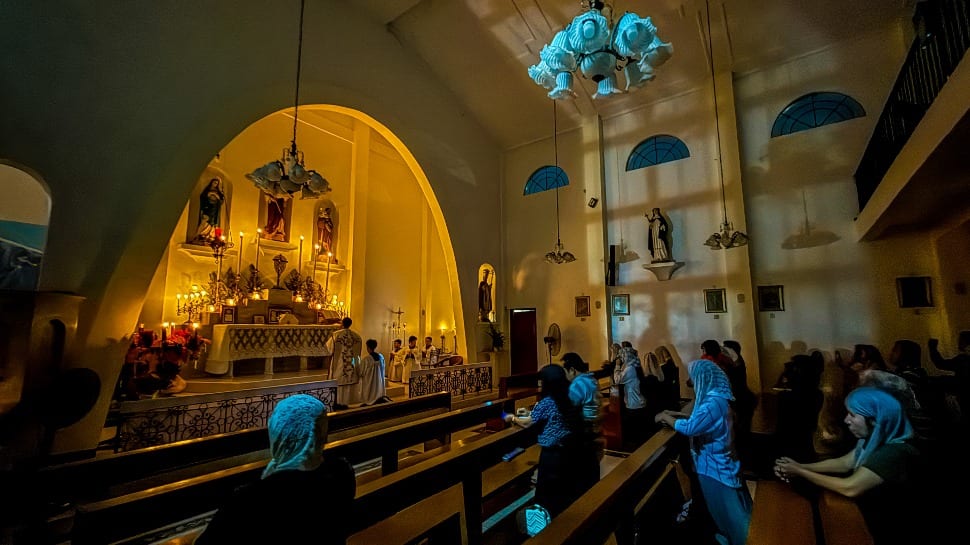
The Pope Pius V Chapel stands on a short alley in a private subdivision in Barangay Umapad, Mandaue City. By its location, the house of worship is inconspicuous and can be easy to miss. Even the minder in a store 300 meters away did not know it existed when I asked for directions after being told by Waze I had arrived at my destination.
It was a good thing I already knew my way there when I attended its Rorate Caeli Mass on Saturday at 4:30 a.m.
A Rorate Caeli Mass in a chapel administered by the traditionalist Society of Saint Pius X
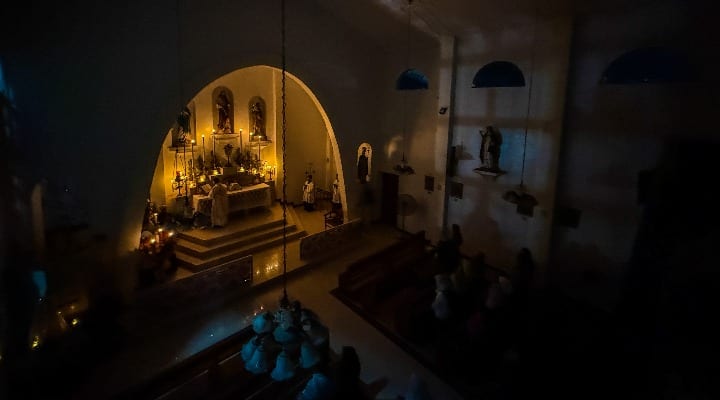
The chapel glowed inside with the subdued and warm light of candles at the altar. At times, the unnaturally bright light of a cellphone used as flashlight would pierce the darkness as a parishioner used it to read a missal or, at the choir loft, reference the choir book.
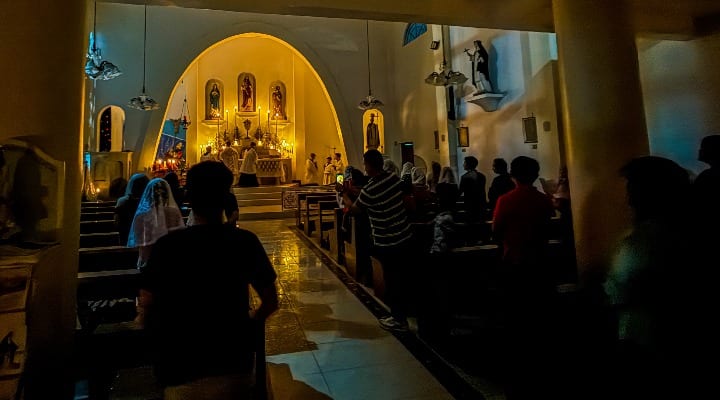
There were about 30 parishioners who attended the Rorate Caeli mass, a traditional Latin Mass, before dawn. The name of the mass comes from the first words of the entrance song “Roráte Caéli Désuper” (or “let the clouds rain the just one”), according to the late historian and archivist Father Fidel Villarroel, O.P.
ALSO READ
In the Mountains of Cebu, Traditionalist Catholics Keep the Faith
In this Cebu Barangay’s San Juan Bautista Fiesta, There’s No Basaan
Father Villarroel wrote about the Aguinaldo Mass and its roots in the Rorate Caeli mass in his paper “The Aguinaldo Masses: Origins, Setbacks, and Survival” in Philippiniana Sacra, a publication of the University of Santo Tomas, in 1999.
Misa de Aguinaldo, which Father Villarroel said was the correct name of the nine-day novena masses heading to Christmas Eve, is “among the oldest if not the oldest and most venerable religious traditions still existing in the Philippines.” Misa de Gallo, he said, is the name of the midnight mass on December 24.
Women wear veils during services at this chapel in Mandaue City in Cebu
Father Villarroel said the Rorate Caeili and Aguinaldo Masses are votive masses, or services said for a special purpose, in honor of Mary the expectant mother. The Aguinaldo masses came to the Philippines by way of Spain and Mexico, he said. Today, however, only the Philippines continues to celebrate it. It was suppressed in 1677 by the Vatican after receiving complaints of liturgical abuses related to the choir and the behavior of parishioners. Manila Archbishop Felipe Pardo posted the prohibition on churches in Manila and the practice was stopped. After he died in 1689, the masses were celebrated again.
The Saturday mass in Mandaue was sung in Latin. People frequently and sometimes condescendingly ask if the parishioners actually understand Latin. They do. Most have been hearing Latin masses for long and the missals have the Latin text on the left page and the English translation on the right.
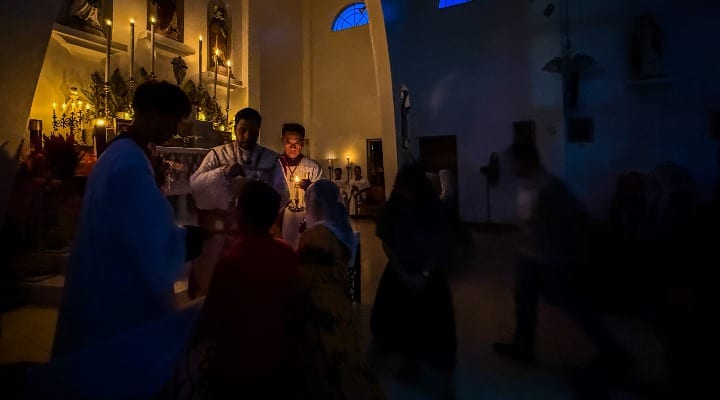
And as in any traditional Latin mass, the priest faced the altar, looking toward the East. The women all wore veils and communion was by tongue at the communion rail in front.
Father Gregory Michael Noronha gives communion to parishioners at the communion rail in front
“As a seminarian, I have been so used to seeing Misa de Gallo with gimmicks: youth dances, song numbers during mass, caroling campaigns during the mass. Sometimes even the priest himself leads these gimmicks,” said Lance Patrick Enad, a seminarian at the University of Santo Tomas. “Over time, either one gets fed up with this nonsense or one gets desensitized to them.”
When attending Rorate Caeli masses, “one notices something very far from your regular Misa de Gallo: solemnity, prayer, the Sacred. No gimmicks, just mass,” Enad said in a Messenger interview.
The Mandaue chapel is administered by the Society of Saint Pius X (SSPX), a traditionalist community with an irregular status with the Vatican. It was founded by the late Archbishop Marcel Lefebvre, who was excommunicated along with the four bishops he consecrated despite the prohibition by Pope John Paul II. The excommunication was lifted by Pope Benedict XVI. A key issue espoused by the SSPX is the Traditional Latin Mass.
Father Gregory Michael Noronha celebrates a Rorate Caeli Mass in a chapel in Mandaue City in Cebu
In Cebu, only the SSPX and its breakaway Marian Corps of Saint Pius X (MCSPX) hold regular Latin masses. The Archdiocese of Cebu used to authorize a Latin mass every Sunday at the Chapel of Holy Relics in the OAD Tabor Hill in San Jose, Cebu City, but this was suspended in November by Archbishop Jose S. Palma.
Only two Rorate Caeli masses were scheduled by the Pope Pius V Chapel: last Saturday (December 21) and on Christmas Eve, December 24. Parish priest Father Gregory Michael Noronha is always on mission and could only celebrate two Rorate Caeli masses.
