
The 12-Year Secret: What Does It Really Take to Create a Grain of Rice?

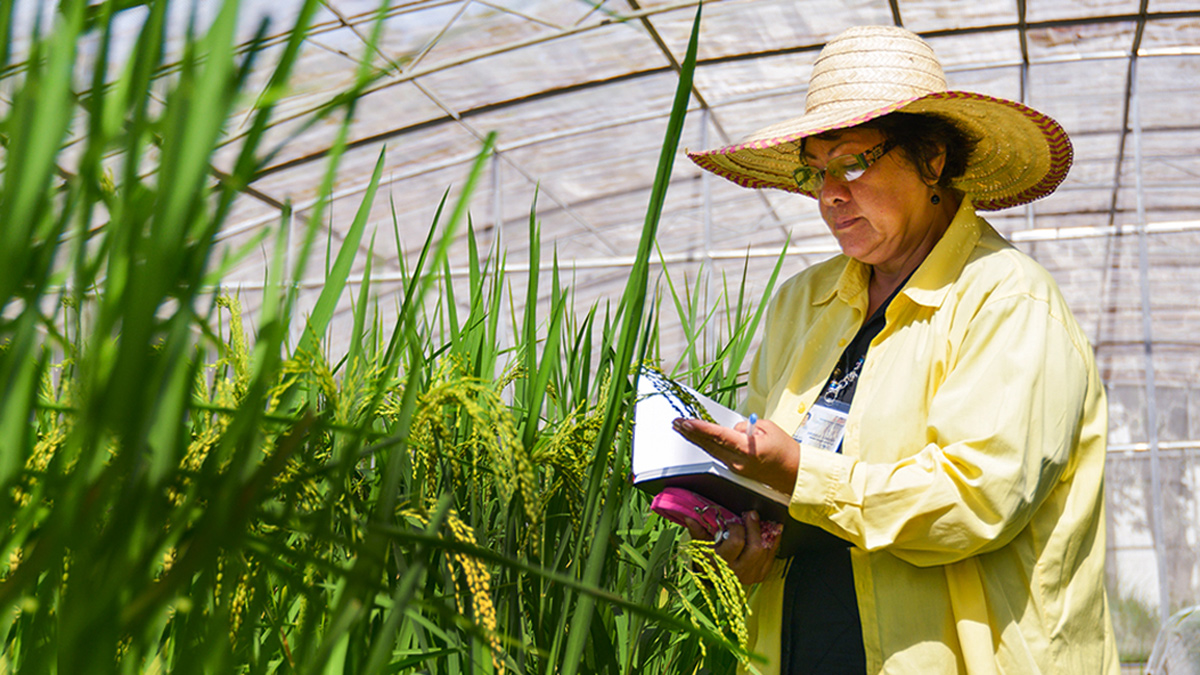
Hilario C. Dela Cruz, now 86, spent 12 years of his entire professional life breeding a new variety of rice that could withstand cold temperatures in the highlands of Ifugao and Benguet, with the goal of helping them achieve rice food security. Yet, when the newly developed rice variety was introduced, the Cordillerans had difficulty adopting it.
According to Dela Cruz, the traditional rice variety (TRV) that Benguet farmers cultivate could only yield 1 ton per hectare, which could hardly feed their families. The hopes of his team were high as they successfully bred a cold-tolerant variety that could yield 4 tons per hectare (t/ha).
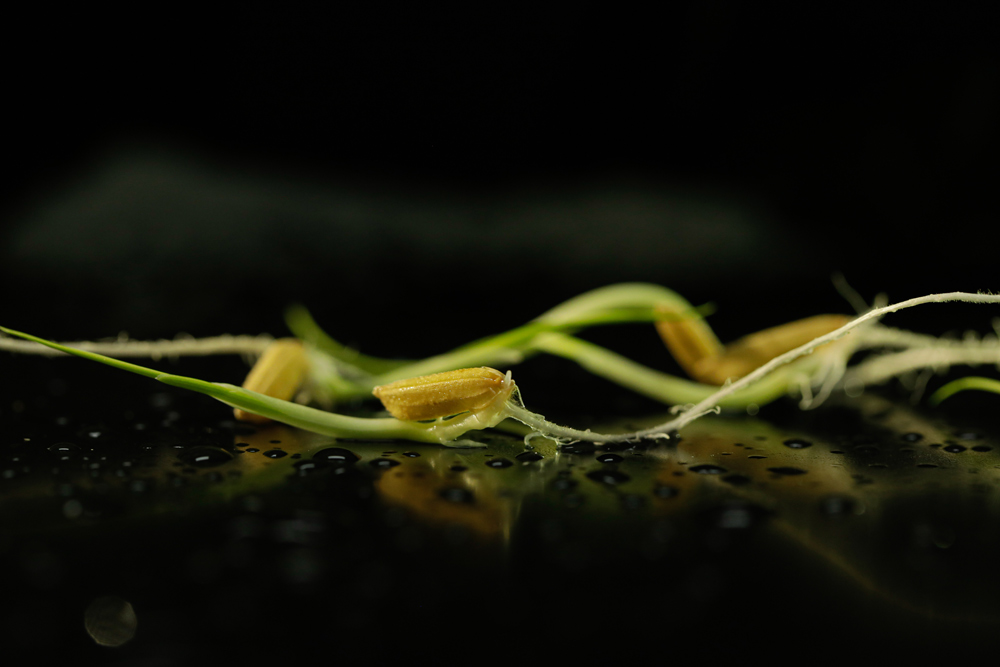
Rice seeds slowly germinate
However, the physical characteristics of the high-yielding variety (HYV) developed vastly differed from those of the heirloom rice or TRV. For example, the flag leaf (topmost leaf) of the TRV is horizontal, making the panicles easier to harvest with the use of their “rakem,” a finger knife. In contrast, the flag leaf of the HYV is erect, making the harvest of panicles more laborious.
ALSO READ:
Akeanon Bukidnon's Indigenous Wisdom Meets Modern Farming in Aklan
Sagada's Pride: How One Farmer Is Cultivating a Community of Coffee Growers
The flag leaves are detached from the straw before the panicles (a loose branching cluster of flowers) are bundled into the desired size for drying. One bundle, when pounded, would yield rice enough for one family meal.
“Naugaw or wasteful, the Ifugao farmers described reaping the crop using a scythe (karet),” Dela Cruz added. The rakem harvests panicles individually.
Harvesting Ifugao’s tall traditional varieties using the rakem prevents shattering and minimizes grain losses.
'Karem' or finger knife
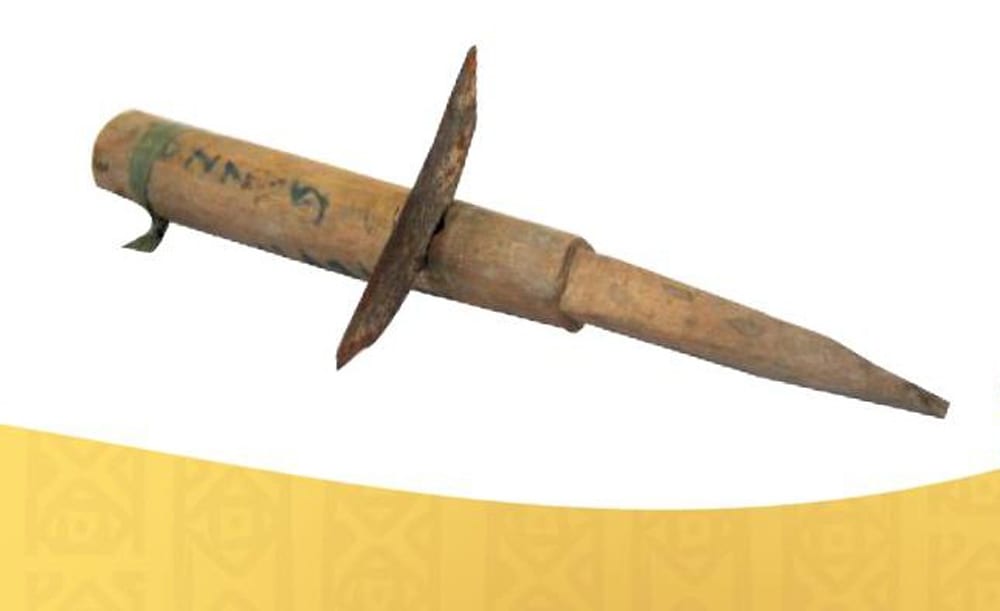
A 2017 study published in the Journal of Ethnobiology and Ethnomedicine documented that rice crops flattened by strong winds and heavy rains are best harvested using the finger knife. The bundled panicles are easier to haul from the terraced fields to storage areas or to hang over firewood stores to dry for eventual pounding.
“We learned from that experience. It requires from 10 to 12 years to breed a variety. You should set objectives and consult farmers if you really want a variety that would be helpful to the farmers,” he asserted.
Dela Cruz lamented that they are proud of what they breed, but the farmers, at times, may not find it useful. After all, breeding should not be a one-way but an intercultural act of public service.
In response to the challenge, their breeding program was recalibrated based on market segments—a combination of farmer, consumer, and seed grower preferences, along with market demand and the rice-growing ecosystem in mind. They have also started conducting technology demonstrations of upland rice varieties for farmers to witness the performance of different rice varieties.
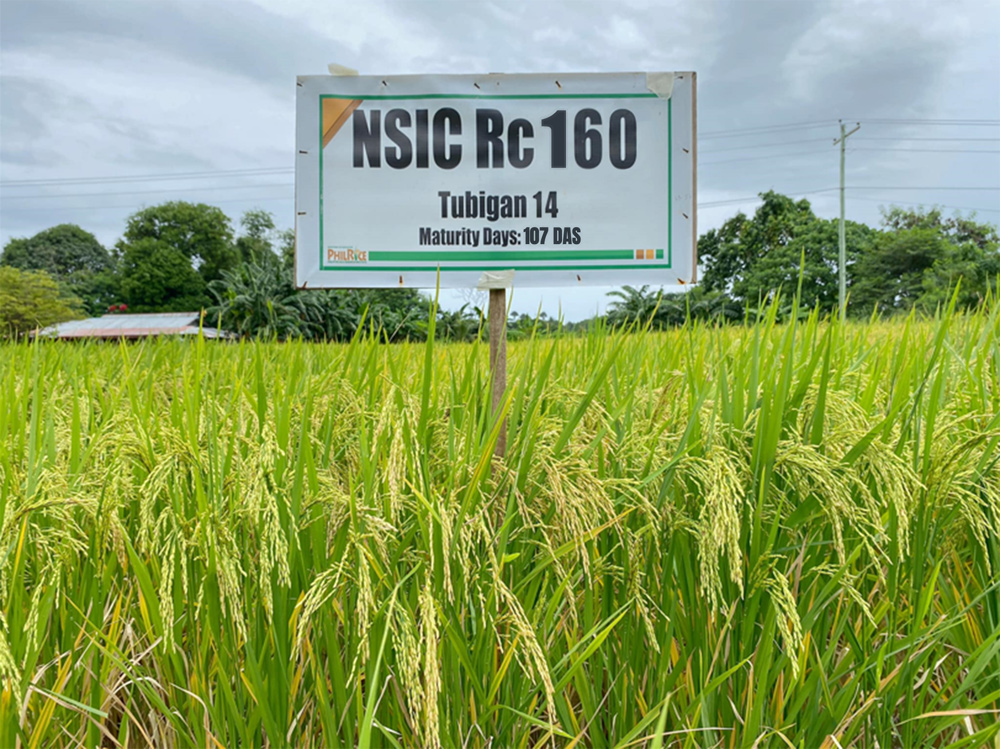
The NSIC Rc 160 (a.k.a. Tubigan 14), a sought-after rice variety among farmers
Passing on the Mission
Twenty rice varieties after he retired, this lesson did not lose its essence. It was passed on to their juniors, embodied by Thelma F. Padolina, his mentee.
In turn, she successfully bred NSIC Rc 160 (a.k.a. Tubigan 14), one of the most sought-after varieties among farmers and well-loved by Filipino consumers. It is a nationally recommended and regionally preferred variety.
NSIC Rc 160 averages 5.6t/ha and a maximum of 8.2t/ha. It is resistant to various rice pests.
More than anything else, it has a soft grain texture because of its low amylose content, which Filipinos love. Padolina boasts that even agriculture students from Generation Z still know and favor this rice variety.
The Woman Behind Sought-After Rice Variety NSIC Rc 160
While the average attention span is only eight seconds nowadays, rice breeders like Padolina found solace in waiting for 12 years to produce a rice variety that Filipinos will plant and eat.
She is one of the most decorated rice breeders in the Philippines. In 2014, shortly before she retired, she won the International Senadhira Rice Research Award given by the International Rice Research Institute (IRRI) in Bangkok, Thailand.
Now a consultant breeder at 75, she began her career as a seed analyst, where she certified seeds at the then BPI-Maligaya Rice Research and Training Center (MRRTC). A chemist, she was always fascinated with the process of rice breeding in a laboratory near their office.
“In the selection of seeds, in the process of crossbreeding, the work they did in the greenhouse, I always tagged along,” she admitted. The head of the agronomy office, where rice breeders work, didn’t favor women.
“At that time, lady breeders were discounted due to their menstrual period and were thought to be incapable of descending to the muddy rice fields,” she recalled.
Despite this, she paved her way and learned the art of rice breeding from her peers. She participated in hands-on laboratory activities and asked numerous questions until she satisfied her craving for knowledge.
Padolina was later sent to her first-ever formal training on rice breeding conducted by IRRI in Laguna, participated in by world rice breeders. She re-echoed her learnings to her colleagues. Rc 160 is just one of 20 rice varieties she developed along with other plant breeders at PhilRice.
Coming back from retirement, her new goal as a breeder is to help farmers realize the importance of replacing old rice varieties with superior traits.
“Fresh varieties have improved genetics based on the current conditions and future climate to ensure higher yield and productivity. They possess sturdier tolerance and resistance to abiotic and biotic reactions,” she stressed.
Augmentation strategy is now one of the norms, hence Rc 160 is being improved by introgressing traits such as pest resistance through modern biotechnology without altering its superior grain quality.
Ever-changing Environment for Rice Cultivation
Christopher C. Cabusora, an active senior breeder at PhilRice, explained that breeding should be done continuously to adapt to environmental changes. He is a mentee of Dr. Nenita V. Desamero, also a retired breeder who helped release varieties for unfavorable environments.
“The varieties we now breed face the risk of non-adaptability to changes in the environment after five or 10 years. A huge factor is the climate and its changing patterns,” Cabusora explained.
He added that droughts, floods, pests, and diseases are the major factors that shape the breeding of new varieties. He elaborated that pests and diseases usually evolve and make varieties lose resistance.
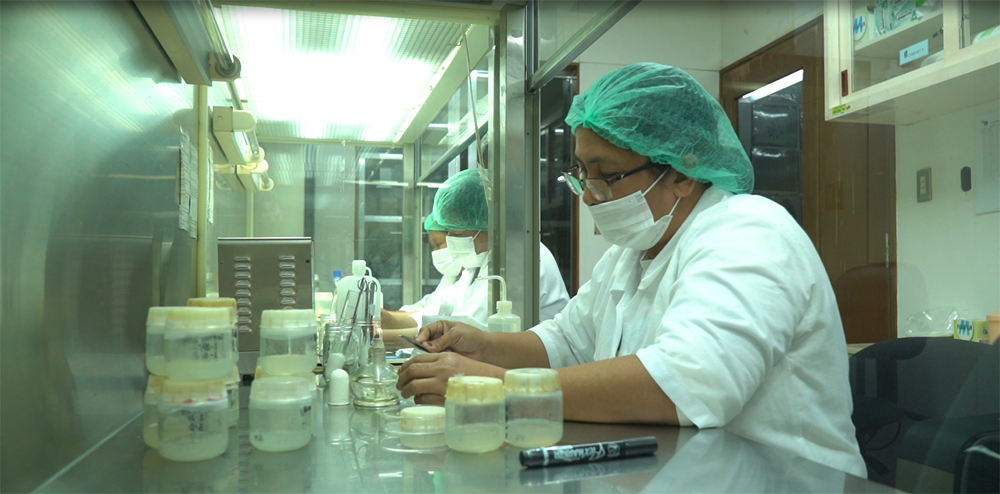
Researchers conduct anther culture inside a laboratory. It is a plant tissue culture technique that's particularly useful for generating doubled haploid lines in a single generation, which would normally require several generations of inbreeding.
Helping Communities Through Rice Breeding
Sharing Cabusora’s advocacy, Padolina maintained that farmers can never have a single variety to plant forever. Different genes need to be infused for varieties to adapt to the challenges of drought, flooding, and diseases.
“Varietal development needs to be continuous to counter the impacts of climate change along with other challenges,” said Padolina.
Currently, she breeds for short-duration or early-maturing rice varieties that can respond to climate change and to the necessity for intensified cultivation. She also develops cold-tolerant varieties for the Cordilleras. The rice plant thrives under temperatures of 18°C to 35°C. A temperature that is too high or too low could immensely affect its fertility and productivity.
She explained that our highlands can only produce 30 percent of their total rice needs. Padolina devotes herself to reaching farmers even in far-flung areas, and helping them improve their productivity without displacing their culture and way of life.
“You need to help all the farmers, whether they’re small or big,” she explained.
For PhilRice breeders, the biggest challenge in rice breeding is not the breeding itself nor the time they wait for the results. It is not the numerous wading in the muddy fields to select varieties that exhibited the desired characteristics. It is neither the laboratory results nor the numerous certifications and examinations by quality control institutions.
The final judgement will come from the farmers themselves who will plant the new varieties, hoping that the hard work of rice breeders for more than a decade will enhance the yield and improve our farmers’ lives.
Defying time—this is the breeders’ way of serving the public, as it takes from eight to 12 years to produce a new rice variety.
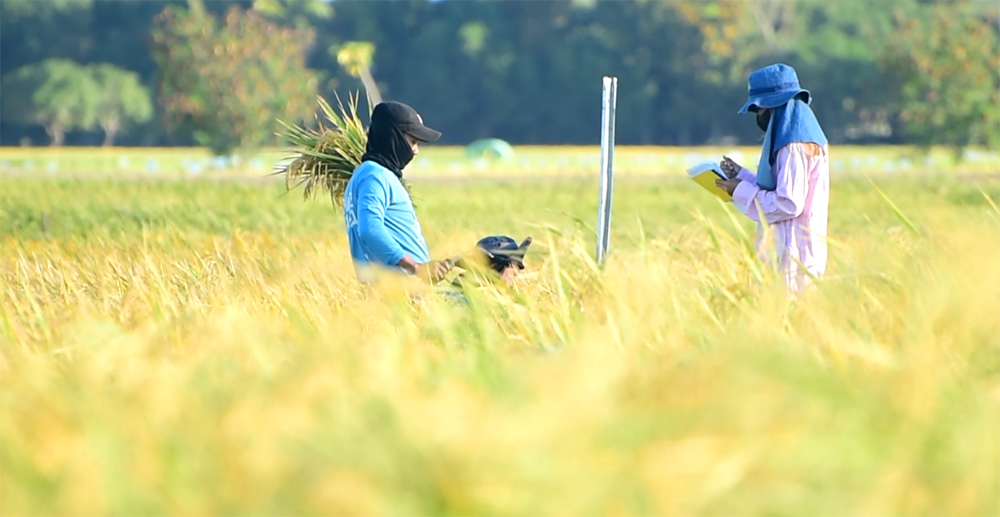
Researchers are assessing the performance of newly-bred varieties.
Steps in Producing a New Rice Variety
The first step in breeding a rice variety is selecting the characteristics that the market demands, such as drought tolerance. Modern procedures such as high-throughput phenotyping and molecular tagging are employed in selecting traits. These advances can hasten breeding by up to two years.
Next is generation advancement, or repeated planting, to ensure that the characteristics incorporated into future varieties are uniform throughout the last generation. Normally, this procedure can take up to five years, but modern and rapid breeding approaches help breeders bypass the painstakingly long phase. It is also the phase where screenings and tests from various disciplines are conducted, including grain quality evaluation and response to pests and diseases.
“We would then proceed with the field testing and trials in our station to see their highest potential yields and pest tolerance under stressful environments. After four seasons of planting, we plant them in multiple locations to test if they are adapted to various climatic conditions throughout the country,” Cabusora explained.
Eventually, the candidate varieties would undergo different tests under the National Cooperative Tests, Rice Varietal Improvement Group, and the National Seed Industry Council to examine their identity, integrity, and purity.
After eight to 12 years, the process advances to seed production and commercialization of an approved rice variety.
To further validate the specific performance of the newly released varieties, they are tested across the different regions in the country through the Department of Agriculture—Regional Field Offices. They implement the on-farm Participatory Varietal Selection (PVS), which was renamed Participatory Performance Trial and Validation (PPTV), to determine the location of the specific adaptation of the varieties. Farmer’s preferences are featured in this process in terms of good agronomic performance and sensory evaluation.
Moreover, it influences the recommendation domain of a particular variety, whether for the national or regional level.
Seed Production and Commercialization
Before the variety is released and distributed to farmers, the master seeds generated from the breeding process are reproduced for further multiplication into nucleus, breeder, foundation, registered, and certified seeds.
Planting the master seeds is quite different from planting ordinary seeds for food production. Under a technique called “panicle-to-a-row,” master seeds in a panicle are planted in a single row. If a row is seen with impurities, the entire row will be discarded. This is because the impurity will just reappear if the seeds are planted continuously. Harvest from master seeds becomes the nucleus seeds, from which Breeder Seeds will be produced and labeled with white tags.
The Bureau of Plant Industry-National Seed Quality Control Service (BPI-NSQCS) examines and certifies these seeds to be 100 percent pure. BPI-NSQCS is a regulatory body that certifies the seed classification of any variety based on a standard that differentiate Breeder Seed (BS), Foundation (FS), Registered (RS) and Certified Seed (CS).
When planting Breeder Seeds, breeders use a mechanical transplanter due to its large planting area. After the breeder seed is harvested, it is now referred to as Foundation Seeds. Foundation seeds have red tags. From these seeds, Registered Seeds are produced.
The registered seed, which has green tags, is sold and distributed to accredited seed growers. When the seed growers plant and harvest this seed, it will then be called Certified Seeds, which farmers plant to produce commercial palay for milling.
Certified Seeds with blue tags are of high quality, purity, and germination rate, which contributes to higher yields. Seeds that are planted repeatedly may not be as efficient and pure as Certified Seeds (CS).
Government Support
Since 2019, the Rice Competitiveness Enhancement Fund Seed Program, with support from the DA-National Rice Program starting in 2023, has been providing rice farmers with free NSQCS-approved Certified Seeds through the local government units. This program ensures that the product of years of breeding research and variety development is within reach of farmers and can influence their harvests.
“For the past six years of the program’s operations, nearly 20 million bags of certified inbred rice seeds were distributed to more than 2 million farmers all over the country,” RCEF project management office director, Dr. Flordeliza H. Bordey, reports.
She further revealed that, from the baseline of 3.63t/ha in the 2019 dry season, the yields of farmers who benefited from the program grew to 4.37t/ha in 2024; from 3.69 to 4.03t/ha in the wet season.
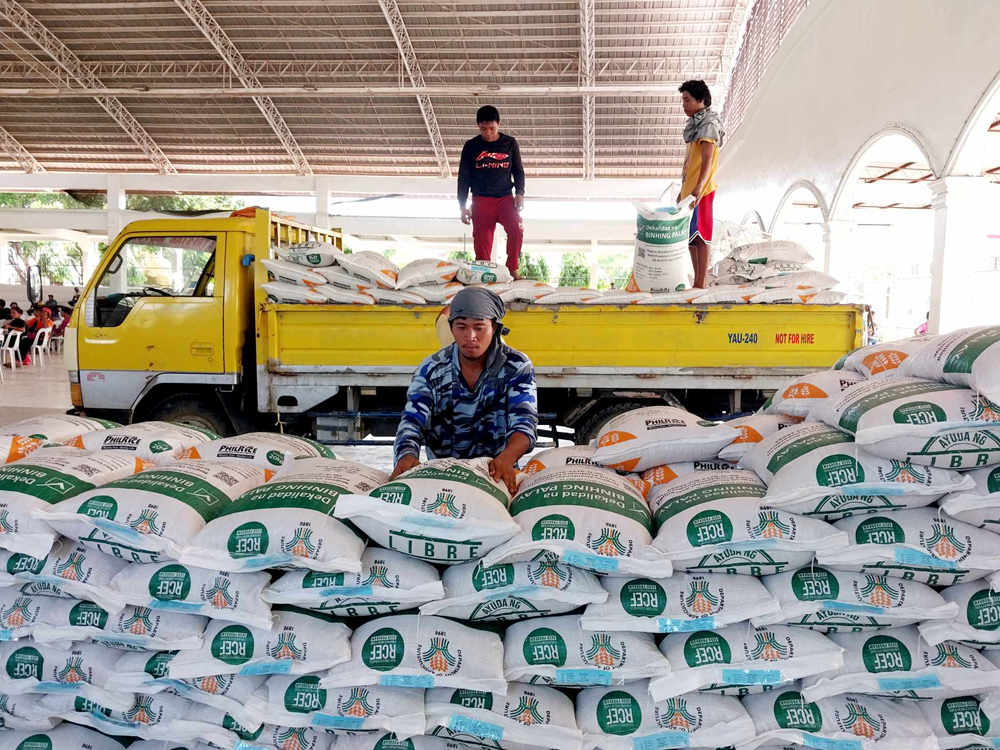
RCEF Seed Program's seed delivery to local government units
The second phase of the Program will also evaluate the performance of newly released inbred rice varieties in farmers’ fields through its project, Varietal Field Trials. Varieties with characteristics superior to existing ones are identified. The trials are conducted in 180 sites per season across 78 Philippine provinces.
The results of this project guide the selection of varieties for seed multiplication and distribution nationwide under the second phase of the RCEF Seed Program.
Continuous Effort
Padolina underscores that breeding remains the most cost-effective intervention to help farmers adapt to the challenges brought about by increasingly scarce resources and climate change.
The consulting breeder emphasizes the advantages of conventional methods. She advises that a rice breeder shouldn’t be confined to the laboratory. The best way of breeding is still being out in the field and seeing rice through their own eyes, together with farmers.
“We need to see the actual interaction of the crop with the environment so we can choose the best variety,” she explained.
Breeding rice is challenging; to succeed, it requires patience, commitment, and a deep understanding of your plant and of the farmers who are the intended users. Nevertheless, the breeders’ shared hopes and aspirations with Filipino farmers remain certain for a rice-secured country.
