
How the Banao Community Helped Botanists Reinstate a Species of the Mysterious Rafflesia

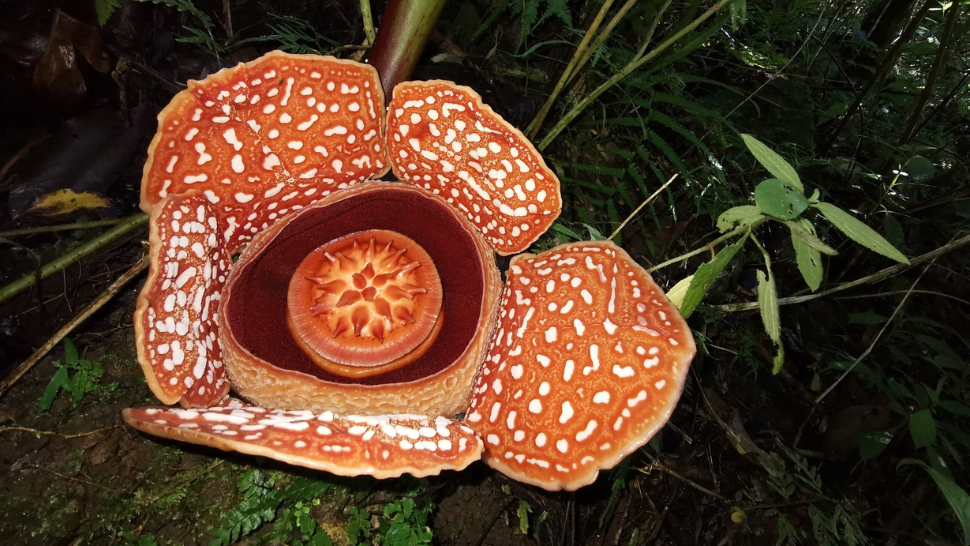
Most people in the world know the Rafflesia as the plant species with the largest flowers in the world. If not that, then maybe they better know it for one of its species' monickers: the corpse flower. Its less-than-pleasant smell has earned it quite a reputation, sure. But the Rafflesia, in general, remains much of an enigma to the general public and even to the scientific community. Apart from its smell and prodigious size, it's a peculiar plant simply because of the fact that it has no roots, leaves, or stems. They're zombies, really.
Many Filipinos, too, aren't aware of the fact that the Philippines is home to numerous Rafflesia species, similar to those found in Indonesia. And its conservation efforts rely on a few good, honest people. Recently, a group of Botanists from the University of the Philippines Los Baños (UPLB) and the University of Oxford Botanic Garden even reinstated a species of Rafflesia. The Rafflesia banaona is the latest species of such in the country, and what makes it so special is that its chief protectors are none other than the Banao indigenous cultural communities.
Adriane Tobias is a Teaching Fellow at the Department of Forest Biological Services with UPLB's College of Forestry and Natural Resources. His team went deep into the Province of Kalinga to see the Rafflesia banaona up close.

Adriane Tobias, forester and Rafflesia expert at UPLB, was one of the researchers who joined the expedition up Kalinga Province. His paper, "The reinstatement of Rafflesia banaoana (Rafflesiaceae), and implications for assessing species diversity and conservation requirements of the world's largest flowers" was published by Phytotaxa, a peer-reviewed scientific journal on systematic botany.
Together with Dr. Chris Thorogood, Deputy Director and Head of Science at Oxford Botanic Garden, and Dr. Pastor L. Malabrigo, Jr., a Professor at the College of Forestry and Natural Resources at UPLB and Manager of the UP Sierra Madre Land Grant, he detailed the team's discovery, debunked the confusion between it and other species, and reassessed our local Rafflesia conservation efforts.
ALSO READ:
A New Species of Pungapong May Have Just Been Identified at Masungi
The Endangered Tayabak Was Spotted in Masungi and the Photos Are Stunning
"The paper recently published is an integral part of my master's thesis," he tells Esquire Philippines. The findings were first presented at the Plants, People, Planet Symposium in Kew Gardens, United Kingdom back in 2019. It was there that he met Dr. Thorogood, who he would later introduce to Dr. Malabrigo, Jr. From there, the trio would form quite a collaboration, from venturing out to Java and Sumatra in Indonesia to exploring areas across Luzon.
"Rafflesia banaoana is distinct based on multiple characteristics: having a basal ridge on the annulus exterior (none in Rafflesia leonardi) and conspicuous process on the disk (flat and almost devoid in Rafflesia leonardi)," the teaching fellow further explains.

"Rafflesia banaoana, originally described as the sixth Rafflesia species on Luzon Island and the tenth in the entire Philippines was later merged with R. leonardi," he says of the common misconception. "Subsequently, it was consistently treated as a synonym in subsequent Rafflesia research papers."
For the longest time, Rafflesia banaoana had often been confused with the Amophophallus, as well as another Rafflesia species, R. leonardi. The expert adds that the confusion comes from the two species' confusion arising from the "striking morphological similarities," specifically with its external floral features. Their work finally puts this confusion to rest.
The Banao People and Rafflesia banaoana
The plant remains elusive to the eyes of the common Filipino for numerous reasons. First, the Province of Kalinga gets relatively fewer visitors compared to other tourist hotspots in the Cordillera region, like Sagada or Baguio City. Second, reaching Barangay Balbalasang has proven to be a difficult trek for most.
The Banao indigenous cultural community lives within Barangays like Pantikian, Talalang, and Balbalan, among others, up in Kalinga. It was through the community that we now have the Rafflesia banaoana, after first being documented by Dr. Malabrigo, Jr. during a trip with them in 2010. Hence, R. banaoana gets its name from the said group. "[They] are at the forefront in protecting the lush green heart of Cordillera in Kalinga Province," Tobias adds.
As it stands, Rafflesia banaoana is currently exclusive to the Province of Kalinga. "Should this species face extinction due to deforestation and habitat degradation, it would disappear from the global landscape entirely."
A closer look at the R. banaoana


.jpg)


The Philippines As a Rafflesia Hub and Its Current Struggles
The species discoveries of the genus Rafflesia have expanded by about a third over the course of the past two decades, bringing the total to about 42. Unfortunately, most Rafflesia species worldwide are both rare and facing significant threats, as well. In the Philippines alone, out of 15 species, nine of them are considered Critically Endangered, five are categorized as Endangered, and one falls under the Vulnerable classification, according to Tobias' research.
Conservation efforts need to ramp up, of course. "The majority of Rafflesia species in the Philippines inhabit a range of forest types, from regenerating or secondary forests to severely degraded ones," Tobias says. "Many of these species were already rare at the time of their initial description, and regrettably, their populations have continued to decline, pushing some dangerously close to the brink of extinction."
Among them is R. baletei, a small-flowered species initially discovered in Mount Isarog National Park, Camarines Norte, in the Bicol region. Tobias emphasizes that it has only been recorded in three locations. Rafflesia leonardi, on the other hand, was first documented in Barangay Bolos Point in Cagayan Province, Luzon Island, an area severely impacted by Typhoon Ompong in 2018. It hasn't been observed in its type locality since 2015.
At the very least, the Rafflesia banaoana in Kalinga Province has the Banao people to take care of it. Indigenous communities like the Banao play arguably the most significant role in the protection and conservation of the Rafflesia. Threats, nevertheless, persist, considering how people today even consider collecting Rafflesias for their personal gain.
"The ramifications of such extensive habitat fragmentation, compounded by natural disasters and other factors, on the dispersal and long-term survival of isolated Rafflesia populations remain uncertain," the researcher warns. "The outlook for many species is indeed precarious."
