The Cycle of Life As Told By My Father's Garden

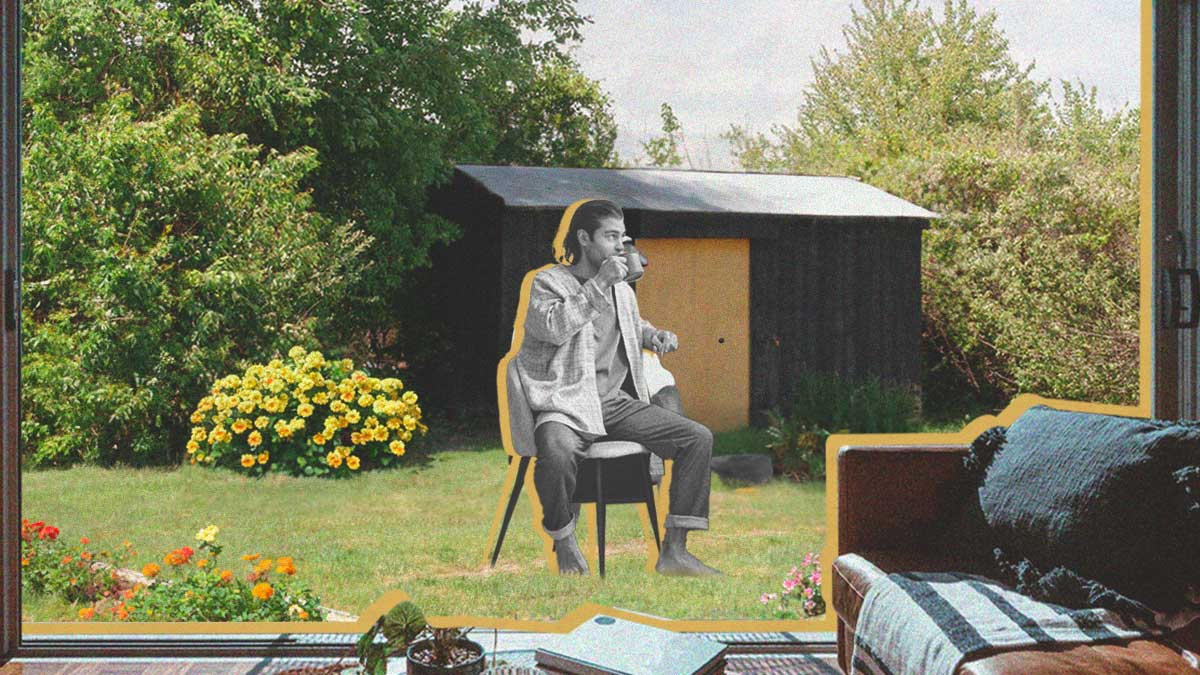
"Sisibol tayong muli sa lupang tinubuan."
When I water my plants in the morning, I think of my father. There is a dialogue that happens between me, these greens, and him somehow. Like him, I make sure to talk to my plants. He tells me it helps them grow better. So I like to say hello to these little critters as part of my routine. Each has its own little prayer for the day. Each functions as a bridge between my youth, the present, and papa.
I hope to be half the gardener my dad is. I wonder what my dad would think of the crispy brown leaves on my monstera. Chances are, he'd be telling me off about the now-dead aloe veras he gave me. He'd probably say that I'm watering my ZZ plants too often. Even though I know I do. But Jesus. Sometimes, I think I only water them as much as I miss him.
All is well since I left Cavite for shiny Metro Manila, but even I can admit that the city has a way of making me sad. It's the nausea of homesickness, I suppose. Here, everyone would much rather be somewhere else. Maybe to that time in childhood when toys were gods and everything was so simple. Or to the moment when you first recognized supreme joy. Or perhaps to your childhood bedroom. A lot of times, there's this longing for home that you just can't articulate. Home can be quite an elusive idea, after all. How far it is. How far you've gotten. Why we don't visit the folks as much as we should.
"He'd look for other reminders of his own history in other ways. One of them was the pomelos my lola would ship out when she was still here. She passed away a while back and the pomelos stopped coming. Fortunately, we can now grow our own. Nevermind if they're inedible. That tree houses papa's blues. It's where his mother, my Lola Bebe, lives."
CONTINUE READING BELOWwatch now
When these thoughts plague me, they take me back to my dad's garden in Dasmariñas, Cavite. I always picture my father hosing down the areca palms, pothos, and alocasias that flank our residence. To me, plants are vestiges of home. At our house is where my dad's plant collection grows wild. In his 50s, he's cultivated this small piece of freedom. Here, he has full control. He deals with each seed with irrational affection. On most days when he's not working in the store, I'd find him repotting and replanting sansevieria and golden pothos in and around the place. What used to be such a monotonous landscape has become a terrain of resistance against old age. As long as my dad's plants are watered and happy, so is he.
Papa and mama, the year before I was born.

I'd like to think gardens are manifestations of daydreams. They are a place for meditation, for study, and for work. For being. Some of the greatest minds were naturalists. The gardens at Down House were where Charles Darwin had his outdoor lab. Sanso had his orchids. Monet had his water lilies. Matisse and his monasteras. David Hockney and those red pots in his Los Angeles home. Hermann Hesse had his berries. Anton Chekov, his handsome spring bulbs. Van Gogh was killed by his sunflowers. Tolstoy is buried beneath a green mound in the adjacent Zakaz forest among ancient trees. These were divine clandestine spaces where life force was cradled, which would either produce profound ideas or offer a place of rest and solitude amidst all the chaos.
My father has his lettuce, aloe vera, and money trees. But perhaps the one that fascinates me the most—and the one I always associate my dad's image with—is our pomelo tree. I think it's his, too.
Papa left his childhood home in his early 20s when he went to study in Manila. He never looked back. My grandmother (god bless her soul), as a way to reconnect with her son, would always send us bags of pomelos from Oroquieta City. The family farm used to have this giant pomelo tree, a source of pride for the Suralta family in a lot of ways. I wasn't much but it was ours.
Because my dad spent much of his life away from them, being an Overseas Filipino Worker and settling in his wife's province over the course of 40 years, he'd look for other reminders of his own history in other ways. Home is an elusive idea. One of them was the pomelos my lola would ship out when she was still here. She passed away a while back and the pomelos stopped coming. Fortunately, we can now grow our own. Nevermind if they're inedible. That tree houses papa's blues. It's where his mother, my Lola Bebe, lives.
ALSO READ:
I Never Got to Find Out if My Dad Was Proud of Me
Thinking of My Father, the OFW, and the Tragedy of Being 'Modern-Day Heroes'
"Plants are a form of coping, I suppose. They're meditative, calling upon something father the human heart or the ancestral spirit can ever comprehend. Greens conjure up reflection. These are confessionals for the things you long to grow and long to keep."
Dad has spent most of his life as a quiet man. But you wouldn't know it if you talked to him about plants. He can go on and on about each of them. That areca palm was a gift from a neighbor. That Boston fern has grown nicely in this small green pot. Another one of his jade plants has kicked the bucket because, as he tells me, "they can be so unpredictable." Whenever my father and I drive through upland Cavite, we have this habit of IDing plants along the way, too. Look at those njoy pothos. How lush. Did you see the monstera obliqua the man was carrying to the jeepney? That grafted golden money tree is gorgeous.
It's a habit I've picked up myself, living in the city. I can ramble for hours about all the greens at Quezon City Memorial Garden or at the Cubao Farmer's Market. I'd walk aimlessly for hours at a local garden center just to check for any pot I can bring home with me. Or sometimes, I do it just to say hi again. To them. To dad. To the world.
Some of my dad's plants, from the old macapuno to the monsteras, money trees, pothos, and more.

Plants are a form of coping, I suppose. They're meditative, calling upon something father the human heart or the ancestral spirit can ever comprehend. Greens conjure up reflection. These are confessionals for the things you long to grow and long to keep.
My plants' survival depends on me, my dad always reminds me. In many ways, my survival depends on them, as well. Watching my father tend to his garden has thought me a thing or two about care: that growing requires a cerebral understanding of enrichment and tenderness. I have to account for each plant's being and becoming, like their watering schedule, the temperature of the soil, the light each needs to thrive, the temperament of the species, and whatnot. Sometimes, the season just isn't kind and some of these babies wither away. For them to bloom, you must know that each needs the time, warmth, and patience necessary to grow. We all do. I've found them to also be such great indicators for my state of mind. You can tell that I'm okay when my plants aren't. Funny enough, if they're dying, that likely means I am too. Ha.
Now in his 60s, my dad jokes about death a lot, I've come to observe. "Malapit na... Malapit nang ilibing." He's funny like that, a brand of twisted humor I recognize because it is mine, too. But so far, apart from these occasional bars, my father has enjoyed retirement a lot, I can say as a matter of fact.
He feels like a man unburdened by the weight of his past. And there he is, away escaping to his garden. I hope to one day indulge in retirement as much as my father has. It seems to me that he's cracked the code about senior years: just because the years have faded, that doesn't mean you have to fade with them. What keeps my father going, among other things, is this humble piece of land he has and the beauty he has sowed. Those plants have offered the family sustenance. It is the same land that raised my brother and me, the same land that he's nursed, and the same damn land that released him from the shackles of material existence during all those years he spent away.
“A human is born a baby, becomes a boy, goes through youth, the prime of life, and finally returns to being a baby before he closes his life. This is, in my opinion, the most ideal way of life."
You know, the idea of land and ownership has always bewildered me and my dad. How can we own something that outgrows us? Something that promises to outlive us in due time? Sooner or later, the same soil that cradles life is where our bodies go to rot. We all reckon with this when we're ready. My dad, however, has transcended this, I think. They say when you grow old, you slowly exhibit vignettes of childhood wonder. Akira Kurosawa, in a letter to Ingram Bergman on his 80th birthday, wrote: “A human is born a baby, becomes a boy, goes through youth, the prime of life, and finally returns to being a baby before he closes his life. This is, in my opinion, the most ideal way of life."
View this post on Instagram>pMy dad is a big baby now, my mom would say. I know this to be true, especially when I imagine him vigorously transplanting plants into different pots. Or when he's watering them. Or when I do. I'm trying to emulate that sense of peaceful wonder in my own garden and in my own life. But I know I have a lot of ground to cover before I finally get there. My father took his time, moved away, came back, and, hopefully, so will I. "Sisibol tayong muli sa lupang tinubuan," I often tell myself.>pThe most important lessons I've learned about living, breathing, enduring, dying, and living (again), I learned from watching my father in his garden, his small lot of freedom in an otherwise unfree world. He planted the seed and now I have to make sure it grows as he goes. I was watering my yuccas and calatheas just yesterday. I ought to water the others, like the dumbcanes and the andansoniis, today. This greenhouse I sort of made out of my terrace in the city, much like his in Dasma, is its own cosmic Shangri-la. Here, everything is in harmony. Here, we are liberated from time. Within it, my dad and I always meet.>pMy memories are in the dew that kisses the earth. How glorious they are when the sun hits them just right. It is with the love of this familiar earth that I celebrate papa. Homesickness, as it turns out, is our shared Eden. Here we are, nurturing life. And so as long as I always have plants to water, I'll always have my father.>p
>p