

Nanay Coring Turns 100: A Tribute to the Woman Who Built National Book Store
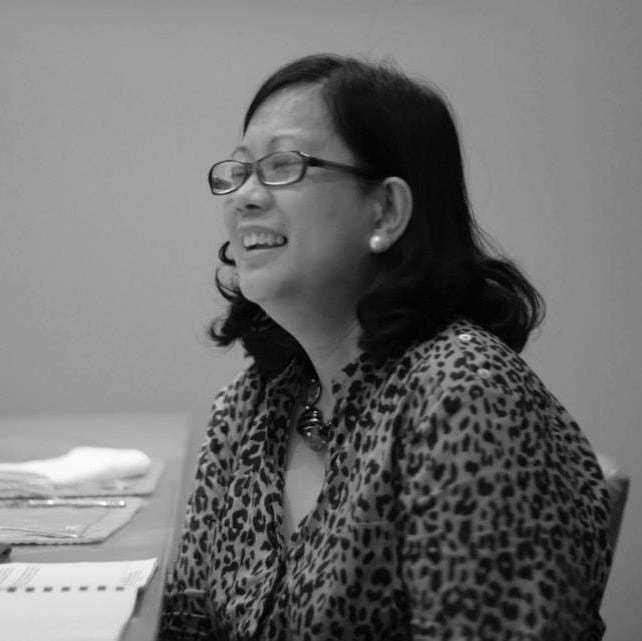

I have always known that one day I will write about her, but never did it cross my mind that I would finally get to do it this month of September when she turns 100 years old. I regard her as the fairy godmother who gave me a career in book publishing, and, truth be told, a life for my children and me. I suppose it is one of those many concentric circles a ripple creates; a single ripple of the many that great men and women are reputed to hit, bulls’ eye, even before targets are drawn. Without their knowing, they have made life more livable for countless others.
When they are hardly aware of their service to a nation because in their mind, they were just running a business, then they must be told. They must be held gently by the arm and brought around to recognize what they have unwittingly achieved for their country. For, when asked what made her family sell books and educational materials instead of food and groceries, she always simply said they were just trying to make a living. Nothing more.
ALSO READ
What's Happening With National Book Store?
9 Things You Didn't Know About National Book Store
Socorro Cancio Ramos, Nanay to the thousands of employees of National Book Store, barely knows what her lifetime dedication to running one bookstore, and then a chain of them, meant to others, did for others especially for this country’s young, generation after generation. A journalist once said Nanay Coring has done for reading and education so much more than all the reading teachers and educators put together. Yet she considered herself partially educated, forced by poverty to drop out of school, and maybe that’s exactly how she became resolute in making everything parents need for their children’s schooling as reasonably priced as possible—from books to pencils.
 (1).jpg)
When I first met her, she looked like an ordinary mother who could, and would, cuddle you any time. Simply and straightforwardly dressed, her hair was tied into a neat bun, kept in place by a few hairpins. She was tall, bosomy, and had glowing magnificent skin, and knew not to sully it with any makeup. In my 23-year-old mind, meeting her may not have been as awesome as meeting the great Nick Joaquin who Ben Ramos asked to be around when he interviewed me in his Recto office for the post as editor at National Book Store’s Publishing Division.
In July 1979, my office was on the 9th floor of Albecer Building, on the corner of Soler and Avenida. I was the only occupant because my very first boss in Publishing was Manny Valdehuesa, who came to work as consultant, reporting only on certain days of the week. I cringe now recalling how, on my first day at work, I was forced to go down to Mrs. Ramos’ office on the 4th floor to borrow utensils as I forgot to bring my own with my lunch baon. At that point, she was the only one I knew in all of National Book Store as I had not been introduced to anybody else in the building. Her secretary, Lydia, seemed irritated and probably thought the gall of this new girl to borrow from Nanay. If Mrs. Ramos thought the same, she surely did not show any sign; she was in fact very nice about it and instructed Lydia to lend me a spoon and fork. Aware now of how good a judge of character she is, I wonder how that single act of daring, which was more being what is now called “clueless” (it didn’t have this meaning then in 1979), established me as an employee. Neither of us had the slightest clue I would stay 36 years with her family.
So many articles have been written about Nanay including that small yellow book Nick Joaquin wrote for her 60th birthday. From that trove emerged iconic stories about her that qualify as urban legend among book people.
One is how ultra-special she makes her guests feel, not just the foreign publishers’ reps who show her what books to import but also our own authors: she would serve them—as in she literally put food on their plates, and not just handed them dishes. She sent her car for them or to bring them back to their homes or hotels. In her office, behind her desk was a cabinet full of barongs of all sizes—these were for the male publishers’ reps of Prentice Hall, Lippincot, Addison Wesley, Macmillan, Simon and Schuster, Silver, Burdett and Ginn, McGraw-Hill, of the time when the landscape was not yet a monopoly of only three giant corporations. She even fitted each barong on the back of each rep to make sure it would be really wearable. After an hour or less, the reps were heard to say they left her office “losing their shirts off their backs” as they had said yes to her ask of 50 to 60 percent discount on bulk purchases of bestsellers. What usually did it was not just the food and barong, or her charm, but her gut feel for certain titles she fought for and was sure she could sell and order more. And which 90 percent of the time panned out. Also, her sob story, which has been true ever since, always worked: that the Philippines as a poor country has a low average purchasing power.

She sent me to industry meetings or took me with her to consultations held by government especially the Ministry of Education, always claiming, “Alam mo naman, tindera lang ako, wala akong alam diyan.” She recounted to me how back in the day of highly literate male publishers like Joaquin Po and Dr. Ernesto Sibal, one industry association didn’t want her to be a member because she finished only high school. On her behalf, I felt a deep sense of vindication when I heard in 2006, ahead of the official announcement, that Ateneo de Manila University would confer on her an Honorary Degree (honoris causa) in the Humanities. Her detractors, though, didn’t live long enough to see this.
From birth, she is an entrepreneur, who at 12 years old knew if she tapped as many other children to gather spoiled or soiled cigarette sticks, they would earn more, and she would have shared the blessing with other children. When the war broke out, her one-year-old small bookstore had to sell candies, soap, and rubber slippers the Japanese soldiers loved; when the war was over, she made sure their bookstore would be ready for the very first postwar school year. She started postcards from sceneries and dances and festivals her son Fred took pictures of, and later by a topnotch German photographer. That line expanded with pictures of paintings she herself bought from our best visual artists, the likes of Amorsolo, Manansala, Ang Kiukok, and others.
.jpg)
There was the map, too, of the Philippines, and many versions of it by a German cartographer. And the local greeting cards line even if, later on, she also won the franchise to the Hallmark line. She sat down and chose designs with her kusinera, Delia, who had a raw talent for choosing which would sell. No need for a product development expert.
Under the Marcos Presidential Decree 1203, National started reprinting foreign books schools and colleges required, paying royalties to the foreign publishers. National grew on this, and from buying and selling imported bestsellers. Then by the ‘90s, they were ready to publish original local books (textbooks and trade) under Anvil and other smaller sister publishing houses like Cacho and Solar, (which, in its time was the leading women’s magazine publisher). National grew to become the largest bookstore chain with 250 outlets (at its peak).
Nanay personally supervised all the store managers. She made them keep a checklist they had to tick and go by every year: stores have to be well lighted places all the time, no fail. Before rainy season, all walls and ceilings had to be checked for leaks, and so on.
She got kind of derailed temporarily when computerization came. And she was often heard to say, “Sibakin na nga yang mga computers na yan,” especially in its early years when it churned out reports more inaccurate than those manually prepared. She felt bad when her red-striped “supot” was changed to something more contemporary by their advertising agency. While I know it must have been difficult for her to gradually lose control over the empire she built with her husband, Jose Ramos, through hard work and enterprise, she also recognized the value of succession.
She was never sick in all that time I worked at National and Anvil. She never took a vacation. She was a strong woman but her mind might have preferred to go where she can be childlike again, and not work or even think of it, even if in her earlier life she enjoyed it without a speck of a doubt.
We visited her on her birthday, every year, no miss even if delayed by a day or so, and as we grew at Anvil, our gift went from fruits and flowers to cash (small amounts enough for her to spend as she wanted). I didn’t get to personally say goodbye to her in 2016. But I still got to greet her on her two birthdays post-Anvil, via her nurse’s phone. Until it no longer was accessible.
.jpg)
Perhaps she will not get to read this anymore, but I hope in spirit and energy, I am able to express my profoundest gratitude to the woman who started me on my lifelong career, pushed me to see what I could be capable of by assigning me tasks I didn’t know how to carry out in the first place, and by her practice that taught me the importance of openness and caring. With her only daughter, Cecilia Licauco, they gave me larger-than-life wing rooms to grow book publishing, and a most consequential life I never imagined was possible.
I think of her today triumphant and glorious, her legacy formidable, that it will not be eroded by frail cracks.
HAPPY BIRTHDAY NANAY CORING!
