
It's Not Blasphemy. It's You.

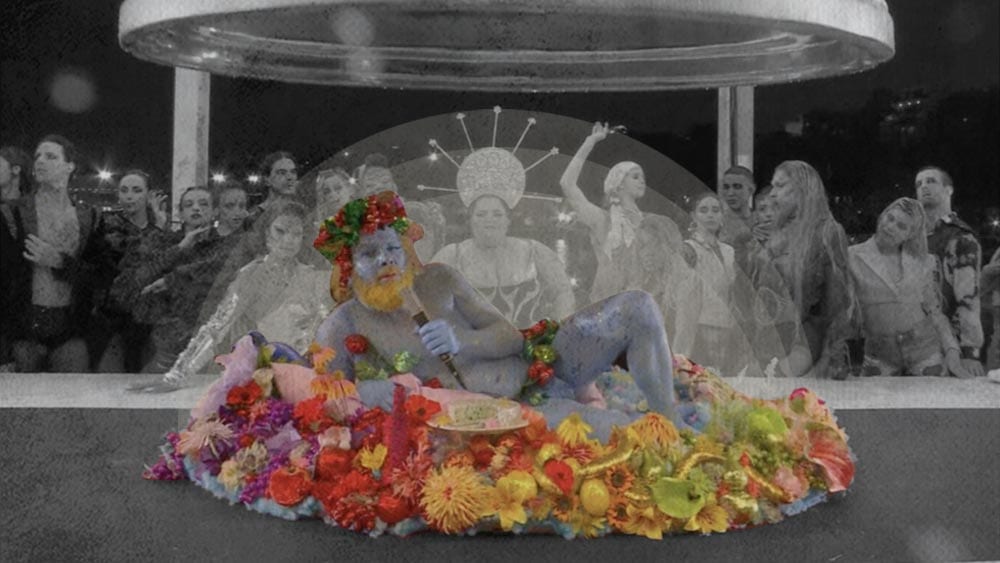
It's gotten a little too predictable, it seems. Watching this so-called "blasphemous" tableau at the Paris Olympics opening ceremony, I can already sense the misplaced outrage that was about to come. Of course, they were going to think about Leonardo da Vinci’s "The Last Supper," as such iconography is too embedded in the dominant Christian worldview. Of course, they were going to get pissy about drag queens and transgender models and strange blue men, because, for some odd reason, these groups are still imperceptible to the prudish mind. Of course, of all things, they'll cry blasphemy, the most boring of all accusations in art.
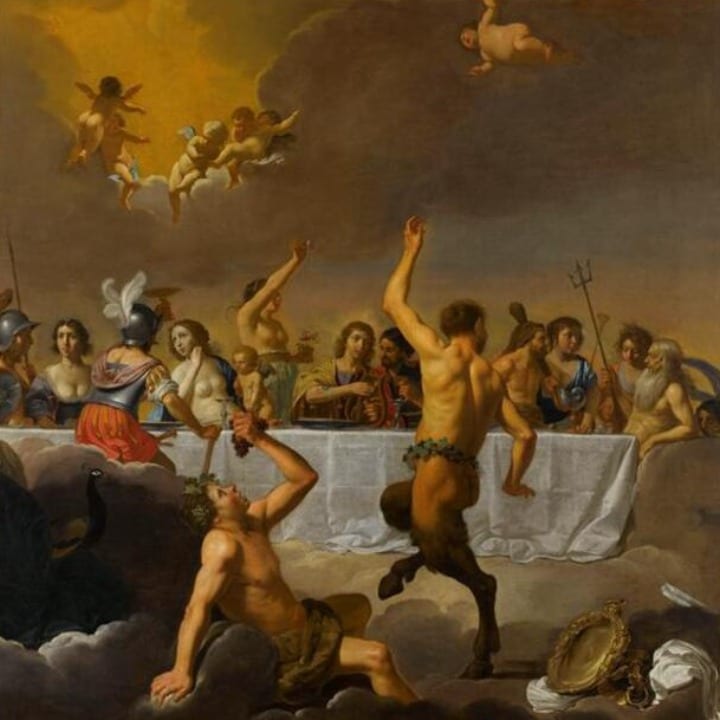
But the thing is, it wasn't a satire about the "Last Supper." The supposed parody that raised such hell among the righties and the religious was a reinterpretation of Dionysus, the Greek God of pleasure and wine. The public was given a picture of a Bacchanalia, borrowed somewhat from Jan Harmens van Bijlert's 1635 oeuvre "The Feast of the Gods" (although blue Dionysus is said to have been more of a reference to "Bacchanal" by the Baroque painter Michaelina Woutier), depicting the Gods celebrating Thetis and Peleus' wedding. There's a reverence shown in this for the Parisian historical context, as well as Greek mythology, that often gets forgotten because of all these needless mental acrobatics. It was a rewarding spectacle, really.
If we were to ask the organizing committee of Paris Olympics 2024, we'd get the whole spiel about how it was a commentary on the absurdity of violence that binds us, or that Dionysus, also the God of celebration, was meant to signify the pagan celebration associated with the Gods of Olympus. It was flamboyant simply because it needed to be. The committee would eventually apologize in the aftermath of the backlash, but the same anger persists.
You have critics as high up as the Hungarian prime minister, Viktor Orbán, enunciating the “moral void of the West” indicated by the act. The daily Italian newspaper Avvenire wrote: “Don’t take us for moralistic bigots, but what’s the point of having to experience every single global event, even a sporting one as if it were a Gay Pride?” We don't even have to look that far. There's that one friend who will tell you how hurtful it was to see God mocked like that. Shame on you for being entertained.
And maybe it was, as it should—and I'm sure, must have—have been. You felt like your faith was parodied. Your sporting event was hijacked by the gays and by the blasphemers and the perverts; or by the liberal agenda that's always been out to get you or, gasps, by the big, bad French artistic cadence you find so corny.
While it delights me in some way that people are engaging with such art forms and ideas (and a pleasantly surprising discourse in general; a great time for people to disagree), I do find it more frustrating that we need to have this conversation again. I've been reading a lot of people cry blasphemy here, and while I understand how and why they'd feel that way, they're wrong.
A closer look at "The Feast of the Gods" by Jan Harmens van Bijlert.
ALSO READ:
Taragis Na 'Yan: On the Scams and Stupid Things We Do For Virality
An Atheist Asks: Do We Really Need Religion To Be Happier?
See, I think of blasphemy more as a moral (and political) concept instead of a religious one. As someone embedded in the art world, I've found that blasphemy and art, in some crazy way, are essential to each other. Blasphemous art is meant to be beautiful and at the same time evocative, ultimately liberating itself of religious concerns in the process of its making. It is of all things intentional, no matter the conceptual garbage that comes with it.
If we are to believe in the accounts of, let's say, the committee's artistic director, Thomas Jolly, we'd be told that the showcase was meant to signal a more inclusive, more diverse Paris. These games offered a kind of political resolution, celebrating this renewed unification of the country amidst a tumultuous landscape as of late.
The opening ceremony in Olympic tradition, after all, is done to show the world the brilliance of the host city. Apart from the Dionysus scene, we get the beheaded Marie Antoinette reference, a nod to the 1793 Reign of Terrors when the then-Revolutionary government executed monarchs and ushered in the new Republic.
The metal horse, on the other hand, was a tribute to the Goddess of the Seine, Sequana. Tying things together, too, is the fact that Seine is Dionysus' daughter. Part of a gender-balanced approach to the games, the organizing committee even celebrated 10 French female icons, including the philosopher Simone de Beauvoir, the abortion rights pioneer Simone Veil, the lawyer and feminist Gisele Halimi, the social reformer Alice Milliat, and activist Louise Michel, among others.
All these mythological symbols are rooted in the Olympics' Greek birth and Parisian history. Paris and its most ardent dwellers, for better or for worse, have always had an inherent sense of identity and a deep understanding of the city's historical power as an artistic and intellectual hub.
Nobody's out to get you. Those constructs that you hold so dearly next to the pearls you've been clutching all this time are preventing you from enjoying all the lovely things beyond the parameters of religion. There is so much culture, history, and art to be had. The more you limit yourself to such constructs, the greater risk you have of becoming morally bankrupt. Such constraints are a denial of life.
It seems to me that this belligerent shock only reeks of plain intellectual laziness. Or perhaps it's a lack of imagination or curiosity. No sense of wonder and mystery about the world and life at all. All this outrage at such a harmless tableau seems to be just another parade of empty moralizing, one that leads nowhere but to the cesspit of human thought and spiritual stagnation.
