
Can We Make Our Streets Safe Again?

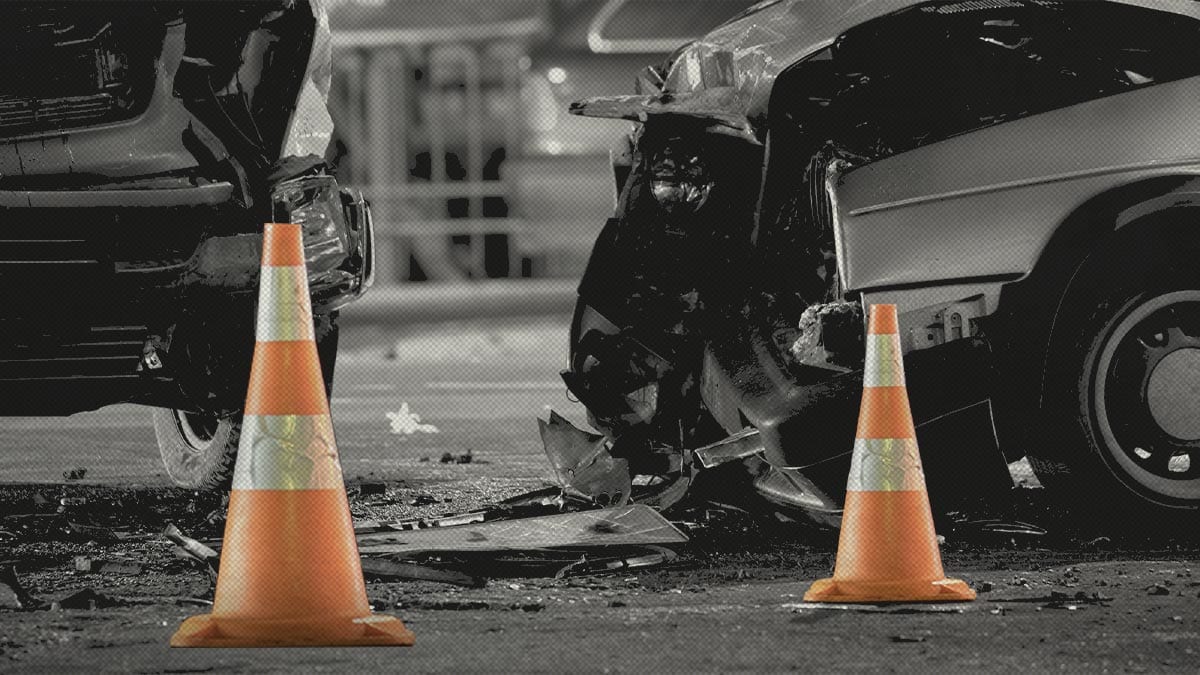
On the morning of May 4, 2025, a black SUV plowed through the outer railings and into the departure lobby of Terminal 1 of the Ninoy Aquino International Airport. Two people—an adult man and a four-year-old girl were killed, and three others were critically injured.
Days earlier, a bus figured in a multi-vehicle collision on SCTEX in Tarlac, with fatalities reaching at least 10. These near-simultaneous tragedies shocked the nation and underscored a grim truth: our roads have become death traps.
In the NAIA crash, investigators say the driver panicked and stepped on the accelerator instead of the brake when another vehicle cut him off, sending his SUV hurtling into the terminal crowd. Reports indicate that the SUV was parked near the terminal entrance when it suddenly accelerated, crashing through the steel bollards and into the walkway. The stainless steel bollards allegedly cost the airport a whopping P8 million in total that were installed and designed to protect passengers from events like this bent and broke like twigs. The driver is currently in police custody and will be charged for the deaths.
ALSO READ
Road Safety in Review and What We Could Do About It
In the case of the SCTEX incident, DOTr Secretary Vince Dizon ordered the Land Transportation Franchising and Regulatory Board (LTFRB) to suspend operations of all units of the bus company involved, Solid North. President Ferdinand “Bongbong” Marcos Jr. and Secretary Dizon responded immediately with public vows to act. In a nationally broadcast message, Marcos offered “heartfelt condolences” to the families and declared that these accidents “should never have happened,” promising “we will ensure they never happen again.” He ordered Secretary Dizon to “move decisively – first, to identify and hold accountable those responsible, and second, to put in place the necessary reforms to prevent further loss of life.”
In that same broadcast, Marcos outlined major steps: Reviewing driver licensing, to keep unfit drivers off the streets; a nationwide audit of bus companies, with sanctions for operators who flout safety standards; and a directive to the Department of Labor to crack down on exploitative practices, since “driver fatigue, long hours, and pressure to meet quotas should never put lives at risk,” he said.
“We owe it to the victims and their families to act—not only with sympathy, but with resolve,” Marcos declared, vowing that “these lives will not be lost in vain… we will build a transport system that truly protects Filipino people.”
Secretary Dizon echoed that sentiment in a May 5 press briefing, saying that victims and their loved ones are demanding “true justice,” which he equated not only with compensation or prosecutions but with making “our streets safe again.” Dizon admitted the road safety system is “broken” and announced sweeping measures: mandatory drug testing for all public utility vehicle drivers, and strict four-hour shift limits (down from six hours) to prevent driver fatigue. His orders also strengthened vehicle inspections and driver training.
Beneath the public statements lies a consensus about the root causes of such carnage. Critics note that no single accident occurs in a vacuum: they are driven by flawed and corrupt systems. Among the systemic failures being blamed by experts and officials are:
1| Faulty and corrupt practices in issuance of licenses
For decades, investigators say unqualified drivers have obtained licenses through bribery or “palakasan.” This was laid bare when Dizon lamented that licenses have been issued “like candy” under a “pay-to-play” racket. He publicly branded the examinations “a sham,” noting that some drivers skip proper training entirely by memorizing cheat-sheet answers and greasing inspectors. Marcos’s directive to “review driver licensing” acknowledges this failing: the goal is to ensure only truly capable, law-abiding motorists hit the roads.
2| Driver quotas and fatigue
Many public transport operators push hefty daily quotas on drivers, forcing them to work beyond safe hours. Secretary Dizon condemned this practice: fatigued drivers and “pressure to meet quotas” were explicitly cited as unacceptable also by the President. The government is also moving to end all-night shifts. Dizon’s new rules already limit bus drivers to four consecutive hours behind the wheel (with a second driver required for longer routes). As one new order states, “if you’re reckless, you’re out” – underscoring that no amount of profit is worth endangering passengers.
3| Faulty infrastructure
The NAIA crash laid bare dangerous design flaws. Properly installed steel bollards meant to protect terminal passengers were supposed to stop rogue vehicles but did not. Dizon, who personally inspected the NAIA site, was astonished by how the P8-million bollards “gave way” under the SUV’s impact. Outrage followed as engineers noted the barriers were embedded too shallow and perhaps substandard. In public remarks, Marcos insisted that “infrastructure meant to ensure public safety must be reviewed and strengthened.” The Airports Authority and its contractor have launched probes into why the bollards failed so catastrophically.
4| Ignored Safety Laws
Republic Act 10916 or the Speed Limiter Act, passed in 2016, mandates speed-limiting devices on public buses, vans, and heavy vehicles. Yet until now it has seen little enforcement. Transportation officials openly admit they have lagged on this law. There have also been calls for immediate action which requires a standard speed limiter for PUVs. The laws are there but they lack enforcement.
These failures play out every day in traffic statistics. In 2024 alone, Philippine highway authorities recorded 31,258 road crashes, which is a 27.6 percent jump from 2023. The trend climbed steadily in recent years, even before the pandemic.
By extension, the first quarter of 2025 shows no sign of relief. Official tabulations for January to March aren’t public yet, but police and transport departments have privately described accident rates as “alarmingly high” compared to last year.
Metro Manila, with its dense traffic, is especially dangerous. An ABS-CBN analysis found that in 2024, most fatal crashes in the capital involved four-wheeled vehicles, meaning passenger cars, jeeps and buses accounted for the lion’s share of carnage (motorcycle accidents were fewer in comparison). Every week there are dozens of collisions on EDSA and other major arteries, though only a few make the headlines. What the NAIA and NLEX disasters show is that these isolated data points are part of a broader catastrophe—if nothing changes, the statistics will only worsen.
The human cost is impossible to ignore. A four-year-old child, a man out for coffee, passengers on a bus heading to work or home – these were the victims. Secretary Dizon, visiting the NAIA scene and meeting survivors, promised not just compensation but “justice.”
“Justice is for all the Filipinos who are now afraid to move along the country’s streets,” he said, empathizing with terrified commuters. President Marcos likewise invoked the memory of the dead, vowing that “we will make the changes that need to be made” so that “these lives will not be lost in vain.”
The question now is whether these words will translate into real reform. Laws can be passed, and orders shouted, but without ironclad follow-through they ring hollow. The President has already ordered Dizon to audit all bus fleets and tighten driver checks, and he said regulators must “demand accountability” from negligent companies.
Yet many fear a return to the status quo once the headlines fade. Will the licensing process see real overhaul, or will “pay-to-play” simply surface with new faces in the machine? Will the Speed Limiter Act finally be enforced year-round, or quietly dropped from the agenda as soon as the heat dissipates? And will transport companies end the ancient practice of forcing drivers to meet grueling quotas? For now, the grim answer seems to be: we will have to watch and wait.
But it isn’t just institutional failures that put us in danger—it’s the culture we’ve allowed to flourish. In an age where online content often outranks public service announcements, influencers and vloggers have become accidental traffic educators—many of them dangerously so.
Case in point: a motorcycle vlogger with hundreds of thousands of followers, whose reckless antics became viral content recently. Her videos glamorized bad behavior all in the name of views and “rider freedom.” What was once brushed off as adrenaline content turned serious when the DOTr, acting on public complaints and viral footage, suspended her license with immediate effect. Secretary Dizon publicly condemned her actions, citing them as “a clear example of how irresponsible content can inspire dangerous imitation,” and urged influencers to recognize their power and platform responsibility.
If we're to shift the narrative on road safety, we must hold not just government and operators accountable, but also those who wield cultural influence and do so irresponsibly. The road is not a stage for content. It’s a shared public space—and one mistake, whether for clout or carelessness, can cost lives.
