

Maybe You Shouldn't Recline Your Seat During Your Flight

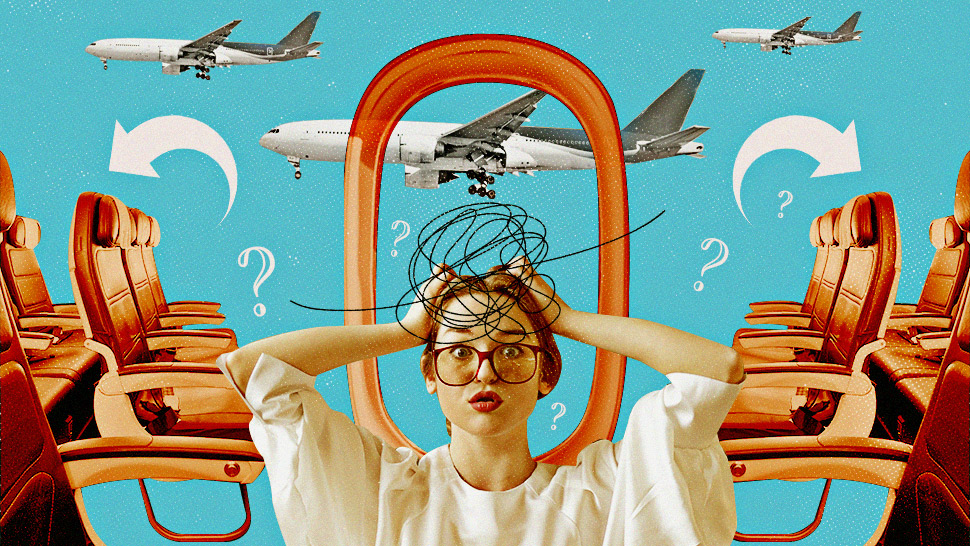
I was at the tail-end of an exhausting 14-hour transcontinental flight on coach recently when the person in front of me reclined his seat for maybe the fourth of fifth time during the whole journey. I didn’t mind it so much, mainly for two reasons: I was asleep for most of the flight, so I wasn’t using the tray table or watching a movie on the screen in front of me, and there was relatively more legroom in that particular plane, from an airline that generally had more space, even in economy.
But I could just imagine if I were stuck in economy on a budget airline on a long-haul flight. Would I have raised a ruckus then?
ALSO READ
19 Percent of Airplane Passengers Rarely Wash Their Hands After Using the Washroom, Survey Says
These Are the Safest Places to Sit in an Airplane
Come to think of it, I actively avoid reclining my seat on any flight, ever, because I’m too conscious that I’m inconveniencing the person behind me. But that’s me. A cursory online search revealed that travelers are pretty much evenly split between recliners and non-recliners.
People are free, to recline, of course. I get that. Airlines wouldn’t have that feature in their planes if they didn’t want passengers to push their seat back to a more comfortable position. But as space becomes more and more precious on airplanes, the question of whether or not you can—or should—recline has become more contentious than ever.
In a 2019 story, Time reported that, on average, seats in economy were set between 25 to 34 inches apart in the early 2000s. But by 2019, that number fell to 30 to 31 inches apart, and even down to 28 inches for short-haul planes. Even the seats slimmed down from 18.5 to 17 inches. The argument for narrower seats is obvious: the less space seats take up, the more seats—and therefore, more paying passengers—you can squeeze in.
Reclining your seat was already something of a question mark back when space was a bit more available; how much more now that you’re practically wedged into a tiny little hole flying thousands of feet up in the sky? In fact, there’s been no shortage of reports of passengers arguing, sometimes violently, over reclining seats. (You may have been involved in one such fight yourself).
A travel professional I spoke to said he reclines his seat because of back problems; it’s just more comfortable that way. But he makes sure to do it slowly “as a sign of respect,” and always puts it back up during meal service so the person behind him can eat without any issues.
Those issues all boil down to manners and etiquette—you know, those things that separate men from beasts, and modern people from Neanderthals. In the case of reclining your seat, the basic rule of thumb seems to be: only do it if you really need to.
Like my travel professional friend, who says he does it because of physical concerns. That seems reasonable. But if you don’t mind sitting straight up, why go through the trouble? The age-old rule applies here: just because you can, doesn’t automatically mean you should. Airlines designed airplane seats to move their backs a little for passenger comfort, but if there’s a chance, however minuscule, that it disrupts the comfort level of the person behind you, shouldn’t you forego those few extra inches of incline for your back?
That in itself is an issue—how much more comfort and space are you really getting when you recline your seat? Because it seems to me that just how much (or how little) your seat actually lies back is too negligible and not worth all the trouble, especially if you’re on a budget airline where designers and engineers have these things calculated down to the micro-inch.
Of course, and again, that’s just me. You may be the type who absolutely needs to recline your seat because, well, you feel that the travel gods gave you that right and privilege, and you’d be remiss not to take advantage. More power to you.
You should know, however, that precisely because of the attendant issues of reclining seats, there’s been a trend of airlines scrapping the recline function in seats altogether and going with what’s termed as “pre-reclined” seats—essentially seats with backrests that already stick out an angle, in between upright and reclined. These were mostly designed for short-haul and budget airlines though, so travelers who go on long-haul flights on legacy airlines—like I did recently—will still probably have the option to recline their seats or not.
Whether or not you do push that recline button, the one thing to keep in mind is to be civilized about it. Remember: manners and etiquette. It doesn’t benefit anyone to suddenly be involved in a yelling match or tussle mid-flight. And over something as trivial as reclining seats? I’m exhausted just thinking about it.
There's business or first class, of course, where you're free to stretch your backrest as far back as you can, sometimes even all the way down to completely horizontal, but that's a whole 'nother story.
