

Andrew E's Song 'Alabang Girls' Can Teach Us a Thing or Two About Economics

It can sometimes be tricky to understand macro-economic concepts. We hear the terms GDP, inflation, debt and recession, among others, but many of us can’t really make sense of them and how they relate to us directly.
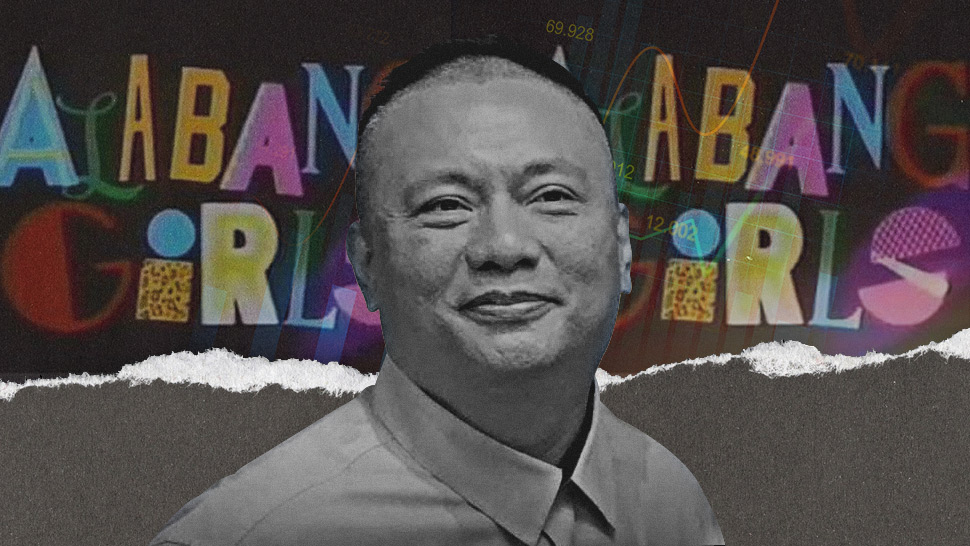
A Facebook user tried a more practical approach to help people understand at least one of these economic concepts. To illustrate the exponential growth of the middle class and purchasing power of the ordinary Filipino over the past 30 years, Jethro Trogo posted a status update using the lyrics of Andrew E’s song “Alabang Girls” as an example.
The song came out in 1992 and was part of Andrew E's extensive oeuvre from the era. It was a big radio hit, so much so that it was eventually turned into a movie, which featured the singer in the lead role, of course.
If you have trouble remembering the song, or have never heard of it at all, here’s a refresher:
And here are the full lyrics of the song:
Let's do this
Yeah, Alabang girl
Yeah, Alabang girl
S'ya'y isang girlie na mahilig mag-beach (yeah)
Mataas ang kanyang level at hindi mo siya ma-reach (uh-huh)
Taga-Forbes, taga-Dasma, ang hilig n'yang ka-mingle (really?)
Wala lamang mayaman 'pag ang ere n'ya, nag-jingle (uh)
Silang mga babae na bihirang ngumiti (ooh)
Walang kaguhit-guhit ang kanyang binti (is that so?)
Walang kaduda-duda, porselana'ng kanyang face (oh)
At 'pag s'ya'y ngumiti, up and down ang kanyang brace (say what?)
Yeah, Alabang girl
Yeah, Alabang girl
Kung, kung, kung s'ya'y pagmamasdan, s'ya'y cool na cool (cool)
Mas cooler pa sa water ng kanyang swimming pool (hm-mm)
At 'pag s'ya'y kausap na, malakas ang dating (oh)
Fav'rite hamburger, Burger King or nothing (nothing else)
Ang gusto n'ya, Kellogs, ayaw n'ya, Cheese Curls (that's true)
'Pag s'ya ay nag-party, suot na ang kanyang pearls (uh-huh)
Imposibleng hinding-hindi mo s'ya papansinin (why?)
'Pag nakita mo s'yang sakay ng kanyang limousine
Yeah, Alabang girl
Yeah, Alabang girl
Palagi n'yang hawak, kanyang cellular phone (really?)
Pabrika at kumpanya, things they own (oh, my God)
Baskin Robbins ang kanyang ice cream (what's that?)
At s'ya'y nagba-ballet pagdating ng dilim (oh)
Puro credit cards at wala s'yang cash (wow)
Laging kinu-curl ang kanyang eyelash (disgusting)
Kapag s'ya'y nasa mall, mga heads ay nagtu-twirl (really?)
Iba talaga'ng dating, ang galing ng Alabang Girl (yeah)
Yeah, Alabang girl
Yeah, Alabang girl
Yeah, Alabang girl
Yeah, Alabang girl
In a nutshell, the song talks about a well-off woman living in a swanky part of town (Alabang) and her penchant for the proverbial “finer things in life.”
Trogo calls it "the best pop cultural evidence of generational growth of the Filipino middle class.”
“This is how Andrew E portrays what he thinks means being the pinnacle rich during that time—Kellogg's Corn Flakes, Baskin Robbins, Burger King, credit cards, corrective braces, and mobile phones—almost all of these things are now considered middle class affairs, but at the time, true enough, were well out of a lot of Filipino families' reach.”
He’s right. None of the things mentioned in the song are particularly associated with just rich folk today. Heck, even the most socially disadvantaged living in depressed communities can afford things like flatscreen TVs and mobile phones these days.
“The 30-year economic boom afforded by the growth of OFW remittances, job outsourcing, the IT revolution, and the increasing competitiveness of the semiconductor industry have allowed for a new generation of middle class to arise—a class awash with previously nonexistent purchasing power and latent with an appetite for consumer goods and services.
“This in turn fueled the growth of retail, services, importation, and manufacturing that provided a healthy enough ecosystem to attract further investment into the industries, leading up to where we are today.”
Trogo’s point is clear: items that were once regarded as “luxury”—what Andrew E. considered posh and what he associated exclusively with the affluent—are now so common that they’ve lost their luster as status symbols. Growth in income and spending power, according to Trogo, also contributed to more people eventually being able to afford these so-called “luxury items.”
Who knows? The things we think are lavish and out-of-reach today—electric or hybrid cars, foie gras, trips to Boracay or Palawan—may be considered ordinary, perhaps even cheap, in another 30 years.
“Andrew E. likely never had economics in mind when he wrote his song, but it accidentally became a time capsule of sorts that offers us a snapshot of how big of a difference a matter of 30 years can make.
“Yeah, Alabang Girls."
What do you think?
Read Trogo's full post here:
