

Financial Adviser: 5 Business Lessons Everyone Can Learn from 'Chao Fan King' Lester Pimentel Ong, Founder and CEO of Binondo Food Group

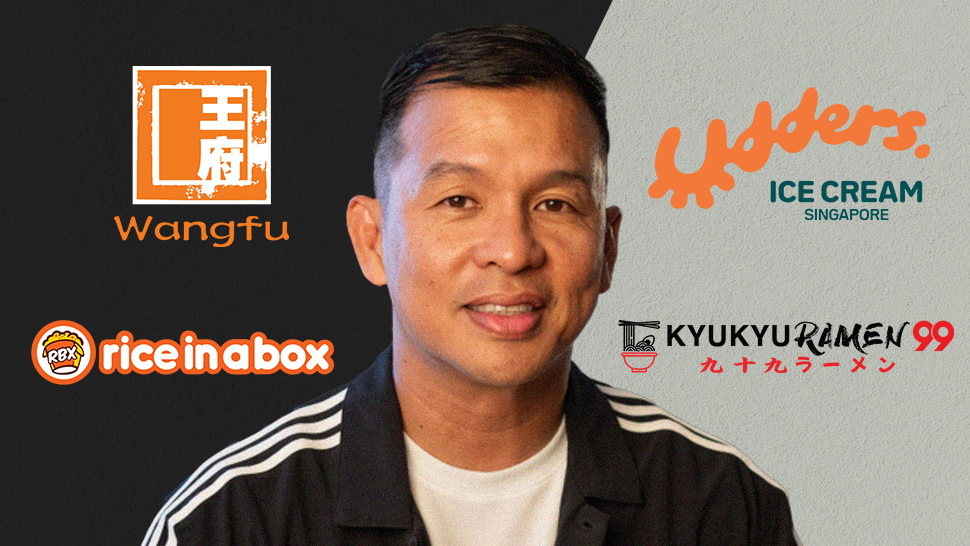
In the realm of sports and entertainment, tales of individuals who transcend conventional boundaries and carve their own path are rare and remarkable. Among these tales, the journey of Lester Pimentel Ong stands as a testament to unwavering dedication, innovation, and the pursuit of passion.
With a background that intertwines sports, filmmaking, and entrepreneurship, Ong's story resonates as an inspiration to aspiring athletes, creative minds, and ambitious entrepreneurs alike.
Ong's journey began with undeniable achievements in the world of sports. As a former National Team wushu gold medalist and world Wushu champion, he soared to great heights as a master of martial arts. His talents extended beyond martial arts when he transitioned to becoming a stunt director for movies, using his impressive wushu skills to create exciting action sequences.
However, every path has its challenges. When movie production slowed due to rampant piracy in the ‘90s, Ong was compelled to explore alternative careers, leading him to work as an apprentice in a stock brokerage firm.
But a subsequent financial crisis rendered his stockbroker job unsustainable, urging him to seek additional income. One day, while searching for a job, he stumbled upon an empty food stall situated near a bustling market area. Inspired by his experiences abroad, he came up with the concept of serving "chao fan," which later became famous as “Rice in a Box” or simply “RBX.”
The first Rice in a Box outlet did not come easy. It faced numerous challenges, but Ong didn't give up. He diligently sought out the right locations and improved the product until RBX eventually became a leading brand for rice box meals, boasting more than 250 outlets before the pandemic.
The success of RBX enabled Ong to establish the Binondo Food Group, introducing Wang Fu, a Chinese-Singaporean restaurant concept, which now owns nine branches under its portfolio, and Kyukyu Ramen, a Japanese noodle concept, which has a total of 50 outlets. Recently, Ong also introduced Udders, a popular Singaporean ice cream brand, to the Philippines.
From Ong's early days as a wushu champion to his endeavors as a filmmaker and entrepreneur, his journey underscores the individual's power to forge their own path, redefine success, and create a lasting legacy.
What lessons can entrepreneurs glean from Ong's ability to adapt and pivot his career when faced with challenges? How can aspiring business owners draw inspiration from Ong's journey of turning adversity into opportunity?
Here are the five business lessons everyone can learn from Lester Pimentel Ong, founder and CEO of Binondo Food Group:
ALSO READ
1| Know how to turn adversity into opportunity
In the dynamic world of business, challenges are an inevitable part of the journey. However, what sets successful entrepreneurs apart is their ability to transform these challenges into opportunities for growth and innovation.
By recognizing challenges as stepping stones, Ong turned adversity into a thriving business venture. His tenacity and willingness to innovate allowed him to transform his struggles into opportunities for growth.
When Ong embarked on his first venture, he faced a formidable challenge: the unfamiliarity of the ‘chao fan’ concept among the local populace. This obstacle could have deterred many, but Ong's resilience and dedication propelled him forward.
The initial months tested his resolve as Ong encountered financial strain due to losses, but his refusal to succumb to adversity became his defining trait. His persistence paid off when, in the fourth month, he reached a pivotal turning point by breaking even.
Acknowledging the importance of location, Ong continued to refine his strategy, expanding to areas near schools and high-traffic spots. As time progressed, his relentless efforts began to yield positive results. This gradual upturn in fortunes provided him the confidence to persist in his pursuit.
In retrospect, Ong's journey highlights how the adversity he faced acted as a catalyst for innovation and growth. His ability to persevere, even when the odds seemed stacked against him, ultimately led to the transformation of his once-daunting challenges into remarkable opportunities for success.
"I was a Philippine national wushu athlete representing the country,” he says. “I became a world wushu champion in 1995 in Baltimore, USA, earning all possible medals in the sport. I achieved the title of Asian Wushu champion in 1996, and I also secured a gold medal and overall championship in the Southeast Asia Wushu championship held in Hanoi, Vietnam, in 1995.
“Having devoted nearly my entire lifetime to martial arts, it was only natural for me to lean towards a career in that field, so when I finished my career as an athlete, I started my career naman in the film industry as a stuntman and I worked my way up to become an action director.
“During that time, yung film industry was hounded by piracy. Alam mo yung uso pa dati yung DVD and VCD, humirap yung industry noon. Kumukonti yung mga film projects so I started looking for a real job.
“In 1996, I worked as an apprentice in a stockbroking company, yun na yung parang second career. I was doing well in training, but when I started working as a stockbroker, nagkaroon naman ng Asian financial crisis. E di syempre walang market. Wala ring income.
“At that time, I was married already and had one child by the age of 23. I needed to find additional income, and I came across a store in Pasay and saw a food stall but I did not know what to do. The area was vacant and had very high traffic flow.
“I inquired about the rent and it was very reasonable, so nag-isip ako ano gagawin ko. Natutunan ko noon, when I was overseas, sa China and Taiwan, uso yung ‘chao fan,’ so nag bukas ako ng chao fan stall. Wala pang chao fan yung Chowking noon. That was year 2000. Kami ang nauna. We introduced the concept of using a takeout box like that, but it did not do well at first.
“We were in front of the palengke, talagang masang-masa yung market ko. They did not have any idea what chao fan was, and they did not know how to eat it, so I started struggling until I made it work.
“First three months, I was losing. I was only 23 years old. Yung life savings ko and sa misis ko unti-unti nadi-deplete, so sabi ko sa misis ko ‘Isara na natin ito kasi it’s not doing well.’ Pero sabi ng misis ko, ‘Hindi, sustain pa natin ng another three months, and after three months, lugi pa rin tsaka na tayo mag decide.’ What happened was on the fourth month, I broke even. Tapos on the fifth and sixth month, I made just a little bit of money so tinuloy ko na.
“Tapos yung sister ko sabi nya gusto rin daw nya mag-open ng store. Gagayahin nya ako, so nag-open din sya ng Rice-in-a-box in Valenzuela. Yung outlet nya, nasa harap ng Fatima. Harap nya yung med school.
“When she opened, yung first day immediately ang haba ng pila. Kasi yung mga med school students, mas adventurous, pag may bagong food concept, they were willing to try it and siguro mas may kaya sila. Eh yung sa ‘kin palengke.
“So naisip ko, okay pala itong concept. Mali lang yung pwesto ko. So we continued doing it. We looked for other locations. Ginaya ko yung pattern. Nagbukas din ako sa mga locations na malapit sa schools. By the way, yung first outlet ko until now, andyan pa, kasi yung sumikat na ibang location, it took off na rin.”
2| Know how to navigate uncertainty and take calculated risks
Taking calculated risks is a crucial aspect of achieving success and growth in both personal and business endeavors. It involves carefully evaluating potential outcomes, weighing pros and cons, and making informed decisions that have the potential to yield significant rewards.
Ong's prudent approach to growth is evident in his early years. With a firm commitment to conservative expansion, he resisted the allure of loans, opting to grow his businesses organically.
When Ong launched Wang Fu, a Chinese-Singaporean restaurant, he ventured beyond his comfort zone, but not without meticulous planning. He recognized the challenges posed by the intricate nature of Chinese cuisine, which is dependent on the skill of each chef. This insight guided his measured expansion strategy, illustrating his adeptness at taking risks that were grounded in thorough analysis and consideration.
During the COVID-19 pandemic, instead of shying away from adversity, Ong pivoted his business model with a calculated approach. Recognizing the potential in vacant mall spaces and shifting consumer behaviors, he focused on takeout and online sales, expanded his outlets and anticipated a brighter future beyond the pandemic.
“It took us 12 years before we opened another brand,” he says. “I focused on growing Rice in a Box kasi we were very conservative. We did not take loans from banks. We grew our business slowly because we did not borrow.
“We were very conservative because I started doing business during the downfall of the movie industry and the Asian financial crisis, so somehow it shaped my business sensibility. So syempre kapag galing ka sa krisis, lahat ng (galaw) mo, conservative eh.
“Pero later on, pag pumapasok naman ako sa business, and alam ako pag hindi naman ito nag-work at hindi naman ako mamamatay, lalaban ako dyan. Kahit mag-loan ako ngayon and hindi ito nag work, alam ko may pambayad ako dyan.
“So after 12 years, I put up a Chinese-Singaporean restaurant called Wang Fu. We now have nine branches and it is still continuously growing. It is 11 years old now. Yung growth nya medyo mabagal. Chinese food is not something scalable kasi we depend on the skills of the chef and not on the process. Mahirap mag-grow. Chinese food is kung fu food. You rely on the kung fu of the chef, unlike Japanese food, which is scalable.
“In 2018, we launched our latest brand. It’s called called Kyukyu Ramen 99. The unique concept behind it is a ramen shop that offers authentic Japanese ramen for only P99 pesos per bowl. But, of course, P99 is just the starting price; we also have slightly more expensive options like P199.
“We wanted to democratize ramen in the Philippines. We tried to replicate the ramen concept in Japan na fast and affordable kasi sa Japan, hindi naman luxury item yung ramen eh. Pero sa Philippines, for P500 pesos that’s almost minimum wage salary for a bowl. Many people cannot afford it.
“I had initially considered franchising a Japanese brand but after considering the franchise fee, the royalty fee and all, the price point that I wanted was not possible, so what I did was, instead of franchising a Japanese brand, I just hired a Japanese chef and several consultants to make this thing possible.
In the past, a good bowl of ramen would cost around P400 to P500 pesos. Ngayon, we have P99 or P199, which is very affordable to everyone, presyong Jollibee. We now have 50 branches and we want to have 100 stores by next year.
“During the pandemic, ang daming bakante sa mall. Marami kasing umaalis, so gusto ko pumasok. The malls were very supportive. Ready sila para sa akin. Normally kasi ang ramen hindi yan bagay sa take out, but we formulated a system how to make it good even sa take out.
“During those times, walang rental eh. We were active with delivery and online sales. Yung time na yun, ini-expect ko the pandemic will not last forever. Alam ko matatapos yun eh, so I bet on it. Pero sabi ko, if I lost my bet, I will still make money every day. Mas matagal lang yung ROI ko.
“Through take out and walk-in alone, I was able to make a profit, so sabi ko, kunyari hindi natapos yung pandemic, I could still recover my investment, mas matagal nga lang. Pero kung natapos yung pandemic, mababawi ko yan in a few months.”
3| Know how to create value to stay ahead of competition
Businesses that create value develop a unique brand identity. By consistently delivering value, businesses build strong relationships with customers.
Loyal customers not only continue to purchase from the business but also become advocates, spreading positive word-of-mouth and contributing to brand reputation.
Ong's ability to create value and maintain a competitive edge stemmed from his understanding of his team's capabilities and limitations. He rigorously assessed whether his team possessed the necessary skills to gain a substantial advantage over competitors. This insight allowed him to channel efforts where they could excel and outperform others.
The iconic Rice in a Box concept, amidst imitations and fleeting competitors over the years, exemplified Ong's dedication to generating lasting value. To manage the competition effectively, he hinged his approach on consistently delivering value to customers. For him, value translated into not just affordability but also satisfaction.
Ong's approach to value creation involved leveraging competencies, pricing strategies, and unwavering commitment to customer satisfaction. This foundation allowed him to consistently stay ahead of the competition and cement his place as a visionary in the business landscape.
“I know ourselves very well,” Ong says. “I am aware of our competencies and weaknesses. So, first and foremost, when I consider entering something, the competency of our group should be of utmost importance. Kaya ba namin? Will our competency provide us with a significant advantage over others? Next, I evaluate the price point. I observe how our competitors do it. Can we do it better? If the answer is yes, then laban. If the answer is no, then huwag. Huwag tayo lalaban dyan, hindi natin kaya yan.
“Like yung Rice in a Box, madami ng gumaya nyan. Over the past 23 years, marami na nag come and go. To manage the competition, we must always create value for the customer. If I am selling for P75, dapat yung binayad mo na P75 pesos, masaya ka pag kinain mo. Ano basis ko? I have to try it myself to see if it’s worth it. If I am not happy, then I will not sell it.
“Kasi madaling gumawa ng murang pagkain, madali rin gumawa ng masarap na pagkain, pero yung mura na masarap, mahirap yun. Eh yun yung gusto natin puntahan lagi, yung mura na masarap.
“At Binondo Food Group, our motto is to consistently create world-class quality food that is affordable for every Filipino kasi I realized that food in the Philippines is not cheap at all. When it comes to income versus food prices ratio, the Philippines is not cheap.
“For example, when I visited Japan, I wanted to franchise a Japanese ramen brand. However, before doing that, my wife and I went around to explore different ramen shops. During our visit, I saw one of the largest chains in Tokyo selling their basic ramen for ¥500 in the Ginza area. Considering the high cost of rent and labor in Ginza, they were able to sell their ramen for ¥500, which translates to around P220 to P250.
Sabi ko kung sa Ginza, kaya mo magbenta ng P220 na ramen, sa Pilipinas, kaya ko ito ng P100. Ngayon papaano? Yan ang inaral namin. We started investigating how to do it, maraming challenges eh, logistics, procurement, know-how, apparently, there was no good independent ramen noodle maker in the Philippines. Wala.
“So, gumawa kami ng noodle. I got a partner, sabi ko, ‘Gawa tayo ng high quality noodle for a very low price.’ Sa Pilipinas, good food is not very affordable to everyone, so I wanted to capitalize on that to make food affordable and good. An example of this is Jollibee. They are the master of this. Idol natin yan. Nagawa naman nya, so kung kaya nya, siguro magagawa rin natin.
“Sabi ko nga dati, nahihirapan ako makapasok sa high-end malls, sabi ko sige sa inyo na yung Makati, basta sa akin ang Cavite, akin ang Rizal, akin ang Bulacan, akin ang Tarlac, akin ang Bicol, sa inyo na Makati. Kasi yung mamahalin na Japanese restaurants, nagsisiksikan sila sa Makati eh.”
4| Know How to Create and Promote a Brand That Resonates
Brands that successfully tap into consumers' emotions go beyond transactional relationships, creating a profound bond that drives loyalty, advocacy, and lasting impact. This emotional resonance transforms routine interactions into meaningful memories.
Emotionally resonant brands build trust and authenticity. Consumers believe in a brand that consistently aligns with their emotions and values. This trust extends beyond products and services, influencing purchasing decisions and long-term relationships.
Ong's approach to creating a brand that evokes emotions is rooted in a deep understanding of human connections and the power of storytelling. By combining his background as a film director with his passion for food, he was able to craft a brand that resonates with people on a personal and emotional level.
Ong's focus on understanding his customers' desires and preferences enabled him to tailor his brand to their emotions. He recognized that emotions are not solely evoked by the product itself but also by the overall atmosphere.
“When it comes to branding, that’s where my being a film director plays an important role, because I know how to entertain people,” he says. “I know how to tell a story. I know what people want to see. That's part of being a director. You would always want to know, ‘Ano gusto makita ng tao? Anong pakiramdam ang gusto mong ibigay?
“It's not all about facts. Branding and marketing encompass more than just figures and prices. They are intertwined with emotions to convey a story. Anong feeling ang gusto mong iparamdam?
“Marami nagsasabi sakin, you’re into film and you’re into food, sobrang diverse, sobrang magka-iba. Pero sabi ko, ‘No, no. It’s not about diversity. Its about being the same because both revolve around the same core—entertaining people and making them happy. Simply put, my business is about bringing joy to people.
“Sa restaurant, when you visit, you come with friends, with family. I aim to give you a sense of happiness not only through the food, but also the ambiance, the music, the sights you see. You’re paying those P99, pero hindi lang yung P99 ang binayaran mo, kundi yung pakiramdam mo sa nakita mo o yung bumati sayo. Ano ang feeling mo kung masikip yung kinakainan mo? O kung maluwang ba yan. Ano feeling mo pag comfortable ka?
“It’s about the feeling and the overall experience. Just like when you watch a movie or the series I made, it’s me entertaining you and giving you the happy feeling to you and your family. Branding is about telling a story and evoking emotions.
“Nothing beats social media nowadays. it's the democratization marketing and advertising. In the past, only big brands could afford to reach people, but thanks to social media, the approach has become more direct and accessible. It's now affordable for brands, including startups, to use platforms like Tiktok and Instagram.
“I'm fortunate that I started my business long before the era of social media, but I always stay in touch with what’s happening and the latest trends. So tuwing may bago, alam ko na agad. I was a very early adopter of Grab food. Bago pa lang sya sa Pilipinas, kinausap ko na sila that I wanted to be part of Grab.
“I wanted to be the cheapest vendor in Grab, so I convinced them to include me kasi, una, they only partnered with expensive restaurants, pero kinonvince ko sila na isali nila yung Rice in a Box. Sabi ko, ‘I have 100 stores to support you.’ Syempre yung Grab gusto rin nila targetin yung mga people on a budget, not just the rich people, so my product could give you that. This happened in early 2017. I’ve always been an early adopter and constantly observing what is going to happen. If there is low risk involved, I'm willing to try it as long as it won't kill me.
“We also franchise other brands like Dean and Deluca, kasi it’s Western food. Ang expertise namin is Chinese and Japanese. We are more on Eastern Oriental food, pero itong brand kasi, it would take us a while to learn all these. And this is a New York brand.
“I think it has more than 80 years of history. Very strong brand in the U.S. Gusto ko mag-try ng isang international brand and see how it works for us. I realized it’s good din, kasi you skip a lot of steps of the learning curve and streamline our progress. There’s a lot we can bypass by partnering with established brands like this.
“Even though we have the capability to create our own brand, the truth is, you can't have it all. And you can't know everything. Instead of starting from scratch and investing several years to develop expertise in areas like pizza, pastries, pasta, and coffee, we opted to go the route of franchising. Our strength lies in operations, so we handle the day-to-day running of the business, and our partner is happy with the arrangement.
I also have a new venture with a Singaporean ice cream company called Udders. It's an ice cream brand from Singapore. We're entering into a joint venture because I believe it will fast-track our technological know-how in creating products.”
5| Know how to apply martial arts lessons in business
Martial arts principles hold significant importance in business, as they possess transferrable qualities that nurture personal growth, effective leadership, and strategic triumph.
Applying martial arts principles to business equips leaders with self-confidence and the ability to overcome challenges, enabling them to navigate high-pressure scenarios and make decisive, calculated choices.
Additionally, martial arts' emphasis on maintaining a balance between offense and defense is relevant in business strategy, where finding balance between risk and stability is vital for enduring success and sustained growth.
Ong seamlessly integrated martial arts principles into his business endeavors, employing the philosophy of balance through a yin and yang approach to ensure equilibrium in strategic decisions.
Drawing from the martial arts concept of repetition, he instilled a culture of continuous learning and improvement, guiding his team towards mastery. Just as he faced challenges head-on in martial arts, Ong approached business obstacles with determination and innovative problem-solving, mirroring his martial arts training.
Ong's coaching and teaching passion translated into effective mentorship, nurturing growth within his team, and his strategic development efforts echoed his martial arts mastery—expanding, innovating, and refining operations.
“Number one, there is always a yin and yang principle—a balance in everything,” Ong says. “You need to achieve a perfect balance. Kaya pag nakita mo yung martial arts logo, lagi yan may yin and yang.
“In wushu, other than the philosophy of perfect balance and the Taoist philosophy of yin and yang, being an athlete in general, the first step to mastery is repetition. When I was a young child practicing martial arts, I aspired to become a master of martial arts and its movements. The only way to achieve mastery was through repetition. You had to keep doing it.
“Then, there will be problems that come in. You will encounter these problems, and you have to keep on solving them. Kumbaga sa swimming, you have to keep on to moving to stay afloat, or riding a bicycle—you have to keep on moving forward to keep your balance. So sa business ganun din, madaming problema ang darating, but you have to keep on moving lang, sige lang, master mo lang yung problem solving skills mo, dire-diretso lang, don’t stop.
“In wushu, if you master the terrain and your opponent, you will achieve victory. Ganun din, you observe the battlefield and how others are fighting their battles. You need to study them, adapt, and learn from them kasi ako, I am very keen on observing competitors, not just to compete with them, but to learn from them. Lahat ng ginagawa nilang tama, gayahin natin. They become your best teachers, tapos yung ginagawa nilang mali, huwag mong gagawin. Maaga pa lang iwasan mo na, kaya to me, competition is healthy.
“That’s what being an athlete is all about. I love the competition and get excited about it, not just to defeat each other, but to challenge ourselves. We are competitors, but we can coexist. I play the game while promoting coexistence, and sometimes I come out as the winner. Sometimes I lose, but the more important thing is to keep moving forward.
“Other than that, I have a passion for coaching and teaching lahat ng skillsets na meron ako. I always love to impart it when I hire people. I make sure to coach them well in management, operations, financial analysis, strategy, and marketing strategy.
Many of the young individuals who were under my guidance before are now adults in their mid-30s. They've been with me for 20 years, helping me grow the company. so nandyan sila. They’re very reliable.
“Currently, my focus lies in business development, which includes expansion, the introduction of new products, the creation of new brands, and refining operations. I have a team of highly skilled individuals who have been running the show for me.
“I only work on one or two movies lang, part-time, but it's something I'm very passionate about. Dati action director ako, but in 2016, naging (full-fledged) director na ako.
“Directing is all about management. You need to manage the creative skills of the people around you. As a director, your role involves overseeing the creative abilities of those in your team.
“Firstly, you manage the actors. You also manage the cinematographer, the one that creates imaging for you, the lighting design and camera angles. I work closely with both my cinematographer and actors. Additionally, I collaborate with my production designer, who is responsible for creating sets and costumes. This is the duty of a director: puro creative skills ang minamanage mo. You push them to their limits.
“In business kasi, dalawa ang minamanage mo. One is the technical skils and the other one is creative skills. You have to manage your finance, your finance people, your accounting people. You also have to manage your HR and your chef. Creativity is only a portion of your responsibilities because you also work closely with technical experts. As a director kasi, you don’t manage the administrative stuff anymore kasi it's already done by other people.
