
Financial Adviser: 5 Business Lessons Everyone Can Learn from 'Thrift Book King' Manny Sison, Founder and CEO of Booksale

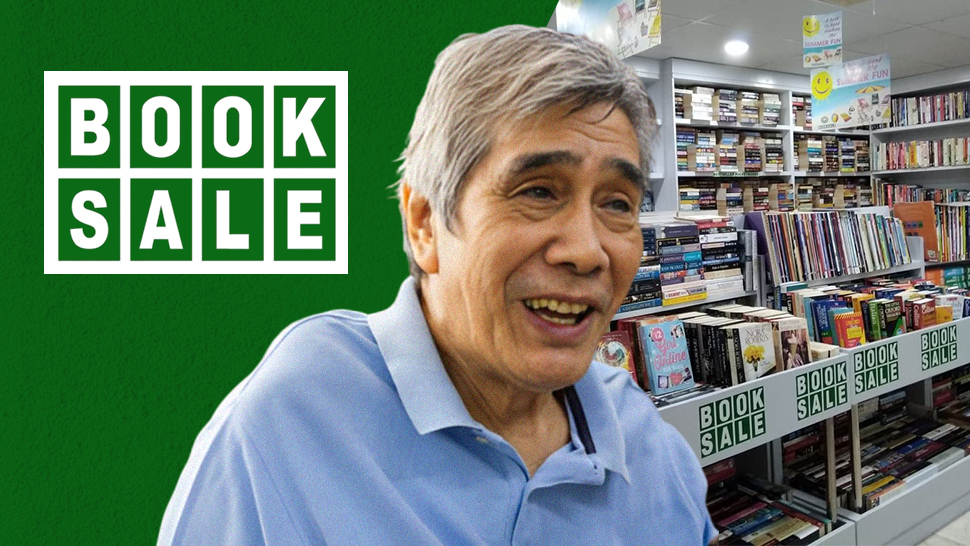
In a world that often underestimates the power of determination and innovation, Emmanuel "Manny" Sison stands out as a testament to the indomitable human spirit.
Despite being struck with poliomyelitis, a condition that limited his movement from a young age, Sison faced challenges that would have discouraged many. However, he transformed adversity into opportunity, reshaping the bookshop industry and leaving an enduring legacy.
Sison's early years were marked by his inability to engage in physical activities like other children. Constrained by his illness, he found solace in the world of books.
His thirst for knowledge led him to spend countless hours immersed in literature, opening doors to new ideas and perspectives. Despite his physical limitations, he developed an insatiable curiosity and a hunger for learning that would shape his future.
After earning his college degree in philosophy, Sison's path took an unexpected direction. He combined his passion for learning with the business world by taking on a part-time role as a university professor while working as a full-time advertising account executive. This dual journey allowed him to excel both in education and commerce simultaneously.
It was during his tenure in the academia that Sison saw an opportunity to source second-hand books. He observed that his fellow professors were struggling to afford costly imported textbooks. Recognizing the need for accessible educational resources, Sison envisioned a solution that would address this need.
In the 1970s, Sison embarked on a new venture. He searched through garage sales and places selling used items, collecting books that people didn't want anymore, but were still full of valuable information. He realized he could offer these books at low prices to many people. He began by selling books in small spots, such as corners of corporate canteens and other locations.
Sison's business venture bore fruit, and his efforts led to the establishment of his inaugural store named Booksale at Makati Cinema Square. The name carried a promise: a treasure trove of books waiting to be discovered.
The response was overwhelming, propelling Booksale's growth. Through the 1980s and 1990s, the brand expanded its presence, with branches sprouting across the country.
As the book industry underwent significant transformations, including the rise of digital content and online retailers, Booksale remained steadfast. While mainstream bookstores faced challenges, Booksale remained a dependable and affordable option. Sison's strategic insight and adaptability allowed the brand to thrive even amid shifting market dynamics.
Today, the legacy of Emmanuel "Sison" Sison endures. His innovative approach to making knowledge accessible resonates through the countless individuals whose lives were enriched by Booksale's offerings.
How can Sison's journey inspire entrepreneurs and businesses facing a constantly evolving business environment? What can we learn from Sison's commitment to making knowledge accessible to everyone, and how can we apply these lessons across different industries?
Here are five business lessons everyone can learn from the king of thrift books, Emmanuel “Manny” Sison, founder and CEO of Booksale:
ALSO READ
1| Know how to identify untapped market niches
Catering to a specific and unmet need within a niche market fosters a sense of loyalty among customers. When consumers find products or services that cater to their exact requirements, they are more likely to become loyal patrons and advocates for the brand.
Sison's ability to identify untapped niches is a culmination of his personal affinity for books, his diverse educational journey, and his acute awareness of market gaps.
It was during his teaching stint that Sison saw the gap between the used book market and the demand for affordable yet insightful reading material among intellectuals. Realizing the gap, he ventured into creating Booksale by positioning it as a refined alternative to the traditional book junk shops along Recto and Avenida during his time.
“I got into this business because I am a bookworm,” he says. “I had two rooms full of books. I had a habit of buying books because I like reading. When I was studying, my day would not be complete if I would not pass Goodwill or Alemars along Recto. Iba yung worm eh.
“I've always wanted to read, possibly because I could not compete physically. I had polio when I was six, which left me bedridden for almost six months and because I could not join other kids to play, I went into fantasy land and all I did was read, read, read.
I studied philosophy and letters. I almost got a Master in Literature. Then I realized you won't get rich from this, so I said ‘I want to be rich.’ I went to business school. I wanted to study abroad. My old man said ‘Are you out of your mind? Who will finance you?’ My mother was just a market vendor while my father was a school teacher, so they thought I was out of my mind.
“It took me two years to look around for financial assistance so I could study and get an MBA from the states. After two years, I landed scholarships, not one but three. I chose to study at University of Illinois to take my MBA.
“My background in philosophy, combined with business and some knowledge in psychology, coupled with an innate drive to succeed enabled me to return here. I was not supposed to come back, but my family was here so upon my return, I joined an advertising agency. A friend of mine then told me, ‘Hey, you want to make extra money?’ I said ‘What do you mean?’ He said, ‘You could become a lecturer at the graduate school.’
“I taught marketing management and research at various schools. That's when I saw the difference between the used book market versus the expensive brand new books and the market for hungry intellectuals with no money to buy the latest books.
“I realized this through a simple analysis. I had conversations with friends, many of whom were professors in colleges, and they still went to second-hand bookstores kasi namamahalan sila, so sabi ko, ‘This is an opportunity.’ Ang tawag pala doon ay niche. So I made Booksale as the elevated, sophisticated counterpart of the book junk shop along Recto and Avenida during my time.
“I believe that business and success are nothing but looking for untapped niches eh. Who the hell would ever think that hitching a ride on a motorcycle could turn into a billion-dollar industry? It all started in Vietnam 40 years ago because of lack of transportation. Could you ever thought that delivering a siopao from one place to another could become a business? People are willing to pay P60 to deliver a siopao that’s worth P40. Yung ganun eh.”
2| Know how to build a business from scratch
Creating a business from scratch allows entrepreneurs to shape their venture according to their vision and values. They have complete control over every aspect, fostering a strong sense of ownership and commitment. This deep connection enhances the alignment between the business and the entrepreneur's aspirations.
Sison embarked on an unconventional path by selling second-hand books on folding beds placed in company canteens. He scoured classified ads and frequented garage sales, collecting not only books but also a variety of items.
Sison turned these opportunities into ways to accumulate resources for his budding venture. He strategically built relationships with vendors and even bribing them to reserve books for him. He understood the importance of having a consistent supply of books, which eventually formed the backbone of his business.
As his business matured, Sison's persistence and strategic thinking led to the realization of his dream. He eventually managed to afford a small store despite the challenges. His experience underscores the value of resilience, creativity, and understanding market dynamics.
“I was already an account director of J. Walter Thompson, handling several multimillion-peso accounts,” he says. “I was also a professor of various graduate schools, but you won't believe this, I was supervising a team of about four people selling refurbished second-hand books on folding beds. We sold our books in company canteens such as in San Miguel, DBP, and other places.
“The funny thing was, a relative who owns a small company, nakita ako, sabi nya, Kkanino ito? Sa ‘yo?’ Nakita nya yung mga dirty books. Sabi nya, ‘Sayo ito? Hindi ka na nahiya?’ Sabi ko sa sarili ko, ‘Well, people with small minds, they don't see it.’ Ten years later, this relative saw my stores sprouting all over the country.
“At that time, I sourced the books through classified ads and garage sale. When there was a garage sale, I would go there and they would sell their kaldero, chairs, and there would be some dusty books here and there. I would read their classified ads and then collect and load the books into my car. Fortunately, yung trabaho ko noon was in account servicing. Pag sinabi sa company, ‘Si Mr. Sison nasaan? Sasabihin sa office, ‘Sir, nasa client call.’
“Maraming garage sale noon. Every Sunday, mga four to five yan. Also, there was an area in Bangkal in Pasay Road where they sold junk. Whenever I visited that area, bina-bribe ko yung mga tindahan doon para every time there would be books, ire-reserve nila kay Mr. Sison. Hindi lang yun, these were the people who would go to the garage sale regularly. Pinapakyaw lahat.
“We could not afford a store and we never consigned to stores because they would skin you alive. I said to myself, 'How can I afford to set up a bookstore?' How do you do it? You do it in the same way that the people you're buying from are doing it.
“What I learned is to let people know that there are good books here and there are always passionate readers like me, so pag nalaman nila may bagong edition na tambak, pupunta sila doon.
“But slowly I was able to afford a small store. Pero before I got that store, I practically had to beg or bribe purchasing managers who were also avid readers by offering them books and magazines like Playboy, and all of that, para bigyan lang ako ng space.
“After one to two years, isa-isa, slowly, we were able to afford to get spaces in lesser-known malls. We located near universities like Ateneo, PWU so we can get a captive market. I had a pwesto beside those selling suka and bagoong. My target market was students and professors.”
3| Know how to find reliable sources of supply
At the heart of every thriving enterprise lies the seamless flow of goods and services. The process of sourcing materials, products, or inventory forms the backbone of a business's ability to deliver to its customers and clients consistently.
The reliability of supply sources can influence multiple aspects of business success. It ensures that a business can meet demand without disruptions, preventing stockouts that could erode customer trust and loyalty.
For Sison, the transformation from scavenging garage sales to establishing a network of supply sources was a pivotal stride in his business journey. This evolution illuminated the power of having a steady and dependable inflow of merchandise to offer to his target audience.
Sison’s transition from relying on ad hoc sources to cultivating relationships with direct publishers and warehouses from abroad led to a consistent and varied selection of books. This not only attracted a wider customer base but also fostered a reputation for Booksale as a reliable source of reading materials.
Sison underscores the paramount importance of finding and nurturing reliable supply sources in the realm of business. Beyond the pragmatic considerations of logistics, a well-crafted supply network can shape a business's identity, reputation, and bottom line.
“Later on, hindi na kami bumibili sa garage sale,” he says. “Foreign magazines and books for pleasure reading were seldom imported. They came here as a by-product of this or that.
“There was this guy, who was the son of a pawnshop owner. He was importing all of these. They were selling top of the line books. They did not have stores. They were consigning to big bookstores such as National, Goodwill, and Alemars. They thought old books and magazines would not sell anymore. Guess what they were doing? They were selling them away at the bargain, and guess who was waiting? Me. Sometimes, the books were not yet discarded, but they would declare them as junk already.
“Hindi lang yan, sometimes they were so greedy. They would import more than they could sell and because of the inefficient logistics management, boxes that were two to three years old in the warehouse were left unopened. Guess what happened? Who was waiting for these? Mr. Sison.
“There was this funny story. They were still selling the remnants of the same title at market price of P65, but their warehouse men also sold them to me at junk price of P6. So I sold the books at P18 and made 300 percent profit.
“If you know marketing, you will realize that sometimes, something doesn't sell not because it is old. It doesn't sell because it doesn't reach the right market. Sa Booksale, do you think we always have fresh stocks? We always rotate our inventory. Any title that you haven't seen before is considered a new book.
“And I'm telling you now, if there's a bookstore that will survive, it will be ours. Others may not, because we check all the details. When you're in business, yung bituka ng kalaban mo alamin mo. Sino supplier nito? Sino ganito?
“When we were growing, the supply here was not enough. I had to import. I researched and we were able to trace that they were importing it from America. They were buying directly from first-hand publishers. But what they did not know was that these publishers would often overprint to get economies of scale so that the unit cost of printing will be lower, then they would dump the rest. That’s where we came in”
4| Know how to identify the right market and manage the business professionally
Understanding one's target market is akin to having a compass in the vast expanse of the business landscape. Without a clear sense of direction, resources can be squandered and efforts may prove futile.
Identifying the right market involves a comprehensive analysis of customer preferences, needs, demographics, and trends. This process guides business decisions, ranging from product development and pricing strategies to marketing efforts. Once the market is recognized, the foundation of a successful business rests on professional management practices.
Sison's reading habits indicate that he is attuned to his interests and obsessions. This suggests that he recognized the potential of consumer preferences, which reflects his awareness of market trends and opportunities.
Sison's management approach is characterized by his willingness to learn from experience, his awareness of potential disruptions, and his emphasis on maintaining professional boundaries. He valued the clear separation between personal and business matters due to his cautious approach toward potential disruptions.
“I read books depending on what I am obsessed with at the moment. I started with classic books, digging into the Greeks, the Romans and then the philosophers. I covered history, everything in between, and after that, I read na the business books. When I decided that I wanted to be rich, pinamigay ko na lahat yung libro na philosophy at ang binabasa ko na lang mga business books.
“I came up with the name Booksale to mean that we do not make books cheap but we make the habit of reading affordable. Books already have a market. People wonder why all the books they need are available at Booksale. How do we know what books they need? Well, you don’t need to think because what they need is randomly mixed. The junk you get is random.
“I analyze our sales by getting feedback from our sales girl verbally. Second, I analyze yung pinapadala namin na category and pagbalik analyze it again. In general, we find that the demand for a particular category of books is also determined by the location, for example, schools.
“Look, the more they buy from you, the more they love to buy because these are the books that they couldn't find anywhere. This is the Booksale habit. These are instinctive because I am a bookworm. I don’t only sell books. I know the economics.
“When we were growing, we always needed money for expansion. Normally, people would lend you money, or you'd be foolish enough to sell your equity. The first people who would help you are your relatives or your so-called best friends. However, I learned some lessons: you should never, ever involve your relatives as partners. My old man used to say that there are only three things in this world that keep it in constant turmoil, always on the brink of catastrophe. These are money, power, and sex. Everything revolves around them.
“Also, do not enter into a personal relationship with your employees. ‘Sir, bibinyagan ko yung anak ko, kasi ho idol namin kayo, gusto naming kayo ang ninong.’ Okay right? It sound nice. Bibigyan mo ng P1,000, whatever. Pagkatapos, after a while, ‘Sir, maga-absent po ako, kasi po yun pong inaanak ninyo may sakit’ Could you afford to say no? Eh inaanak mo yan.
“So it’s better to enter into a formalized business relationship. If you are a supplier, then let's leave it at that. If you are an employee consultant, stay there. Don't interfere with anything else.”
5| Know how to invest and nurture financial empowerment
Mastering the art of money management empowers you to make informed decisions about spending, saving, and investing. It grants you the freedom to achieve your financial goals, whether it's building a comfortable retirement, buying a home, or funding your passions.
Equally crucial is imparting these lessons to your children. Teaching them to be responsible stewards of their money equips them with lifelong skills. They learn the value of budgeting, distinguishing between needs and wants, and making prudent financial choices. By starting early, you provide them with a strong foundation that will serve them well throughout their lives.
Sison's investment learning process involved a combination of guidance from professionals, self-directed learning, and a calculated investment strategy. He developed his investment strategy based on his own psychological makeup and priorities.
Sison also approached teaching financial responsibility to his children through open communication, values, and a commitment to preparing them for the realities of the world. He rejected the notion of shielding them from hardships he himself experienced, believing instead in preparing them to face challenges. By doing so, he aimed to nurture their independence and resilience.
“A friend of mine from a bank once asked me ‘What will you do with your extra money?’ This friend taught me where to put my money and referred me to the right people, and the rest, ako na lang sarili nagbasa.
“I learn from my own books at Booksale. Because I have books in my store, pagdating ng libro I will tell my sales girl the topics I need and idadaan nila sa akin.
“Your standards for investing is your psychological make up. You need to set your priorities. Sa akin, marami akong what if, what if? Meron akong paranoia, a healthy paranoia, that’s why I don’t touch equity. I buy only bonds, ETFs, currency trading, preferred shares.
“I am a philosophy major but I know about interest rate and reserve requirement because first thing in the morning when I wake up, I always ask magkano ang dollar. I read the financial times and watch Bloomberg and CNBC.
“When it comes to my children, I make sure I maintain the contact and provide the guidance, values and discipline. I never believe in the philosophy that I have to strive so that my children will not suffer the hardships I have suffered.
“If you love your children, you must guide them firmly. If you love your children, prepare them to face the challenges of the world. If you love your children, don’t baby them because you will not always be there. If you love your children, instill in them the understanding that their own actions matter most. Everything else is secondary.
“The best way to avoid trouble is not to treasure your wealth through a will and testament—that's a wrong mistake. Give it now. What if lustayin nila yung pera? Then, good for you, if you end up in hardship. That's not my problem anymore because I've already given you the money, and you want me to babysit you, too? That's my philosophy right here.
“Investing in real estate is good kaya lang ang real estate, if left to heirs, magulo, so better liquidate it, get the money and distribute it. If you give the money to your children, they should be responsible.
“You think money is power until you find out the very power you have will ruin you. How do you use money? Give it away. You must have enough for you to survive without bothering your children to support you. We will all turn to dust. Everything you could do, you should do it now, for you will never pass this way again.”
Henry Ong, RFP, is an entrepreneur, financial planning advocate and business advisor. Email Henry for business advice hong@financialadviser.ph or follow him on Twitter @henryong888
