
The State of Online Taxation One Year Into the BBM Administration, According to Taxumo

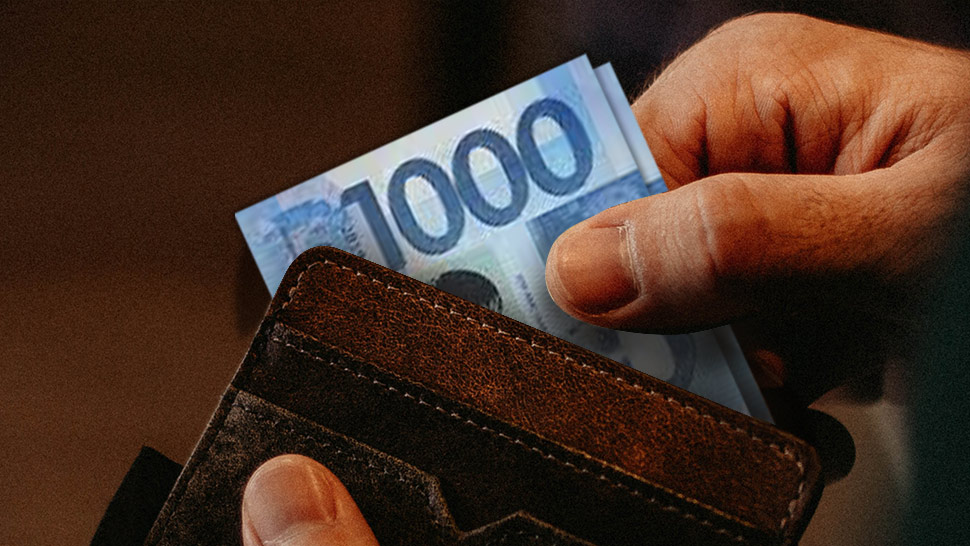
Tax policy reforms were the first points addressed by President Ferdinand Marcos Jr. during his first State of the Nation Address in 2022. He declared that the “tax system will be adjusted in order to catch up with the rapid developments of the digital economy, including the imposition of value-added tax on digital service providers” before promising simplified tax compliance procedures to promote the ease of paying taxes. What does the economic landscape look like for taxpayers one year later?
There are some pretty interesting observations according to the just-released annual report on the State of Online Taxation in the Philippines from Taxumo, a tax compliance platform.
Also read:
Oh No, It's Tax Season: The Best Online Tax Filing Apps
Financial Adviser: 5 Tax Planning Strategies Every Entrepreneur Should Know
One assessment finds that the population of poor taxpayers has gone down. According to the report, the socioeconomic divide between online taxpayers has improved as the country acclimates to the new normal. This means more people are moving upwards in terms of socioeconomic class, with the share of poor taxpayers (monthly income of less than P9,100) significantly decreasing from 32.7 percent in 2022 compared to 26.2 percent in 2023. Consequently, the Upper Middle Class (monthly income of P63,700 to P109,200) and High Income (monthly income of P109,200 to P182,000) online taxpayers grew by 3.8 percent and 2.2 percent, respectively.
Who among the Philippine online taxpayer demographic declares the highest income? It turns out, millennial taxpayers are the highest income earners in 2023, making up 73.9 percent of all incomes declared within the fiscal year. Generation X taxpayers are a distant second at 15.8 percent and Gen Zs at nine percent.
Taxumo also found that the majority of online taxpayers were service providers coming from industries such as supplies, events management, travel agencies, and social media agencies, all of which add up to 64 percent. The growth potential of the country’s service-oriented economy, the report says, “is a strength that our government must focus on, much as we develop our manufacturing sector.”
IT and Tech industries then follow at a measly 8.8 percent, indicating that a significant portion of software and computer technology professionals may be choosing to set up their own businesses. Freelancing, consultancy, and virtual assistance are also jobs that are seeing an emergence this year, which points to the continuing popularity of the remote-work setup even post-lockdown.
Finally, although there are more women online taxpayers, they earn considerably less than their male counterparts. In terms of income filed by gender, the male segment appeared to grow by 130 percent, while women only grew by 80 percent. Surprisingly, the segment that identifies as non-binary grew by 110 percent.
These numbers are a sign that people are gradually recovering from the grave economic effects of the global pandemic, but it may still be too early to celebrate. The data from the report is only derived from online taxpayers on Taxumo—comprising freelancers, self-employed professionals, and small- and medium-sized businesses—and not the entirety of the Philippine taxpaying population. Nevertheless, this microcosm can serve as an indicator of the economic state of Filipinos in a wider, national context.
As Taxumo emphasized, the continued growth of the country’s economy must be inclusive. Especially because the past three years have highlighted that the weaknesses in policies and lack of social safety nets can thrust marginalized groups back into poverty at just a drop of a hat.
Read the full State of Online Taxation report here.
