
The EDSA Carmageddon and Why Remote Work Just Makes Sense


After a fully remote work arrangement during the COVID-19 pandemic, our company shifted to a hybrid setup. On days we're required to be at the office, I use up about an hour in the morning and another hour in the afternoon for the commute, and another hour of getting ready and making sure that all urgent chores are done before I leave for the day. That's a total of three hours wasted just to do the same thing I'm doing at home: typing shit on my laptop, with the noise and other distractions at the office as unfortunate add-ons.
And I'm one of the lucky ones. My workplace is nearby, so waiting for a jeepney "only" takes 20-30 minutes, and getting stuck in traffic for a three-kilometer distance "only" takes another 20-30 minutes. Sure, that's a distance you can walk, run, or bike, but this is Metro Manila, not really the most friendly to pedestrians in terms of urban design (and the weather).
Others have it worse, spending five to six hours on the road, on a good day, for a nine-hour shift. For a person living in the south and working in the north five days a week, for example, that's a total of one whole day (or more) just getting to and from work.
So, imagine how many hours (or days) people will be wasting when the EDSA rehabilitation starts, with all the lane closures, a bingo card-like odd-even scheme, and even ironically losing the one thing that actually helps commuters: the bike lane. Time wasted in traffic to just do the same thing they're doing at home: typing shit on their laptops or even attending meetings via Zoom.
That's time that could have been used to get some much-needed rest, connect to loved ones, or maintain a work-life balance. Not to mention the physical toll of going from one PUV to another (including lining up at the terminals or crossing ridiculously high walkways), the mental load of having to deal with the commute after a long day, and the emotional burden of braving our not-so-safe streets.
ALSO READ:
Today I Learned: The Modern-Day Guadalupe Bridge Is Almost 60 Years Old
The Most In-Demand Jobs That Let You Work From Anywhere
Remote Work in the Last Five Years
In March 2020, the Philippine government announced a nationwide lockdown, and employees were sent home in the middle of a workday, thinking that we were going back to the office after two weeks—spoiler alert: we did not. The work-from-home scheme became the labor force's solution as a COVID-19 safety measure in an effort to further decongest public transportation and office buildings. A year later, a 2021 study by SEEK Asia (parent company of JobStreet), Boston Consulting Group, and The Network found that up to 49 percent of workers in the Philippines prefer going completely remote.
The study titled "Decoding Global Ways of Working," which was the second in a series about the pandemic’s long-term impact on work, surveyed 208,807 workforce respondents in 190 countries, with more than 5,000 of them coming from the Philippines. The sample included an equal proportion of men and women, who were mostly from commercial industries, and were mostly 20 to 40 years of age. The survey was conducted between October and early December of 2020.
Within that period, the Philippines also showed a significant digital shift in an effort to adapt to the so-called "new normal." Before COVID, only 52 percent of Filipino workers were working remotely, but this spiked to 85 percent during the pandemic.
The Philippines also had the highest percentage when it comes to the level of enthusiasm for fully remote work. Up to 49 percent preferred completely remote work, while the rest can manage a combination of remote and onsite work. A very small percentage wanted to go back to completely onsite work.
The survey figured that distance work is most prevalent in digital and knowledge-based jobs like information technology, the media, arts and creative fields, and research—because they can. In fact, an average of 70 percent of people in these industries were already working remotely anyway.
And why would people even want to go back to the office?
A 2023 research titled "Working Remotely and Its Impact on Employee Productivity: A Post-Pandemic Analysis From a Business Process Outsourcing Company in Manila, Philippines" (by Shekainah E. Pontanoza, published on the Journal of Third World Economics) discussed earlier literature that there are six benefits of working from home: save more money and energy, more family time, less stress, relaxed environment, more productive, and better Internet. The last one is probably a deal breaker because digital workers need digital resources.
It concluded that "a remote work setup helps to increase job satisfaction and improves productivity and work-life balance of the employees. With the freedom to work from anywhere, employees have greater opportunities for flexible lifestyles that accommodate both rewarding careers and meaningful personal lives."
As expected, "primary factor that impacts productivity and employee satisfaction as a means of working remotely have been found to be the time saved due to the elimination of travel time to the workplace. This can enhance their overall productivity because the time spent commuting can be utilized to perform office tasks."
Wasting Time in Traffic
This observation couldn't be more true.
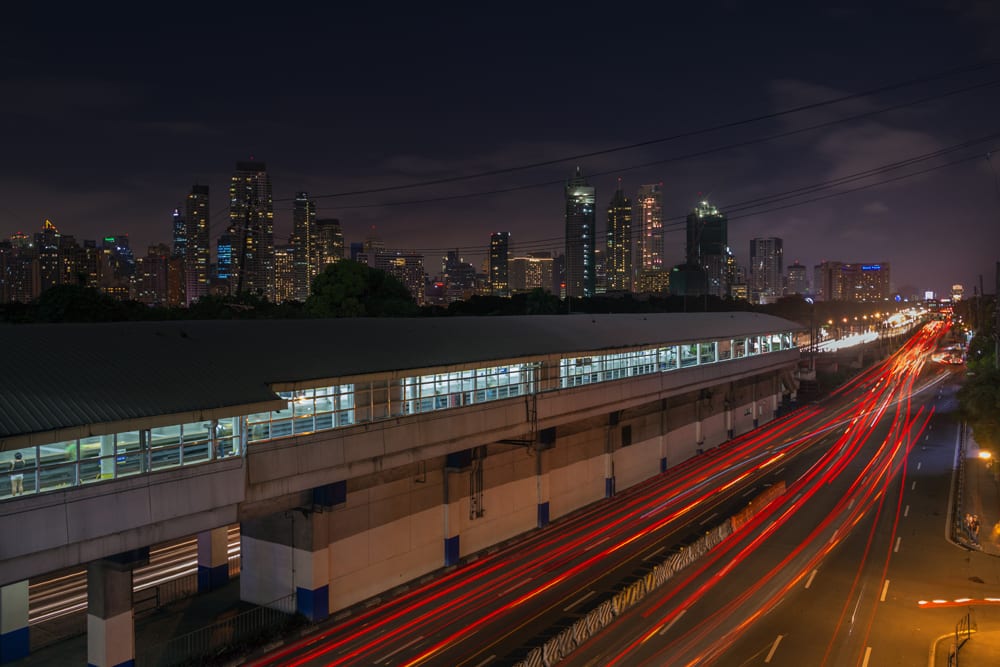
In 2024, the TomTom Traffic Index said that we lost around 127 hours of our lives in Manila traffic. That's five days and seven hours just getting to and from the office. In 2023, the same portal registered total time spent driving in rush hour over the year to be 130 hours and 20 minutes.
Of all roads in Metro Manila, it is the Epifanio de los Santos Avenue (EDSA) that bears the brunt of daily traffic jams, as it passes through the region's major financial districts. By December 2022, the Metropolitan Manila Development Authority said that more than 470,000 vehicles ply EDSA every day, already beating pre-pandemic levels. That's nearly half a million vehicles.
MMDA Chairman Atty. Romando Artes, back then, explained that the daily pre-pandemic level was at 405,000. So much for "Earth is healing" captions that went around at the height of the pandemic when Metro Manila air had become cleaner than ever—a silver lining amid the COVID-19 uncertainty—because of our decongested roads.
Data from the Congressional Policy and Budget Research Department - House of Representatives, released in June 2024, showed the 10-year change in annual average daily traffic along EDSA from 2013 (342,612) and 2023 (407,342). This is an 18.9 percent increase in a decade. Both these numbers exceed EDSA's actual carrying capacity, which ranges from 250,000 to 300,000 (data varies).
In terms of data by vehicle type, the report showed that there was a smaller number of cars traveling Metro Manila's second busiest road in 2023 compared to 2013 (272,965 versus 234,439). Public utility buses also dwindled close to three-fourths as many city buses were prohibited from plying old routes, even years after the 2020 pandemic. However, motorcycle traffic increased significantly by 248.9 percent from 2013 to 2023. The last one can be attributed to the popularity of motorcycle-hailing services like Angkas and MoveIt, which are cheaper and faster alternatives to regular car-hailing services and PUVs.
Don't even get us started on the issue of air pollution in the National Capital Region, sometimes even reaching a "very unhealthy" level according to IQAir.
Sometime in August 2024, when everyone was mistakenly blaming the Taal Volcano's phreatic eruption for the foggy atmosphere in NCR, it was actually air pollution that was causing the smog, not only between our high-rise buildings, but also closer to the ground.
"The current air pollution levels may be primarily attributed to emissions from heavy vehicular traffic, especially during rush hour, and the effect of thermal inversion, which traps air pollutants at the surface level," the DENR's Haze Watch Air Quality Technical Bulletin read on August 19, 2024. And that's just another day in the city.
And things would probably get worse (before it gets better, unless it never will) with the rehabilitation project initiated by the Department of Public Works and Highways.
EDSA Rehabilitation Project
The EDSA Rehabilitation Project is a long-time coming for Metro Manila's major thoroughfare that dates back to 1939, when it was still known as Highway 54. It was originally two lanes wide until a major rework was done in the 1980s, when its configuration became more like the EDSA of today.
Final announcements have yet to be made by authorities, but so far, we know that a total of 200 kilometers of lanes, both northbound and southbound, will be rehabilitated. The existing pavement would be dug up, new concrete would be installed, plus a new running surface with thick asphalt would be added. Construction would proceed lane by lane for the next two years, starting with preparations and a dry run mid-June.
Transport Secretary Vince Dizon said that operations of the EDSA bus lane would not be interrupted, but it is a priority in the rehabilitation. Other planned schemes to supposedly mitigate severe traffic jams include the implementation of a 24-hour odd-even scheme, free toll on Skyway Stage 3 (beginning July or August) and the NLEX Connecter, deployment of additional 100 buses, addition of trains at the MRT-3, and a total truck ban along EDSA from 5 a.m. to 10 p.m. daily. Existing bike lanes would also be repurposed into a shared lane with motorcycles. City planners really be like, "It's time to call on your strongest angels, bikers."
It does sound like the worst version of the carmageddon that Metro Manila commuters go through more than a few times. That dystopic combo of a Friday payday during the rainy season (read: waist-deep flood), with a sprinkle of road repairs.
And while the future of EDSA is still up in the pollution-ridden air, bosses in remote-capable industries need to let go of this obsolete idea that face-to-face interactions ensure "collaboration" and "office culture" (air quotes for sarcasm). We have apps and productivity solutions like Trello and monday.com for shared project management, Microsoft Teams and Google Workspace for video meetings and document sharing, and all the other things on the cloud that tech-forward companies are so keen on implementing anyway.
And not all industries have this privilege. Surgeons, obviously, can't operate from home. Hospitality and F&B workers can't work away from their establishments. But maybe places that can flawlessly enforce WFH arrangement should embrace remote work as a collective contribution to decongest EDSA amid the impending carmageddon. They should take one for the team because, clearly, the government isn't budging. Do it for those who can't, and it could be a win-win situation for the rest of us who are just droning through day-to-day in traffic-stricken Metro Manila. We were forced to do it over the pandemic; why can't we choose to do it again for everyone's sanity?
And then maybe, there would come a time when not all jobs are in Metro Manila, a time when Imperial Manila is finally decentralized. Maybe finally give more people a chance to work from anywhere, even by the beach—for, you know, mental health.
