

When It Comes to Watchmaking, Nobody Does It Better Than the Swiss

It's the first day of August and in some places around the world, it's not just another Tuesday to be struck off the calendar. In Switzerland, for instance, the Swiss celebrate their national day. What do we think of when we think of Switzerland? We know a few things: It's a relatively tiny and landlocked nation that's not only the safest travel destination in the world but it is also a haven for offshore accounts, with over US$2.4 trillion in personal wealth alone thanks to a robust economic and political system run by one of the least corrupt governments in the world.
Aside from banking and milk products (Swiss cheese and chocolates are delightful), Switzerland may also be best known for its watches. Unless you live under a rock somewhere, chances are, many of these Swiss brands will sound familiar to you (you’ll be forgiven for not being able to properly pronounce some of their century-old names).
Contrary to what most people think, it is said that it was the Germans who first engineered small clocks that eventually evolved into watches. However, it was the Swiss who excelled in making it into the industry that it is today, even surviving wars, historic lows like the great depression, and the quartz watch revolution of the 1970s.
The Swiss watchmaking industry has been thriving for centuries.

These days, owning a Swiss watch is considered a status symbol, and many popular brands are traded like instruments of investments in the secondary market. So, it isn’t surprising to see that brands like Rolex and Patek Philippe have outpaced the S&P 500. Based on a five-year timeline, the value of many of the popular brands and models of pre-owned watches grew twice the average of S&P500 from 2018 to 2023, according to Bloomberg.
According to Statista, global Swiss watch exports are around CHF17 billion (US$ 19.4 billion) with Hong Kong being its leading market at about 12.5 percent of exports, followed by the U.S. market at about 11 percent. As a matter of fact, there are over 700 companies that comprise the entire Swiss watchmaking industry (200 companies located in Neuenberg alone). Rolex alone accounts for about 25 percent of the entire market. That's a lot of watches.
Meanwhile, the Swatch Group is the largest Swiss watchmaking conglomerate with about 30 percent market share for all the brands it owns. Under the Swatch Group are many prestigious watch brands including Breguet, Omega, Longines, Rado, and Blancpain (which also happens to be the oldest Swiss watchmaker, established in 1735).
ALSO READ:
Introducing the New Rolex Daytona, With Paul Newman-Inspired Dial
A Patek Philippe Once Owned by China's Last Emperor Was Sold for P347 Million at Auction
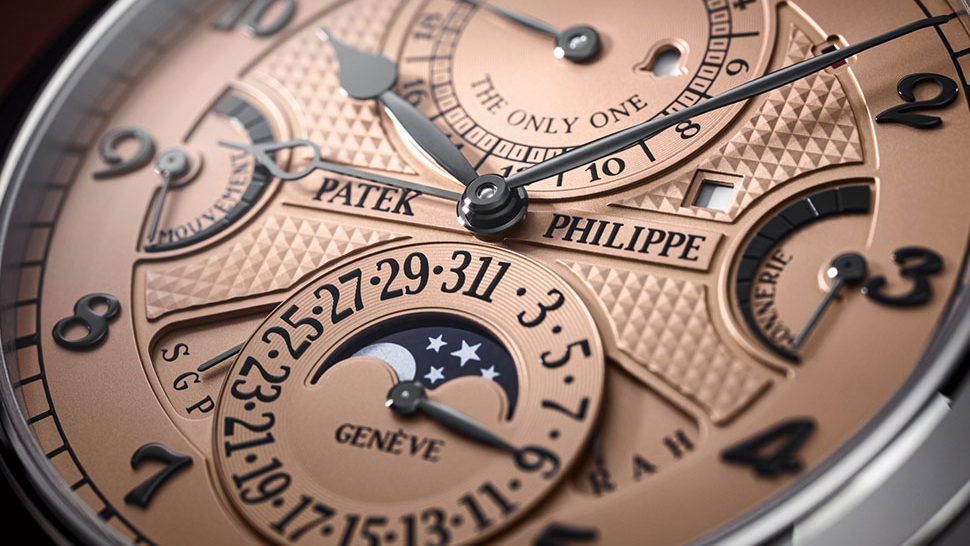
Patek Philippe continues its tradition of passing on watchmaking skills it has used for over a century; Rolex accounts for 25% of all its Swiss watch exports.

Interestingly, the group is widely credited to have saved the Swiss watch industry from the quartz revolution by producing high-quality yet affordable and fashionable watches. It was also able to keep the “Swiss Made” branding very much alive. The Swatch Group constantly finds new ways to innovate, too. Its recent collaboration between its Omega and Swatch brands, for instance, led to another frenzy last year with the launch of the Moonswatch.
So what makes all these brands so successful? The genius behind them lies not only in the actual watchmaking, economies of scale, and preserving talent. It has a lot to do with marketing. Let's use Omega as an example. It's known to be the first watch to go to the moon and is the official timekeeper of the Olympics. To top it off, it's even James Bond’s timepiece of choice. Rolex, on the other hand, is massively present in motorsports, yacht racing, and tennis. Smaller family-owned brands like Chopard have collaborations with Mille Miglia, which is considered the world’s most beautiful race.
And on top of the whole Swiss-made pecking order is perhaps Patek Philippe. Why is it considered the most desirable of all brands then? Well, there's one piece, in particular, every collector seems to covet. From celebrities to watch collectors, its Nautilus Ref. 5711 is one of the most coveted models, with its very recent limited edition release fetching as high as P327 million (depending on which day you convert the currency) for the first timepiece to be released in the market.
The original Nautilus was designed by Gerald Genta, who also designed the Audemars Piguet Royal Oak in 1972 and IWC Ingenieur in 1976, two other iconic luxury steel sports watches. These three watches have redefined the status of luxury sport watches using a non-precious metal and an integrated metal bracelet made popular in the 1970s. Some five decades later, they continue to have new iterations and enjoy popularity more than ever.
Funny enough, now seems to be the best time to start collecting these things. In the Philippines, Swiss watch brands like Rolex are still not subject to the 20 percent excise tax under section 150a of the tax code as clarified by the Department of Finance. This is because these timepieces are considered “semi-essential goods," maybe because it has some form of utilitarian value by telling time, unlike jewelry, which is widely thought of as an ornamental accessory.
This could change, however, if Albay Representative Joey Salceda has his way. The Congressman is pushing for a 25-percent “luxury tax” to raise at least P15 billion in tax revenues. It's a pretty regressive measure, if we were to ask retailers. So we might want to buy that Swiss watch we've always like sooner rather than later.
