

The Unsolved Mystery of the Missing Grand Duchess Anastasia Romanov

However thoroughly debunked, the myths that surround the Romanov family continue to endure. Everyone’s heard stories of the missing Duchess Anastasia, the mad monk Rasputin, and Russia’s missing treasures. As captivating as the stories may be, they tell us more about our tendencies to
Romanov history is surprisingly well-documented, despite what the stories may say. The mystery that surrounds their death in 1918 was intentional—the Bolsheviks ran a misinformation campaign about the family’s fate for nearly a decade, and the burial site in which the Romanovs laid remained hidden until its discovery 61 years after their execution. During this time,
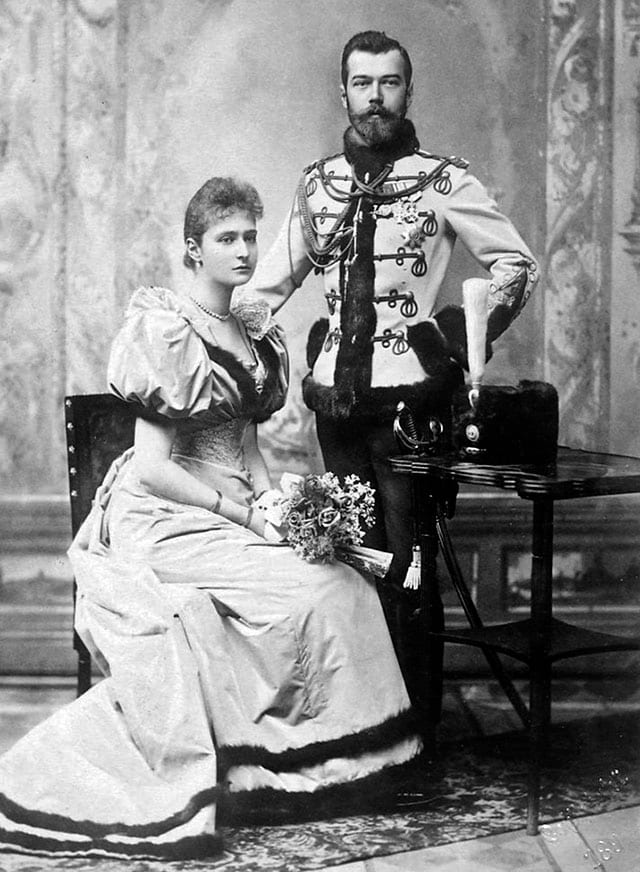
The official engagement photograph of Alexandra and Nicholas
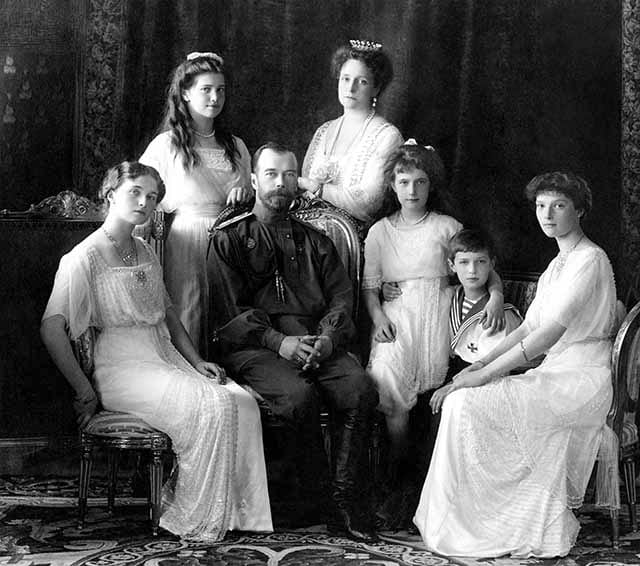
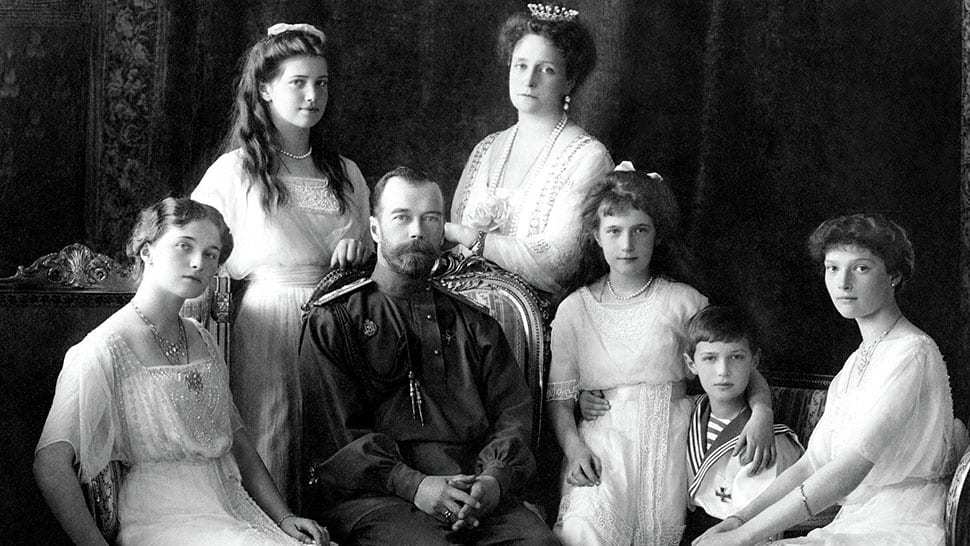
The Romanov family: Olga, Maria, Nicholas, Alexandra, Anastasia, Alexei, and Tatiana
The Lost Duchess Anastasia
Of all the legends that endured, none is more famous than the fate of Anastasia. Over the decades, numerous personalities have claimed to be the youngest daughter of Tsar Nicholas II, inspiring dozens of books and films that only served to perpetuate the belief that Anastasia had escaped the brutal execution of her family.
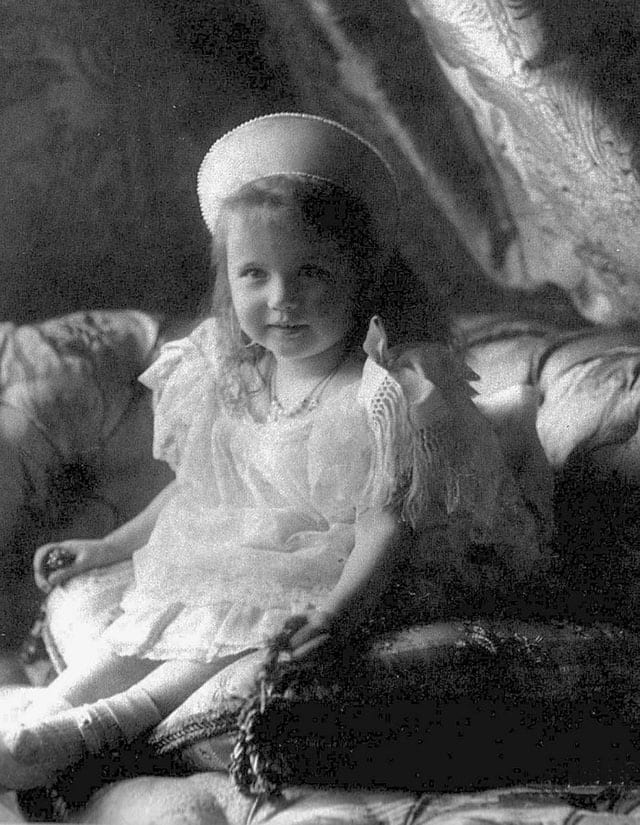
The Grand Duchess Anastasia on a postcard reproduced prior to World War I.
The first of the false
Later, in 1922, a fellow patient claimed that
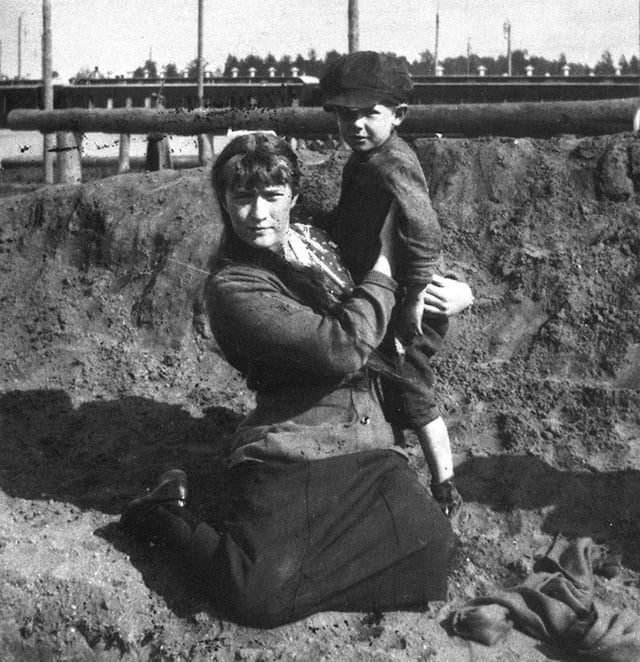
Anastasia hugs a boy at a train station. The Imperial train is behind them.
Eventually,
Over the course of several decades,
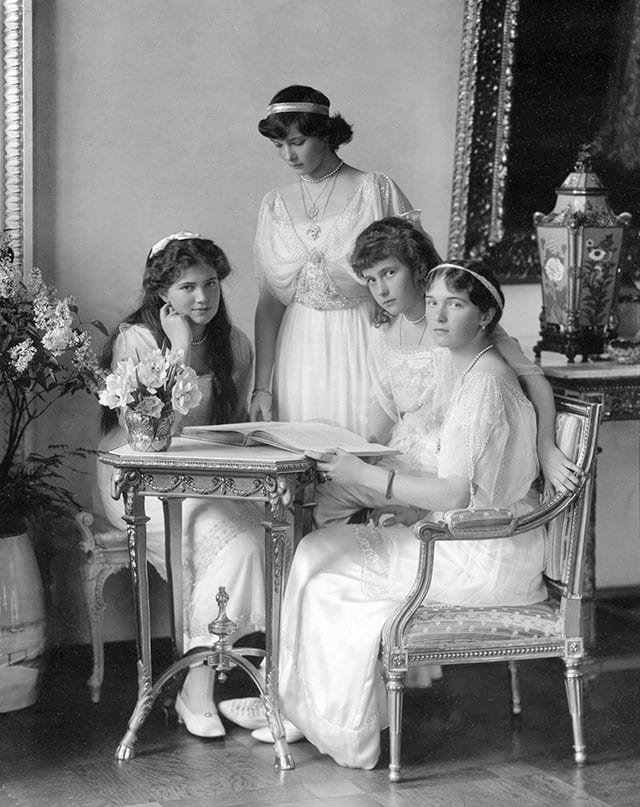
Grand Duchesses Maria, Tatiana, Anastasia and Olga Nikolaevna of Russia, 1914
Contributing to the enduring appeal of the “Missing Duchess” storyline was the fact that the burial site of the Romanovs, which was discovered in 1979 and made public only in 1991, was missing two bodies. One of the missing bodies was the Tsar’s son, and the other, one of his daughters; and since the Romanovs’ corpses were mangled and burnt beyond recognition, many theorized that the missing daughter could be Anastasia. Until the discovery of two more remains near the site in 2007, the mystery of Anastasia saw a dramatic revival in the public consciousness. Regardless of the fact that DNA testing proved that the new bodies were confirmed to be Romanovs—thereby accounting for all members of the family—rumors of Anastasia’s escape persist to this day.
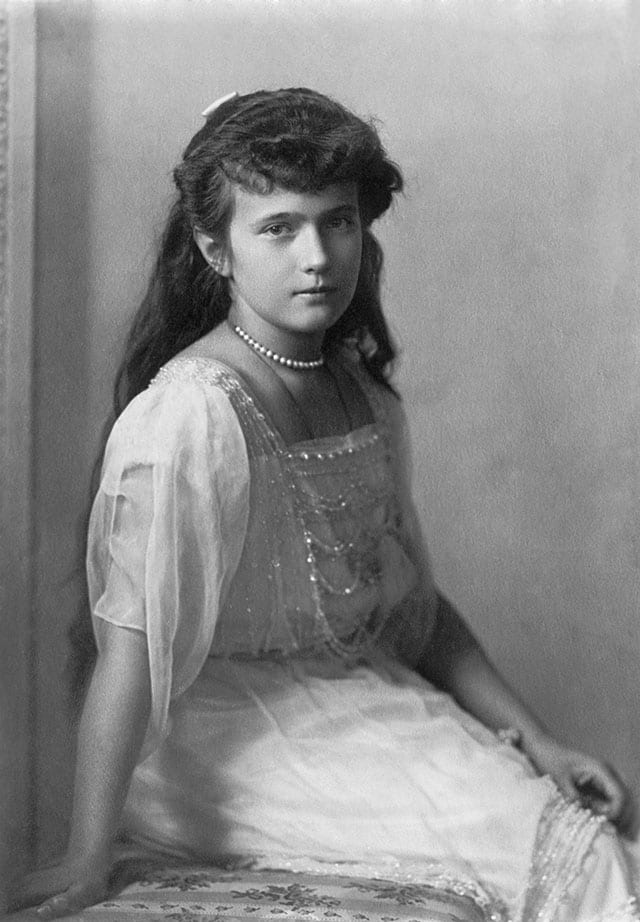
Grand Duchess Anastasia Nikolaevna of Russia
A 2012 article by Caty Petersen titled “Filipino’s Grandmama could be Russia’s Anastasia” implied connections between the author’s grandmother and Russian nobility. Grandmama Tasia, as she was fondly called, not only resembled the Romanov duchess in her younger
Rasputin, the Mystic
Duchess Anastasia wasn’t the only prominent figure in Romanov legend. Of the myths surrounding the family, those of Grigori Rasputin, the Russian mystic who served as a trusted adviser of the Tsar and Tsarina, are among the most compelling.
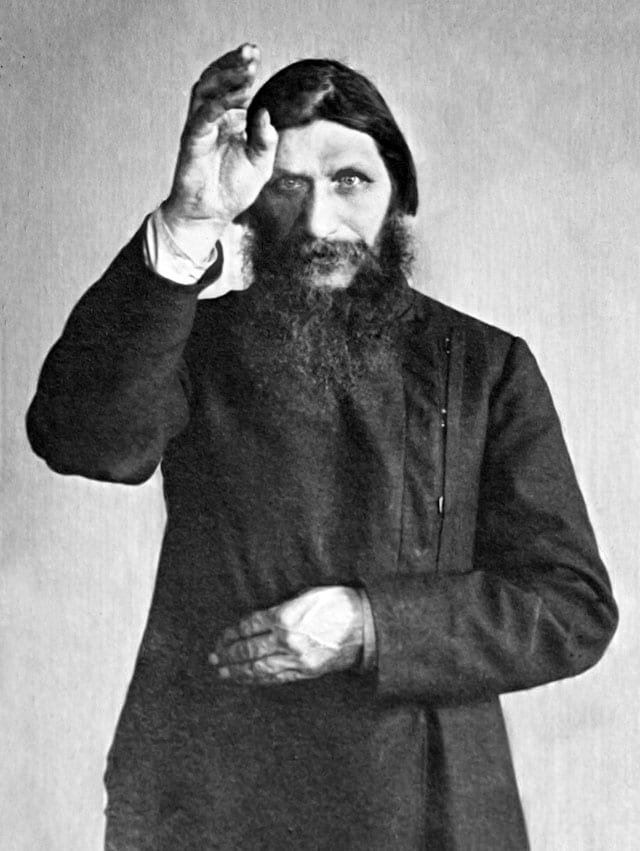
Grigori Rasputin
Nicholas II brought Rasputin into his fold upon learning of the monk’s supposed mystical powers. The Tsar’s only son, Alexei, was born with
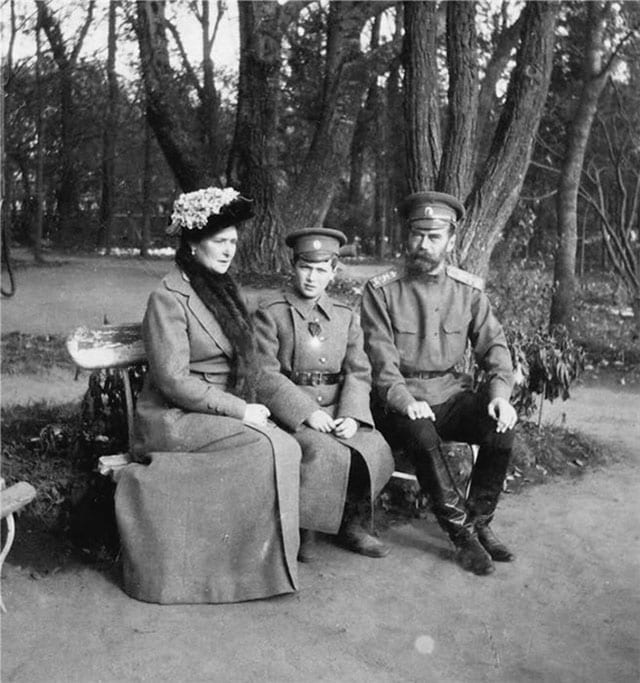
Tsarina Alexandra, Tsarevich Alexei, and Tsar Nicholas II
Experts, however, suggest that Rasputin’s power was more a matter of timing than magic. Some allege that the monk came to treat Alexei only when he knew the child was already on the road to recovery, while others say that it was Rasputin’s distrust of modern medicine that unintentionally saved Alexei’s life—he may have convinced the Tsar to stop giving the child aspirin, which is known to thin the blood and aggravate hemophilia.
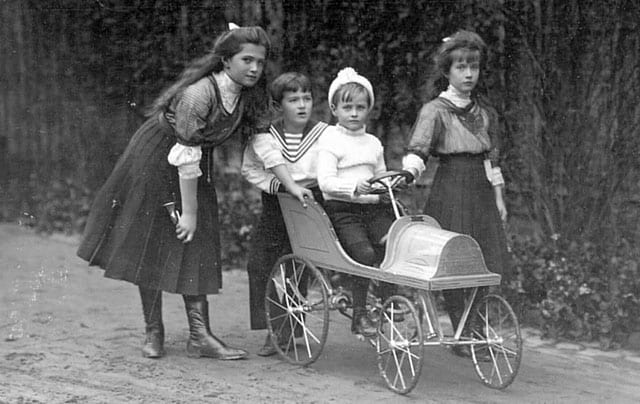
Maria, Alexei, their cousin Georg Donatus, Hereditary Grand Duke of Hesse, and Anastasia
Eventually, the monk earned the Romanovs' trust and became a part of the Tsar’s inner circle. Rasputin was even said by some to be the secret ruler of Russia—when Nicholas II left the capital to oversee the country’s efforts in World War I, he put his wife in charge of matters at the homefront. Tsarina Alexandra leaned heavily on Rasputin’s advice, and he was known to put personal friends in public office.
Many thought the Romanov’s trust in Rasputin was ill-placed, as he displayed
Rasputin, the Undying
The first attempt was carried out by
According to several accounts, the attempt only served to bolster Rasputin’s mystical image. Stories about Rasputin’s extraordinary ability to survive attacks
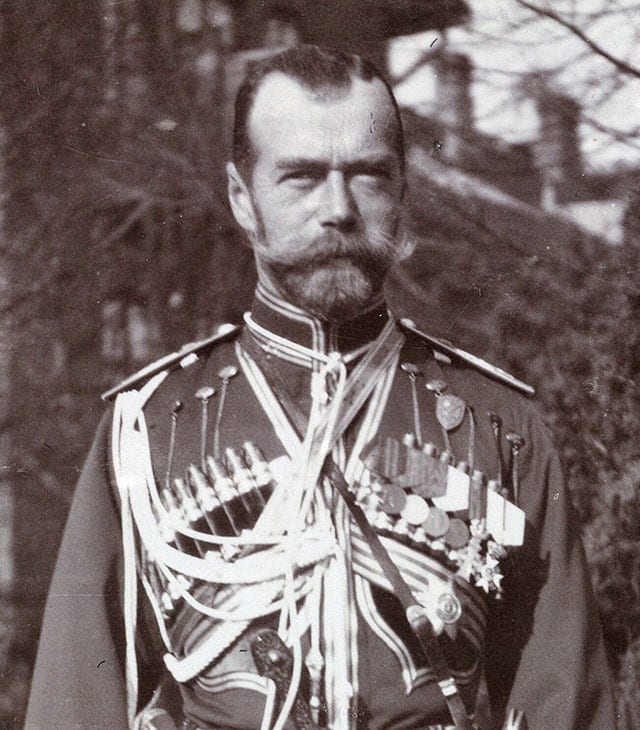
Nicholas II, Tsar of Russia
On December 30, 1916, Rasputin was invited for tea by Prince Felix Yusupov, who had supposedly laced the monk’s food and drinks with cyanide. When Rasputin showed no signs of distress, however, Yusupov served him three glasses of poisoned wine. The wine had no effect on the monk, and Yusupov had to resort to more violent means. He shot Rasputin in the
When an autopsy was performed on Rasputin’s body, however, there was no trace of poison found in his system, nor were there multiple gunshot wounds. Evidence suggests that the assassination was a lot less eventful: the monk was simply shot once in the head, and then his corpse—completely intact—was dumped in the river. Rasputin’s legend lives on regardless of the truth, with some people going so far as to say they’ve seen his severed genitals as part of an eccentric’s collection.
The Romanov Impostors
Even though Anastasia’s supposed survival was the story of the day, several individuals stepped forward as other members of the Romanov family. Heino Tammet, Vasily Filatov, George Zhudin, Eugene Ivanoff, and CIA agent Michael Goleniewski all claimed to be Alexei,
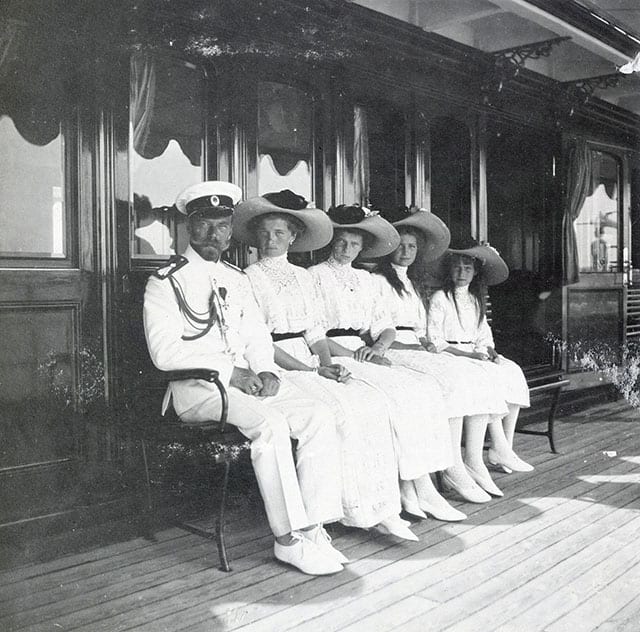
Tsar Nicholas II and his daughters aboard the imperial yacht Polar Star.
Reports of Nicholas II’s other daughters surviving also surfaced, with at least six people claiming to be either Olga, Tatiana, or Maria. Even
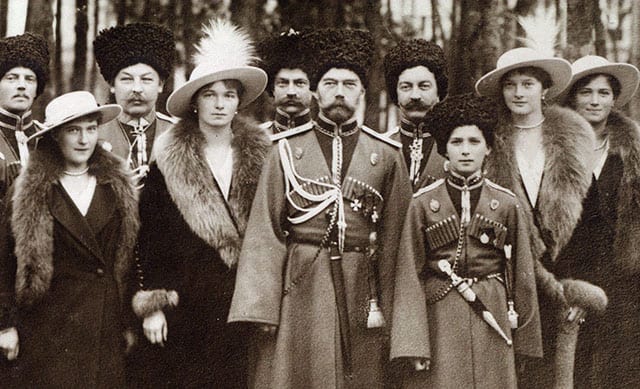
The Romanovs during a visit to one of the regiments
Perhaps the best explanation for the sheer number of claimants, aside from the fact that the Bolsheviks lied about killing all the Romanovs for nearly ten years, is that the family left behind a significant amount of wealth. Every person who’s stepped forward as a surviving Romanov has also laid claim to their inheritance. Originally, it was assumed that the claimants simply wanted the attention that came with possibly being a Romanov, but more and more
The Secret Wealth of the Romanovs
Pretty much every royal family has been at the
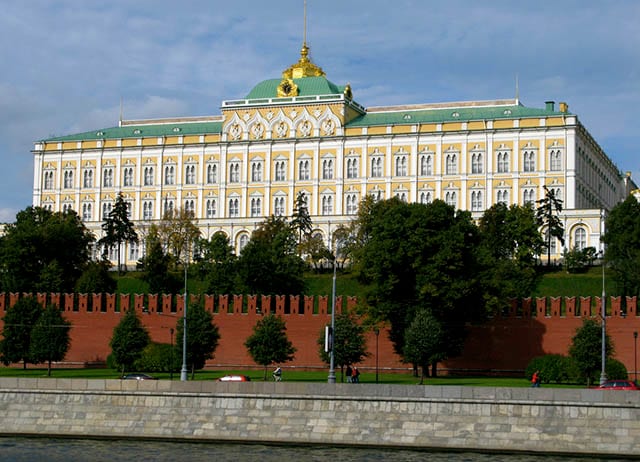
The Grand Kremlin Palace in Moscow
Among all the stories of missing treasures, one of
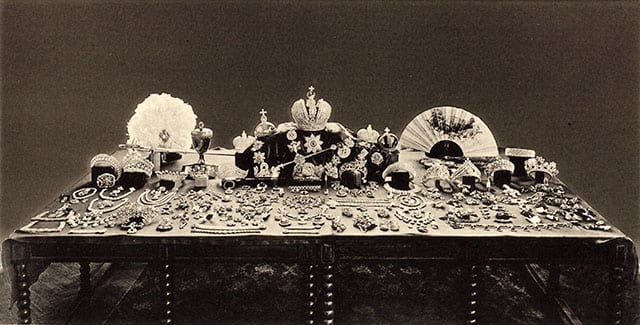
The Imperial regalia of Russia
According to reports, it was said that one of the Tsar’s bodyguards entrusted Alexandra’s cabinet of ornaments, the Romanovs’ ceremonial swords, and Nicholas II’s daggers to Pechakos, a resident of Omsk in Siberia. Years later, the secret police got wind of the
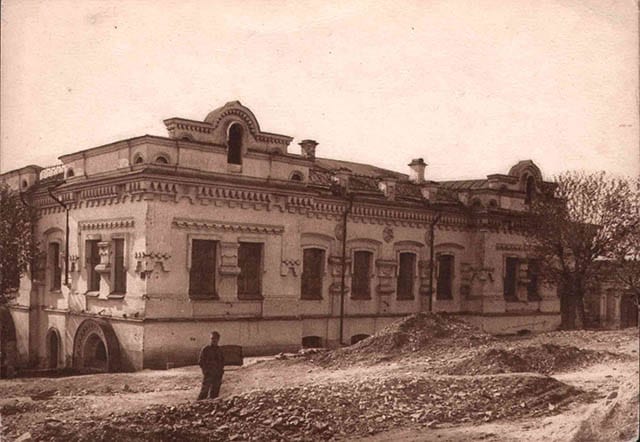
The Ipatiev House where the Romanovs were executed
As time goes on, the myths circling the Romanovs—of their family, their inner circle, and their wealth—live on. You’ve most likely heard a few of them, without seeking them out. Legends somehow endure, be it through the surfacing of new information or the outright refusal of people to accept facts. In the end, all that matters is that we get a good story. Even with all the evidence at our disposal, there is nothing more captivating than a dramatic—even if inaccurate—journey through the tales of the past.
