
How 3 Filipino Classics Stole the Spotlight at This Food Festival

The inaugural International Manila Food Festival (IMFF) brought together a group of internationally acclaimed Filipino chefs to make a powerful statement: to showcase Filipino cuisine on the global stage. The four-day celebration took place at the Newport World Resorts from August 7 to 10, 2025.
On August 10, 2025, the invite-only World Filipino Congress 2025 was held at The Collab in Sheraton Manila Hotel. The atmosphere was vibrant, uniting industry celebrities, gastronomy leaders, educators, innovators, and thought leaders for a dynamic dialogue on Philippine cuisine. The Philippine Culinary Arts School moderated the panel discussions: Le Cordon Bleu Ateneo de Manila on “Filipino Cuisine: Traditions and Modern Interpretation – Which Way Forward?,” the Center for Culinary Arts, Manila on “Building a Sustainable Filipino Brand Globally,” and Enderun on “The Long Table: Reimagining Sustainability in Filipino Foodways.”
Poster for the Festival Gala Dinner of the International Manila Food Festival, featuring chefs Danny Cancino and Lordfer Lalicon.
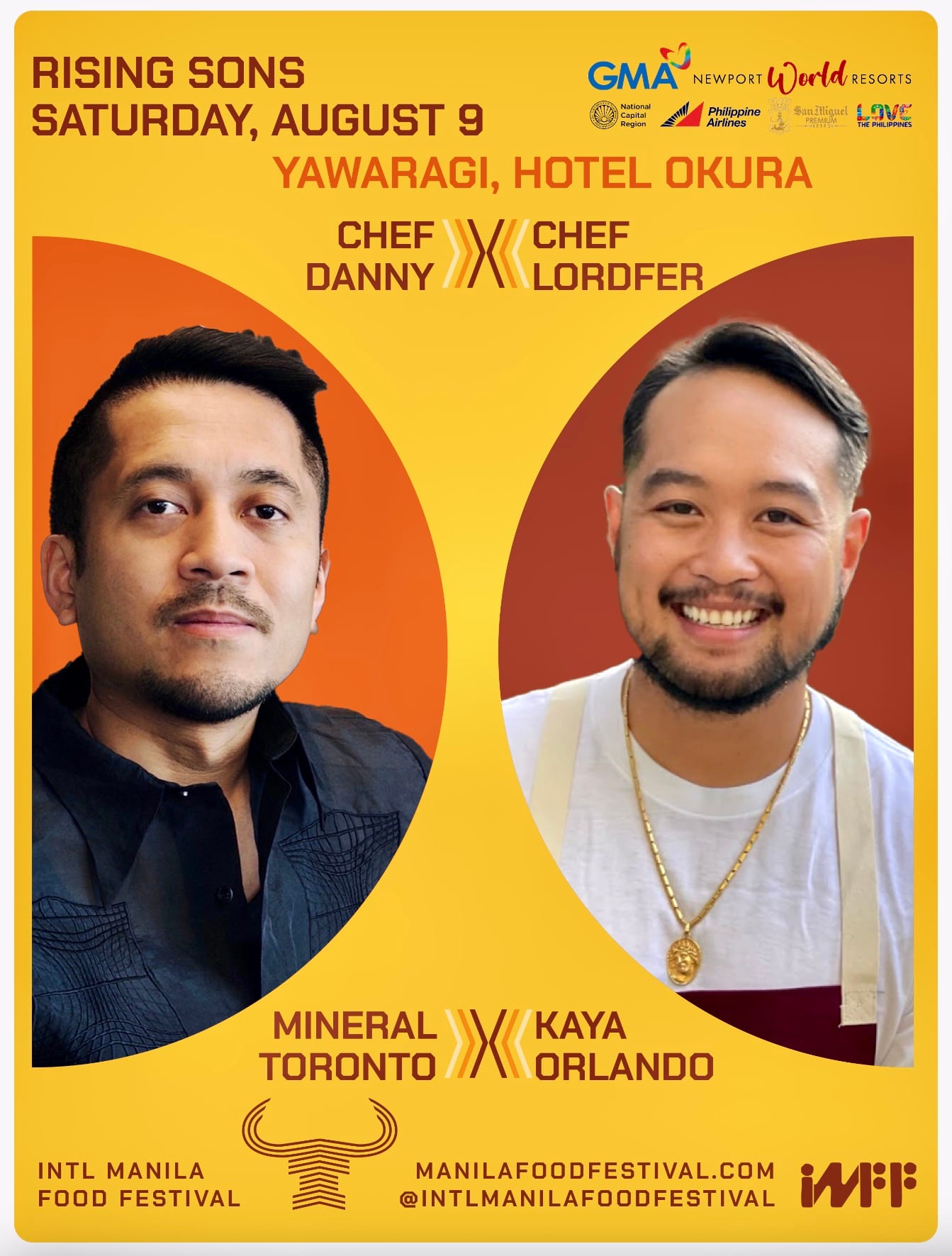
Without leaving the Sheraton Hotel, guests could walk to the adjacent Hotel Okura Manila, where the Festival Gala Dinner was held at its famed Yawaragi restaurant, an ultramodern Japanese-inspired village.
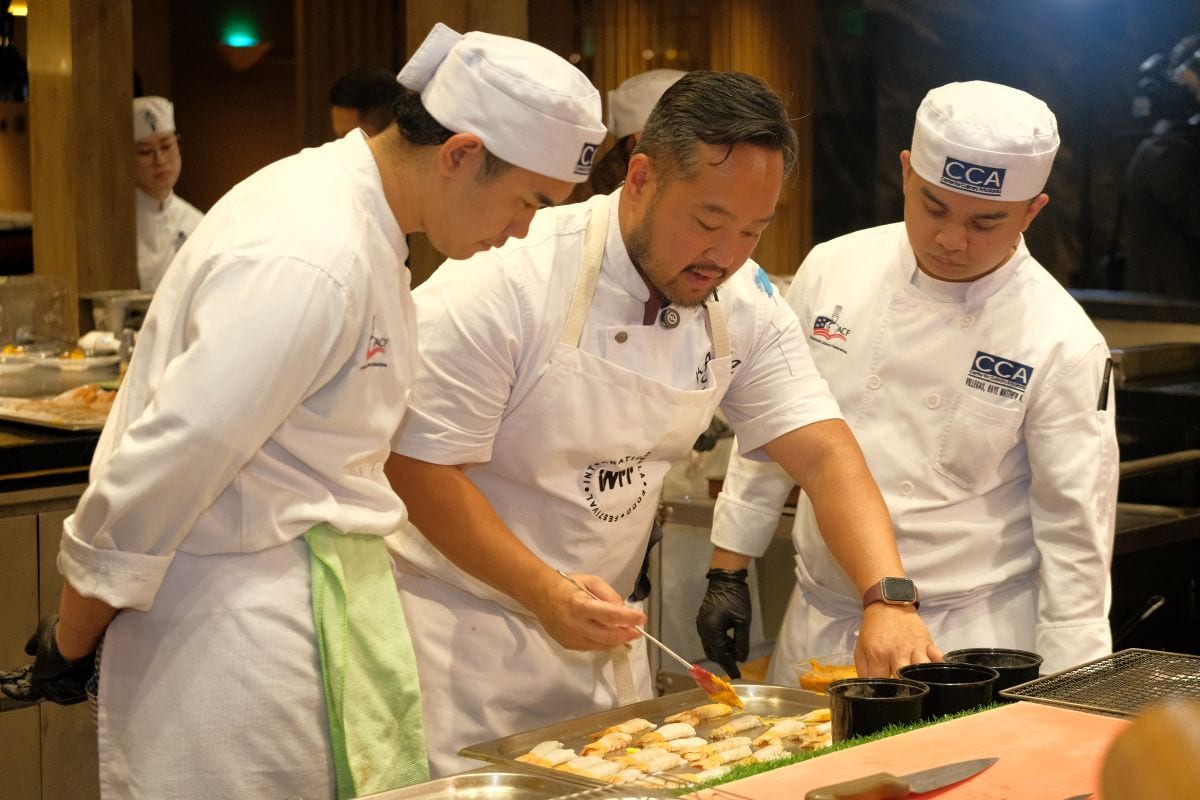
It was interesting to watch the bustling, modern, open kitchen. It felt like watching a live theater, with chefs taking center stage alongside students from Le Cordon Bleu Ateneo de Manila and CCA Manila.
Chef Lalicon guides the Center for Culinary Arts Manila students.
Two Continents, One Palate
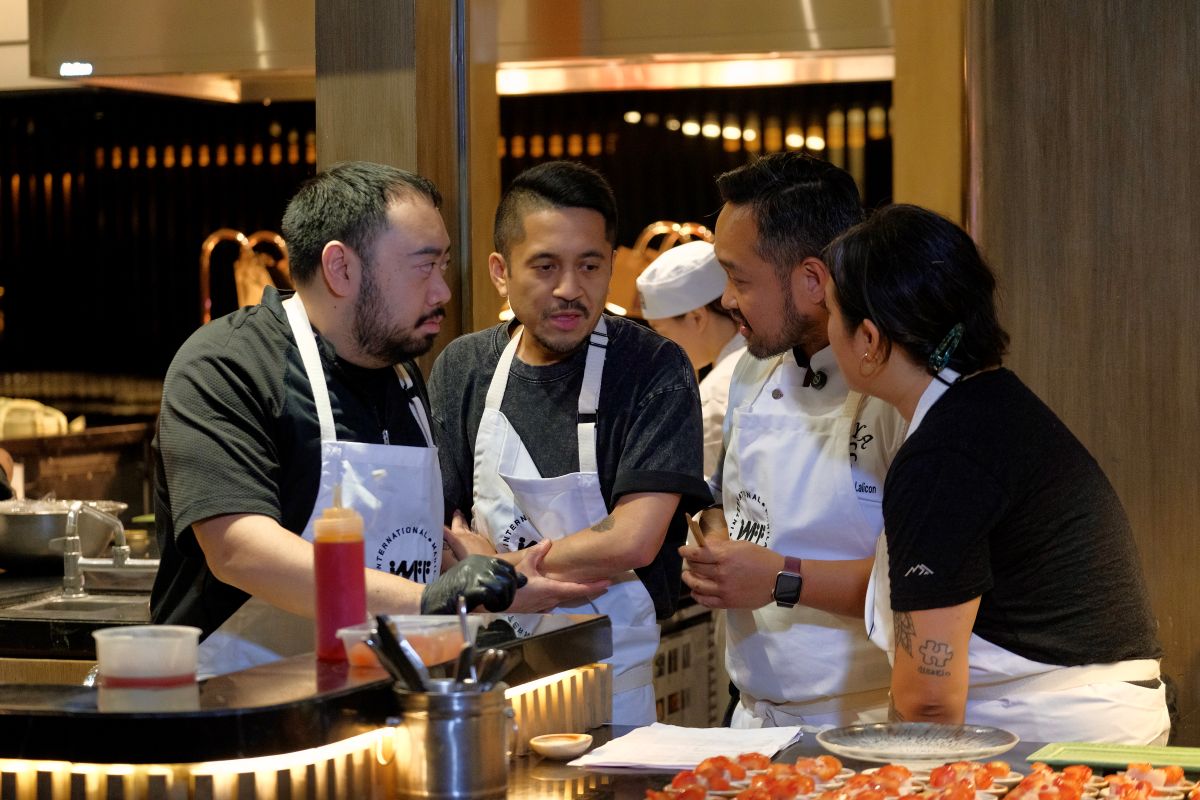
The stars of the night were chefs Lordfer Lalicon of Kaya in Orlando, USA and Danny Cancino of Mineral in Toronto, Canada. Both have carved their names on the global culinary stage, transforming Philippine flavors into contemporary classics.
Chef Lalicon is a 2025 James Beard Semifinalist for Best Chef: South. His restaurant, Kaya, has earned a Michelin Green Star for two consecutive years (2024 and 2025), reflecting its commitment to honoring grassroots communities, families, and future generations. Behind the restaurant, he cultivates a variety of Philippine produce, including bataw (hyacinth bean), bananas, calamansi (Philippine lime), sili, talbos ng kamote (sweet potato leaves), and ube (purple yam), among others. This emphasis on local agriculture is a key part of Kaya’s sustainable program, which embodies its commitment to farm-to-table dining.
Chef Cancino is celebrated for his skillfully curated, ingredient-driven tasting menu at Mineral, rooted in Filipino heritage and refined with global techniques from Canada’s competitive dining scene. His quiet demeanor belies his accolades, including a spot in OpenTable Canada’s Top 10 Best Ambience Restaurants (2025) and Toronto Life’s Top 3 Best New Restaurants (2020).
Chef Melvin Reyes of Mano Modern Café in Chicago and Chef Melissa Miranda of Musang in Seattle came on board to support the lead chefs of the night, Danny Cancino and Lordfer Lalicon.
Alab Distillery’s Liquido Maestro
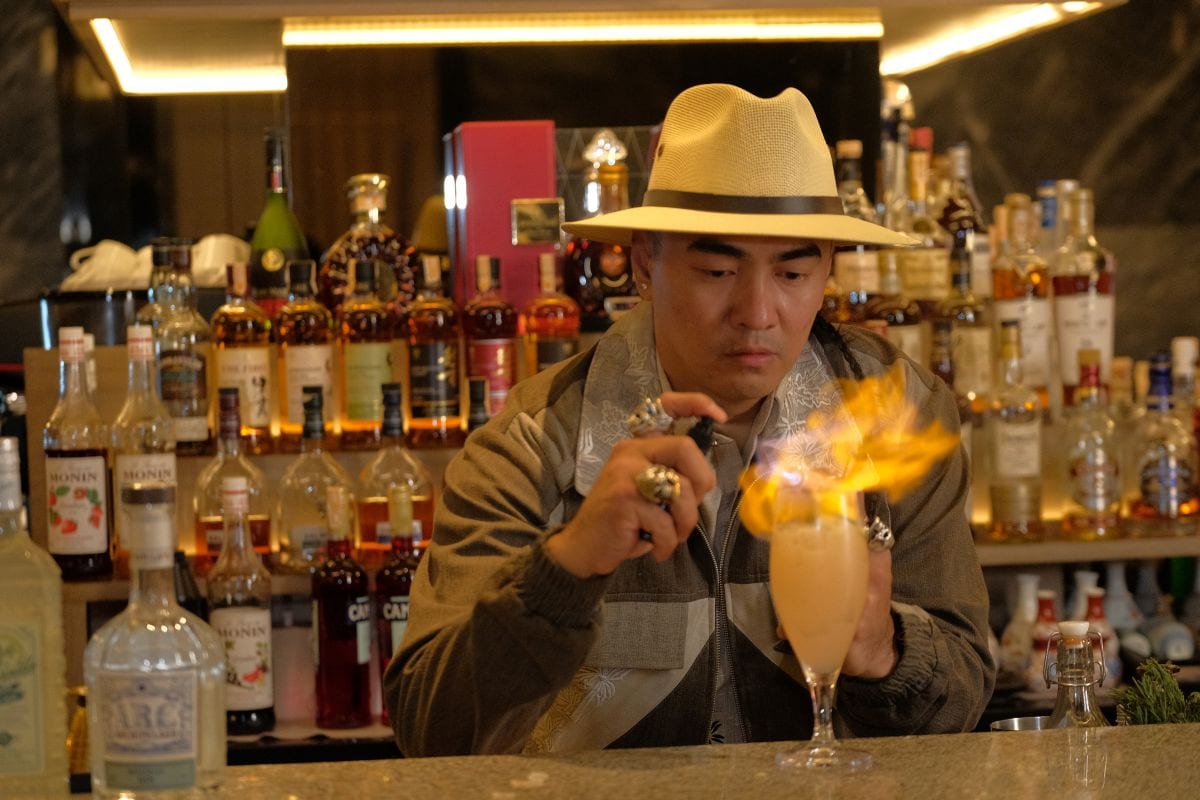
Kalel Demetrio, a celebrated Philippine alchemist of creative spirits, made a commanding appearance as the Beverage Director for the IMFF, overseeing the bar and curating the dinner’s drink pairing menu. His selection highlighted homegrown brands such as Sula’s Coconut, Coffee, and Chocolate Liqueur, Pedronay Tapeuy, Bielma Bugnay, Arc Archipelago, and Distelleria Limtuaco’s Vigan Basis, Manille Liqueur de Dalandan, Manille Liqueur de Calamansi, and Bonifacio Rum – White.
Liquido Maestro Kalel Demetrio crafted a flaming Rebolusyon Cocktail for the International Manila Food Festival.
Rising Sons Dinner: Orlando x Toronto in Manila
Guests were welcomed with a rock glass of Negroni Yawaragi as a cocktail starter. A sip revealed a bold interplay of citrus notes, sweet and bitter flavors, and a complex infusion of hibiscus passion gin, Campari, Manille dalandan, and yuzu tincture, garnished with an orange peel, warming the palate in preparation for a five-course gala dinner.
The excitement of a multicourse food marathon followed. The feast put the spotlight on seasonal ingredients and the bold imagination of Philippine cuisine.
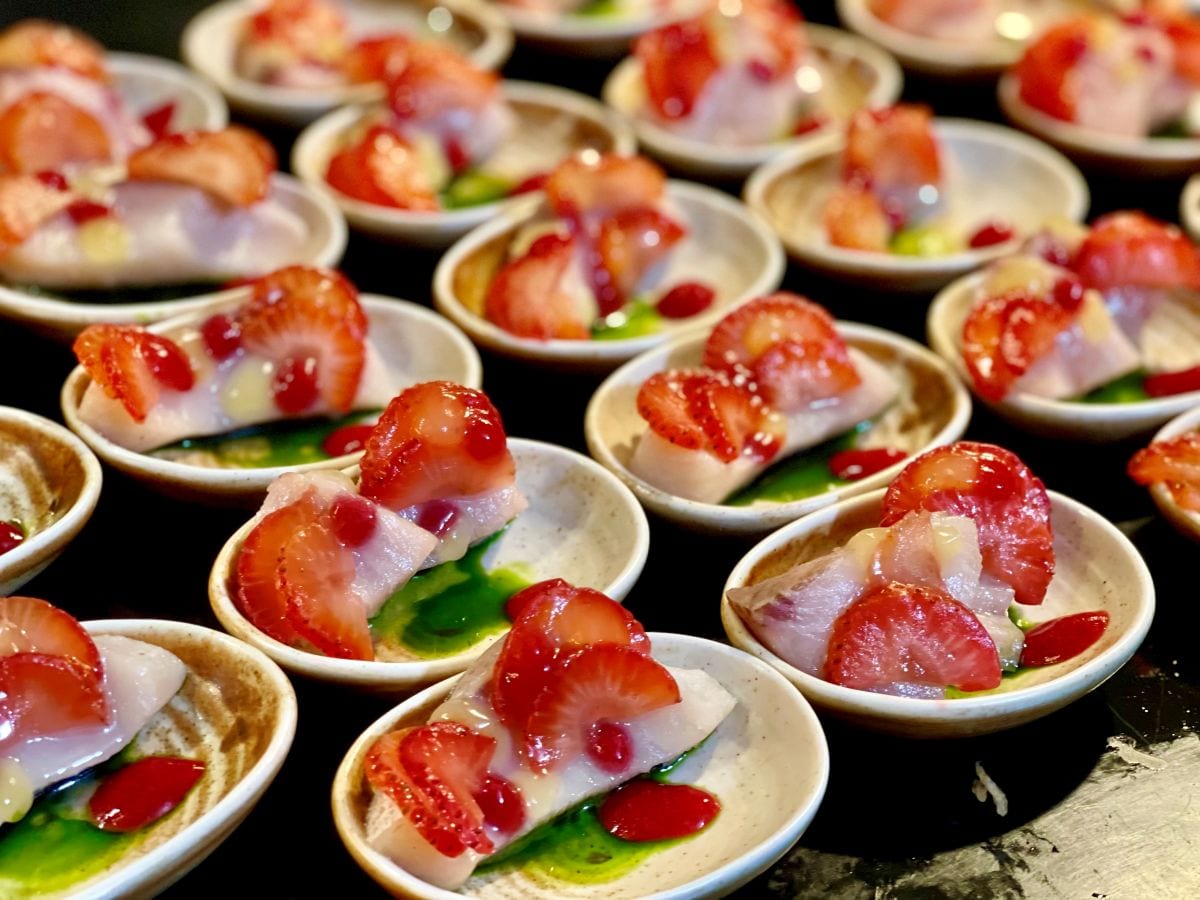
The vibrant Hamachistek with Strawberry, crafted by Chef Cancino.
Exquisite Canapes
Both chefs began the evening with two impressive bites. Chef Lalicon ingeniously employed a sushi-inspired technique, using a base of pressed sinangag (garlic fried rice) that was toasted to create a crispy bottom, reminiscent of tutong (the toasted rice at the bottom of the pot). He then flipped it over, topping it with silky chunks of creamy bluefin tuna and elegantly crowning it with caviar. Each bite burst with the rich flavors of the ocean.
Inspired by fond memories of enjoying “TunaStek” on the beach alongside a lavish spread of fruits and seafood, Chef Cancino presented an eye-catching dish called “HamachiStek.” He created a delightful array of ingredients and flavors served in a small ceramic dipping bowl. At the bottom, he added a drizzle of pandan-chive oil. Delicate slices of yellowtail were artfully arranged on top, complemented by dots of strawberry wasabi and calamansi gel. The dish was beautifully garnished with vibrant red strawberry slices. A ponzu-mansi sauce, made from a blend of ponzu (a tangy and savory Japanese sauce) and calamansi (Philippine lime) infused with tuyo (dried herring), shiro shoyu (a type of white Japanese soy sauce with a higher wheat and lower soybean content), and fruit peels, was poured at the bottom. It was superb!
The flavors were perfectly paired with a refreshingly light Mio Sparkling Sake from Japan, with the effervescence of delicate bubbles and fruity notes.
The first course was masterfully crafted, a delicate interplay of taste and texture, stimulating the senses. It set the moment with curiosity and excitement for how the upcoming four courses would unfold.
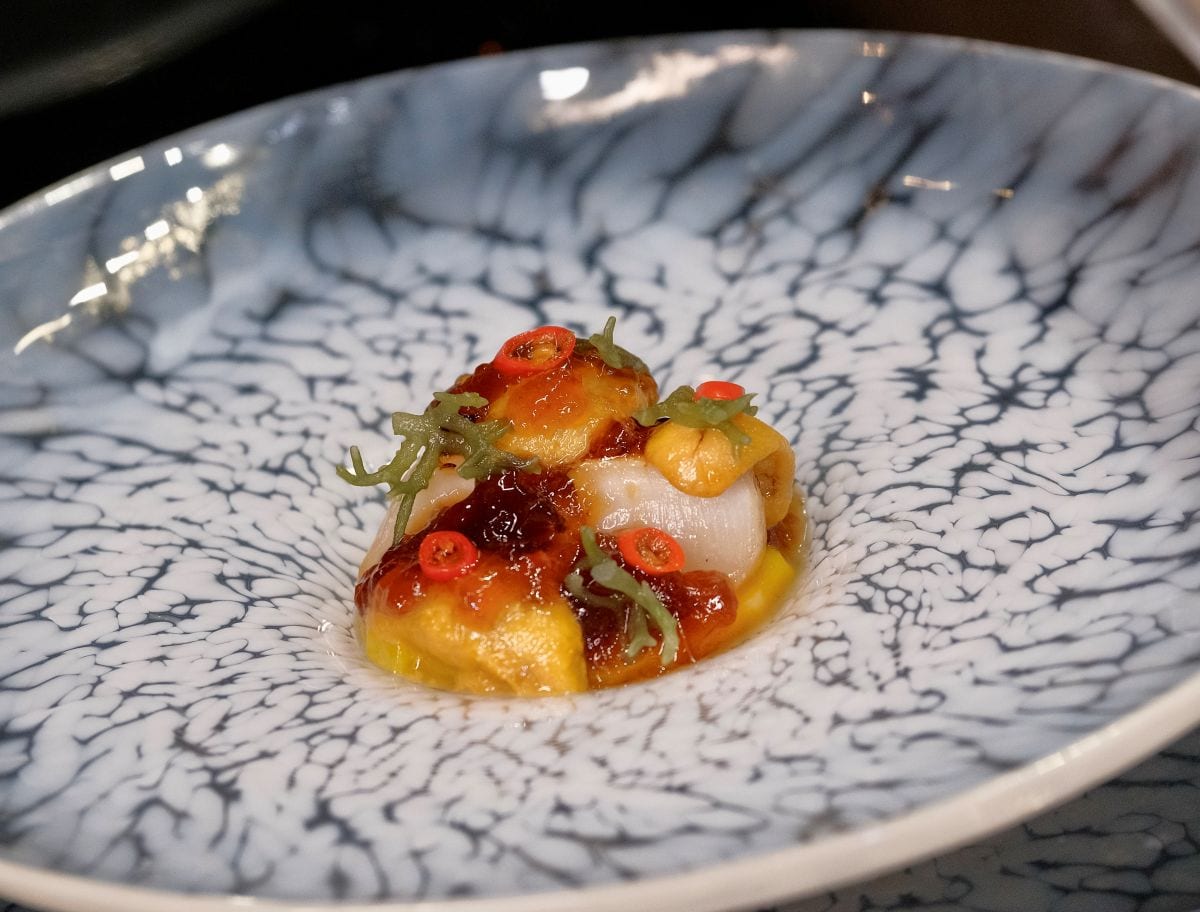
The sensational Hokkaido Uni and Mango by Chef Lalicon
Vibrant Appetizer
Chef Cancino presented a unique take on fruit carpaccio for the appetizer. This dish featured thinly sliced pineapple arranged in a joyful sun pattern. It was dressed with burnt pearl onions, black garlic, smoked garlic, and chili, then sprinkled with puffed rice toasted in garlic. It was finished with asin tibuok (artisanal sea salt from Bohol) foam. The result offered a refreshing combination where the sweetness of the pineapple paired harmoniously with the umami and earthiness of the garnishings. The added crunch of the peanuts created a delightful contrast, making this dish a true marvel.
Meawhile, Chef Lalicon created a compact masterpiece of taste and texture. The briny Hokkaido uni (sea urchin) was paired with Philippine mango, glazed with smoked sawsawan (dipping sauce) and slices of chili, then finished with guso (green seaweed, Eucheuma denticulatum). The dish was elegantly served on a glass plate adorned with embossed wave patterns, evoking the essence of the sea.
The appetizer offered a delightful journey of flavors that harmoniously blended sweetness, sourness, and spiciness. Each element reflected the Filipino palate, achieving the essence of linamnam, which signified a rich and full-bodied deliciousness that left you craving more.
The palate was delighted to finish with Susana Balbo's Crios Rosé from Argentina; it was sparklingly fresh and delicate with vibrant berry flavors.
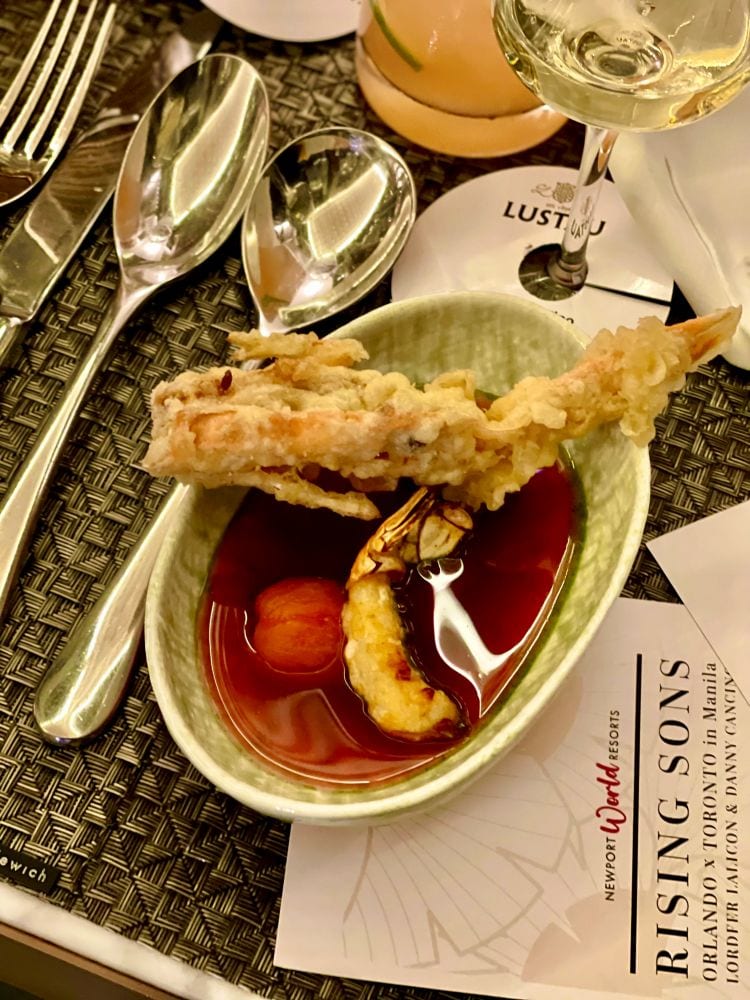
Langoustine Sinigang by Chef Lalicon
Sinigang and Adobo, Reimagined
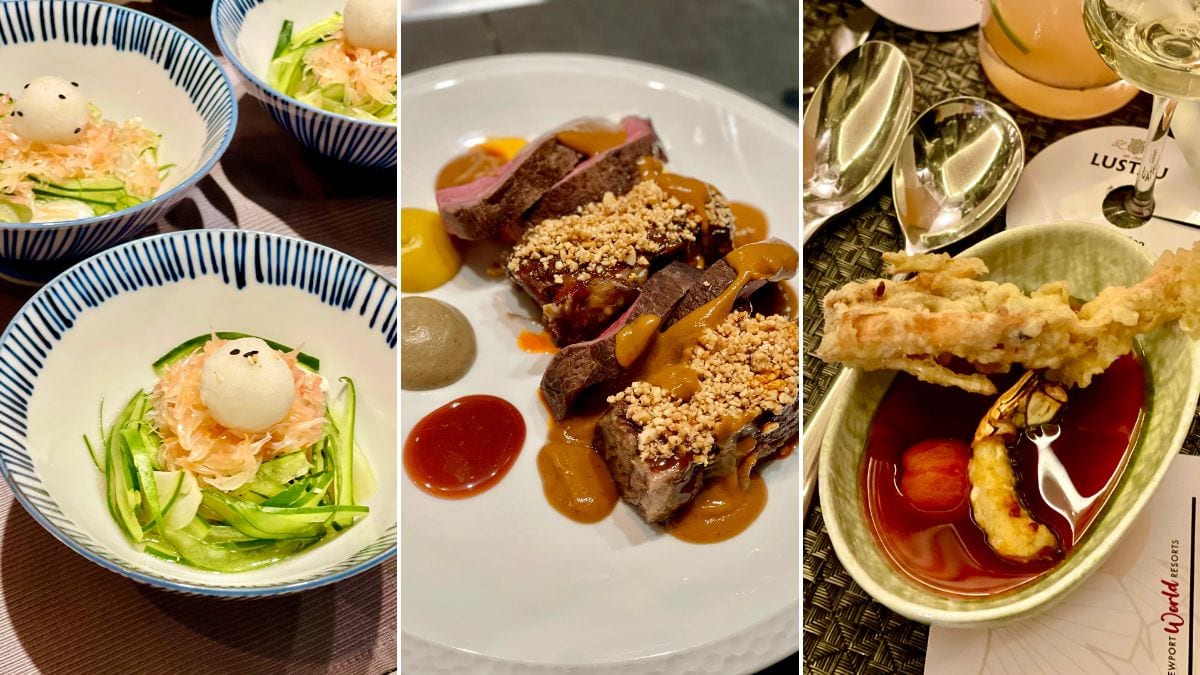
The centerpiece was introduced with a haute cuisine rendition of sinigang (Filipino sour soup) served deconstructed: a small oval clay bowl was dotted with boiled and peeled pearl onions, blanched tomatoes, a cube of watermelon, and a tempura langoustine. The dish was completed by pouring a watermelon broth from a Japanese teapot. On the side, a closed palayok (clay pot) contained light and flavorful rice tossed with minced adobo meat, crispy garlic, black sesame seeds, and scallion strands.
A refreshing salad with adobo vinaigrette.
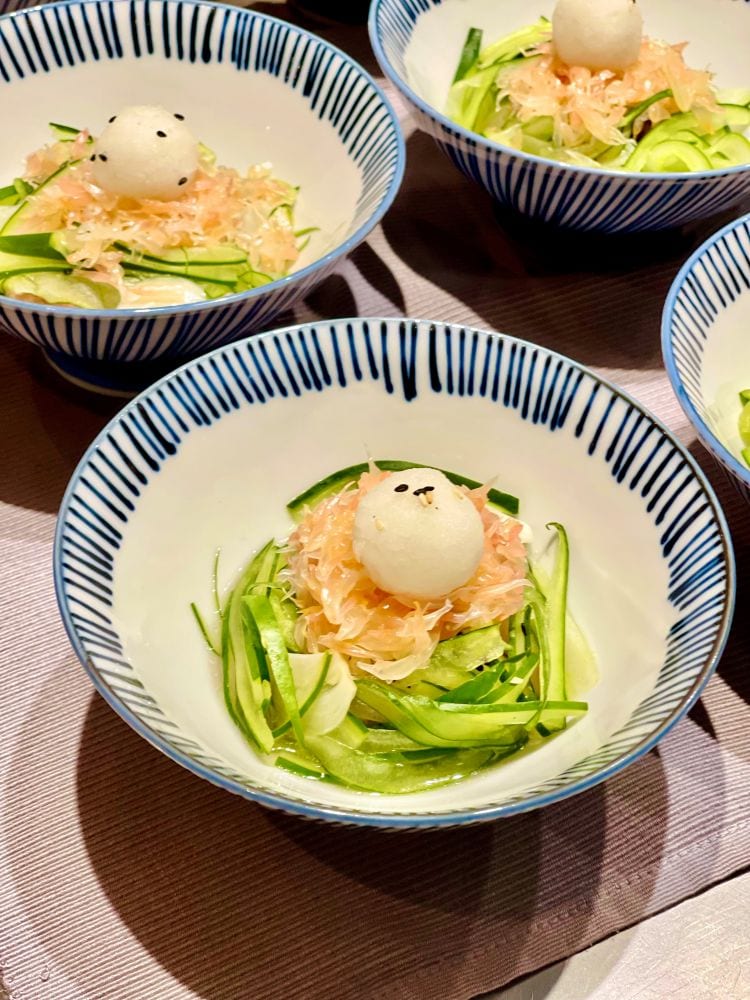
An adobo salad graced the table, yet it bore no resemblance to traditional Filipino adobo. In a Japanese ramekin, cucumber slices were neatly topped with loose pomelo sacs, and an immaculate ball of grated daikon rose majestically, seated atop like royalty. Once the adobo vinaigrette was drizzled and all the ingredients were tossed together, the result was an impressive marriage of tangy and savory flavors. The infusion of the peppery taste of the daikon was a delightful surprise. This refreshing salad provided an invigorating contrast to the rich flavors of the main course.
Two-Way Kare-Kare
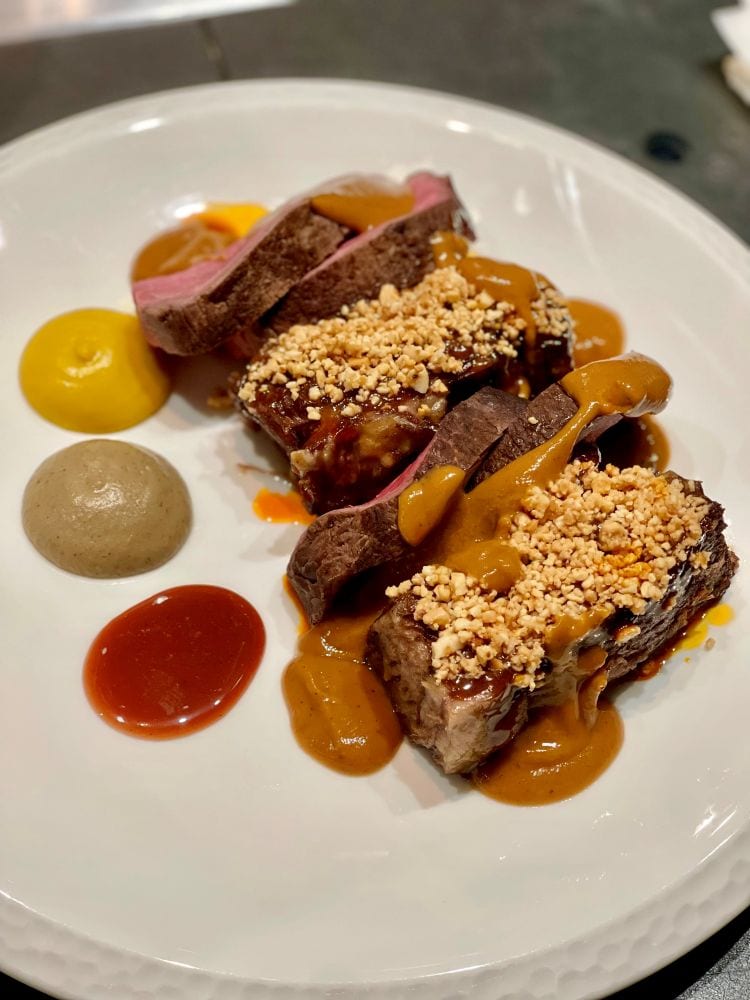
The 2-Way Kare-Kare was meticulously prepared by both chefs, featuring beef short ribs braised for an impressive 36 hours. The premium meat was coated with black pepper glaze, torched for a smoky finish, and sliced akin to steak. It was served in a deconstructed style: the annatto-tainted Palawan cashew sauce was beautifully swirled around the meat and topped with roasted, pounded cashew. Accompanying this were a purée of squash and eggplant and a glossy sheen of bagoong (sautéed shrimp paste) oil, inviting diners to savor the interplay of flavors and textures. While it looked different from the classic, it delivered the familiar flavors in a decadent way. The Kare-Kare truly stood out as the superstar of the night.
The rich main course paired beautifully with Lustau's Almacenista Fino del Puerto, a dry fortified wine from the Sherry region of Spain. This light and smooth wine offered distinct floral aromas with a hint of the sea.
Another drink from Liquido Maestro is the Rebolusyon, a flaming drink of Filipino florals and fruits. It featured Manille Calamansi infused with fresh lemon juice, the creamy tang of guyabano, Bonifacio white rum, and kaffir liqueur. The ilang-ilang spritz pleasantly perfumed the drink, and rounded by tultul (smoked coconut-infused salt from Guimaras), complementing the succulent meat and freshness of the seafood.
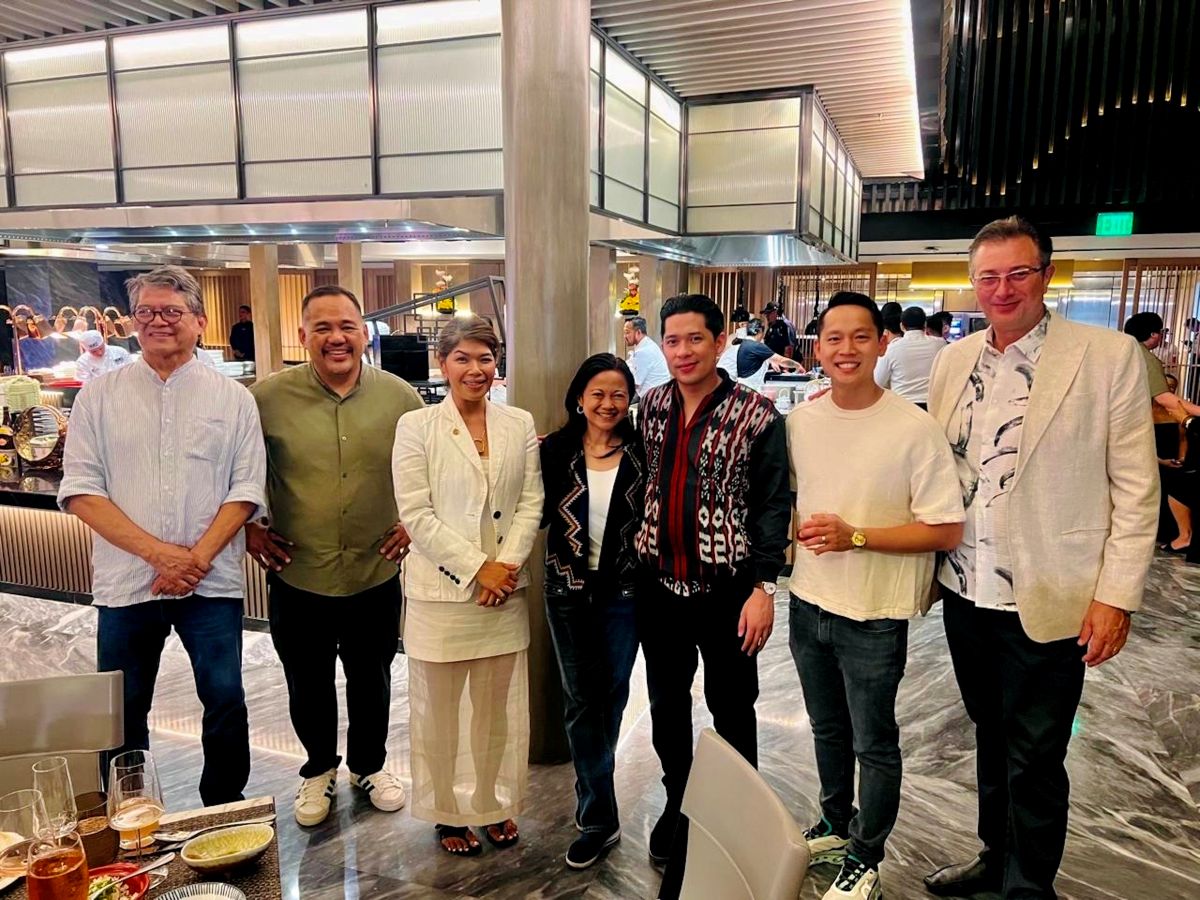
Chef Claude Tayag, Anton Diaz, Kate Anzani, Clang Garcia, Vernon Carandang, Chef Francis Ang, and Chef Marco Anzani.
Whimsical Desserts
As everyone looked serious in the kitchen, a Japanese box was delivered like a precious gift to each table. Upon opening it, guests found the lid adorned with taped photos of the three chefs in lighthearted poses, alongside a trio of dainty desserts resting on a bed of coffee beans. The lady pictured was Chef Cancino’s fiancée, Janine Tolentino, pastry chef of Kasa Palma, who had helped with the pastry course.
Inside were playful yet elegant confections. Pâte de Fruit captured childhood memories with chewy cubes of mango and guava purée, balancing sweet and tart. A delicate Honey Cruller followed, its ridged doughnut form glazed with honey and filled with custardy mousse. The Timbit, a bite-sized glazed doughnut hole, concealed a creamy-tart guyabano (soursop) mousse, its gooey glaze recalling the Filipino street favorite karioka.
ALSO READ
Francis Ang’s Abacá Offers Novel Ways to Experience Filipino Food
A Culinary Tour of Zamboanga, Basilan, and Tawi-Tawi at Hapag
For the finale, Chef Cancino reimagined a Canadian café classic with the Iced Capp Ice Cream: Philippine coffee enriched with San Miguel Negra syrup, burnt muscovado, and coconut, presented in a ceramic mini goblet.
Bottles of San Miguel Cerveza Negra and glasses of Morena cocktails were raised to toast the marvelous dining experience.
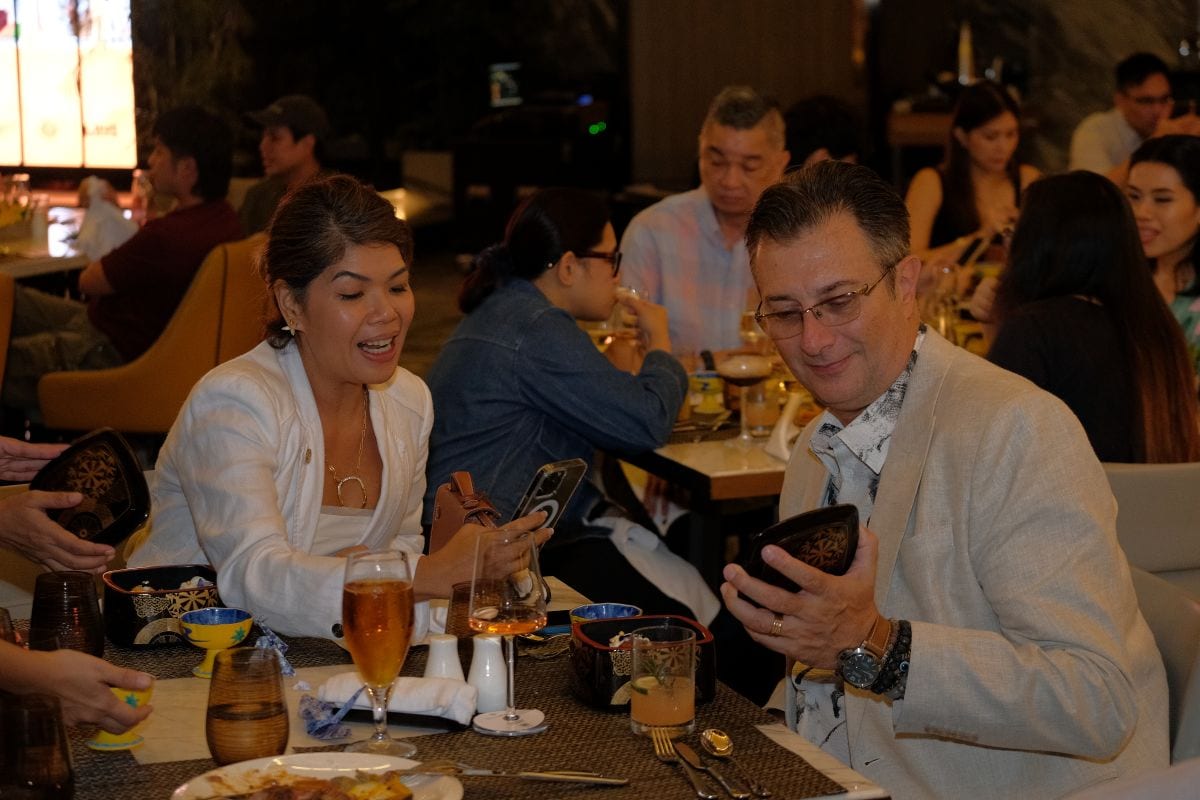
Couple Kate and Marco Anzani were delighted by the humor of the chef trio's photograph placed on the dessert bento box.
Charting the Future of Filipino Cuisine
The Rising Sons dinner offered a transformative perspective on the current state of Philippine cuisine and its potential future. It celebrated the elder generations who championed Filipino food, now invigorated by a new wave of diaspora chefs, helping catalyze gastrodiplomacy, tourism growth, and economic development.
The IMFF underscored the importance of rooted passion, cultural representation, innovation, sustainability, and global collaboration. This landmark celebration stood as a significant milestone in the journey of Filipino cuisine toward international recognition.
The IMFF traces its roots to a call to action during the 1st UN Tourism Regional Forum on Gastronomy Tourism for Asia Pacific, held in Cebu in June 2024 and hosted by the Department of Tourism. At the forum, leaders were urged to integrate gastronomy tourism into policy and practice, with the active participation of multiple sectors, and to extend support to micro, small, and medium enterprises. This initiative aims to foster national pride and a stronger sense of nationalism.
Answering this call, restaurateur Kate Anzani pledged to grow a national Filipino Food Festival by collaborating with destination partners to advance the mission. She has since joined forces with key leaders in six gastronomy destinations. A year after her initial pledge, she is ready to launch the festival across the following locations: Cebu (Kate Anzani, Marco Anzani, Brian Connelly, Didier Belmonte), Manila (Anton Diaz and Nicole Ponseca), Tagaytay (Rhea and JJ Sycip), Siargao (Andrew Malarky), Davao (Carmina del Rosario), Cagayan (Jeeves Dey Veyra/Big Bite Team), and Ilocos (Reggie Aspiras).
