

At Global Food Event in Italy, Filipino Lechon Becomes the Star


Over 3,000 delegates from 120 countries were in Turin, Italy over the past week for the Terra Madre Salone del Gusto 2024. All of them looked to either showcase or experience the rich culinary heritage from all corners of the world.
Participants at the Terra Madre Salone del Gusto throng the Philippine pavilion which presented traditional and heritage dishes from Cavite, Negros Island, Panay Island, and the like
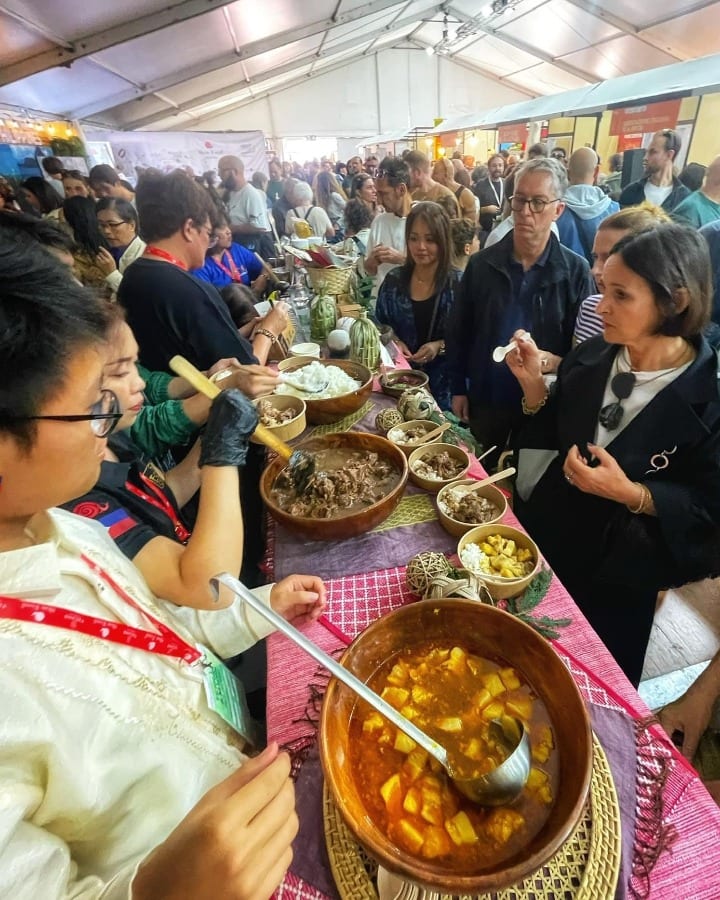
The contingent from the Philippines was no exception. Reena Gamboa, president of Slow Food Movement Negros posted videos and photos on her Facebook page of delegates crowding the Philippine Pavilion as they served a staple of every Filipino fiesta—lechon.
“You can’t go wrong when there is lechon, whether in the Philippines or in Turin,” Gamboa said. “The line was so long!”
ALSO READ
Lechonero from Carcar Named Best in Cebu
Lechon Wars: Supreme Court Issues Verdict in Elar's vs. Elarz Case
“It was definitely a proud moment for the Philippines at Terra Madre seeing hundreds of Italians and other visitors line up to have a taste of Filipino cuisine,” Philippine Consul General to Milan Elmer G. Cato. “Our participation raised the profile of the Philippines here in Italy.”
Visitors to the Philippine pavilion during Terra Madre Salone del Gusto made a beeline for the lechon (roast pig on a spit)
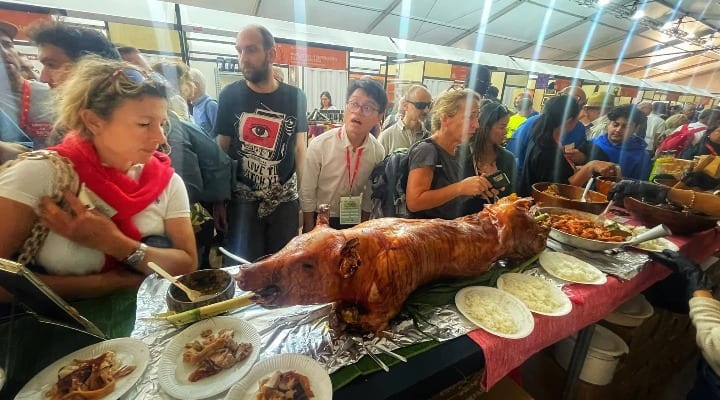
Besides the beloved roast pig, other classic Filipino dishes were served at the Philippine pavilion during the event held from September 26 to 30, including Chicken Inasal, Adobong Bisayas, Beef Caldereta, Seafood Sinigang using the batuan fruit as souring agent, batchoy, hot chocolate from criollo cacao, kinilaw, along with heirloom rice, native vinegar, and Philippine coffee.
The signature dishes and heritage cuisine came from various regions and provinces such as Cavite, Negros Island, Panay Island, the Cordilleras, and others.
Bacolod is slow food hub in Asia
Meanwhile, back here in the Philippines, a memorandum of agreement signed between Bacolod Mayor Albee Benitez and Slow Food International Director General Paulo di Croce designating Bacolod City as the hub of the Slow Food movement in Asia.
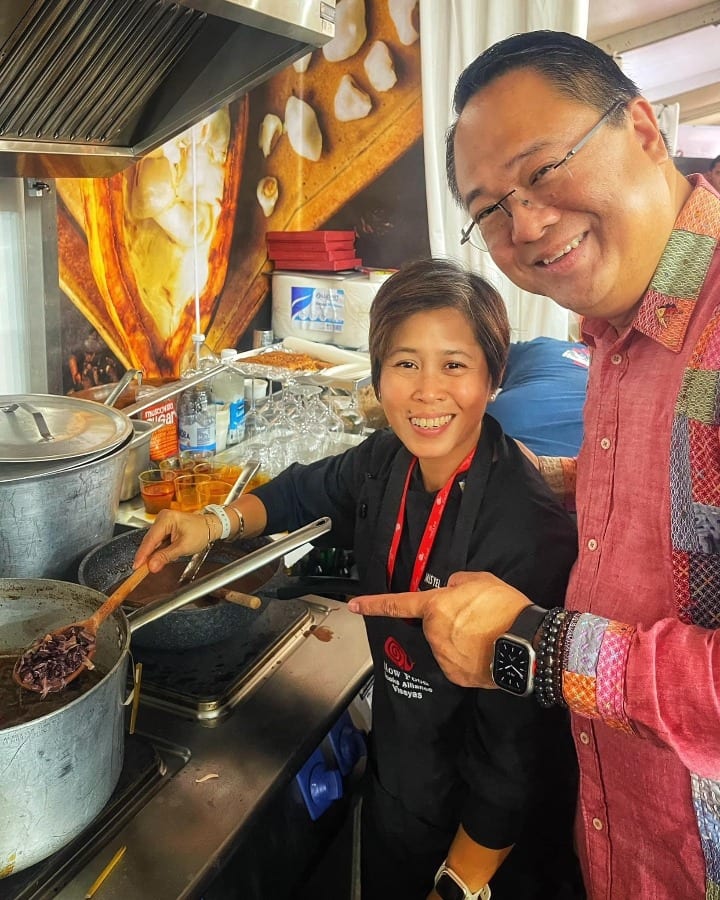
Philippine Consul General to Milan Elmer G. Cato checks out what Michelle Gerona of the Cooks Alliance Visayas is plating for guests at the Philippine pavilion
“[Bacolod] will serve as the branch of Slow Food International for Asia and the Pacific,” said Gamboa. “So anyone who wants to learn more about the advocacy and how to adapt it in their communities will want to visit and learn how to go about it.”
Gamboa added that the designation will also positively impact Negros Occidental, as it will attract more visitors. “This includes learning about our own farmers, our food, our culinary heritage, and our being Filipino.”
Tourism Secretary Christina Garcia Frasco hailed the designation of Bacolod as a slow food hub. “The Philippines has one of the most organized Slow Food networks in Asia, and our delegation underscores our commitment to championing our unique food heritage and sustainability,” she said in a statement. “We are excited to foster global partnerships not only in promoting good, clean, and fair food, but also in developing and promoting Slow Food Travel.
“With Bacolod recognized as a Slow Food International hub for Asia and the Pacific, we aim to further elevate the country’s status as a key player in sustainable food systems and place the Philippines at the forefront of the global movement toward Slow Food Travel and sustainable agriculture, providing a platform for regional collaboration and innovation,” she added.
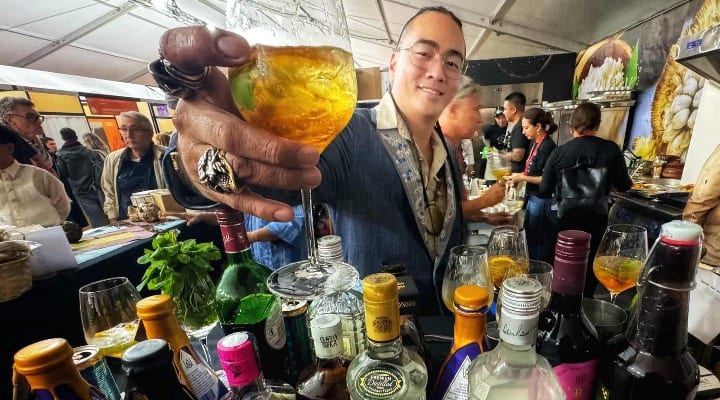
Visitors at the Philippine pavilion were also able to sip and savor beverages made from Philippine liquors
Frasco revealed that the Philippines is actually gunning to host the 2025 edition of Terra Madre Asia Pacific through the DOT.
The Philippine delegation at the event in Turin was composed of 90 farmers, chefs, restaurateurs, and advocates for good, clean, and fair food. Among the key activities the delegation participated in were interactive workshops, panel discussions, and immersive food tastings, while top-tier chefs and culinary experts prepared special menus that blended traditional and modern techniques. The featured resource persons shared insights on sustainable food practices, heritage recipes, and the role of indigenous ingredients in promoting biodiversity.
