

Pare Ko at 30: An Oral History of a Filipino Teen Film Classic

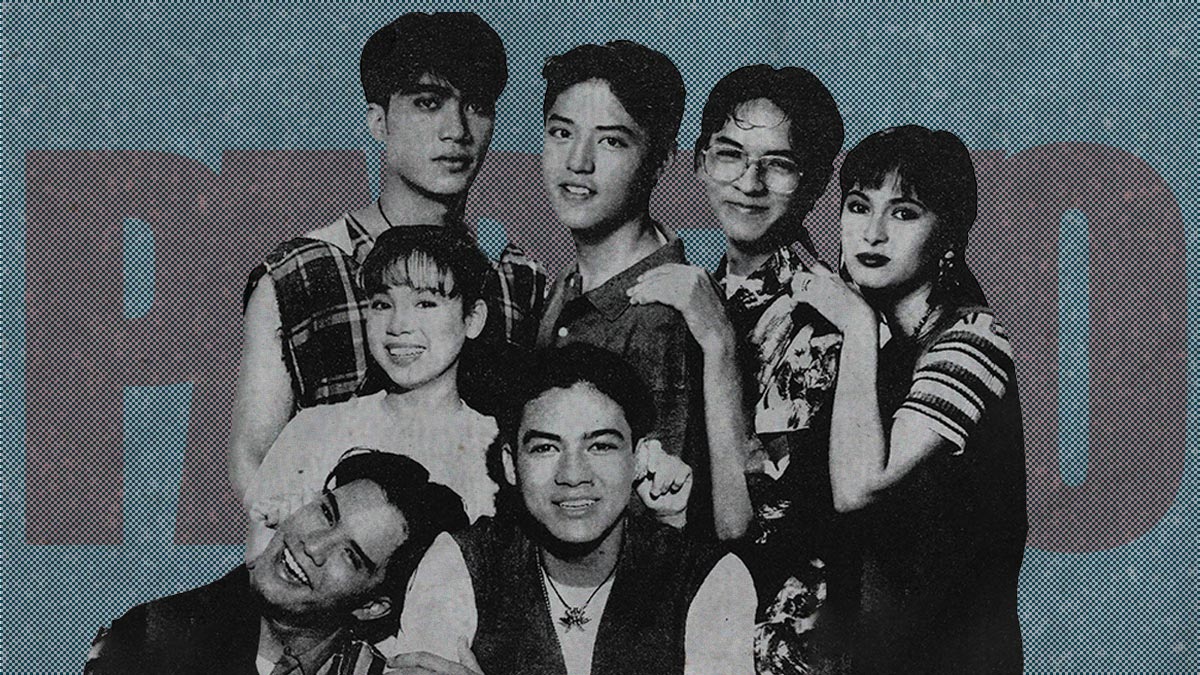
The 1980s had Bagets, but when the 90s rolled around, no youth-oriented film was able to capture the zeitgeist quite like Pare Ko. At a time when smoking was still allowed everywhere, box-type Lancers were the pinnacle of cool, and so-called “ledge dancing” was all the rage in night clubs, the 1995 film that starred some of the most popular teen stars at the time broke ground for its real and honest depiction of Filipino youth culture.
But Pare Ko had more to say than just what Filipino kids were up to in the mid-1990s. Writer and director Jose Javier Reyes—recent awardee of Esquire Philippines’ Man At His Best Creative of the Year citation—says he wanted to explore male friendships in the context of teenage barkadas.
“I wanted to do a youth movie that was not the same,” he says over a casual conversation to mark the movie’s 30th anniversary. “I wanted it to be more gritty and real, not just centered on romance. I wanted a movie that kids could identify with that reflected the values and mindset that they had during that time.”
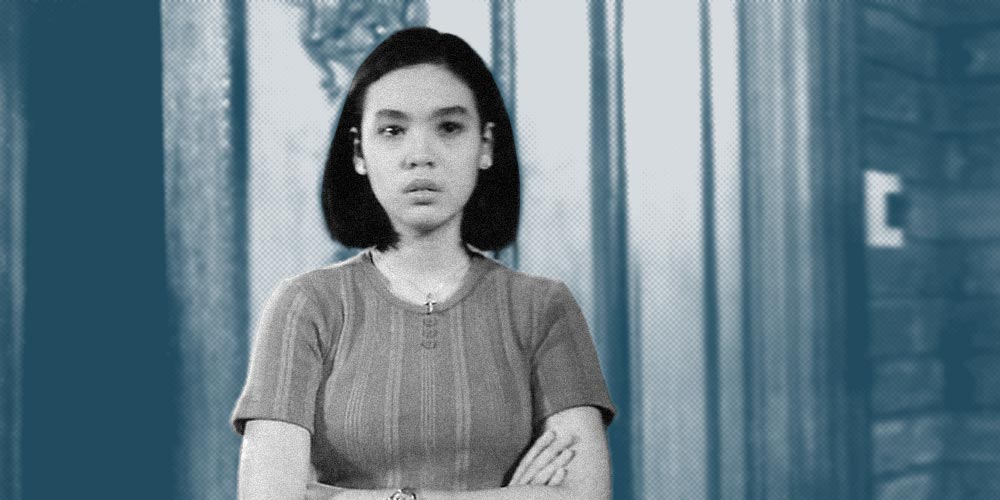
Pare Ko would turn out to be a massive hit that catapulted actors like Jomari Yllana, Jao Mapa, Claudine Barretto, and Mark Anthony Fernandez into superstardom. It was a box office success that also paved the way for other youth-oriented films to dominate theaters in succeeding years.
Reyes, who said he was shocked to discover that three decades had passed since the release of the film, spilled a few secrets about the film, what the Star Cinema executives thought when they first saw it, and what he thinks about the lasting impact the film has left on Philippine cinema. Excerpts:
ALSO READ
Jose Javier Reyes on the Hard Truths and Hopes for Philippine Cinema
Esquire Philippines: Where did you get the idea for the film?
Jose Javier Reyes: I remember meeting with Malou Santos and then the late Simon Ongpin and I believe Olive Lamasan was there, because she was still part of the creative team at that time. And they wanted a youth movie. The Gwapings had already matured a bit by that time.
Yeah I know Jomari Yllana and Mark Anthony Fernandez were in the film, but how come Eric (Fructuoso) wasn’t in the cast?
You know I’m not sure. I really don't remember. I don't know if Eric ever forgave the production for not including him.
I just know that (Star Cinema) wanted to do a film for some of their Star Magic stars at the time. And these Star Magic kids, I’m not sure if I worked with them earlier or later, but I worked with Gio Alvarez and Victor Neri. I knew Jomari and I knew Jao because I've worked with them before. And then there was Claudine, because I worked with her in May Minamahal, together with Nikka Valencia. In other words, I was familiar with all these kids. So we put all of these components together to come up with a movie.
Did you write the characters based on the actors?
Basically, yeah. I knew Jomari and Jao very well. But I wanted to push, especially Mark Anthony, because I knew what he was going through at that time. He’s the son of Rudy Fernande and Alma Moreno, and by that time Rudy had already married Lorna, and he already had stepbrothers. But I wanted to show a kid who was from a very dysfunctional family, and he did it well. He knew exactly where to pull.
Then I wanted to create a character of overbearing parents, and that was Madeleine Nicholas and Buboy Garovillo, who were Gio Alvarez’s parents in the movie. And then I wanted yung medyo pa-macho na bata, si Victor Neri. The early stud.
I wanted to do a youth movie that was not the same. I wanted it to be more gritty and real, not just centered on romance. I wanted a movie that kids could identify with that reflected the values and mindset that they had during that time.
So I had a lot of fun. I really had a lot of fun at that time because Star Cinema gave me the liberty to write the script that I wanted to do. I never realized that it was going to be the ‘90s counterpart of Bagets.
What was your inspiration for the story?
I wanted it to be about male bonding. I wanted it to center on the friendship between the characters of Jao and Jomari. And I wanted to parallel that with the story of the older characters, sina Koko Trinidad and his friend Vicente. Remember yung nagche-chess sila? I wanted to show how male friendships lasts long. I wanted to create a story about the strength of the bond of male friendship, which I felt was not yet featured in films before. And then to show how this male friendship, from one generation to the next, it’s still the same. It still lasts.
Surprisingly, Star (Cinema) left me very much on my own for this one. They didn't meddle with me in terms of the characterization, which is why, the women there are not weak. Nikka (Valencia’s) character is not weak. In the same manner that Claudine’s character was an energy vampire. She was passive-aggressive. I wanted to see how the intrusion of a girl can bring great tests in male friendships. Because Jao knew that what Jomari did was wrong. But at the same time, you’re left with the question, which is more important—your moral obligation, your sense of moral compass, or your sense of friendship?
In the end, you know, it's still friendship that will eventually prevail, but not necessarily giving up your moral compass.
Let me ask about the title.
Yes. I do remember that when we met it was the height of the popularity of the Eraserheads. And (Star Cinema) said, ’Joey, let’s do a movie called Pare Ko.’ And then sabi ko, let's do a movie about the mindset of kids of the ‘90s.
The movie was titled after the Eraserheads song, but they weren’t in it. Instead it was Rivermaya who made an appearance in the film. How did that happen?
I really don't remember, but I know that they wanted to put in Rivermaya. I don't know why the Eheads were not brought into the scene. I guess it was a studio negotiation thing.
So when you wrote it, did you know at the time that you were also going to direct it?
Yes, I did. It was the time that I was the “niño bonito” of Star Cinema. I was endlessly doing one film after another. So I knew that I was going to do it.
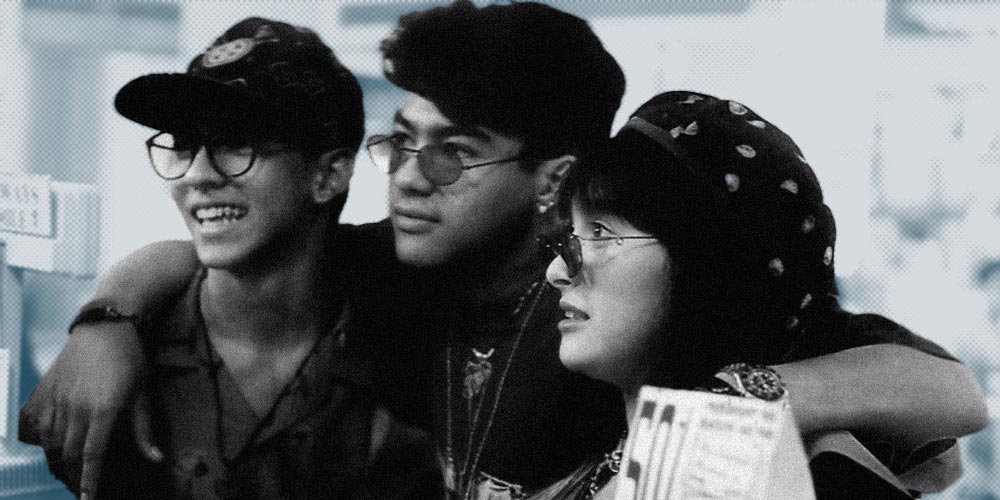
You said Star Cinema gave you kind of a free rein. But obviously, when you see it, it's not like their typical teenybopper flick. There was a lot of cursing and drinking. Star never said anything?
No, no, I remember when Charo watched it, she said, ‘Oh, this is so different.’ But then she said, ‘It's so different, but it rings so true.’ Sabi ko, ‘Well it is different, and it does ring so true.’
You know, if you're going to do a story about kids that age today, it will be so completely different. Because the values now are so different. Sina Jomari and Jao, they’re the parents of the kids now!
When you wrote Pare Ko, you had that basic framework of life of the kids at the time. I'm wondering how you got to sort of immerse yourself into that culture? I mean, even the dialogue is very precise, and you weren't exactly the same age.
No, no, I wasn’t. I was 40 years old at that time and that's 30 years ago. I’m 70 now.
I go around with kids. Even at the age of 40, I was clubbing, and I was always in contact with young people. Even to this day, that's why I teach, because it gives me the accessibility to be with the audience. To be with young people. And I knew the club culture and I knew a lot of kids who go through those dilemmas. Even up to now I never isolate myself from the much larger world, despite the fact that you know my age works against me as far as being part of that world actively.
But I know that world because I teach. And when you teach, you deal with these kids.
Did you have to do research to sort of learn the language of the kids at the time?
Not research. Maybe because my immersion was part of my life during that time. It was the other side of my life during that time to be around all these kids.
Was there anyone in the cast that you felt was particularly right for the role? Parang perfect casting?
Yeah yeah. Yung tatlo, especially the three leads. I knew it because I knew them well. I knew their capacity. I knew Jao’s character because even at that age, I knew he was already an artist. He paints. I knew Jomari since he was a kid. And Mark Anthony, I knew because I was close to the Douglas Quijano group, and lalo na nung nag Gwapings. I knew these kids outside of the movie set. So I knew exactly what capacity they had.
And I knew the capacity of Claudine, and I love Nika Valencia because of May Minamahal.
Can you tell me some stories while shooting? The interviews from the cast, they all said they had a blast. Parang naglalaro lang.
You know, I make it a point that each time I go to the set that I enjoy what I am doing. And I make people enjoy the work that they're doing, mainly because it's difficult work. It's difficult physically, it's difficult emotionally, and it's very, very demanding in terms of time and in terms of energy. So I make it a point to really laugh a lot on my set.
And since I'm dealing with kids, I enjoy it. Even though I was middle-aged at that time, we made it a point to enjoy.
I do remember when we were shooting that fight scene outside the club. That was somewhere in Nakpil in the Malate area. That was a lot of fun because I didn’t want a choreographed fight. I wanted a fight between two kids. Sabi ko sa fight instructor, don’t give me numbers. Yung may ‘one two punch.’ I said I wanted it to be bara-bara.
Jao and Joemari had such fun doing that. And then yung mga bumubuyo, yung mga, ‘Sige pa, sige pa!’ Sila-sila lang yun. We had a lot of fun doing that. And since these kids I was familiar with na, in between takes, we were just making kwento and they were just enjoying it. And I think that was what helped me a lot in directing the movie, mainly because I was with the kids, and the kids, too, were making the movie with me.
The locations, I'm just curious. A lot of them don't even exist now.
The restaurant scenes, a lot of them were shot in Malate.
Jao’s character worked in Carl’s Jr, which we don’t have now.
Oo. With Ogie Diaz, na binato ng burger. (laughs). Oo nga no, andaming wala na. And then that house of Koko Trinidad and Anita Linda, that was somewhere in Parañaque. It was a big white house. And yung bahay nina Madeline Nicolas and Buboy Garovillo, that was somewhere in the Banaue area.
The mall scenes? Where was that? Was that Virra Mall?
It was Virra Mall. Suki ko yan, yung Virra Mall and Shoppesville. I forget where we shot the club scenes. It was somewhere also in Malate.
So when you finished the film, was it the film that you envisioned in your head
Very much so. But of course, there's no such thing as, ‘Oh God, I did the perfect film.’ But I did exactly what I wanted. There were other things I would have done differently. Okay, I would have done things, you know, certain scenes differently. But then it was, you know, the best of what was available at that time, and it was the best of what we shot. So I was really happy with it.
What really surprised me is that, you know, it had that kind of shelf life, of being placed as a kind of an artifact of the age, kind of reflective of that age
Talk to us about when you first screened the film, during the premiere. What kind of reaction did you get?
Well, for one thing, I've seen the film a number of times, but only in the editor's bay. I had this monitor on which I've watched that film so many times. Wala pang Vimeo at the time so you had to go to Road Runner and to see the film in the small screen.
But when I saw it and you do the sound design, and you do the scoring, it's different when you're in Road Runner doing all of that and it’s different when you see it in the movie house. How should I put it? I was pleasantly surprised at what I saw on the big screen. I guess what I was most surprised about was how it rang so true and how the kids were acting as kids. I realized that the audience was relating to that, and that the kids were acting like kids.
I remember Charo (Santos) talking after watching, she said, ‘You could feel the friendship.’ Sabi ko, that's the whole point of the movie. The story of Pare Ko is the story of friendship and growing up.
And I wanted to shoot that final scene…
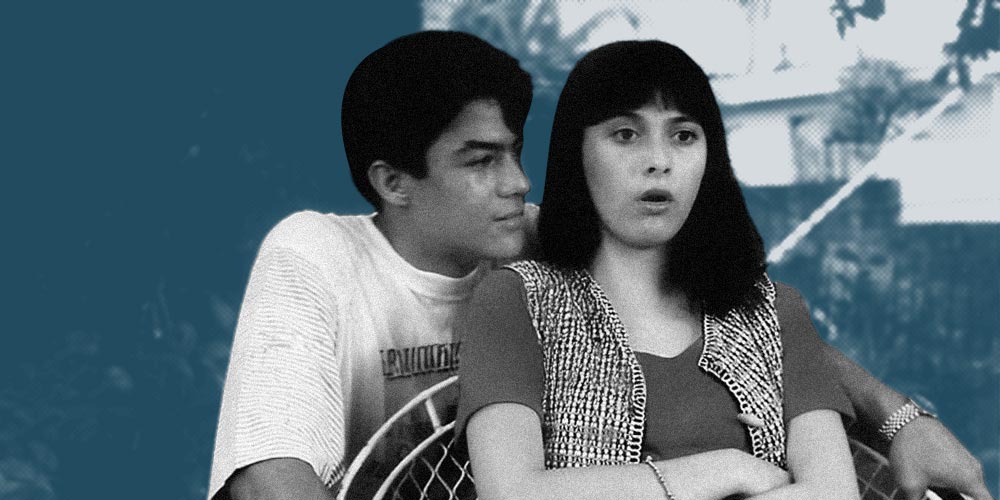
Was that in Tagaytay?
Yeah. We had to wake up at about three in the morning to wait for the sunrise. We had to shoot it precisely because the sunrise would only last for so long. And I needed that shot. And I wanted to end with that sunrise, because their lives will change right after that day. Like with all kids, right after that day, you don't know whether the friendship will still be the same when you finally graduate from high school and enter college.
Correct me if I'm wrong, but the whole film, the time period of the movie, it happened in one summer, right? The summer before they went off to college?
Yeah. It's the summer of abandonment, because God knows what will happen to them the moment they graduate. And I also picked that up, because I have a lot of good friends from high school, which you completely lose track of the moment you step into college. And you develop new friendships, and your worldview changes altogether.
You know what, one thing I would love to do is to do a sequel of Pare Ko, and a sequel of May Minamahal. Of how it is, with Aga and Aiko, 30 years later (laughs). It's so nice to have a certain kind of continuum in the same…like I want to do a third film in the Kasal Kasali Kasalo with Judy Ann and find out what happens to them. But then with Pare Ko. Can you imagine…Jomari, and Mark Anthony and Jao, binata na yung mga kids nila. My god, I’m 200 years old!
Yeah, that could be interesting. And they all have sons.
It's just crazy that, you know, when you're in this job, you don't see and you don't feel the passage of time.
So when it came out, was it a box office hit?
It was. I don’t remember the numbers, but I know that Star was surprised by the results. And I realized that it picked up because of word-of-mouth. I guess the risk Star took here was that it was not your template youth movie.
Yeah, and there were a number of teen films that came out after this—Gimik the Movie, Hataw Na, FLAMES the Movie. Did you have any idea that Pare Ko would have legs and influence so many other films?
Not at al. I think when you do movies, you just do what you feel is right for that moment, and right for the audience, and most especially, right for yourself, with what you want to say. Now, if it has legs, or it becomes a landmark, or it becomes a peg to your age and to whatever, I think that happens when it's supposed to happen. I never expected May Minamahal, Pare Ko, Hataw Na, or Kasal Kasali Kasalo to be benchmarks of certain kinds of films that I've done, but it just happens. And I'm pleasantly surprised. I am pleasantly surprised.
When people come up to you, how often do they reference Pare Ko? Obviously, you have this big oeuvre of films. Do you get people saying this was their favorite movie?
There are three movies which they always refer to as their favorites. That's May Minamahal, Pare Ko, Kasal Kasali, Kasalo. So in other words, my career has been defined by these three films. Not even Live Show or Toro, which is another landmark. (laughs)
How does Pare Ko stack up? Like, in your own personal opinion, where does it rank among your favorites, or the films that you really have a fondness for?
I mean, it's, it's one of the five movies in my career which I love the most. And it's not because it has legs or people you know refer to me relative to that movie. It's because I love that movie. I love that movie because at the time that I made it, it was such a joy making it, and it was a joy seeing people enjoy it.
Last question. I mean, we were talking about possibly doing a sequel, or a follow up to the movie. If ever, Star Cinema came calling, and maybe said let’s do something, would you be game to do it?
Actually, I heard somewhere na may plan to do something with the same characters as parents. Like sina Jao and Jomari and all the rest. That would have been interesting, Because there’s the question of how they’re dealing with the youth of today. My God, I teach, you know, and the kids now are so different.
But, well, right now with my present position here as FDCP (Film Development Council of the Philippines), it's not that I can't make movies, but I was allowed only to do a maximum of two movies a year. I never realized (the job) would be taking up so much of my time.
And you know, it's at the point where the industry is really in dire straits, and you really have to find ways to keep it up. But I still want to do movies, but I just have to be very selective about what I do. And if ever, you know, if I could make a sequel of any of my movies, like Pare Ko, or May Minamahal, or Kasal, Kasali, Kasalo, I’d drop everything and do it. Hopefully with the same amount of freedom I had when I did the original.
