
There are New Rules for Non-EU Nationals Traveling to Europe

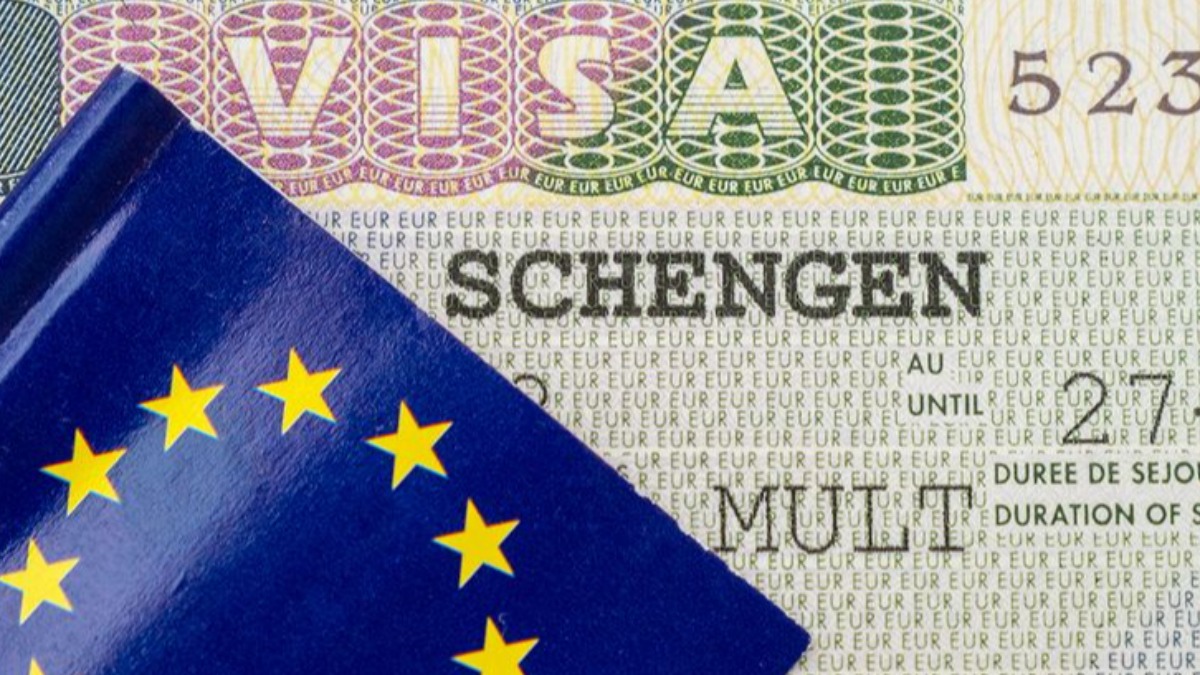
Heads up if you’re making plans to head to Europe soon.
The Schengen region will gradually implement its new Entry/Exit System (EES) that will phase out physical marks on passports. This will start on October 12, with full implementation targeted by April 10, 2026.
This means the entry stamps on your passport when you travel to European countries will soon be a thing of the past.
“The EES is an automated IT system for registering non-EU nationals traveling for a short stay, each time they cross the external borders” of 29 countries, according to the European Union’s Travel Europe website.
Under this new rule, passport control officers will save the non-EU national’s biometric data as a digital file.
ALSO READ
Exploring Poland: A Cultural and Historical Odyssey in Eastern Europe
“This process can be quicker if you register some of your data in advance…by using the self-service available at your border crossing point, and/or a mobile application if made available by the country of arrival or departure,” the Travel Europe announcement said.
According to the EU, the EES will speed up border checks, which means less time for visitors at the border, and will also help staff work more efficiently. The new system will also “stop people from overstaying, using fake identities or misusing visa-free travel” as the EES will use biometrics, including fingerprints and facial data.
Officials expect the EES to further help border control officers and law enforcement agencies by spotting security risks and supporting the fight against serious crimes and terrorism through easier access to traveler information.
Officials added that, for those whose fingerprints and/or photo have already been recorded in the EES for a short stay, non-EU nationals will not have to present them again on their next trip as the data is already stored digitally. The data will be stored in the EES data for three years and can be shared with other countries inside or outside EU and international organizations “for law enforcement purposes.”
“Border control officers will verify your existing biometric data against the record, leading to faster processing times,” according to Travel Europe.
In addition, the region will also be implementing the European Travel Information and Authorization Systems (ETIAS) for non-EU nationals from visa-exempt countries, which will require them to pay for a visa waiver instead.
The European Commission defines a “non-EU national” as a traveler who is not a national of any EU country or that of Iceland, Liechtenstein, Norway, or Switzerland. “Short stay” means the travel will be up to “90 days within any 180-day period. This period is calculated as a single period for all the European countries using the EES.”
Travel officials stress that Filipinos will still have to apply for a Schengen visa if they are traveling to the EU. This means that the normal process of applying for a Schengen visa remains.
According to the Department of Tourism, a total of 249,795 Filipinos traveled to the EU last year. To the Schengen area, specifically, the number is 241,402.
Bulgaria and Romania formally joined the Schengen area last year.
The new EES data collection will be implemented at the border crossing of 25 EU members and four non-EU countries but are included in the Schengen area: Austria, Belgium, Bulgaria, Croatia, the Czech Republic, Denmark, Estonia, Finland, France, Germany, Greece, Hungary, Iceland, Italy, Latvia, Liechtenstein, Lithuania, Luxembourg, Malta, Netherlands, Norway, Poland, Portugal, Romania, Slovakia, Slovenia, Spain, Sweden, and Switzerland.
Cyprus and Ireland, which are both part of the EU, are not part of the Schengen area so they will still manually process the entry and exit of travelers and continue to stamp passports.
In the first seven months of the year, about 154,000 Filipinos visited the Schengen region. The top 10 destinations are:
1| Italy - 34,733
2| Spain - 25,471
3| Germany - 24,147
4| The Netherland - 19,635
5| France - 17,811
6| Greece - 11,530
7| Norway - 9,391
8| Switzerland - 7,773
9| Denmark - 7,169
10| Belgium - 5,721.
A total of 4.34 million Filipinos traveled overseas from January to July 2025, according to the DOT.
