From Crisis to Advocacy: How One Nurse Is Changing Mental Health Care in Baguio

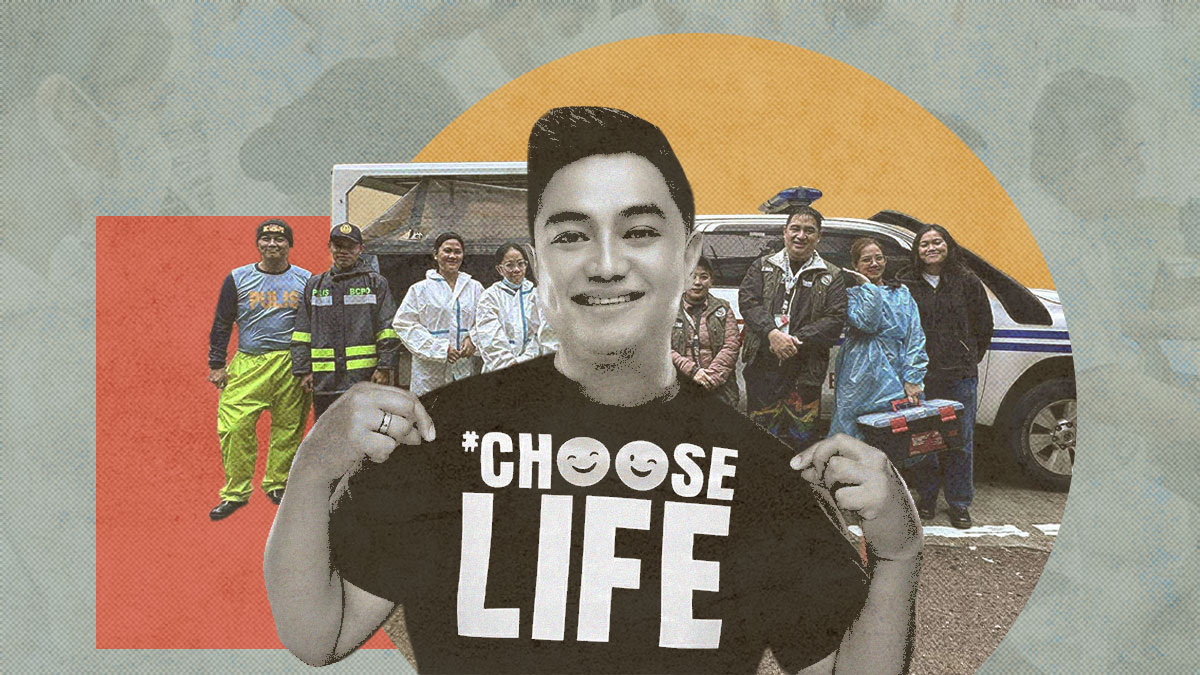
“I was alone in China and suddenly, I felt like I no longer had control over my own body. The episode led me to seek help from emergency services. That´s when I knew that I needed to seek professional help before it got worse.”
This is how Ricky Ducas Jr., PhD, RN. recounts his experience before he was diagnosed with panic anxiety disorder (PAD).
ALSO READ:
It’s Time We Talked About Men’s Mental Health
Filipino Men are Up to 4x More Likely to Die by Suicide Than Women
Nursing by design
Ducas was born to Kankanaey parents from Tadian and Bauko, Mountain Province, but grew up in Tuba, Benguet. The youngest of six children, he never met his father, who passed away while his mother was pregnant with him.
Ducas depended on his grandparents to support his education, aspiring to become a physician. But his grandfather died just after they found out that he had passed the nurse licensure examination. Left with no choice but to work instead of getting an MD, Ducas headed to Taiwan and worked as an intensive care unit nurse. After a year and a half, he took up a post in Mainland China. There, he fulfilled the dual role of clinic nurse and nurse-educator for three years. Though he enjoyed the workplace, he admits that his job was highly stressful and required a lot from him. Add to that the alienation of being in a foreign country.
By 2019, he started feeling that something was wrong, though he could not identify exactly what. After the incident, when he had to call Chinese emergency services, Ducas decided that he should go back to the Philippines.
While preparing to leave China, he asked a good friend to find a psychiatrist whom he could consult in Manila. But his friend came back saying the soonest any psychiatrist could see him was after three months.
Ducas, concerned that he could not manage for that long without professional intervention, had to overcome his own apprehensions and look for a psychiatrist in his hometown of Baguio.
“There was still, in my mind, that stigma, that I did not want anyone to know that I was seeking help for mental illness,” he confides.
When he managed to get an appointment with a psychiatrist in Baguio, he underwent psychotherapy and was prescribed medication.
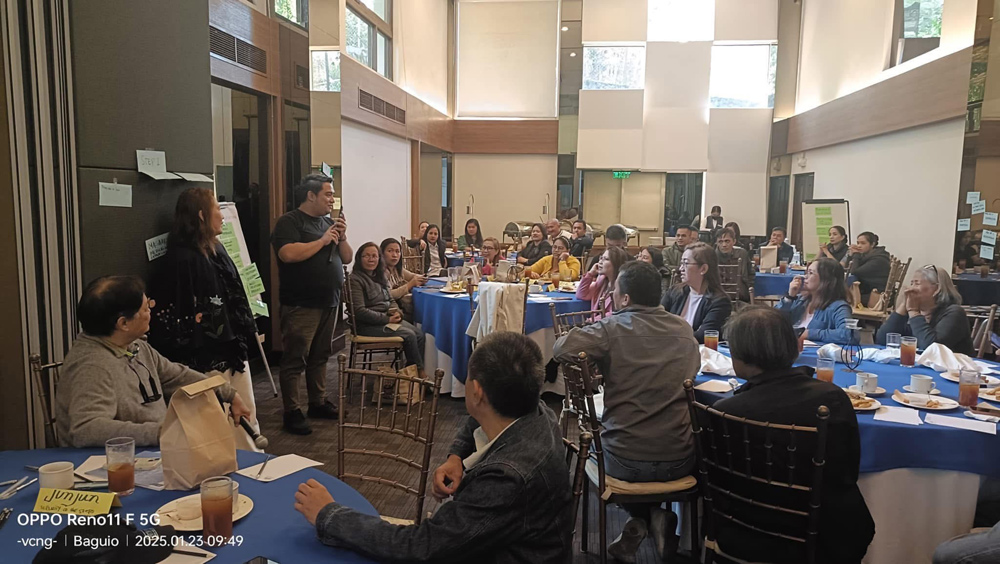
Ricky Ducas holds seminars and talks about mental health.
The Lifeline
Soon after, he went back to his hometown to talk to elementary schoolchildren about personality development. One of the students took him aside and confided that he had thoughts of self-harm. He was only in sixth grade.
“I was alarmed. I thought: how can they manage in such a remote place, without access to mental health facilities and professionals?”
That was the impetus for Ducas to establish the Anxiety and Depression Support Group – Baguio City (ADSG), primarily, to connect students he met with mental health professionals. The online group served as a venue for questions to be asked and answered, and, if necessary, to receive counseling from registered psychiatrists and psychologists. All of the mental health professionals–from Ducas’ own network–participate voluntarily. To augment any expenses, the organization raised money by selling ChooseLife merchandise and holding the Binnadang Concert for a Cause (“binnadang” is the Cordilleran value of community solidarity).
No Coincidences
In 2020, Ducas hosted the debut of a friend's daughter. During his spiel, he talked about his advocacy for mental health. In the audience was Baguio’s mayor, Benjamin Magalong, who found resonance in the sentiments the mental health advocate expressed. Not long after, Ducas talked to members of the Baguio City local government unit about the topic.
Then, the global pandemic happened. Ducas and his colleagues provided stress debriefing and de-stressing for barangay health workers and frontliners, who were physically and mentally exhausted. All in all, they helped more than 1,200 people.
ADSG’s membership also grew exponentially, as more people became acutely aware and looked for ways to cope with various mental health challenges. The establishment of the online group came at an opportune time to meet the need, as people struggled to deal with issues that arose due to the public health emergency. In a major way, the pandemic helped lessen the stigma and opened up conversations about mental health.
Mental Health in the Philippines
According to the 2021 Philippine National Survey on Mental Health and Well-being (NSMHW), one out of five Filipinos has attempted suicide.
Meanwhile, the Department of Health, in 2023, reported that more than 3.6 million Filipinos suffer from mental health conditions, neurological, and substance use disorders. Among the most prevalent conditions are major depressive disorder, bipolar disorder, and schizophrenia.
In addition, based on the Mental State of the World report by Sapien Labs, the Philippines' mental health quotient (MHQ) worsened from 78.44 in 2023, 68.76 in 2024–much higher than the global average of 62.84.
Making special mention of data that more males die by suicide, Ducas makes this appeal: “Hindi kabawasan sa pagkalalaki ang pagpapakonsulta, ang umiyak. ang humingi ng tulong.” [It does not take away from your manhood to consult, to cry, to seek help from someone.]
“Mental illness, like any other sickness, should be treated by a medical professional to avoid symptoms from manifesting.” Ducas acknowledges that, though the stigma still persists, more people are now seeking and availing of professional help. And that is a good thing. “Since it is a disease, it can be treated and prevented.”
He emphasized the importance of proper assessment by health experts to determine the appropriate prescriptions and follow-up check-up schedule. Regular check-ups will also help prevent conditions from worsening or other serious consequences.
Compassionate Rescue
In the midst of the pandemic, Ducas spearheaded compassionate rescue efforts for vagrants. That means no medication or restraints are used, and they are treated with compassion and dignity.
Rain or shine, Ricky (third from right), with the multidisciplinary team, delivers compassionate care in Baguio City.
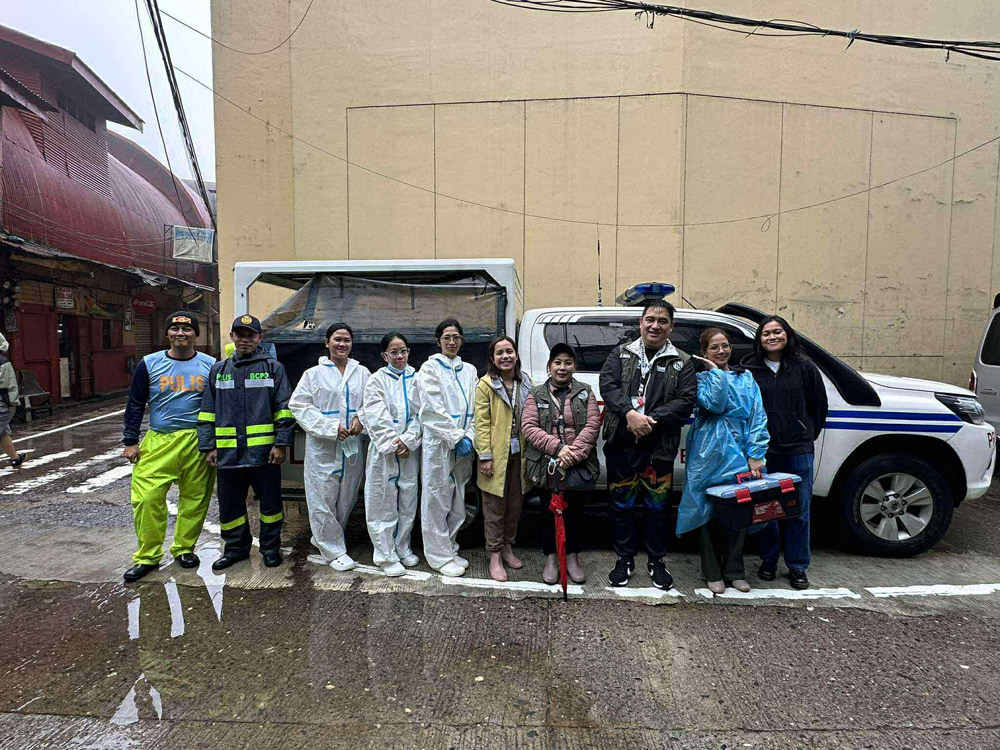
In 2020, after initial surveillance and in coordination with the Baguio City Police Office (BCPO), Baguio City Social Welfare and Development Office (CSWDO), Baguio City Emergency Medical Service (EMS), Baguio City Health Services Office (HSO), and the Psychiatry Department of the Baguio General Hospital and Medical Center (BGHMC), the team rescued Mother Calteya who had been living on the streets of Baguio for more than 30 years. Observing health protocols, she was confined to BGHMC. Social workers located her family, who were oriented on how to manage her care, including regular medical check-ups and keeping her on her treatment regimen, before she was reintegrated with them.
Now in her late 60s, Mother Calteya is preoccupied with vegetable farming and sells her produce around Baguio.
“We do not care what happened in their past. We need to focus on what can be done now, the potential after healing, what they can do within the community, and reintegration into the family,” Ducas says.
In 2022, Ducas joined HSO, where he has served as mental health program coordinator until today. The office has also adapted the mental health rescue, with a team that includes members of the BCPO, CSWDO, EMS, BGHMC, and barangay representatives.
“Through proper care and social support, good governance, we can achieve our goal to let them be more productive and be reintegrated into the community, and live with dignity,” Ducas says of the concerted effort that goes into it. The team has handled close to 100 cases so far.
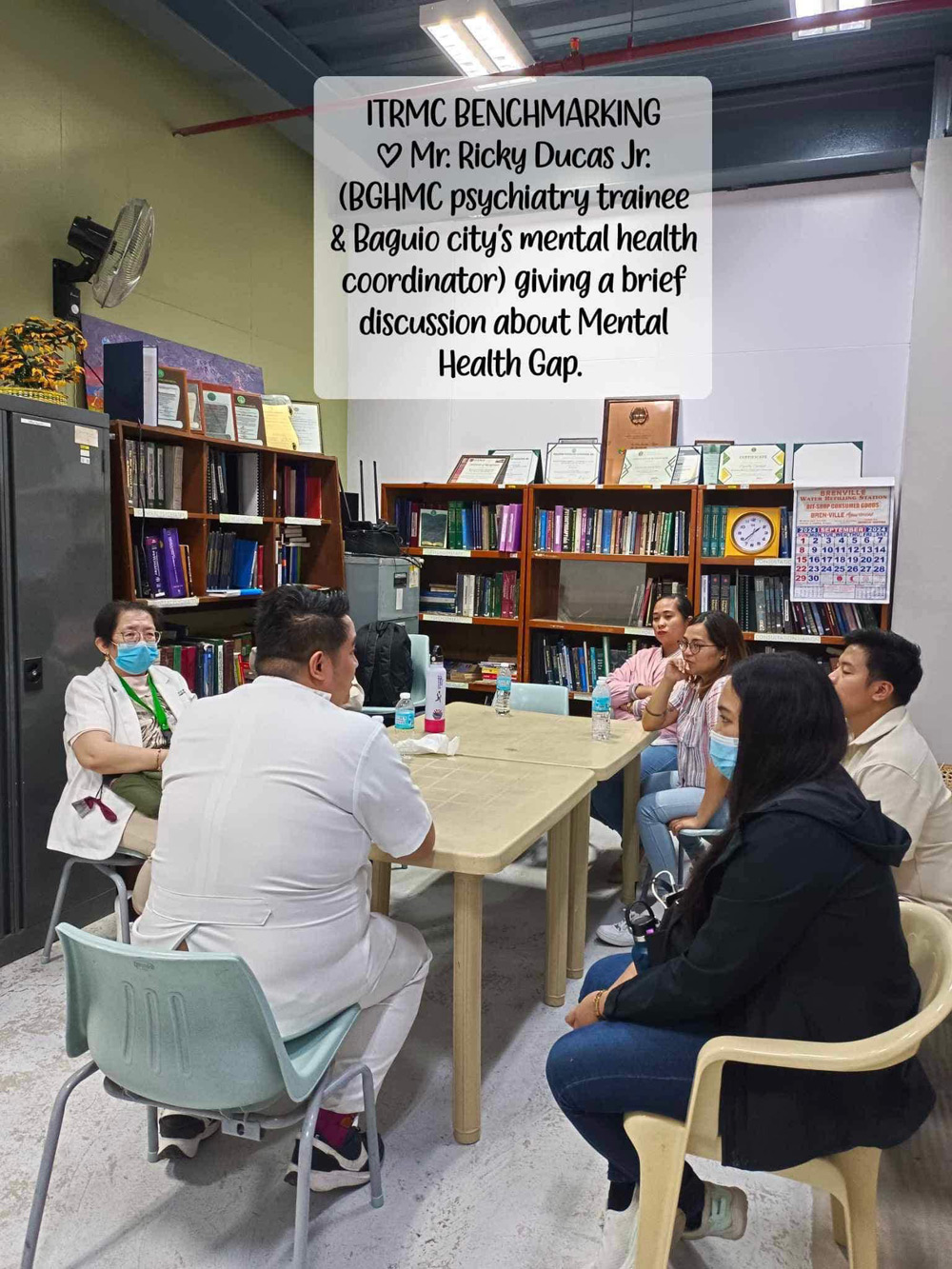
Ricky serves as Baguio City's mental health service coordinator.
Raining Accolades
In 2022, Ducas was named one of Baguio City´s outstanding citizens and was recognized as a Bayaning Nars Award of the Cordilleras by the regional chapter of the Philippine Nurses Association, cited for his spearheading of the compassionate rescue of vagrants in Baguio. Baguio City’s Mental Health Program was lauded by the Department of Health’s Healthy Pilipinas Awards for Healthy Communities.
The following year, ADSG received the Bronze Award during the Healthy Pilipinas Awards for their commitment and initiative in promoting the community’s mental health and rescue.
Lack of Mental Health Professionals, Facilities
But there is a dire need to improve the sector for the benefit of all Filipinos. In 2024, there were only 1,821 mental health care professionals practicing in the Philippines. A poor showing for a population of more than 100 million.
Through the World Health Organization’s mhGAP (Mental Health Gap Action Programme), implemented by the DOH, a program to address the limited resources to care for those with mental, neurological, and substance use disorders, health professionals have undergone training to augment manpower. They are equipped to make initial assessments and give primary interventions to people suffering from mental illnesses, including talk therapy and psychological first aid.
Senate Bill 1447 (the Philippine Nursing Practice Act of 2022), which introduces a new provision on Advanced Practice Nursing (APN) to give nurses with advanced clinical competencies and specialized knowledge expanded and collaborative roles within the healthcare system, has yet to move up for a vote. Ducas himself finished a Psychiatric Nursing course, which makes him more qualified to fulfill the many demands of the job.
There is also a dire need for affordable and accessible long-term facilities. According to Ducas, aside from the National Center for Mental Health in Mandaluyong, there is no public long-term facility that can accommodate people with mental health challenges who need such.
A Community of Support
Still, there are many efforts that seek to fill in gaps. In Baguio, youth are regularly trained under the DOH’s Peer Support Group for the Youth module to be part of the city’s psychosocial support group as peer facilitators and advocates.
In the school setting, though severely understaffed, students can speak to their guidance counselors, classroom advisers, and principals for mental health concerns, including psychological first aid.
In barangays, there are mental health first responders who can refer individuals whom they assess may need them.
Workplaces are also required to have mental health policies and programs to help employees with mental health challenges.
And in the family, Ducas suggests that parents and guardians create a support system within the family that makes it conducive to openly communicating regarding the family members’ mental health.
In addition, Philhealth has a mental health benefit package, providing screening, assessment, consultations, psychoeducation, psychosocial support, and medication at mental health outpatient facilities.
Ducas cites their various projects as proof that someone with mental challenges can be nurtured back to mental health through collaborative and complementary efforts.
Finally, Ducas encourages people who know someone or who themselves need someone with whom to talk to reach out, if not to medical professionals, then at least to trained mental health advocates.
“We should celebrate life and continue to hope,” he says.
For mental health concerns, the National Center for Mental health's 24-hour hotline are: 02-7989-8727, 0917-899-8727, 0966-351-4518, or 0919-057-1553. You may also contact HOPELine Philippines (Natasha Goulbourn Foundation, Inc.) through 0917-558-4673, or the In-Touch Community Services Crisis Hotline through 02-8893-7603, 0917-800-1123, or 0922-893-8944.