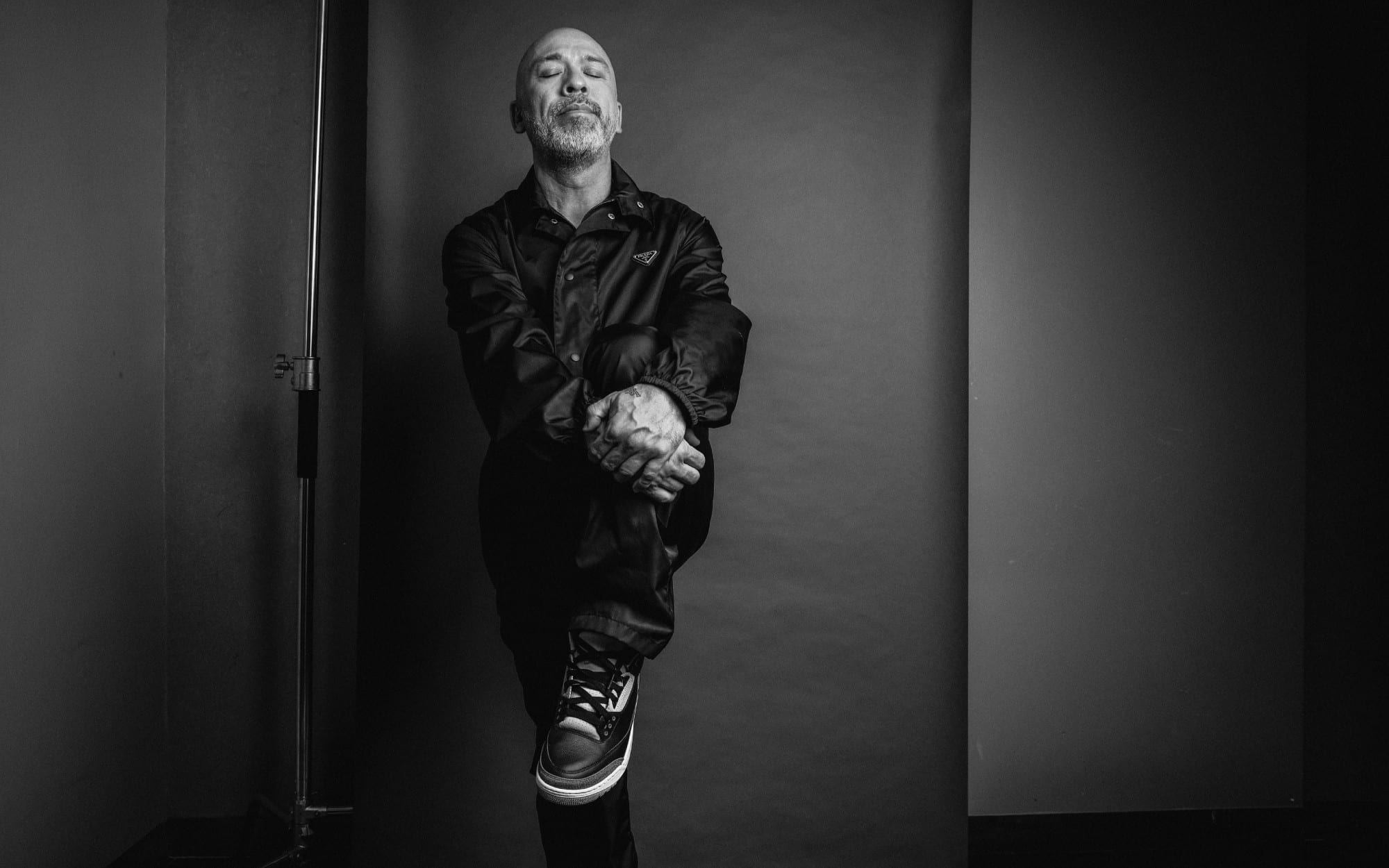
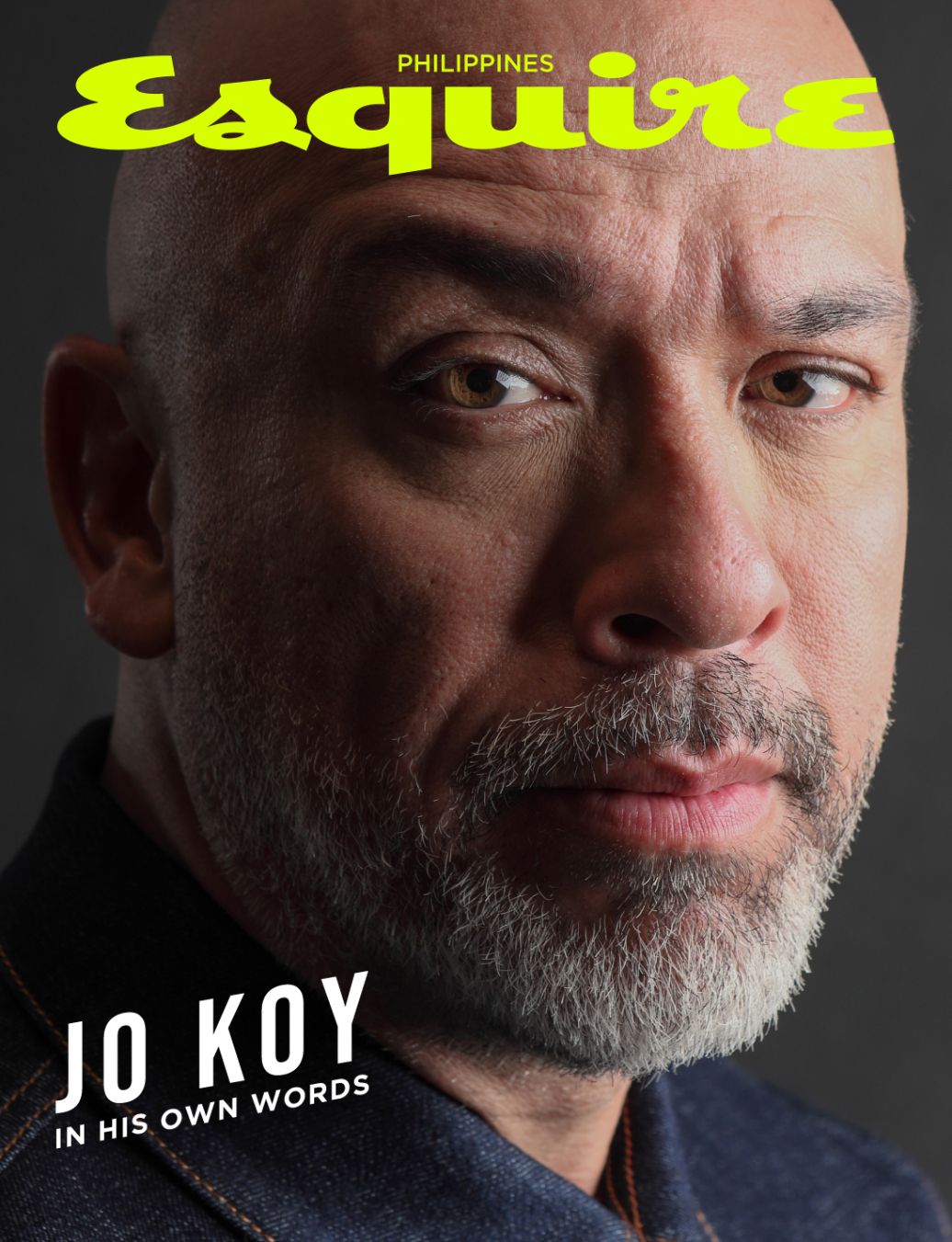
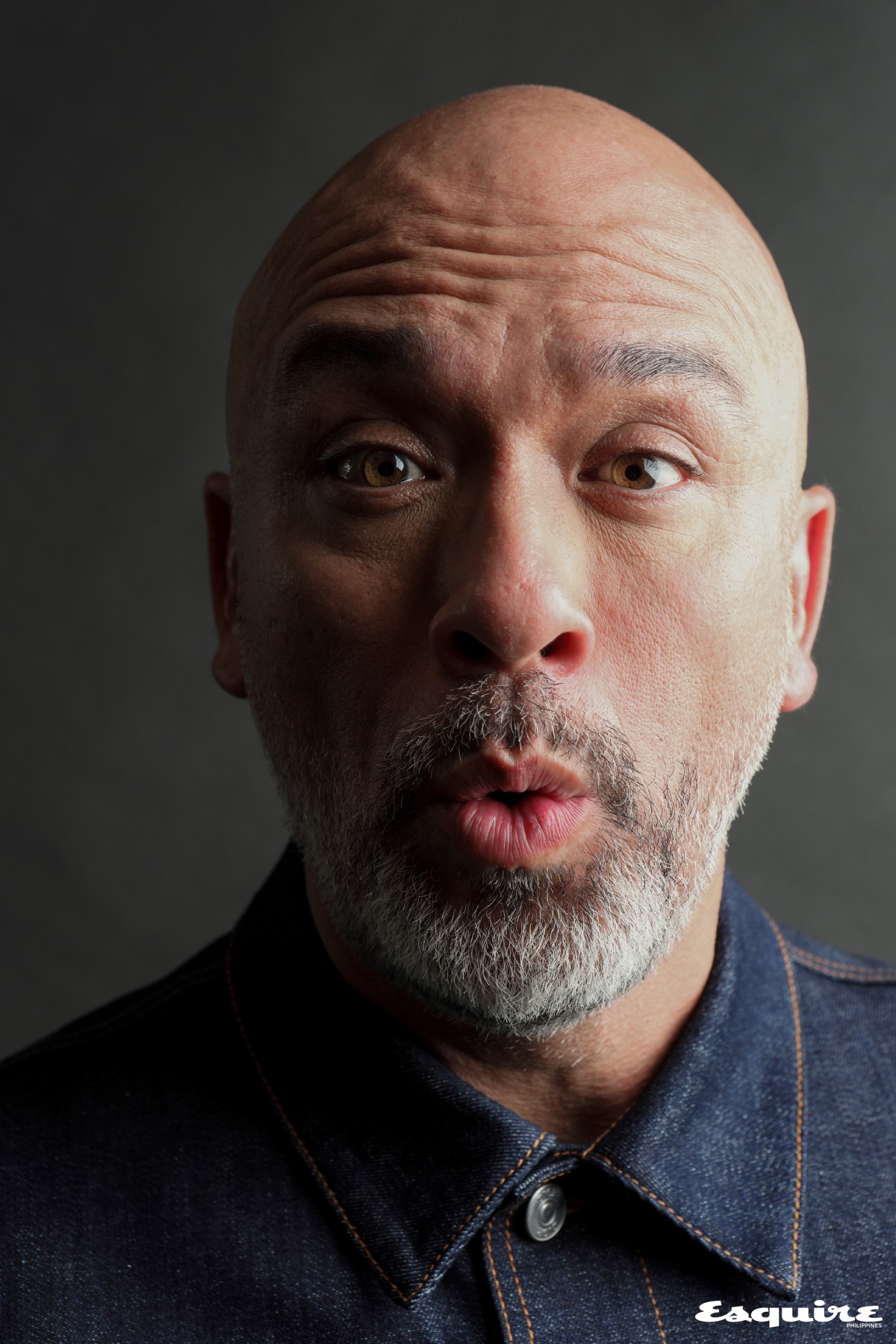
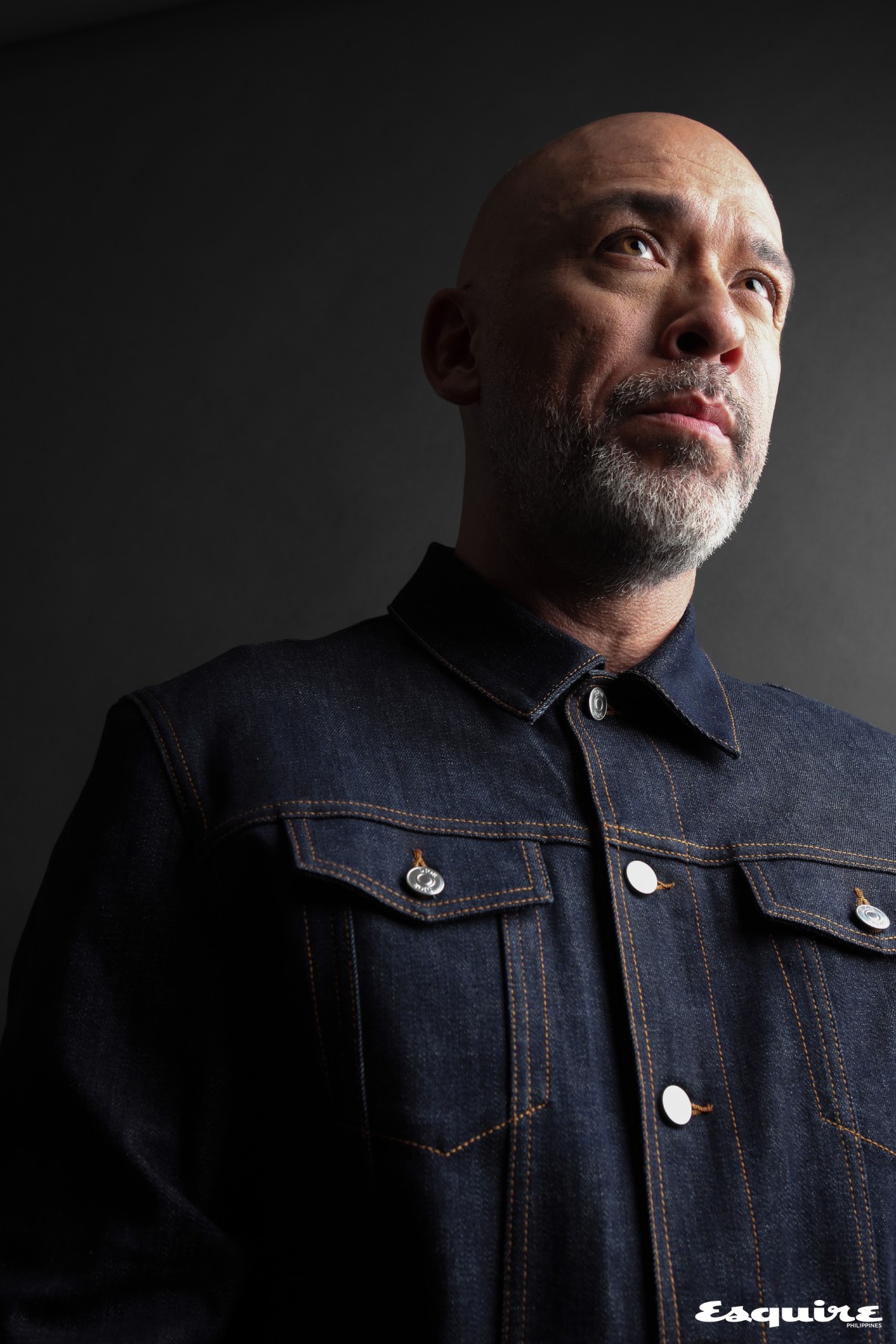
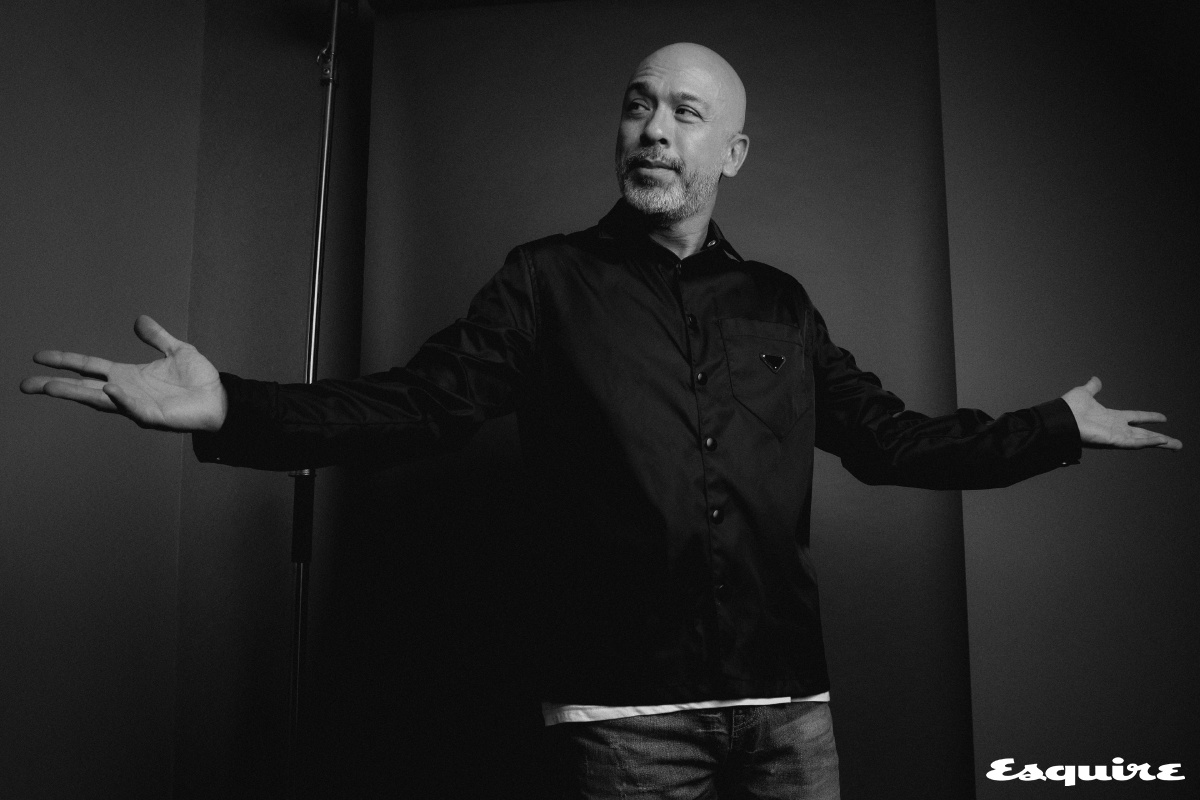
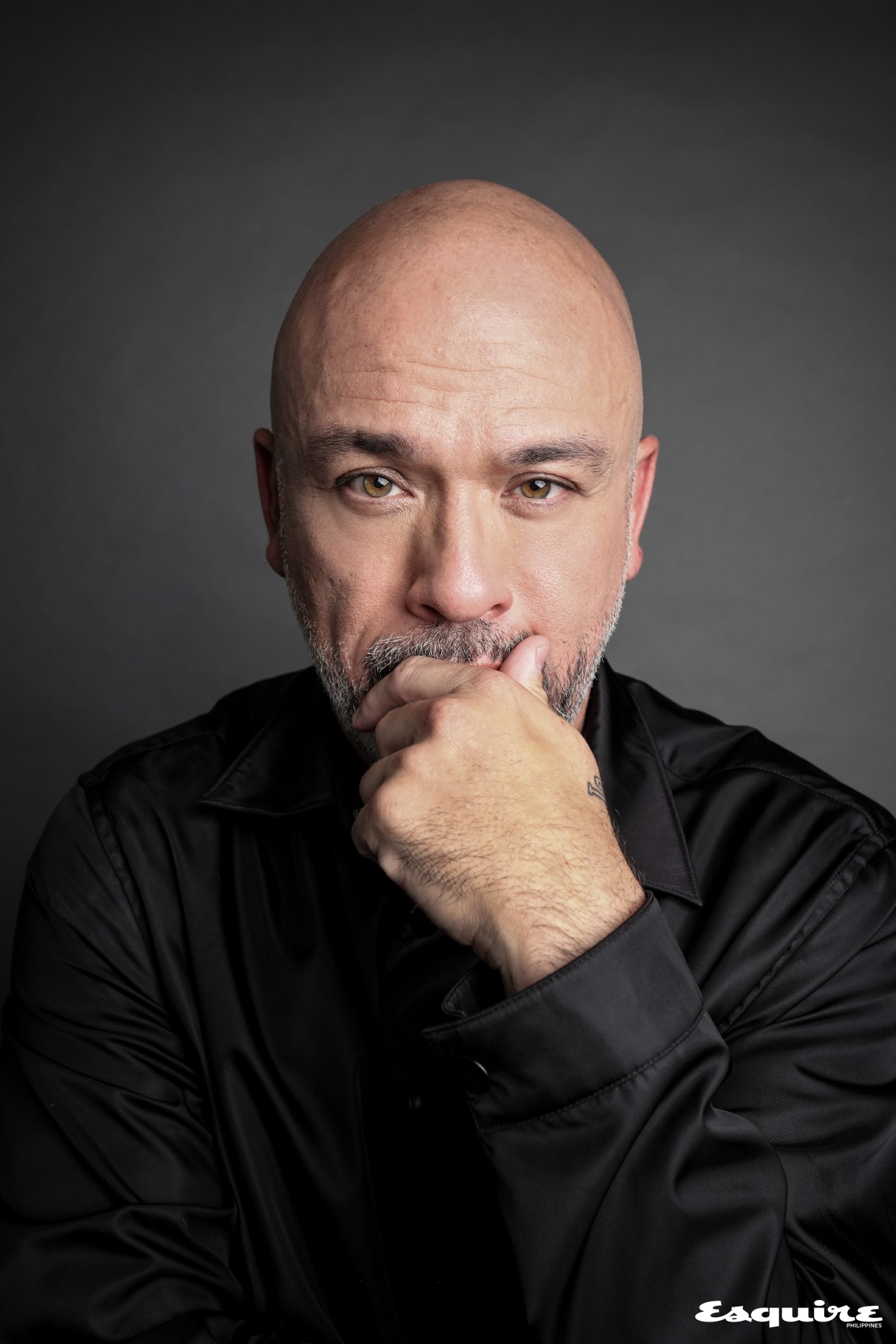
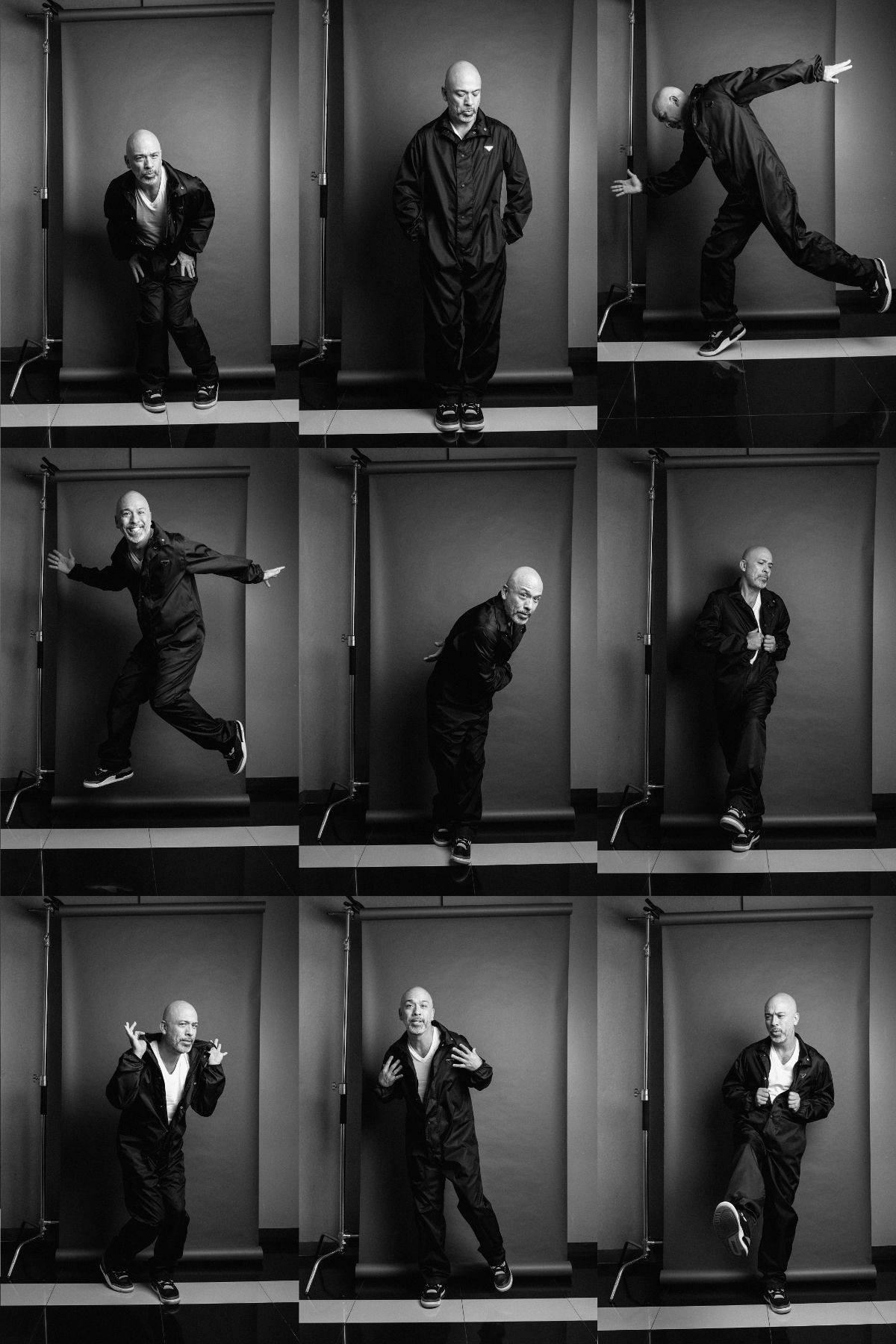
It's the 31st of August and Jo Koy is home. The comedian is going to be on stage tonight for the Funny Is Funny World Tour, which spans 19 dates, across sacred grounds like Radio City Music Hall in New York and Chase Center in San Francisco, among others. For his Manila date, he chooses the Mall of Asia (MOA) Arena in Pasay City as his playground. The last time I saw him was for another homecoming of his back at Solaire in 2017. That show was taped for Netflix's Jo Koy: In His Elements. This time around, he is in his element again.
Roughly five hours before his set, Jo Koy is backstage and he is mad about something. Well, a lot of things, really. Right now, he's mad about Mary Grace cheese rolls and ensaymada. "Why is it not a household dessert?" he says with a Mary Grace cheese roll in hand. "I'm not even trying to be funny. This has been around forever, but for some reason, it's only here. And I don't get it."
He takes a few more bites. "There's got to be some kind of marketing ploy. There's got to be someone that's like willing. And I'm not saying I'm that guy, but I'm gonna be that guy," the comic quips. Quick, someone get his face on a t-shirt with the Mary Grace logo on it. Call him their new ambassador.
He has, after all, been carrying the monumental task of globalizing the Filipino identity, beginning in Hollywood, of all places. He didn't exactly ask for it, sure. But he's been thrust into that role and he's killing it out there.
PHOTO: CYRUS PANGANIBAN
Post a Comment
The cheese roll is deeply personal to him, much like his brand of comedy and the jokes he cracks. "The more I tell my truth, the better the story is... When I tell that stuff where it kind of makes you cringe and I'm like, 'Oh, I hope my mom doesn't get too mad at me for this one,' then I know I'm doing something right."
And this is the truth: Mary Grace is soul food, he points out. "You take whatever you guys have, and you make the best out of it. That’s soul food. Yeah, we don't have chocolate frosting, but we got butter. We got sugar, and we're going to make this bread delicious."
It's as delicious as the quotes he gave us for this interview. Just when we thought we knew what makes Jo Koy tick, we realize we really don't. Tick here, he did. Tick here, he boomed. He's pissed about our racist questions. He's pissed about the crab-in-a-bucket mentality. He's pissed about people not understanding the grind that immigrants have to go through to make it. But Jo Koy is only as pissed as he is humbled. What that means, we'd come to learn later on.
You never want to catch a comedian when he's mad. But I did. I'm glad I did.
The Netflix Special That Was Never Supposed to Happen
Looking back, Jo Koy: Live from Seattle in 2017 was a preamble to the comic as a global stand-up sensation. Since then, he’s opened up to the world that has welcomed him right back. From the hardy laughs and brazen jokes to the abject criticism of his routine and intentions, he’s turned himself into a star:detached, but not quite really, from his humble Las Vegas beginnings.
Live From Seattle was the first big production he did with Netflix. But it was never supposed to happen. The reason? Netflix, apparently didn’t want it.
“Here's the thing, man: I got receipts. I'm not trying to sell you who I am right now. Like you go all the way fucking back bro. Look back to 2018 and I have the pictures. I got the facts is what I'm saying to this day,” he explains. “I'm not doing anything different. People say I did this for the opportunity to capitalize. That's bullshit, bro.”
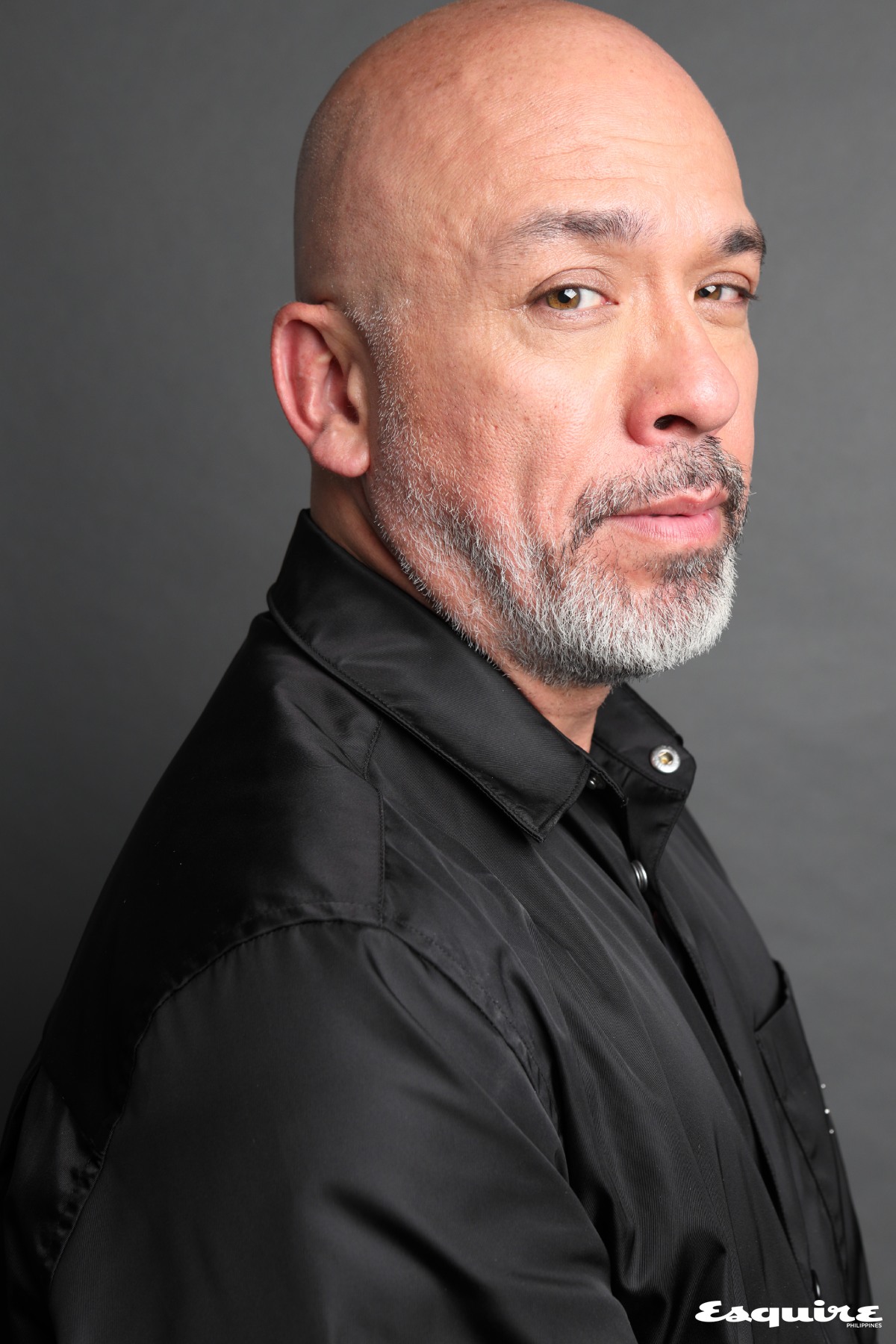
PHOTO: CYRUS PANGANIBAN
Post a Comment
Notwithstanding the fact that Jo Koy broke a record in 2017 for the most tickets sold by a single artist (23,000 tickets and 11 sold-out shows) at The Neal S. Blaisdell Concert Hall in Honolulu, the special still wasn’t a sure thing. “Google that shit,” he tells me.
“The fact that I didn’t get a special then made no sense. Literally, eight times, they said they were going to come see me and they didn’t. And I was like, ‘Are you kidding me?’”
I’d be mad, too. We all would. What does a person of color (POC) really have to do to get a show around here?
"So I started crying upstairs. I was like, ‘Fuck, man, I only got one more shot.’ This means: If I don't nail it on the second one, I'm fucked. All that money is gone because Netflix didn't pay for it. It was my money."
With Netflix not paying a dime for the show, Jo Koy ended up paying for everything out of his own pocket. He rented the theater. He sold the tickets. He got the director paid. The director then paid for the production. That logo you see behind him cost $15,000 alone. “I didn't have that money,” he stresses.
Two days before the show was to be taped, the cameras and lights had been set up. It was around this time that he got the phone call from Netflix bigwigs, who made their intentions very, very clear. They told him, “‘Hey, we heard you're shooting your own special. We just want you to know we really don't want it.’”
Netflix didn’t want him because he was “too specific,” he says. On the day of the taping, all he could do was, well, just cry backstage. What made things worse was that the first taping, Jo Koy claims, really fucking sucked.
“The first taping, we didn't use any of that. If you watch Live from Seattle, that's all from the second taping. We shot two shows in one night. And I couldn't even use the first taping because I was so fucking awful," he says."I was off. Everything was off. The lighting was off. It was hot. The microphone was fucked up. So I had to play it right the whole time. I was so mad.
“So I started crying upstairs," he adds. "I was like, ‘Fuck, man, I only got one more shot.’ This means: if I don't nail it on the second one, I'm fucked. All that money is gone because Netflix didn't pay for it. It was my money.”
But, as we've all come to know by now, it all worked out in the end. Netflix would later put him in the best spot market when they released the special in the third week of March.
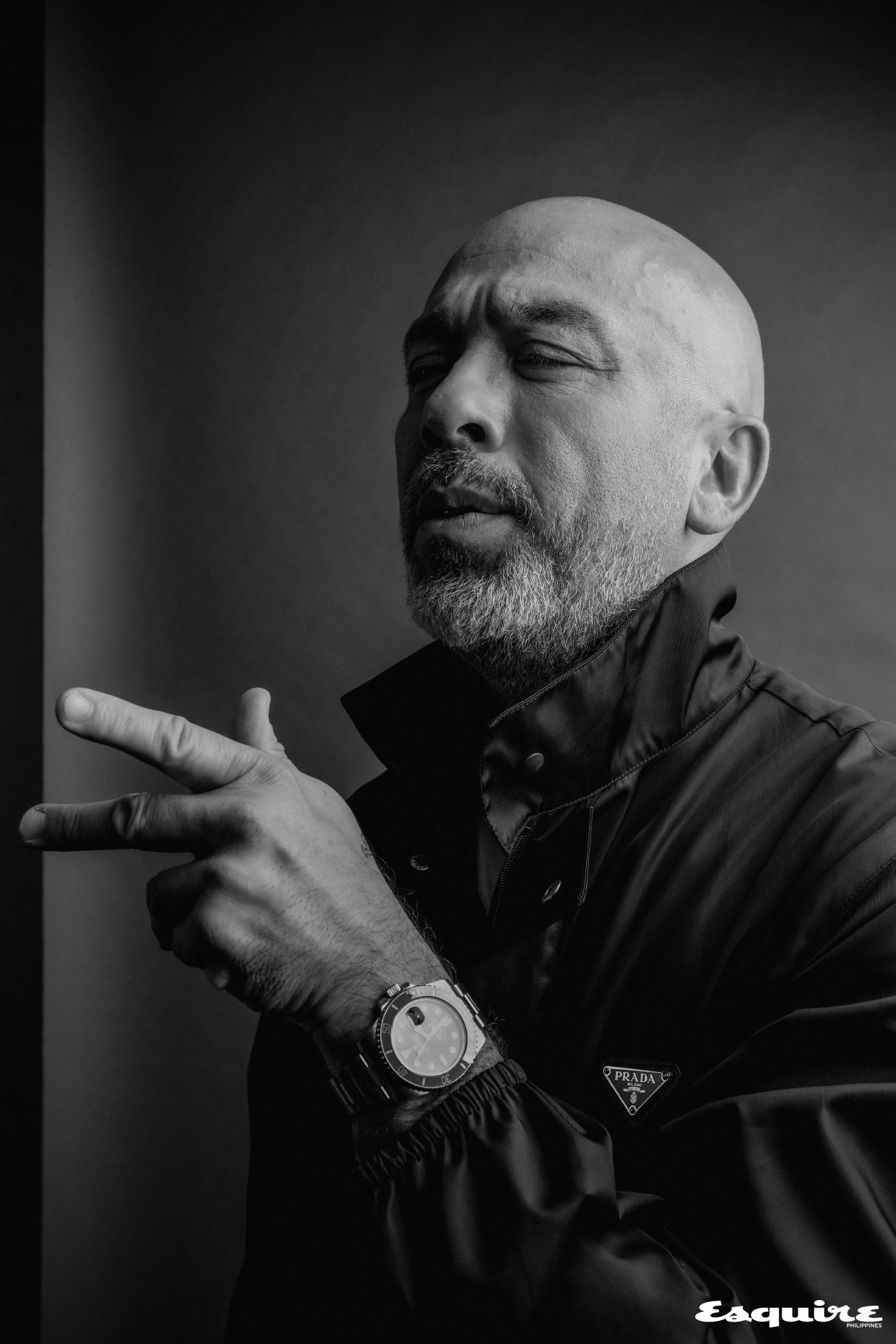
PHOTO: CYRUS PANGANIBAN
Post a Comment
A few years later, he would do that show I went to. In His Elements championed an all-Filipino crew. He asked Netflix if they could let him go to the Philippines and the suits obliged. Jo Koy wanted to bring in Filipino comics, producers, dancers, songs, and cameramen for the whole shebang. It was a banger.
“They don't even understand how hard that was. We're like crabs in a bucket, right? You got a bunch of Filipinos just trying to make it. I knew how hard it was for me to be on Netflix. I knew what it took for me to get on. So I can only imagine how hard it is for other Filipinos,” he expresses.
Jo Koy is woefully aware of what critics and detractors say about his work. "We spend so much energy on seeing someone fail. Understand what it took for that one special to be made and understand what it takes to just get in. It was years of a process. It was begging and pleading. But yet, there's always going to be someone that's within our community who wants to bring it down."
“I love hearing people go, ‘Oh, you're going to do that story again about your mom again?’ Fuck yeah, man. You know, what's crazy, man? This is what I love about that question, especially in Hollywood. You never look more racist in your life when you say shit like that. If you're not Filipino, and you live in Hollywood, and say you're an executive, and you ask me, 'Are you going to do another story about your mom again?' You are a racist piece of shit.”
Yes, He's Going to Do That Story About His Mom Again
Internalized racism seeps through conversations in the most subtle of ways. As his fans know, a commonality that runs through Jo Koy’s routines is doing jokes about his mother. And if you ask him about it, you best not be white.
For this instance, I’m glad to be Filipino then. “Think about that question. Are you asking anybody else in Hollywood about that?”
Chances are, we won’t. Of the countless shows we’ve seen about white families in America, covering subjects like white guilt and everyday suburban white people problems, a show or an act about real-life POCs in messed-up real-life circumstances shouldn’t be a problem.
“Are you going to do another show about a white family in America? Because we've seen 10,000 of those. But you don't want to hear one more story about my mom. She's lived in that country for 53 years,” he explains. “The only time she ever sees or hears her voice or her story about her culture is through her son's jokes. If I don't do it, who’s going to do it?"
He continues: “If I didn't make that movie, who's going to make the movie? So yeah, I'm gonna do another story about my mom. Just like you're going to do another story about the Hendersons, The Brady Bunch. It's like, how many versions of that are we going to see?”
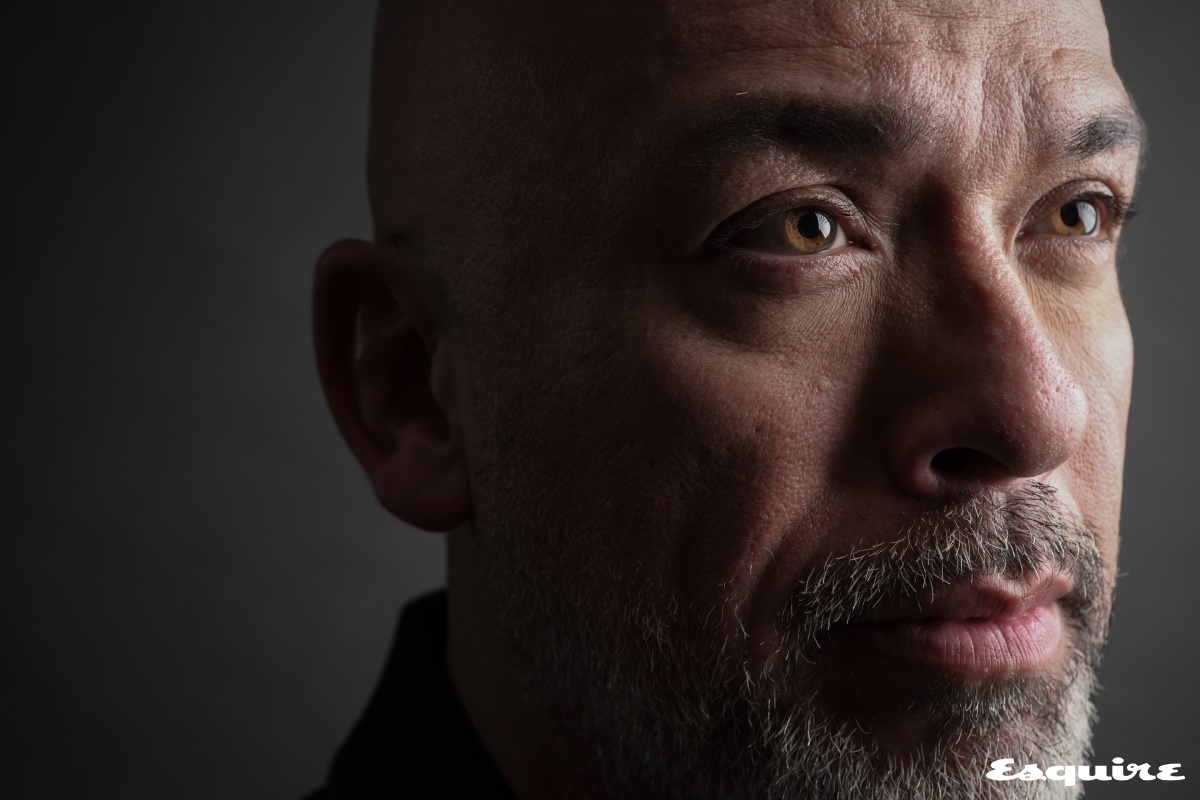
PHOTO: CYRUS PANGANIBAN
Post a Comment
Jo Koy makes it clear that he’s not doing this for anyone else. He tells Esquire Philippines that his jokes are not here to represent anybody’s mom or dad or uncle, in particular. So that snappy voice or quirky comeback or take-no-shit fearlessness that reverberates from his act is as close as it gets to his mother’s essence, so to speak.
“What I love about it is that I want everyone who is not Filipino to relate. But most importantly, I want Filipinos to be proud of that shit. I'm not trying to do a general Filipino accent,” he tells me. “There is no such thing. I'm not trying to imitate your mom. Your mom doesn't talk like my mom. I am doing my mom. This is my mom. She's a Filipino woman, one of the baddest women ever and one of the baddest women I know.”
Hollywood has been around for 100 years and depicting Asians, in general, has been relegated to non-Asian people producing uneven, at-times way offensive, results. Stand-up comedy, which is inherently American in many ways, has seen various portrayals of POC moms, dads, uncles, and more from non-POC comics. For performers like Jo Koy to reclaim a little bit of this, they must draw from their own experiences. It’s about showing the crowd something real, something that’s truly theirs to begin with.
"The only time she ever sees or hears her voice or her story about her culture is through her son's jokes. If I don't do it, who’s going to do it?" the comic says. “… The joke is about a mom being a mom, not the accent.”
PHOTO: CYRUS PANGANIBAN
Post a Comment
Jo Koy, of course, knows what racism looks like. He’s seen it from his mom’s generation all the way to his own kid's. “They live in a time where the racism isn’t as bad as what immigrants had back in the ‘60s and ‘50s.”
He also thinks back to all those racist cartoons he watched when he was growing up. “When I was a kid, it was okay for a cartoon character to have their eyes slanted back. And you can air that at five o'clock in the afternoon and let these kids watch it with complete disregard that there's Asian kids in America who speak English."
This, the comedian says, has led a whole generation of people, including his own, to believe that this kind of shady, shabby portrayal reflects the realities of POCs.
‘”Yeah, that's us.’ No, it's not. That's what I'm talking about—that type of brainwashing depiction. So when you see somebody who's on stage, who is talking about his mom, like, even our own culture kind of gets offended by it. Because now, in their mind, they've been programmed that when you do an accent, it's clownery.”
He continues: “And that's how Asians were depicted. Look at that accent. He's got rice buckets, and he's hobbling across the fucking thing. So it's programmed. So they just automatically think this is racist, what you're doing on stage. No, I'm not. I'm doing the best depiction of my mom. I'm doing exactly the opposite of what that cartoon was doing. And this is what my mom wants to see… How am I supposed to do my mom[‘s accent] without representing her? Or do you want her to be portrayed like that? Like the cartoon?"
The Portrait of the Filipino Immigrant as a Movie Star
Much like in his jokes, Jo Koy's mom’s footprints are ever-present in the movie Easter Sunday. In the American comedy, Jo Koy plays a struggling comedian and single father who finds himself at his dysfunctional Filipino family's Easter Sunday celebration. It hits close to home, too. Jo Koy’s parents divorced when he was 10. His dad left the state and his mom had to work tirelessly to get him and his siblings through hard times.
Directed by Jay Chandrasekhar and written by Ken Cheng and Kate Angelo, the movie is the first-ever Hollywood film that focuses on the inner life of a Filipino family. That's what makes it historic. Steven Spielberg's Amblin Entertainment produced it. The production company apparently only made two films during that period: this one and Jurassic World. Quite the choices from one of Hollywood's most celebrated filmmakers.
Jo Koy wanted the film to feature everything he personally saw growing up, from the house dresses and constant cooking, to the fights and balikbayan boxes (this deserves a subheading of its own).
“Nothing more fun than seeing a character who you created on stage come to life and being portrayed by an actress. That was the most amazing thing: to actually see my mom come to life before my eyes on the big screen,” he tells me. “I just couldn't believe it… I was watching something that was part of my life, come to life.”
PHOTO: CYRUS PANGANIBAN
Post a Comment
Easter Sunday is a collection of full-circle moments for Jo Koy. He vividly recalls two specific scenes during the filming where he needed a second to stop and cry. The first is the dinner table scene, where the sisters fight, and the second is the balikbayan box scene. They both made it to the final cut, with no tears necessary.
He recalls his youth. “My mom took whatever money that she had and bought stuff and put it in a box. As a kid, I was jealous of my cousins who lived in the Philippines. ‘Why are you putting those socks in there?’ And she’d get mad at me. As a kid, I didn't understand that.”
The balikbayan box can be a metaphor for the crucible of the overseas Filipino worker. No Filipino immigrant ever escapes the burden of home, even if they are situated in much better circumstances. And that weight is encapsulated within these cardboard boxes.
"Understand the importance of being able to move to America to provide. So that's what the balikbayan box is to me.”
Otherwise trivial or regular American things like cans of Spam, secondhand school supplies, worn-down hair dryers, chocolates, old clothes, old magazines, and the like are everything to these Filipino families who receive them back in the homeland. Moving shouldn’t mean forgetting, and sending balikbayan boxes are an act of care and remembering.
In my case, my family would send us these boxes twice or thrice a year, never missing Christmas, of course. Jo Koy knows this. It’s become an enduring symbol for diasporic communities. The most heroic acts in the world don’t always come in glitter or gold, after all. They can sometimes come inside cardboard boxes.
“We all get to identify with that as Filipinos. People who aren't Filipino get to understand the importance of someone's livelihood in America, an immigrant that comes to this country. It’s not just living for their family,” he claims. “They have another set of responsibilities at home (in the Philippines).”
There’s this stereotype of immigrants coming to the U.S. Most people think they made it good. In reality, they haven’t. Jo Koy’s mom, for instance, worked nine-to-five jobs not just to provide for him and his sisters, but also for another group of kids to look after from the States.
Immigrants always have another set of responsibilities that they have to carry. As someone who has family overseas, I’ve lived through this myself. They start from scratch, carrying the weight of another family on their shoulders. “Do you know how many kids my sister Gemma sends to college every year?” Jo Koy says. “They just go, 'Oh, you made it. You're in America. You're good.’ No. We have a balikbayan box that we have to fill.”
It took about 50 or so years for the Filipino family, and the balikbayan box, to enter mainstream Hollywood. This is what Easter Sunday means to Jo Koy. More than the representation it offers, it’s about opportunity. The movie has the Filipino family as the headliner, which has never been done before.
“That's what I'm trying to get at. We have the door open. So let's celebrate. Let's get more Filipinos in. That's what I'm trying to do. We're trying to hold the door open,” he notes.
Of course, there’s some unwanted, unwarranted chatter from fellow Filipinos since the movie’s premiere. “Why are there people that are trying to kill it? It just doesn't make sense to me. I just don't get it."
What does make the most sense to him is to keep going. He wants more. Jo Koy’s latest Netflix special, Jo Koy: Live from the Los Angeles Forum, just debuted. Shot from the legendary arena, his special has his name written on the wall next to Forum legends like Michael Jackson, Janet Jackson, and Journey. “Think about it: Mötley Crüe, The Eagles, James Franklin… Jo Koy.”
Anybody who has a new show coming up will always say that their latest is their best ever. "I know everyone who is promoting something says that. But this is really my best special ever. Hands down, from start to finish.” He’s even going to do a bit about the pandemic, which, he says, is his “favorite routine ever.”
As for this interview, we finish the exchange with a dab for our Aunt Evelyns (a very common name for Filipino aunties). Things have cooled down. He now needs to change for the photo shoot. We take a picture and that's it. I finally get to finish my own Mary Grace cheese roll. Audiences will start coming inside the MOA Arena very soon. He tells his team that he's going to be packing some of these cheese rolls and ensaymadas for their trip to Dubai. The world was ready for Jo Koy before it was ready for Mary Grace. If his meteoric rise gave us any indication, it's that the world has yet to see the best of what Filipinos can offer. That, you can definitely put on a t-shirt.
Produced and styled by Paolo Chua Sittings by Paul John Caña Photographs by Cyrus Panganiban Grooming by Arlene Hernaez for Team Muriel Vega Perez Special thanks to Nixon Sy and Live Nation Philippines
We use cookies to ensure you get the best experience on Esquiremag.ph. By continued use, you agree to our privacy policy and accept our use of such cookies. Find out more here.