
Rethinking May 1st, the Aftermath of Liberal Democracies, and Renewed Labor Agitation

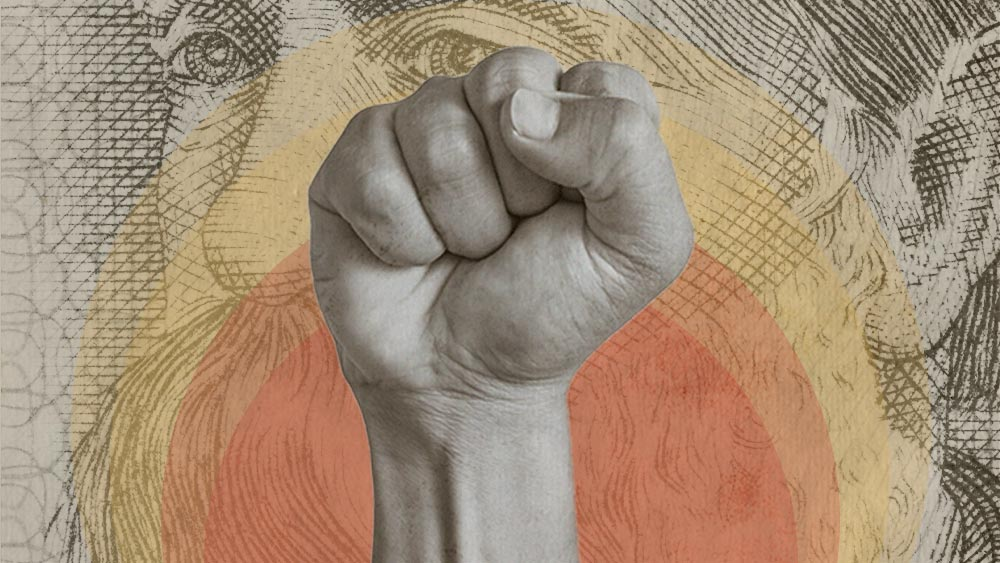
On May 1st, most countries in the world celebrate Labor Day. International Workers' Day, in recent years, has been reduced to job fairs and holiday breaks, but its relevance has not been lost on those cognizant of its significance. Understandably so, it has been interpreted less charitably as a day where activists, with their numerous aims, present their agenda, with a reception, unfortunately, ranging from lukewarm support to general indifference.
While it may be easy to take our entitlements for granted, many of the provisions for workers are a result of the struggles of the labor movement: the 40-hour workweek, accident insurance, basic standards on safety, and even to the extent that labor, in itself, deserved to have its own Department or Ministry in the corridors of state power.
In commemoration of the sacrifices that led to these changes, this feature will focus on the origins of Labor Day, agitation, and, by extension, the day's contentious Socialist history.
Socialism and Other '-isms:' What’s in the Name?

Contemporary and banal notions tend to view definitions as enterprises that are correlative with reality. However, any “-ism” didn’t just begin with a definition. Definitions are just the best way of summing up reality, and not the other way around. Socialism, therefore, and perhaps many -isms, should be viewed from this perspective.
Enter the premises of the left-right divide, which originated from an accidental fact of reality, that later carried on as tradition. During the National Assembly in the first phase of the French Revolution in 1789, political groups had to be identified by seating arrangements. Happenstance has a sense of humor.
The earliest iteration of this spectrum looked something like this: Royalists, who occupy the right; Constitutionalists, who occupy the center; and the Republicans, who occupy the left. Democracy, at that point, was vastly different from today’s understanding, and even bore similarities to contemporary anarchism.
When terms such as right-wing, left-wing, and center are used in our discourse, these refer to a legacy of seating from this period. Those who were immediate or near to the King sat to the right. The most distant to the King sat at the left. Those who are neither sat in the center.
Now, Socialism. It didn’t start from a definition. It’s shaped by the circumstances around it. As such, the first articulation of what would become Socialism is actually derived from the social question. The dilemma of the social question was simple enough: What shall be society after the dissolution of all traditional bonds?
We must remember that the individualism that we cherish today is very recent invention. In the days of yore, people were defined by their occupation, and from their occupation, their social standing. It is represented in Europe by the Great Chain of Being, as well as in countries influenced by Confucian Heritage, the Four Occupations.
As such, what happens when all of these foundations are either gone or absorbed into an emerging order alien by its conception? If we look at the developments of the 1800s, we can find many answers. The most popular (and by the course of historical events, the most pervasive) is the British rationalization.
With the absence of determinate and organic social relations, persons are left to the cruel mercy of nature itself. Only those fittest can survive, while the rest are to be culled by the wrath that will be exacted by malevolent forces. This rationalization, therefore, is inevitably provided with an opposing case.
This is where Socialism, and later Communism, rears its head. There is no invention of Socialism or Communism, Liberalism, Conservatism, etc. These isms would only get their characteristics after the fact.
The main point of what became known as Socialism is that the social question is acute and is thrust. What can be taken with ease, as the circle of life in feudal societies guarantees an individual’s purpose, is nowhere to be found? Socialism is the recognition that the anarchy of production in countries is unsustainable and will lead to eventual monopoly—of which the only question is for whose benefit shall this monopoly will be.
As for Communism, while the Communist Manifesto itself and the name Communism are almost contemporaneous with Socialism, Communism, as an explicit political force, will only be actualized through Vladimir Lenin and his Bolsheviks. In an effort to bypass objections from Socialists insisting that capitalism or liberalism must first emerge, Lenin broke from the mold, justifying that the party is enough as a vessel to bring their ideas into realization.
ALSO READ:
The Origins of Labor Day in the Philippines
The Underrated Ilustrado Isabelo de los Reyes was a Filipino Renaissance Man
The Aftermath of Liberal Democracies
.jpg)
There is a general feeling that much of liberal democracies, especially after 2016, are exposed to constant twists and turns. Whatever the symptoms of these tremors may be, it is quite clear that this necessitates a transition to a new paradigm of theory and practice. Objectively speaking, these tumults are manifestations of the ongoing tensions and contradictions embedded in social order. What is called by many observers the “neoliberal epoch” is heading to a crossroads.
There are, of course, many factors that have occurred. In recent years, democratic backsliding has become a jargon and even an analytical framework to highlight the challenges to liberal and social democracies. Before we further dive, we have to clear the elephant in the room first. The elephant is a democracy, that lofty aspiration and rhetoric. As of this current millennium, certain aspects are generally agreed upon on what constitutes a democracy:
1| Regular elections;
2| An influential media, specifically corporate media;
3| A depoliticized judiciary, and lastly;
4| An emphasis on negative liberty, or freedom from restraint.
These four parameters tend to be the accepted understanding of the democratic process. Caveats aside, they are able to function relatively well, after many assumed that the age of ideologies, can are buried in dustbins.
The go-go ‘90s, characterized by the Goldilocks economy, reigned supreme. There is a broad affluence in the middle, while those at the receiving end of privatization, deregulation, or deindustrialization, are too miniscule to possess relevance. As with any era of excess, the biggest mistake that everyone can make is complacency.
Absent, however, in the four parameters of democracy are direct channels for participation. There is a reason why. With the curtailment of labor unions, what is considered popular feedback is either fed to the pipeline of non-government organizations or focus groups? This shallow yet observable tranquility, in retrospect, is not built to last.
Since the 2009 recession, interest in approaches outside of the parameters of either liberal or social democracies, are ascendant. They are all responding to the prevailing notion that the center in these structures are either incapable or corrosive to the country’s well-being.
In some nations, this energy is harnessed to a renewed push for grassroots initiatives. In others, it is translated as polarization and mutual hatred. The latter is aided by a largely partisan media, which is the culmination of manufacturing consent’s universal grasp on information.
Labor Agitation and Class Consciousness Now

In the Philippines, there is an uptick in labor agitation. This is simultaneous with the enduring populist insurgency. While they tend to merely occupy pluralities of around 20 to 30 percent, they are formidable. They take advantage of the fragmented opponents before them, who are splintered into hundreds of intersecting organizations. Squabbles, are entertaining and largely personal.
In an ironic twist, the Marxist hymnal of class consciousness is rendered afloat to the service of reactionary goals. Reaction in this case can mean two things: a yearning for the past or an immediate response. In both cases, these currents have reinforced one another.
But what is class consciousness to begin with? To put it simply, class consciousness is a collective sentiment rooted in class. Class is but a person’s relation to their job. Blue collars are identified with the fact that they are considered general laborers, of which the maintenance of civilization is dependent on their shoulders. In contrast, the white collars are those who occupy a particular aspect of labor, usually that of a clerical nature.
Class consciousness is easily felt when the workers live, sleep, toil, and aid together. They usually sleep in common barracks, shepherded to the factory or the facility, and then return to their habitat once the job is done.
In contrast, today’s age is defined by a more complicated web of social connections, more indirect than the complications of yesteryear. As such, there was once an assumption that class was longer going to play a role. They were mistaken.
This is why much of the establishment is baffled and alarmed by these developments. They sadly neither possess the acumen nor the prudence of their older ancestors, who have witnessed what we consider as mass politics. This is the politics where resource distribution is immediate and where its goals are paid with the price of blood and tears.
The most pressing lightning rod in this revived labor agitation is in the realm of the blue collars in the Philippines, specifically jeepney drivers. Either due to an inconsistent measure of the state towards modernization, or an abrupt favoritism by the state on minibuses, the reorganization of the transport sector is littered with chaos and dysfunction. This chaos, in turn, is hurting the bottom line of the drivers. Their strikes persist, garnering a broad degree of sympathy and again, lukewarm indifference.
The revelation that the acquisition of the new models will be shouldered by the drivers and operators, more or less shifted public opinion to their favor. There is, however, a catch: strikes can only work so long as there is a tangible objective and reward in mind. To strike for the sake of strike can sap the momentum of those who partake in it.
This is where an opening is at hand. For decades, unions have been associated with organized crime and a bureaucratic clique in which red tape is rampant. Now, there is a notion of revisiting the union concept as the basis of not just winning bread, but also of the people’s stake in the government.
The future remains unwritten. Let us see where the winds will blow. Yet, one is sure that what was once normal, can no longer be recovered. For the only way, after all, is through.
