
Pang Ilan Ka?: On Whether Birth Order Determines The Rest of Your Life

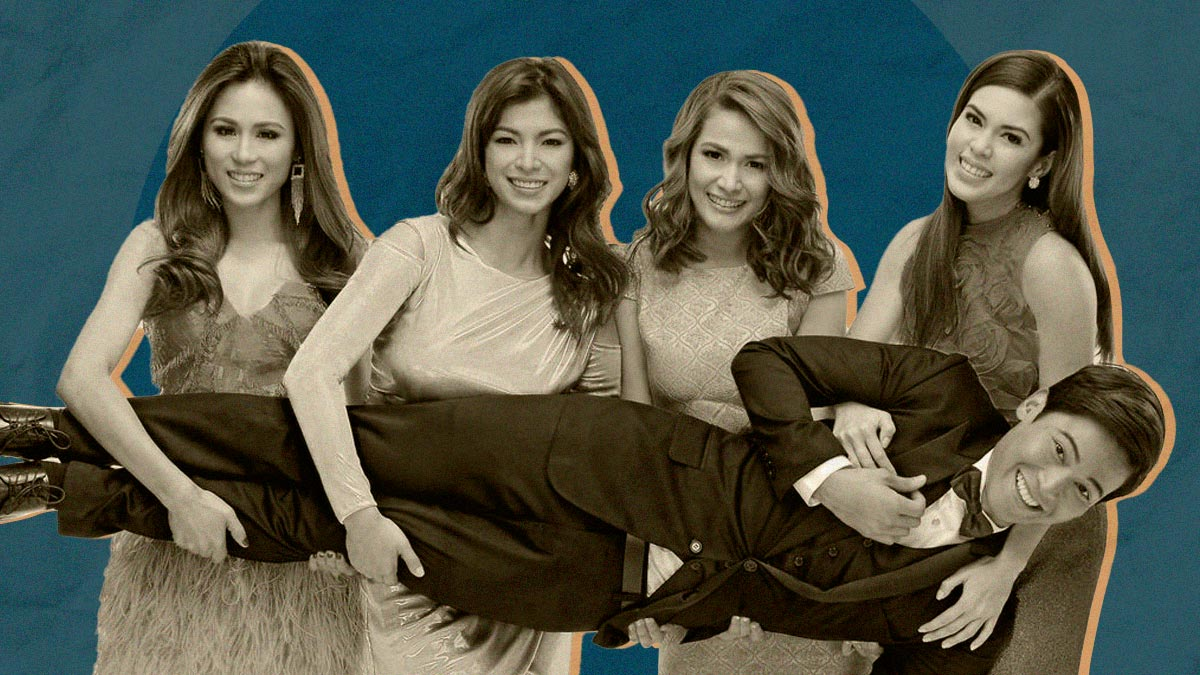
Ten years ago, Star Cinema decided to steer away from its usual romantic fare for its 20th anniversary and served us Four Sisters and a Wedding, a light family drama that remains as relevant today as it was upon release. It was a gamble at a time when love teams were taking the box office by storm, but today, this movie is so ingrained in our collective consciousness that it’s clear this risk paid off.
Case in point: To this day, members of Generation Z not only continue to reference scenes from the movie or respond to trending topics with screencaps of Bea Alonzo saying, “Bakit parang kasalanan ko?”; they also debate and discuss which Salazar sibling they are, like it’s the latest iteration of the Myers-Briggs personality test.
Also read:
When Filipinos Fight with Filipino-Americans, No One Wins
I'm Not Like the Other Girls! (On Micro-Individuality and Self-Commodification)
For those who haven’t watched the film yet, the titular four sisters exhibit distinct characteristics that come to the fore as they join forces to stop their baby brother’s (Enchong Dee) wedding. Teddie (Toni Gonzaga), for instance, is the typical firstborn: the pride and joy who has made a life for herself in Spain. Hot on her heels is Bobbie (Bea Alonzo), who cowers in the shadow of her ate, even as a successful corporate communications manager living in New York. Beneath her veneer of strength is a layer of vulnerability caused by her strained relations with her family, particularly her sister Alex (Angel Locsin). As the third sister, she is the black sheep, marching to the beat of her own drum, as opposed to Gabbie (Shaina Magdayao), who has always put others’ needs before her own, sometimes at the expense of her own hopes and dreams.
These characters may be as stereotypical as they can get, but they continue to resonate with modern Filipino audiences and our family-centric values. We place much importance on birth order – to the point where the untranslatable question, “Pang-ilan ka sa magkakapatid?” is embedded in our culture.
Birth Order Theory: The Basics
In the 1900s, psychotherapist Alfred Adler proposed that the sequence in which a child was born into a family determines the kind of person they’ll become. According to his heavily contested birth order theory, children are heavily influenced by their family dynamics in their formative years. Historically, these roles have helped provide a sense of structure to the household and manage parental expectations.
Aside from that, they’ve allowed children to develop characteristics crucial to thriving in the real world. The eldest is often primed to be a role model to their siblings and consequently go on to become achievers and leaders. “Growing up, I wouldn’t even use the term ‘stereotype’ when referring to being a panganay, since it seems to denote something negative,” said Nat, a university student who is also the oldest of four siblings. “I grew up independent, helping my younger sisters, and being responsible, and I don’t regret it.”
Middles are said to get the short end of the stick, with parental attention devoted to those who came before and after them. But as a result, they learn how to carve out spaces for themselves outside the home. “I do think I’m as close as I am to my friends and org mates because I’m a middle child,” shared Cheena, a legal assistant and the third of five siblings. “But even if people think I’m the type to resent my parents for it, I can look back at it now and see that this made me more sociable and sure of myself.”
By the time the youngest child comes along, parents have usually mellowed down, making them the most spoiled of the bunch. Apollo, a graduating college student, relates to this, saying that “years of being babied by my family has influenced my excitable energy. I’m really cheerful, friendly, and extroverted, and my friends sometimes attribute it to me being the bunso.”
We place much importance on birth order – to the point where the untranslatable question, “Pang-ilan ka sa magkakapatid?” is embedded in our culture.
Fact or Self-fulfilling Prophecy?
While there are perks to the specific positions we have, there is danger in leaning into these predetermined labels too much. We scramble to decipher our natal charts or remain obsessed with our respective Hogwarts houses because it makes the fullness of our existence easier to compartmentalize and comprehend. It’s even more exciting every time we share our results with our peers because of our innate desire to belong.
But completely embodying these character traits could keep us from realizing the full extent of who we are. Having grown up as her “ate’s sunud-sunuran,” Cheena resigned herself to being a follower for the rest of her life. “When I was in high school, a teacher I trusted convinced me to run for student council, but I had trouble believing that I could do it. I just didn’t think I was born with the qualities [needed to be a leader], not like my ate,” she said.
These stereotypes also present real-life consequences that could cause us to lag behind our peers. “I know bunsos are viewed as spoiled, and I can’t deny that it’s applicable to me,” Apollo admitted. “I was super babied and sheltered growing up, and as a result, there are so many life skills that I'm only learning right now, like household chores and commuting. I notice how surprised college friends get as they learn about how sheltered I am. It makes me feel a little ashamed.”
The Pain of Parental Expectations
Aside from the preconceived notions we have of ourselves, we also bear the expectations of our parental figures. Many researchers have tried to debunk Adler’s theory, suggesting that it’s not one’s birth order per se that determines who we become in life but rather how our parents react to and reinforce these stereotypes.
It’s why eldest daughters and their mothers have such a fraught relationship. Many firstborn daughters have had to grow up more quickly and step into shoes that leave little room for failure. UK-based counselor Louise Tyler tells Refinery29 that this is a form of gender stereotyping, as daughters are labeled as ‘good girls’ or ‘no trouble’ early on in life.
“As a child receives these messages, they can feel pressured to keep up these behaviors even when they don’t want to, leading them to learn how to suppress their own needs and emotions.” Add to that the utang na loob culture so prevalent in our country, where we owe our parents total adherence to their every request in exchange for giving us life, and we have a foolproof recipe for intergenerational trauma.
Coincidentally, this was the very climax of Four Sisters and a Wedding. In the highly quotable confrontation scene, Teddie is exposed for losing her prestigious teaching stint in Spain – a fact that she concealed from her family. When interrogated by her mother, she tearfully breaks down and explains that she couldn’t bear letting her down and not living up to her standards. Cue the classic “Ma, I’m sorry.”
Kynesha, a freelance journalist and the eldest of three siblings, found that this was a familiar pattern in her life as well. “Having to be independent was something that was both forced on me but also a matter of free will: I love my family and would do anything for them, but at the same time, it feels like I wasn’t given much of a choice.” Nat built on this, saying that identifying with the eldest daughter stereotype made her “fixated with upholding the image of being the responsible one who has everything together. When that happens, I struggle to ask for help from people and be vulnerable.”
For those of us who find ourselves in petty fights or full-blown sibling rivalries, we can try eliminating the tension by understanding that we are all products of forces outside of our control.
How We Heal Our Inner Child
Hurt that runs deep in the family can only end if someone is willing to feel it. Thankfully, our generation is showing signs of stopping these toxic cycles, with terms like “eldest daughter syndrome” spreading on TikTok. As we learn to recognize the trauma we endured in childhood, we become more inclined to raise our children a different way by giving them the same opportunities to grow.
“We try not to put them in a box and say, ‘This is who you are and you have to become this.’,” said Orysa Steele, a mother of three sons, to The Globe and Mail. It all boils down to acknowledging that her “three unique kids [...] are decent human beings committed to different things.”
In the meantime, for those of us who find ourselves in petty fights or full-blown sibling rivalries, we can try eliminating the tension by understanding that we are all products of forces outside of our control. No one wanted to be subject to the treatment they faced at the expense of their brothers and sisters – we’re all just children of parents who were figuring things out as they went along.
Don’t get me wrong, it’s perfectly fine to identify with a particular Salazar sibling or point out similarities we share with others from our birth order – I’ll be the first to tell anyone I’m a Bobbie at heart. But this arbitrary label should be nothing more than a quirky little detail about us or a sign that we’ve watched one of our country’s most celebrated family films. It shouldn’t determine the rest of our lives or dictate what we are capable of.
