
The Story of Pascual Racuyal, the Eccentric Presidential Aspirant Who Became a Folk Hero

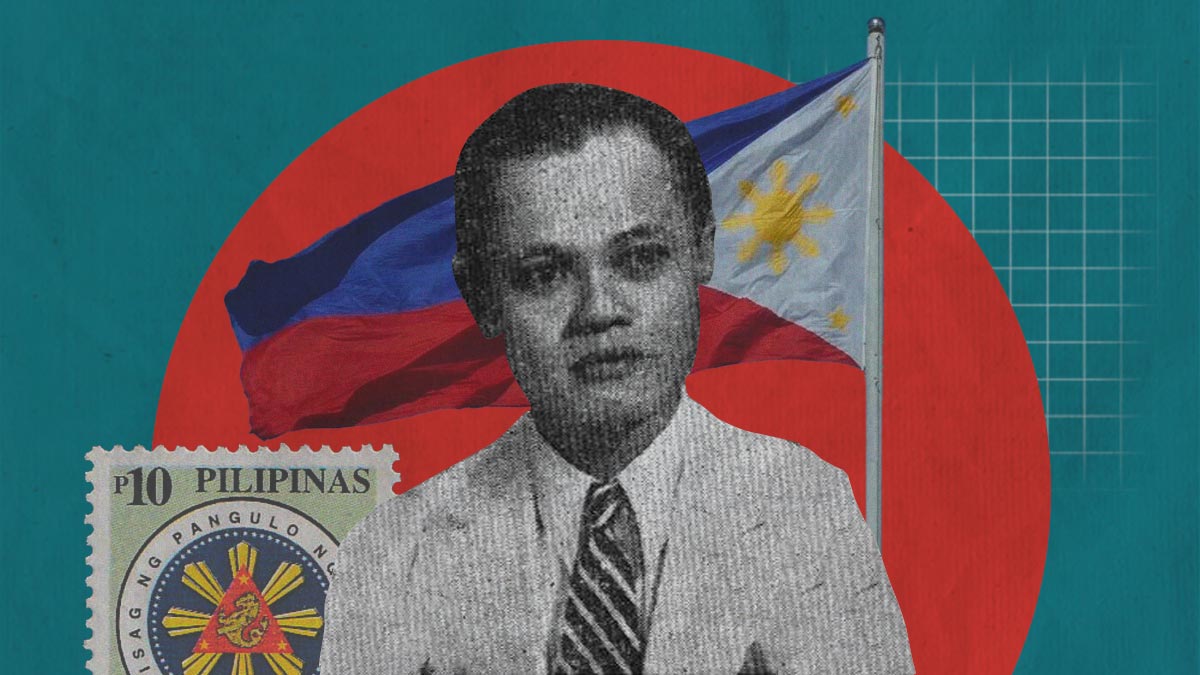
The most interesting candidate in the 1935 elections wasn't Manuel Quezon or Emilio Aguinaldo. While the two former presidents headlined the race, they were also up against a peculiar Independent. It was a man by the name of Pascual Racuyal, who, from that year to 1986, would compete in every presidential election. The man was and still is a fascinating case study.
He ran against Aguinaldo, Quezon, Gregorio Aglipay, Ferdinand Marcos, and even Corazon Aquino. Most chalk it up to plain lunacy or diversion or mild aversion, but there was so much more to him than that.
Remembering Pascual Racuyal
Growing up in Cebu City, Pascual Racuyal was said to have been either a mechanic or garbage collector before flying to Manila to pursue his dreams of the presidency. While he was never taken seriously as a candidate, he did become a media darling and eventual folk hero, a jester of sorts who straddled the line between illusion and reality. In time, he would be dealt with as a national occurrence during the campaign season. A sideshow that came with the ballot, if you will.
So we begin in 1935. This was the first year Racuyal was introduced to the public. He was maybe 24 or 25 at the time, running as an independent against heavyweights Quezon and Aguinaldo. In an election that saw Quezon win (powered by a shrewd propaganda campaign against Aguinaldo, by the way), Racuyal finished with a measly 158 votes, accounting for about 0.01 percent of the total vote. Not too bad, but nowhere near enough to even make a dent in the elections.
By 1952, Racuyal decided to stage another campaign. This time, he invited Ramon Magsaysay, Arsenio Lacson, Lorenzo Tañada, and Trinidad Legarda to be his running mates. As expected, nobody bit. The Manila Mayor, Lacson, said of the aspirant: “strictly fiction, utterly fantastic, and incredible.” Mambo Magsaysay would become president in 1953.
Another four years passed, and Racuyal wanted another shot. He joined a presidential election race that featured luminaries like Jose Yulo, Manuel Manahan, Claro M. Recto, and, of course, Carlos P. Garcia, who would go on to win comfortably.
The 1969 elections were the same story for Racuyal. He challenged President Marcos and Senator Sergio Osmeña to a 12-hour debate in Plaza Miranda. Both of them declined. Funny enough, Racuyal came in third place to the two seasoned politicians in Rizal Province, having collected a modest share of 79 votes. He finished with a total of 778 votes at the time.
For what it's worth, Racuyal did have a plan. In a 10-point agenda, for instance, he advocated for things like the introduction of a standard calendar of 30 days a month, 13 months a year; a top-secret system of dikes to combat floods in Central Luzon; utilizing an algebraic-geometric detection code to battle graft and corruption; the construction of plastic roads in Mindanao; using naturo-therapy to combat the Huks; the abolition of Municipal Councils; the establishment of the seat of U.N. Assembly in Baguio; and surprise blitzkrieg helicopter raids on gangsters, racketeers, and other criminals. He was ambitious, to say the least.
Unfortunately for him, he was disqualified as a "nuisance candidate" by the Commission on Elections in 1986. That would be the last time he would run before retiring to a relatively quiet life elsewhere. He would achieve folk hero status in the aftermath of his, well, political career. He amused voters, charmed the press, and was deemed one of our most memorable political eccentrics.
ALSO READ:
A Look into the Most Consequential Election in our History: the 1935 Presidential Elections
Most Iconic Campaign Jingles in Philippine Elections
Published in the Philippines Free Press in 1949.

The writer and literary critic Resil B. Mojares, however, isn't as dismissive about Racuyal as most others. He thinks of the aspirant in a different vein. The National Artist asserts that we must look at the conditions that brought about Racuyal in the first place.
A "strange fruit of an age of political innocence," as the writer puts it, the perennial candidate was part of a generation of Filipinos who were taught the purity and efficacy of a "Jeffersonian democracy." In the essay, “The Fantastical Career of Pascual Racuyal (From the Interrogations in Philippine Cultural History),” Mojares makes the case for Racuyal not just as a laughingstock, but as a candidate who characterized the ills of an electoral democracy.
"Racuyal grew up in a time when a generation of young Filipinos trooped to public schools to learn for the first time the processes of an electoral democracy, the duties of modern citizenship, the bright promise of a ‘government of the people, by the people, and for the people,’ and of equality under the law," Mojares writes, "such that any young Juan de la Cruz (a symbol of the common citizen invented in the American period) can aspire and dream of becoming President of the Philippines."
Mojares poses this question: “Can one fault Racuyal for believing in the promise, even if by some fateful turn of the screw his dream would become a parody of what it intends? For all the oddities there was rhyme and reason to his career.”
Racuyal passed away in 2004. Since then, hundreds of other "nuisance candidates" have thrown their hats into the ring. Case en point: Ely "Spike" Pamatong, who wanted to petition the United States to accept the Philippines as its 51st State; or Intergalactic Ambassador of Planet Earth Allan Carreon, who hoped to establish communication with aliens; or even Rastaman, who wanted to legalize cannabis in the Philippines. All equally absurd. Quite the characters themselves.
We've learned to look at these aspirants the way we do caricatures: as subjects to be ridiculed and satirized for simply having lofty (ahem, crazy, yes!) ambitions. The Philippine media (by extension, social media, too) treats these candidates as comedians, oddballs, and crackpots—spectacles amidst a broken system. Racuyal, nevertheless, preceded them all.
If we sit and ponder, we should realize that candidates like Racuyal implicate the failures of the current electoral mechanism. They expose our politics as farce, portraying a particular folly in our democratic system: that this political circus of ours just can't get enough of clowns and two-faced performers. Racuyal made politics entertaining for a time, at the very least; despite his delusions of grandeur, he made honest attempts, even for a troll.
But what even is a mockery anymore? We can't say the same for other candidates, whose ignorance never stopped them from running... and winning. Really, perhaps we should've spent more time laughing with him, not at him.
