
Tamilok Is a Weird Worm-Like Delicacy Found in Palawan

When it comes to exotic regional delicacies, the Philippines has quite the range. From Aetas' Tapang Usa and the Cebuano soup Tuslob Buwa to some of the more common like Balut, these weirder local cuisines are byproducts of Filipino multiculturalism Filipino.
Adding to that is Tamilok in Palawan, which probably stands as one of our more bizarre dishes around. This thing is up there with Balut in terms of bizarre eats (especially from a more Western palate). Tamilok perhaps just doesn't enjoy the same notoriety in Luzon. It's the perfect combination of slimy and salty. Some people claim it has the same taste profile as, let's say, kinilaw or kilawin. But it occupies its own space in the halls of strange Filipino food.
Of all the beautiful things we associate Palawan with, from its beaches to its heritage sites, Tamilok deserves a spot among Palawan's great gems. Let's help enlighten the beauty of this delicacy.
ALSO READ:
10 Unusual and Exotic Filipino Dishes Other Than Balut
I'm Still Eating Kinalas, the World's Worst Filipino Dish, Whatever Taste Atlas Might Say
What Is Tamilok and Where Can We Find It?
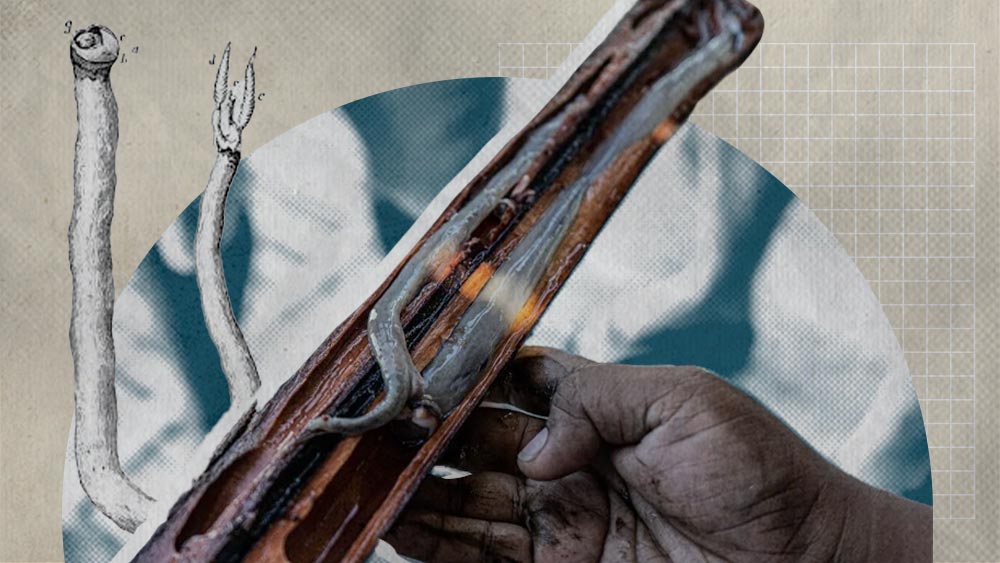
Tamilok, by textbook definition, is actually a woodworm mollusk found in mangroves situated by the shores of the Aklanon region, specifically in Palawan. Interestingly, local stories think of them as sea termites or shipworms, as it is said that they've attracted the heat of ships and crewmembers in the past.
These babies can be extremely elusive. They're at least recognizable by their soft, grayish body and yes they really squirm. You can find them hiding in decaying wood and are typically hunted down below the waterline as they do like to go deep into dead trunks. They resemble more so oysters. After all, they are part of the mollusk family. So we might ask then, what happened to its shell? The thing about Tamilok is that they don't have one. These creatures make use of wood as their protection.
As soon as Tamilok are pulled out of their habitats, they are ready for consumption. Locals love to pluck them out of trunks and eat them raw. In other cases, they're served with coconut vinegar and sometimes other spices like chili. You can fry them and make an omelet out of them, as well. They're served during times of celebration among local communities.
There's this local tale that says that Tamilok got its name during the Second World War. Two American soldiers were said to have seen locals harvesting the mollusks. You know what one GI ended up telling the other? “Tommy, look!” From there, Tamilok, the name, was said to have been christened.
So What Does It Taste Like?
A lot of foreigners will probably speak about how challenging it is to eat Tamilok. But Filipinos shouldn't have a problem downing the dish unless, well, they just can't take the sheer sliminess of the thing. Now most people will say that it tastes just like an oyster, albeit for the peculiar texture and mouth feel. They're often eaten in one slurp. Yes, you're supposed to eat it whole.
Funny enough, websites like Atlas Obscura have pegged Tamilok as one of the "scariest" cuisines in the world. Suffice it to say, they can be ultra-salty, with most first-time eaters (like this writer) describing a gelatinous seawater-y experience (we know it's not the most pleasant description, but it truly is one of a kind). They come from the sea, of course. It's high in protein, vitamin B12, and essential micronutrients, and, like the case of other mollusks, they are thought to be an aphrodisiac, too. Do what you will with this information, friend.
Increased Disturbances and Discoveries
As far as tradition goes, they're only meant to be eaten during special occasions. But Tamilok has sort of gained a cult following during the past few years. Tourists in Palawan end up booking guided tours just for such a cuisine particularly due to just how hard they are to find by yourself. You literally have to wade through the filth and the grime of the waters just to find rotting wood. Unfortunately, this does more harm than good. In most cases, more tourists mean a greater chance of disturbing Tamilok's natural habitat and Palawan's cherished mangrove ecosystems.
But can they be found elsewhere? In 2019, residents from Mabini, Batangas claimed that they'd been serving up their own version of Tamilok. These creatures possessed similar traits, with their worm-like bodies and vestigial shells. Scientists from the University of the Philippines’ Marine Science Institute and Northeastern University in the United States would end up classifying it as a new genus altogether.
The researchers, who had been part of the Philippine Mollusk Symbiont International Cooperative Biodiversity Group, said that the discovery of the Tamilok's cousin, if you will, named Tamilokus mabinia, could lead to potential breakthroughs in medicines and so forth, thanks to its antimicrobial compounds.
T. mabinia is said to have had a large globular stomach and is even more capable of eating wood than the Tamilok we know and love. More studies, of course, need to confirm its biology and history.
Researchers at Cambridge and Plymouth Universities, likewise, had experimented with farming Tamilok and selling it to consumers in the United Kingdom. While there's reason to have hope in its popularity in such a different landscape, they might just be a little too odd for a Briton's palate.
Hey, these only mean we have so much more to learn about these weird, little things we Filipinos love to eat. And other places in the Philippines, as well as the world, are just starting to catch up.
