

This Filipino Artist Once Beat Salvador Dali in a Competition

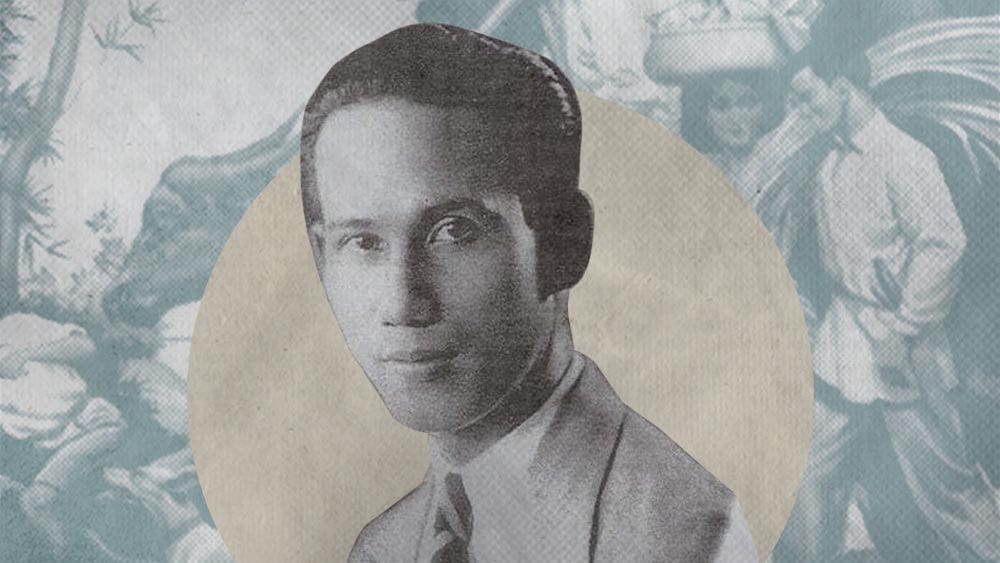
Vicente Alvarez Dizon's name is often lost in the annals of Philippine art history. The Filipino artist, illustrator, and lecturer was a true pioneer in every sense of the word. He might not have the name recall of contemporaries like Galo Ocampo, Diosdado Lorenzo, Botong Francisco, Vicente Manansala, or Victorio Edades, but his contributions to a burgeoning local art landscape during the early 20th century are nevertheless celebrated by his peers, former students and colleagues, and institutions like the College of Fine Arts at the University of the Philippines (U.P.).
His works and ideas were instrumental to the next generation of Filipino artists and art educators. Dizon's brand of romantic realism offered the world a new perspective on an artistic identity that was uniquely Filipino, one that was brimming with symbolism and lyricism.
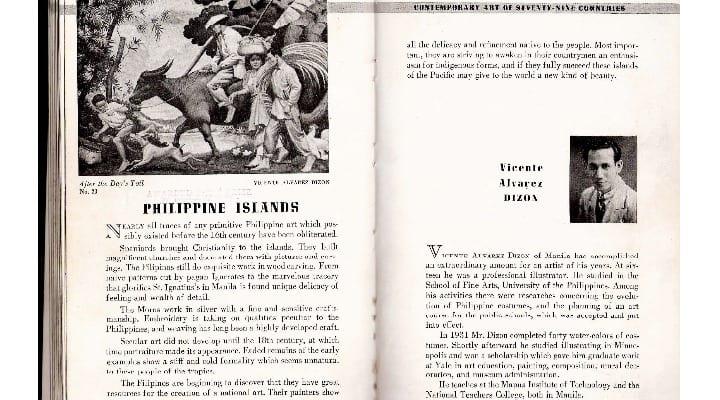
"After the Day's Toil" (1936) was in the possession of a Filipino cardiologist in the U.S. for quite some time.
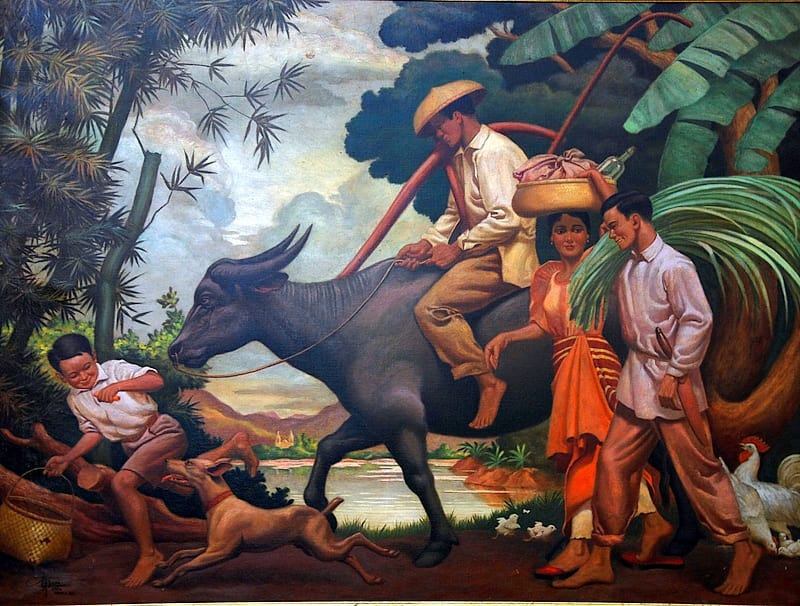
He would display his talents on the world stage, and subsequently bring honor to the country on various occasions; none, perhaps, had been as big as his triumph in 1939. This was the year that Dizon bagged the top prize in the Golden Gate International Exposition in San Francisco with his oeuvre, "After the Day's Toil."
Depicting a group of peasant workers in the Philippines, Dizon's technical mastery of light and composition would capture judges' attention. The piece bested the works of 77 artists, including Spanish surrealist painter Salvador Dali and French Impressionist Maurice Utrillo. According to his daughter, Josie Dizon Henson, this painting was Dizon’s graduation thesis at Yale University, where he graduated three years earlier.
Here, we reflect on his life and legacy, as well as his greatest works, based on the After the Day's Toil monograph Dizon's daughter, writer Josefina Dizon Henson, published in 2014.
ALSO READ:
Meet Esteban Sampzon, a Revered 18th-Century Filipino Carver of Religious Art in Argentina
Who Was Félix Laureano, the First Filipino Photographer?
The Early Life of Vicente Alvarez Dizon
Born on April 5, 1905, in Malate, Manila to Jose Sampedro Dizon and Rosa Carlos Alvarez, Vicente Alvarez Dizon would spend the early portion of his life in the city, as well as in the towns where his father was stationed. The elder Dizon was a botanist and agricultural inspector who worked for the Bureau of Agriculture; at the same time, he was an artist himself, with a particular fascination with landscapes. His job would entail a lot of moving, having been assigned to various communities in Tarlac, Pampanga, and Nueva Ecija.
He was earlier enrolled at Malate Primary School, before continuing his studies elsewhere. He eventually found himself graduating from the National University High School. The young Dizon stayed at his godparents' residence at the time. Around this time, he would further explore his inclinations towards illustrating and painting. To put things into perspective, at the age of 16, he was already illustrating for Liwayway Publications. Among the projects he worked on included stories for Lola Basyang, Graphic Herald, and more.
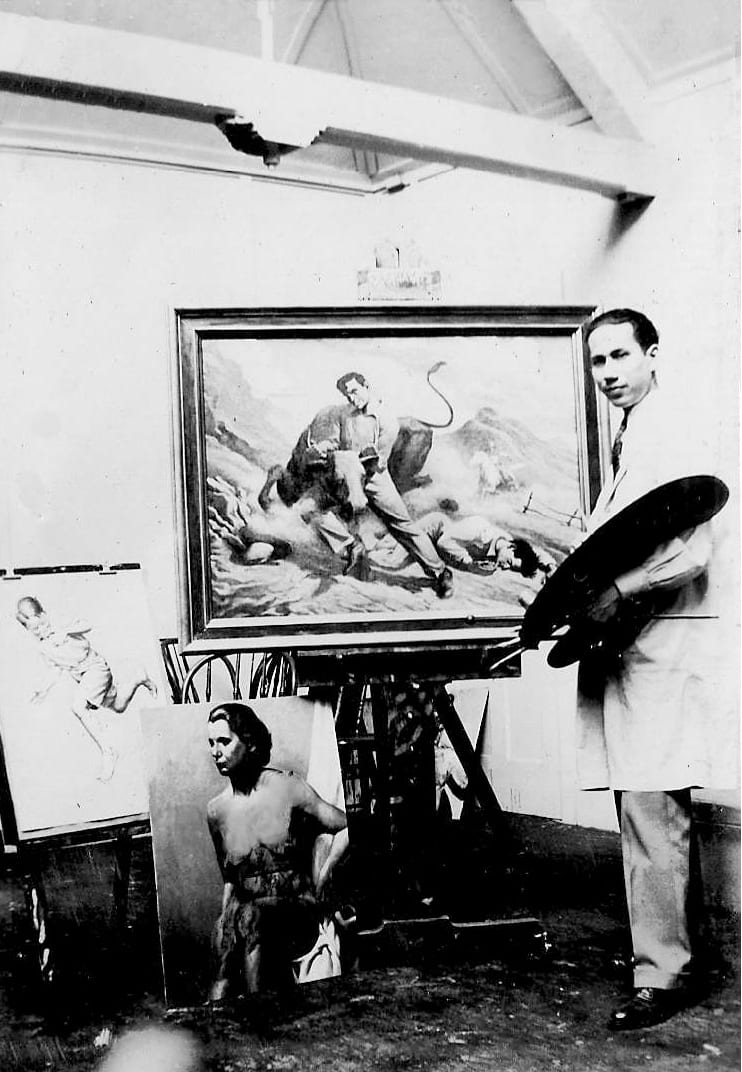
The artist in his studio at Yale.
For college, the Kampampangan artist decided to first take up medicine at the National University College of Medicine from 1921 to 1923. It was a way to appease his father, who had wished for his son to have a medical degree. However, Dizon would then transfer to the University of the Philippines School of Fine Arts. He was there for five years, graduating with an art diploma in 1928.
As one of the early 20th-century Filipinos who pursued scholarships in the United States, he would further his studies at the Federal Schools of Art, Minneapolis, Minnesota, and then onwards to Yale University in 1934. Dizon was a very productive member of the Yale student community, having been elected as one of the 12 members of the “Yale Phi Alpha."
While there, he also became an associate member of the American Museum of Natural History. It took him just a year and a half to finish his Bachelor's degree in Fine Arts. He was a specialist in a wide array of cultural endeavors, including painting, murals, composition, art education, and even museum administration. And of course, it was at Yale that "After the Day's Toil" came to be.
His Works and Contributions to Filipino Art Education
Even as a student at Yale, Dizon was already getting invited to speak at various institutions in the United States to talk about Philippine culture and art. He had always been a charismatic, passionate speaker who knew how to work a room.
When he got back to the Philippines after finishing his degrees abroad, the artist ended up teaching Art at the Mapua Institute of Technology and Drawing and Art Appreciation at the National Teachers’ College.
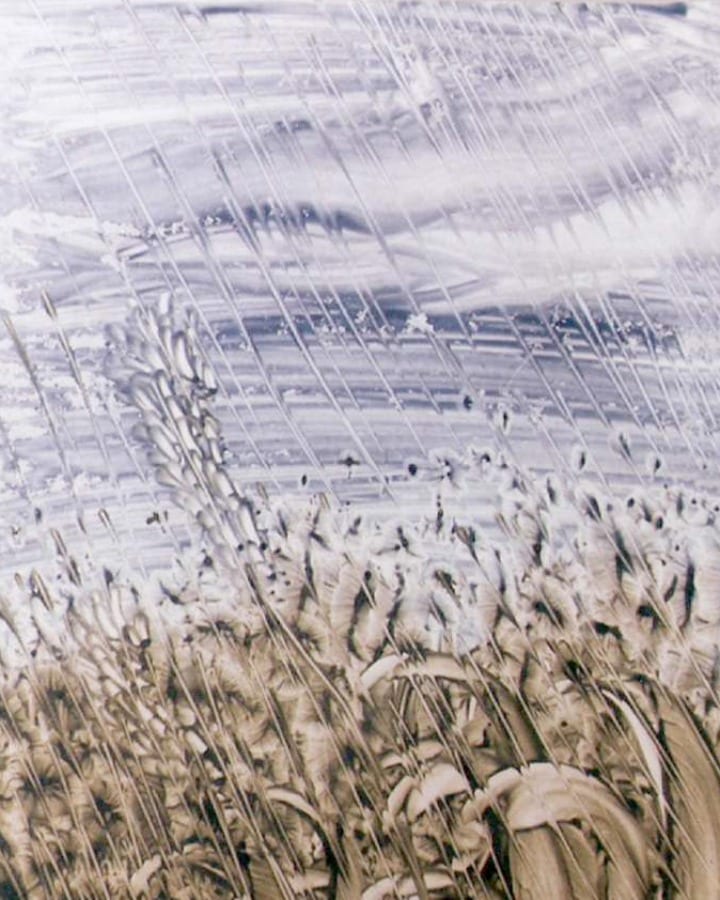
Through his lectures, including his famous Chalk Talk series, he educated people on new techniques and mediums. He is also credited as the first artist to introduce the concept of finger painting in the country.
A closer look at one of Dizon's finger paintings.
He was also a faculty member at the U.P. School of Fine Arts and the College of Education, where he would teach the history of art and art and interior decoration, respectively. He was also an associate painter in Painting and Theory of the Arts. Later on, he worked closely with Dominador Castañeda to create the basis for the creation of the College of Fine Arts today.
For his efforts, the artist was even named to U.P.'s "Distinguished 100." In the 1940 edition of the Biographical Encyclopedia of America's "Who's Who," as well as the 1941 edition of the Biographical Encyclopedia of the World, Dizon's name can be found among the other great artists of his generation, as well.
Dizon is also remembered for his extensive research on local costumes, culminating in 39 watercolor paintings for the Filipino Costumes 1500-1935 collection (which was unfortunately lost during the Battle of Manila). Among his greatest works include “The Battle of Zapote Bridge,” “The Battle of Tirad Pass,” and “The Struggle.”
His artist profile for the 1939 Golden Gate International Exposition.
Not even the war years could stop Dizon from painting, evidenced by the 30 paintings he did during that period that would be part of the ”From Japanese Invasion to American Liberation, As My Brush Saw It” collection. According to his daughter, he was said to have authored two books, Art Education and Appreciation and Living As An Art, both of which were sadly never published.
Why Do We Often Forget About Him?
In the foreword of After the Day's Toil, National Artist for Visual Arts Benedicto "BenCab" Cabrera wrote that the book is a “timely reminder to this generation about the work of an excellent and pioneering artist who brought honor to his country and people, and who contributed greatly to the formation of generations of artists, myself included, at the College of Fine Arts of the (University of the Philippines)."
Part of the reason why Dizon often gets glossed over is the fact that he was just gone too soon. He passed away at the age of 42 because of bronco pneumonia on October 17, 1947. At the very least, two of his four children, Dizon Henson and her older brother Daniel, have kept his memory alive through their tales and own artistic practices.
It's also worth mentioning that Dizon, as his daughter explained, went against the prevailing modernist trends of his day, adopting a more romanticist approach to his art. She wrote of her father:
"He had great visual acuity combined with remarkable technical command, which enabled him to render his drawings and paintings with outstanding veracity. Surprisingly, despite his brilliant gifts, he declined to follow the trending fashions of art during his time. He could have acted as a stabilizing element in the turbulence of the Philippine Art scene after the influence of Fernando Amorsolo had waned. He could have exerted his influence on a new generation of Philippine painters."
Alas, that wouldn't be the case. But maybe we may find solace in the fact that, even for brief moments, during such a conflicted and downtrodden period for the country, Dizon emerged as one of Philippine art's greatest minds. He had the foresight, talent, swagger, and brilliance to conquer traditionally caucasian spaces in the art world—and so he did. Unfortunately, the man just wasn't able to reach the same heights back home.
