

Donnalyn Bartolome and Her 'Main Character Syndrome' Just Couldn't Help It

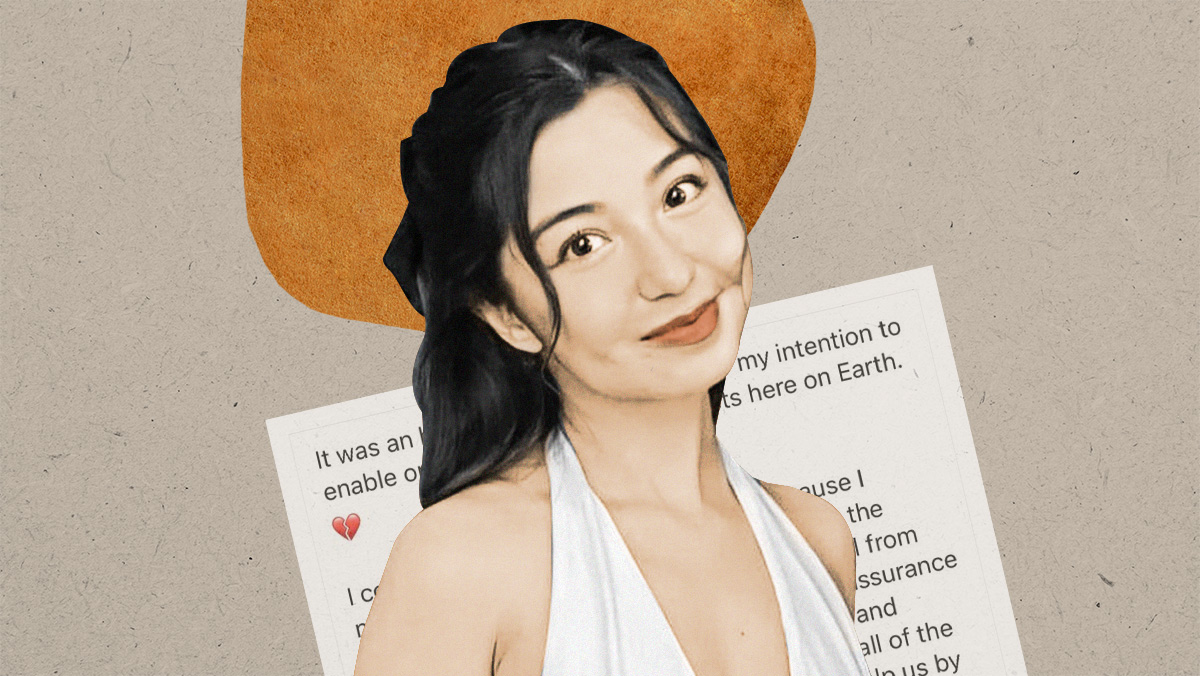
It's been a hell of a first week of 2023. We had the great flight disruptions, the BPI system error thing, and some annoying motivational speak from an out-of-touch influencer coursing through the depressing cesspit that is our timelines.
Talk about starting the year off on the wrong foot. Like, really wrong.
I guess these are topics we've chosen to concern ourselves with, and for good reason. After the subsequent shitstorm that followed her the past few days, Donnalyn Bartolome's case strikes a nerve with us for three primary reasons: the first being how public figures use relatability as social currency for their brands; second, how the privileged often do gross oversimplifications of the struggles of the common Filipino; and third, how some people just don't know when to shut up.
She was at it again Thursday night. Bartolome gives us, of course, a half-assed apology and statement, set in the backdrop of her own personal story, which was meant to inspire us somehow. She chalks it up to poor word choice and the "negativity" of people. Hell, even a fellow "influencer" like Rendon Labador (who has gotten his fair share of criticism, too, for his callous remarks) knew she was wrong. That's how bad it was. That's when you know the world is ending.
"I’m posting to let you know that 'yung positivity na 'yun hindi nanggaling sa privilege, matter of fact, it came from experience," she wrote. She just shot herself in the foot with her latest posts.
In an attempt to appear relatable, she tells us of her own struggles in the past. Hey, she commuted, just like us. She worked extra jobs, just like us. She was grateful and it paid off, so we should just trust the process, too. Bartolome just can't help defending herself in the comments, as well. In one instance, she compares her life to that of an Overseas Filipino Worker because her family is based abroad and she's here. She really had to justify her already-troublesome stance with some shallow aspirational bullcrap.
Sure, the toxic positivity part in all of this irks us. But I think what makes this especially intriguing is that this is symptomatic of the kind of main character syndrome we all are guilty of from time to time (it's reflective of the social media age). For most celebrities and pseudo-celebrities, however, it's a way of life. They indulge in the proverbial millennial "me, me, me" culture. Look at me. Learn from me. Everyone is lazy. Everyone is entitled. It's about mindset. Freaking mindset.
It's putting their so-called hero stories out there to tell us that we can triumph against this broken-down system, too. Nevermind the transport crisis. Nevermind the labor crimes many employers get away with regularly. Nevermind our collective grief brought about by the skyrocketing consumer prices. Nevermind working 60 to 80 hours a week just so we can afford a relatively decent quality of life for ourselves and our families.
ALSO READ:
Donnalyn Bartolome and the Anatomy of a Proper Apology
Opinion: When It Comes to Our 'Broken Public Transport System,' the Key Word Is Empathy
We get it. Bartolome wanted to give us a feel-good-for-the-protagonist story. But those feel-good stories we hear are just that. It's our favorite headline, right? "Person A Who Comes From an Impoverished Background Becomes Successful." They did it through hard work and perseverance and innovation, the piece will say. And chances are, they did, and it is all the more impressive because it is.
However, whether we want to admit it or not, we prop these stories up for the simple fact that these are anomalies in the grand scheme of things. That's why we write about them or talk about them because they're one-or-two-in-10 million (adjusted for inflation).
This is not to say we shouldn't work hard, because it matters, after all. But god knows hard work isn't the only ingredient to this imaginary recipe for success we've been told to follow growing up. If that was the true barometer, then the richest and most comfortable people in this nation would've been our farmers, fisherfolk, nurses, teachers, construction workers, or service crew members. Our economy is built on the backs of everyday laborers, and yet, most of us don't get to live a good life, no matter how hard we want to believe or try. It's the sad reality of third-world life, and it can be really hard to say that out loud. We have every right to be sad. But yeah, generic motivational quote or whatever.
donnalyn bartolome pag nalaman nyang nag-file ako ng leave:pic.twitter.com/Tdm5sryHe2
— Sehun Araullo (@vicentejian) January 5, 2023
Donnalyn Bartolome Kween of Ending Burnout and Bare Minimum Wage ???? pic.twitter.com/YEm7oVnqtH
— Gabe #FreeHIVTest #GetTestedNow (@gaburikat) January 4, 2023
People like Bartolome think that, just because they had their own challenges, everyone can escape theirs, too. While these hero stories can serve as inspiration in some way, they often forget to tell us about the part of privilege most people just seem to ignore: success can sometimes just be pure dumb luck. Anybody could do it if they had generational wealth. Anybody could do it if they had the kind of looks that were validated by the status quo. Anybody could do it if they just had the kind of resources and opportunities some of the luckier people in this society have. Anybody could do it if they didn't have to worry about survival on a daily basis.
It shouldn't be that hard to admit that they got lucky. That's just the way it is sometimes. Deal with it. Don't deny it. It kind of reminds me of the "nepo babies" conversation in Hollywood, where a lot of them had to ramble on about how they developed their skills and whatnot. There's some truth to that, of course. But a lot of times, for us to achieve some semblance of success on a practical level, we need to get into those circles where that's nurtured and empowered. I think of the phrase, "You got to spend money to make money." Man, those who can spend a lot more will always make a lot more than the average person. And some of us will never have that kind of capital. It's about getting in or affording to get in, really. For nepo babies and priveleged nitwits, they had at least one foot in the door from the day they were born.
What I'm trying to say here is that, in some conversations, we should know when it's our turn to speak and when it's not. In Bartolome's case, this isn't one of those times. It shouldn't hurt to sit down with your sins and just listen. She could've just said sorry, admitted she was wrong, and kept silent, but she just couldn't, perhaps for the sake of gaining even more clout or for saving a flailing ego. Either way, things like this remind us that even if we've overcome some social, economic, or cultural disadvantages in our lives, we shouldn't just assume that people can do the same. It's a hard life for a lot of people, in the most different and complex of ways—ways we can't even begin to comprehend. Christ, any good main character should know this.
