

Heroes Are Human: The Real Faces of Heroes We Praise

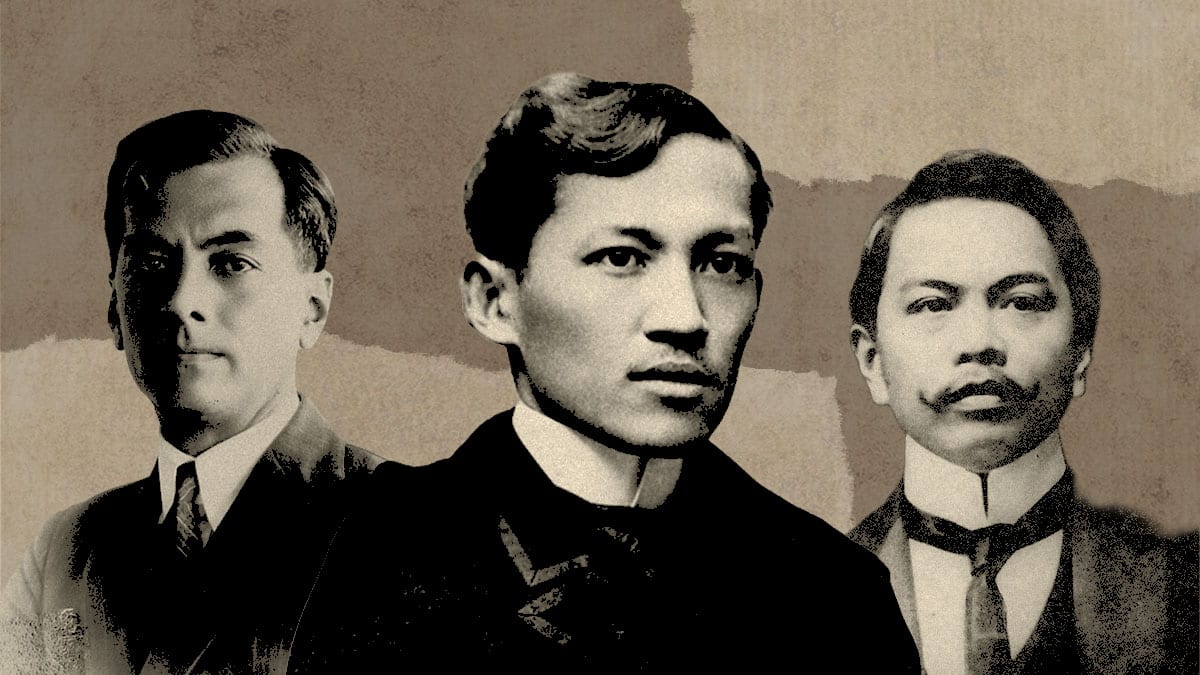
Heroes are human. They are afflicted by weaknesses, burdened by faults, strengthened by their will, and wary of the judgments of history.
Yet seldom do our heroes probably want the stature they have now. It is the later generation who placed them on the pantheons and pedestals they are on. And being heroes makes us forget that they are like us, that they are and always were, human.
ALSO READ:
Sorry, Heneral Luna Romanticized Strongmen
Quezon Is a Triumphant Blend of Fact, Fiction, and a Whole Lot of Exposition
What our heroes may have had as to their habits, attitudes, preferences, passions, tempers, and faults are eventually forgotten. Their human traits are relegated to the background of people’s minds, and their heroism is made prominent. Yet, if we look at them, our heroes’ unforgotten frail traits are many.
Some had famous tempers. Andres Bonifacio was a known hothead who once chased his friend, Teodoro Plata, with a bolo after finding out that the latter was courting his sister, Espiridiona. His temper and arrogance also cost him his life when he made enemies among the Caviteños when he moved to Cavite after losing the revolution in Manila.
Two heroes who had blind rage (the classic "nagdidilim ang paningin") were the Luna brothers, Antonio and Juan. The latter suspected his wife, Paz Pardo de Tavera, of having an affair and became a jealous, abusive husband. On September 23, 1892, he shot her dead along with his mother-in-law and wounded his brother-in-law, Felix, in a fit of rage. The French court acquitted Luna on the grounds that his behavior at the time of the crime was common to inhabitants of a “savage” country.
Antonio, on the other hand, was known among his Filipino propagandists in Madrid as El Cafre for his terrifying countenance whenever he was angry. His temper also earned him many enemies among soldiers and officials of the Aguinaldo Cabinet during his stint as a general in the Filipino-American War. It eventually led to his assassination. One of his killers, Pedro Janolino, said that he hacked Luna in the head because he was afraid that the general would shoot him down in anger.
Our heroes had vices. Graciano Lopez Jaena was notorious for his drinking and slovenly habits. But, primed with cups of wine, his pen flowed with the most eloquent speeches and articles. Composer Nicanor Abelardo resorted to drinking to tame his creative demons, eventually dying of alcoholism at the height of his career. Starving and afflicted with tuberculosis, La Solidaridad's Marcelo del Pilar continued his smoking vice, picking up cigar butts off the streets of Madrid to keep warm. Of course, our heroes’ womanizing is also the stuff of their biographies: Gregorio del Pilar had a damsel in almost every province his army passed through. Jose Rizal had girlfriends in different countries. Aguinaldo had different women in his life, two of whom he married.
Physical afflictions ravaged their bodies. Edilberto Evangelista, the hero of Zapote Bridge during the Philippine Revolution, suffered from myopia and wore thick glasses. It proved to be his fatal weakness. He was said to have been shot dead after mistakenly running towards the Spanish lines, blinded by his poor eyesight and the smoke of battle. Gangrene from an untended wound cost Teodoro Kalaw his left leg and political career, but this did not stop him from living the life of an intellectual, writer, and eventually, Director of the National Library. Ninoy Aquino’s heart problem didn’t stop him from continuing his fight against the Marcos dictatorship here and abroad. A lifetime battle against tuberculosis may have ended with the death of Manuel Quezon, but it didn’t stop him from being a shrewd political leader, which culminated in the Commonwealth presidency. And, of course, there was the Sublime Paralytic. Polio may have confined Apolinario Mabini to a chair, but his intelligence and advice made him a respected adviser to General Emilio Aguinaldo.
There are some heroes that time made Filipinos forgive (and forget) their faults. Raja Soliman didn’t die in the Battle of Bangkusay in 1571. Spanish chroniclers mentioned him helping the conquistadors in pacifying the other Luzon villages, yet we honor him today with a monument in Manila. President José P. Laurel and Senator Claro M. Recto served under the Japanese-sponsored Philippine Republic during World War II and were later tried as collaborators. They became respected nationalists during their years as lawmakers. Bonifacio’s executioner, Lazaro Makapagal, left an account of how the Supremo knelt and begged for his life, seeing that his executioners would continue with their deed, ran for his life and was shot in the back. Some historians refused to believe that Bonifacio would act that way, but if one would give a second glance, wouldn’t someone who all the while believed that he would just be exiled, do this desperate act if he learned that he would be killed?
Gregorio del Pilar was said to be Aguinaldo’s hatchetman, cleaning out the remnants of officers loyal to General Luna by arresting and killing the latter’s aide-de-camps, brothers Manuel and José Bernal, days after the general’s assassination. Five months later, the boy general died a hero’s death at Tirad Pass, covering the retreat of his president to the Cordilleras.
And Emilio Aguinaldo? He was a high school dropout of Colegio de San Juan de Letran. His pre-presidential career included being a merchant and a colonial officer before reaching the pinnacle as President of the Republic. His decline included being a prisoner of war of the Americans, a losing presidential contender in the 1935 Commonwealth elections, and a collaborator during the Japanese Occupation. He lived the life of a gentleman farmer at this home in Kawit, Cavite, held office in Binondo as head of the Veteranos de la Revolucion, and died in his nineties. His human frailty? Aguinaldo was denied a hero’s death. He lived through seven presidents (Marcos was then a senator); two world wars; and the birth, death, and resurrection of his beloved Philippine Republic. He was condemned by his fate to live long enough to face history’s judgment. As a film director who made a documentary about Aguinaldo said, “The one fault Aguinaldo had in history was that he lived too long.”
Heroes are human. Yet, in spite of their physical and spiritual frailties, they stood by their beliefs and were crowned with achievements that made them famous. We have looked beyond their human side. We placed them on pedestals. But let us not go beyond and make them supermen.
It is the very essence that they lived and died for—the love of their country —that we should praise and honor.
The author originally posted this piece on his Facebook account. We are republishing here with his kind permission. Minor edits have been made by the Esquiremag.ph editors.
