
Filipinos in the Music Industry Earn Less Than P20,000 a Month, According to Study

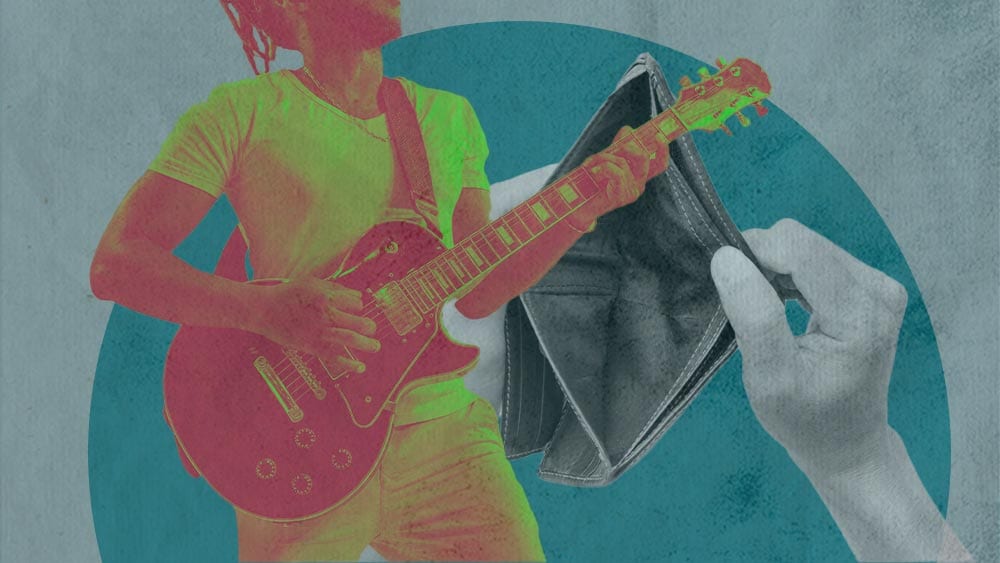
More than half of the Filipinos working in the music industry are earning less than P20,000 monthly, highlighting the financial challenges faced by local artists and music professionals, according to a new study. This figure is barely above the minimum wage in the National Capital Region, which is at P570 daily (or P11,400 monthly for 20 days of work).
A comprehensive national survey involving 700 participants, including music stakeholders, companies, and organizations from various regions across the country, has brought these issues to light. The survey reveals that 61.1% of those involved in music—whether in creation, production, distribution, or consumption—hold college degrees, with a significant portion working freelance. Despite their education and skills, these professionals often rely on additional sources of income outside the music industry to meet their basic living costs.
ALSO READ
Music Industry Professionals Discover New Music the Old Way
Filipinos Listen to More Music Daily Than Anyone Else in the World
Maria Alexandra Chua, the project leader for the Musika Pilipinas Project funded by the Department of Science and Technology-National Research Council of the Philippines (DOST-NRCP), points out the lack of governmental support in training, marketing, and promoting local talent.
"Local artists would always have to go through what we normally identify as sariling sikap, that is, without any government intervention and support in its music training, marketing, and promotion," she says in a press statement.
Despite the existence of the Philippine Creative Industries Development Act, which is designed to foster the growth of creative sectors, the music industry struggles with adequate representation. It falls under the broader categories of performing arts and audiovisuals within the Council, leading to challenges in advocacy and recognizing the sector's economic contributions.
Chua advocates for the establishment of a centralized music coordinating council to address the industry's concerns and strategic development. She also emphasizes the critical need for effective protection of intellectual property rights for local artists, which remains a significant issue.
The definition of the Philippine music industry, as explained by Chua, includes all individuals, groups, institutions, companies, and stakeholders involved in the music process within the Philippines. This includes those who create, produce, distribute, consume, or represent Philippine music domestically or internationally, contributing economically through activities such as remittances from overseas Filipino musicians.
Musika Pilipinas Project aims to analyze and propose improvements for the music market's vulnerabilities in the Philippines. The insights from the project and the call for more structured support and recognition of the music industry underline the need for a reevaluation of how music professionals are valued and supported in the Philippines.
Preliminary data from the Philippine Statistics Authority (PSA), which was published in March 2024, shows that the creative industry's gross value added (GVA) rose by 6.9 percent, from P1.61 trillion in 2022 to P1.72 trillion in 2023. In total, the creative economy contributes 7.1 percent to the country’s Gross Domestic Product (GDP), but the music sector contributes only 8.8 percent of this figure, highlighting its limited economic impact compared to other creative fields.
In terms of employment in the creative economy, only 2.7 percent comes from the music industry, which is lumped together with arts and entertainment in the percent share presented by the PSA. This highlights the limited opportunities in the music industry compared to other creative fields, with "traditional cultural expression activities" and "symbols and images and other related activities" dominating the market.
A 2023 study by digital marketing company Adventrum and their research arm, Business Name Generator, suggested that Manila is a less-than-ideal place for creatives. The Philippine capital ranked fifth in the list of "Bottom 10 Cities for Creatives," with a score of 3.2. We're just above Tel Aviv, Johannesburg, Mumbai, and New Delhi, which ranked last.
This is based on the estimated number of "creative" roles available, average yearly salaries advertised for them, cost of living as a single person excluding rent, number of museums and art galleries, number of green spaces, number of classes and workshops, and happiness score by country. Data shows that there are only 14,644 creative roles and a monthly average salary of $470 (roughly P27,000) in Manila, which is less than enough to meet the average rental rate in the city at $518 (approximately P28,000).
