
Farewell, Kali: The World's Last Captive Tamaraw Dies

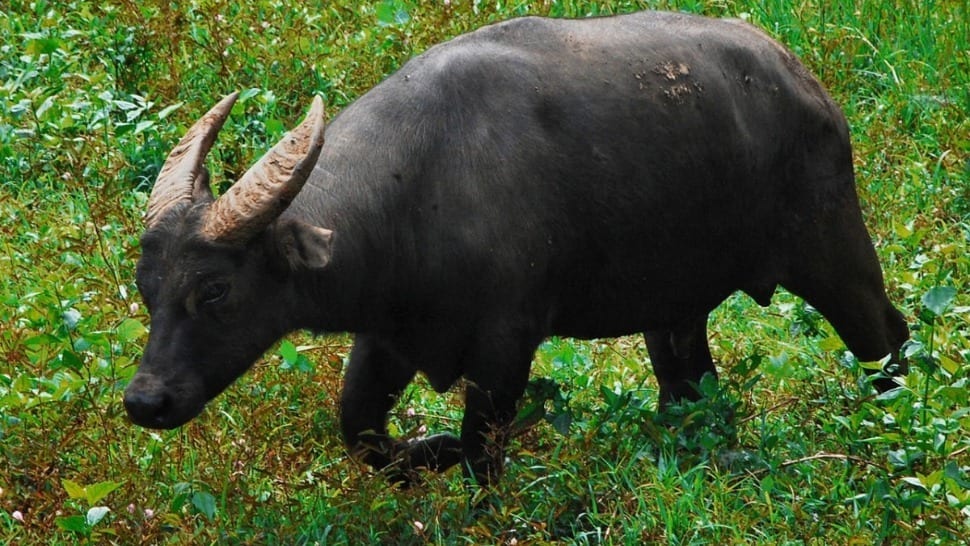
The world’s last captive tamaraw, Kalibasib, aka Kali, has died. The Department of Environment and Natural Resources (DENR) announced the news on Saturday, October 12.
Kalibasib is an acronym for Kalikasang Bagong Sibol (Nature Newly Sprung). The tamaraw was named so when he was born. He was 21 years old at the time of his death, making him the world’s oldest tamaraw on record.
According to the DENR, Kali had diarrhea on October 9. On Saturday, he ate bananas mid-morning before he died.
READ MORE ABOUT PHILIPPINE ANIMALS
More Whale Sharks Are Flocking to Donsol
Ultra-Rare Dwarf Kingfisher Fledgling Photographed for the Very First Time
Sole Progeny of the Tamaraw Gene Pool Farm
Kali was an important tamaraw that helped save its species from extinction. He lived on the Tamaraw Gene Pool Farm in Occidental Mindoro, a breeding facility established in 1980 to help save the tamaraws from extinction.
But breeding proved more difficult than expected.
From 20 captured tamaraws, only one tamaraw was produced—Kalibasib. He was born on June 24, 1999. His mother never gave birth again and died of old age in 2011.
What are Tamaraws?
Tamaraws are a species of buffalo endemic to the island of Mindoro and are the largest mammal species endemic to the Philippines. The endangered species also goes by the name dwarf forest buffalo.
Compared with other bovids, the tamaraw is relatively small, with an average shoulder height of 40 inches. Its v-shaped horns are also one of its defining characteristics not seen in other bovids around the world.
Saving the Tamaraws
Far Eastern University (FEU)'s mascot is a tamaraw, and the school is at the forefront of saving the bovid species from extinction.
In 1969, fewer than 100 heads were counted surviving in the wild. After the government banned the hunting of tamaraws, this number rose to 327 heads in 2012.
READ MORE ABOUT PHILIPPINE ANIMALS
More Whale Sharks Are Flocking to Donsol
Ultra-Rare Dwarf Kingfisher Fledgling Photographed for the Very First Time
Because of the slow population growth of the tamaraws in Mindoro, the FEU spearheaded the Tams2 program in 2012 in partnership with the World Wide Fund for Nature (WWF) and through close cooperation with the DENR's Tamaraw Conservation Program. It aims to raise the population of wild tamaraws to at least 600 individuals by 2020.
The Tams2 and the Tamaraw Conservation Program are considered some of the most successful rehabilitation and conservation programs to save an endangered species. In the headcount made in 2016, the Tams2 program reported there were 413 tamaraws on Mindoro island, a significant increase since 2012.
