
Political Analysts on Why Marcos Asked His Cabinet Members to Resign

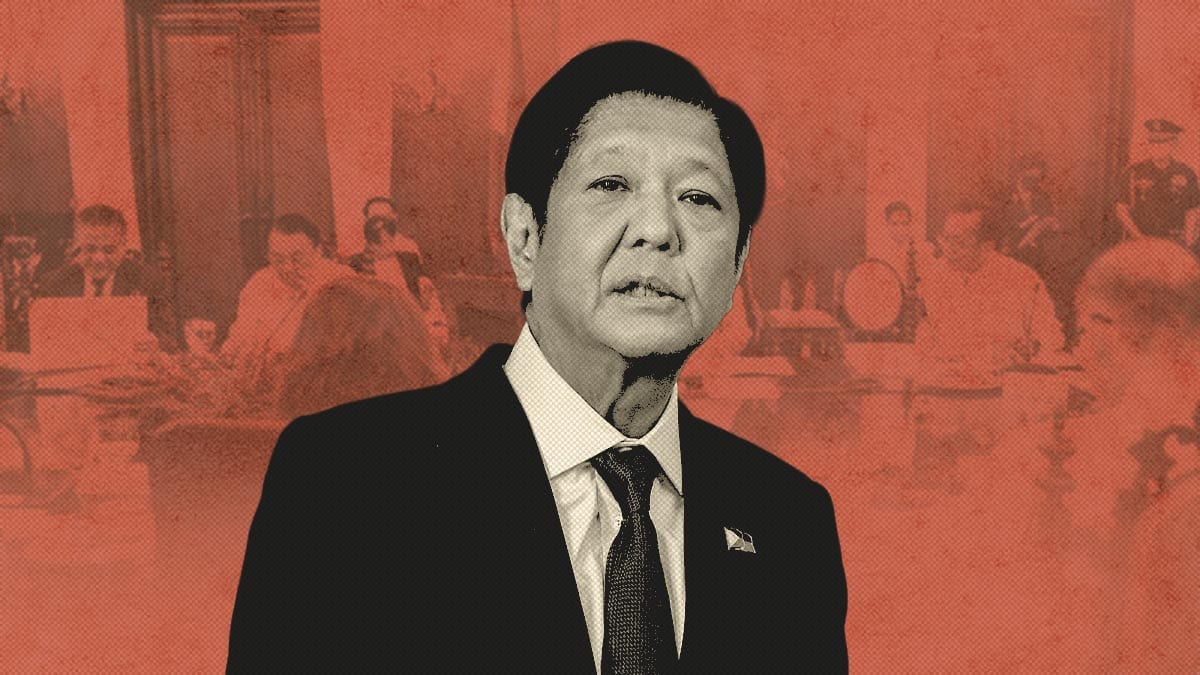
Philippine President Ferdinand “Bongbong” Marcos, Jr., on Thursday morning, May 22, asked his Cabinet secretaries to submit their courtesy resignations. This comes after the 2025 midterm elections, with the supposed necessity to deliver on development goals.
"This is not about personalities—it’s about performance, alignment, and urgency," he said in a statement published by the Presidential Palace. "Those who have delivered and continue to deliver will be recognized. But we cannot afford to be complacent. The time for comfort zones is over."
As of 5 p.m., 33 officials from the President's Cabinet have submitted their courtesy recognitions. This includes Transportation Secretary Vince Dizon, Department of Social Welfare Development Secretary Rex Gatchalian, Interior and Local Government Secretary Jonvic Remulla, Tourism Secretary Cristina Frasco, Trade Secretary Cristina Roque, Foreign Affairs Secretary Enrique Manalo, Finance Secretary Ralph Recto, and Education Secretary Sonny Angara.
"This is not business as usual," Marcos said. "The people have spoken, and they expect results—not politics, not excuses. We hear them, and we will act."
He added that it was time to "realign" his administration with what the Filipino people’s expectations were.
ALSO READ:
What a Beefed-Up Opposition Means for the Senate
When the Right to Vote Becomes a Privilege
In separate statements commenting on the President’s directive, the Cabinet secretaries said that they had submitted their courtesy resignation letters without delay as he had served "at the pleasure of the President."
According to the Presidential Palace, government services would stay uninterrupted during the transition while meeting the public’s pressing needs.
Arjan Aguirre, who teaches political science at the Ateneo de Manila University, said that this is a mere political move meant to gain control of public opinion after the elections amid the Marcos clan’s feud with the Dutertes.
"This is something that expected as the most logical move from the incumbent—to deliver more what the people want and/or really need," he told Esquire Philippines in an interview. "We have yet to see if this will really lead into real changes or benefits or they are just for short term gains (merely focusing on the wants) or for show."
The May 12 midterm national and local elections saw at least six admin-endorsed candidates secure Senate seats after failing to secure an overwhelming majority.
In a surprising turn of events, opposition candidates former Senators Bam Aquino and Francis "Kiko" Pangilinan placed second and fifth in the Senate race, even if they were at the tail end of the so-called "Magic 12" in previous election surveys.
"It's the policies that are in more urgent need of recalibration, not the individual performance of line agencies," Jose "Sonny" Africa, Executive Director of the think-tank IBON Foundation, said in an interview.
"No matter how many times Cabinet members are changed, the public sector and economy won't be transformed unless real reforms for social and economic transformation are undertaken."
The President has failed to secure a sweep of all Senate seats during the polls, which comes amid a split legislative environment ahead of the second half of his six-year term.
How the Cabinet's Resignation Affects Public Approval of Marcos
Based on a March survey by Pulse Asia, Marcos saw a steep dip in public support, with only 25 percent of Filipinos expressing approval for his performance, compared to the previous 42 percent.
On the other hand, Vice President Sara Duterte got a substantially higher approval rating of 59 percent.
The survey also showed that the public sees that the government had failed to tame inflation, which is a top concern of Filipino households, despite staying within the Bangko Sentral ng Pilipinas’ two percent to four percent target since August last year.
The steep decline in approval also comes on the heels of the arrest of former President Rodrigo Duterte, who is detained in the Hague in the Netherlands as he awaits trial before the International Criminal Court over his deadly anti-illegal drug campaign.
"Unless the president himself understands the economy's problems and the scale of reforms needed, his directive will come to nothing and will be just for show," IBON Foundation’s Africa said.
"It will also just make things worse if the Cabinet revamp is also to reapportion influence and power to reflect the post-midterm election political realignments."
Rodrigo Duterte, who is the sitting Vice President’s father, is facing accusations of orchestrating vigilante-style killings when he was Davao City Mayor and President
President Marcos has said cooperating with the INTERPOL to carry out the arrest in Manila was just the government doing its job in honoring its commitments to the rule of law.
"As we go into the midterm, the President should be able to rely on a Cabinet that can deliver actual results for the remainder of his term," Terry Ridon, a public investment analyst and convenor of the think tank InfraWatch PH, said in an online exchange with Esquire Philippines.
"The next set of Cabinet members should be innovative and agile enough to work within a limited timeframe and with a limited fiscal space."
The Philippine government under Marcos is eyeing making the country an upper-middle-income country by this year, and for it to be a predominantly middle-class society by 2040.
According to the World Bank, countries with gross national income per capita of between $4,516 and $14,005 have upper-middle-income status.
Manila is at present a lower-middle-income country with a GNI per capita of $4,230 in 2023, higher than $3,920 a year earlier.
"The real test lies in whether this shake-up leads to genuine technocratic strengthening or merely political repositioning," according to John Paolo Rivera, a senior research fellow at the Philippine Institute for Development Studies.
He added that the credibility of this so-called recalibration would hinge on the successors of outgoing officials and whether they only push for continuity or to bolster current institutions.
Public perception may improve as Filipinos may see the gesture as a decisive effort to "course-correct" stagnancy, the economist said. However, it may also be seen as an admission of underperformance or no evident improvements during his term.
"This is just a natural response given the poor showing of the administration senatorial slate in the last elections," Leonardo A. Lanzona, who teaches economics at the Ateneo de Manila, said in a chat.
"The results indicate that poverty is the key issue, as the winning candidates are those who have clear platforms in addressing this issue."
