
Here’s What to Expect When Marcos Meets With Trump This Month

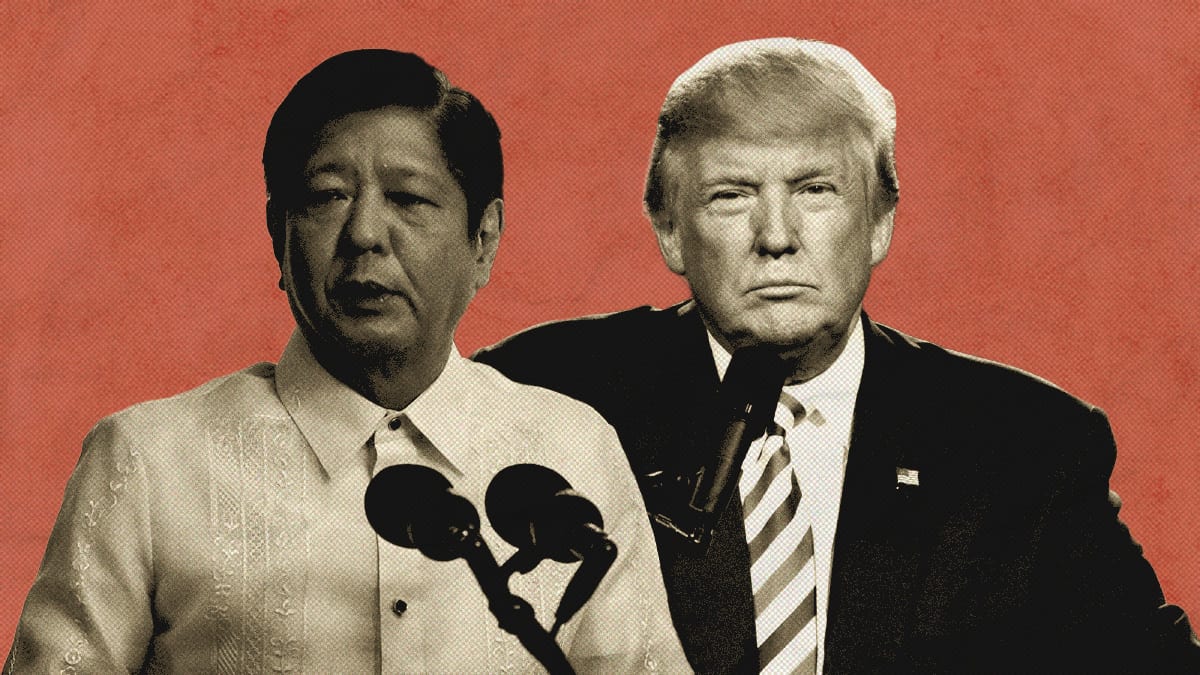
Almost immediately after United States President Donald Trump announced the bombshell of a new round of tariffs on its trading partners, including the Philippines, the Department of Foreign Affairs said President Ferdinand “Bongbong” Marcos, Jr. is set to discuss the slightly higher 20 percent duties on Philippine products with his U.S. counterpart, among other issues, later this month.
This was revealed by Manila’s top diplomat Maria Theresa Lazaro in a regional summit in Malaysia on Friday (July 11), marking the first time the two heads of state will meet amid pressing tariff and security concerns.
“The issue of tariffs will be discussed among others," Lazaro said, based on a report by Reuters. "It’s also very important to us. We have already sent negotiators to discuss this issue."
The White House on Thursday posted via X multiple tariff letters dated July 9, with one addressed to Philippine President Ferdinand R. Marcos, Jr. indicating the higher 20 percent tariff rate on Manila from the initial 17 percent imposed earlier this year.
Trump had paused the reciprocal tariff scheme after Wall Street panicked and investors sold off shares, tanking the stock market.
The Philippines currently imposes a 34 percent tariff on US goods, which was based on estimates made by US trade officials.
ALSO READ:
Trump Slaps Higher Tariffs On Philippine Exports: What Does This Mean For Local Businesses?
How The DoF Is Trying to Get Fighter Jets To Beef Up Manila's Defenses
Special Assistant to the President for Investment and Economic Affairs of the Philippines Frederick Go, the country’s economic czar, told a Palace briefing on July 10 that the government is committed to continuing negotiations with the United States in good faith.
The Department of Trade and Industry had earlier said it is concerned about how the tariff scheme would affect global supply chains.
“We recognize the concerns of the United States regarding trade imbalances and its desire to strengthen domestic manufacturing,” DTI said. “However, global supply chains are deeply interconnected, and unilateral trade impositions will have adverse effects to the global economy. Thus, we believe in the need for constructive engagement to address trade issues.”
The Trump government also rolled new duties on Algeria, Sri Lanka and Iraq facing import tax rates of 30 percent; while Brunei, Libya and Moldova are getting 25 percent.
Brazil got the worst of the new rates at 50 percent after the US leader cited “grave injustices,” such as alleged censorship and attacks on “free elections.”
“I believe that we can negotiate a deal with President Trump by eliminating our tariffs and non-trade barriers to United States goods,” Calixto Chikiamco, president of the Foundation for Economic Freedom, told Esquire Philippines in an interview, reacting to the new tariff rate. “Therefore, we should do a two-pronged strategy: negotiate for lower tariffs and also weaken the peso.”
He earlier proposed allowing the peso to weaken against the dollar to make Philippine exports cheaper for US customers.
Trump’s tariff order exempted the following from the so-called reciprocal tariff scheme: goods loaded onto a vessel at a port of loading and in transit on the last mode of transport, products derived from steel and aluminum, automobile parts, cooper, semiconductors, lumber articles, certain critical minerals, and energy products.
“It was announced that electronics will be exempt from the 20 percent tariffs and its good news,” Chikiamco said. “It will mitigate the negative impact but nonetheless will hurt other Philippine exports.”
The Philippine Chamber of Commerce and Industry (PCCI) underscored the importance of diversifying the country’s export markets, strengthening regional trade partnerships and investing in domestic competitiveness to cushion the effects of these new duties.
“We urge the [Philippine] government to continue engaging with the US government to explore pathways toward a more equitable and sustainable trade relationship,” the PCCI said in a statement on the new round of tariffs. "We are hopeful that through a constructive dialogue, both governments will uphold a mutually beneficial trade relationship."
The South China Sea Question
One other issue that might be on the table during the Trump-Marcos meeting is the escalating situation in the West Philippine Sea. Lazaro, who recently replaced former Foreign Affairs Secretary Enrique Manalo, said that the Philippines will continue to push for talks on a code of conduct between the Association of Southeast Asian Nations (ASEAN) and China on the disputed waterway.
President Marcos has been pushing for the code as he cited the necessity to adopt a legally binding framework and code of conduct for the disputed waterway to prevent "miscalculations at sea.”
Washington is Manila’s major security partner as they are both bound by the 1951 Mutual Defense Treaty that compels the countries to defend each other in the event of an armed attack.
US Secretary of State Marco Rubio and Defense Secretary Peter Hegseth have underscored Washington’s ironclad defense commitment to Manila amid China’s “dangerous actions in the South China Sea."
Security tie-ups between Philippines and the US have flourished under the Marcos government after China and the Philippines’ respective coast guards were involved in several air and sea tussles, accusing each other of fueling tensions and provocation.
Philippine Ambassador to the US Jose Manuel Romualdez has said the government was working with the United States to finance a $5.6 billion contract for 20 F-16 jets.
Ties between China and the Philippines have soured over the past year after clashes in the disputed South China Sea, which Beijing claims almost in its entirety. The waterway is a crucial economic route with more than $3 trillion worth of global trade flowing through it.
The Hague-based and United Nations-backed Permanent Court of Arbitration had voided China’s claim over the South China Sea and deemed it illegal. Southeast Asian nations such as Malaysia, Indonesia, and Vietnam also have competing claims over the disputed waterway.
The Philippines has beefed up its budget for its military modernization program in the next decade at $35 billion, which involves the procurement and acquisition of advanced naval ships, planes and missile systems to counter China’s imposing military arm in the region.
"It is our view that it should not be taking so long. It is important that we have to deliver," Lazaro said. "So it is incumbent upon all of us, and actually China, to... endeavor to finish the negotiations, the discussions. And that's supposed to be in 2026."
