

The Tragic Story of the Passing of 24 Filipino Boy Scouts Involved in a Plane Crash

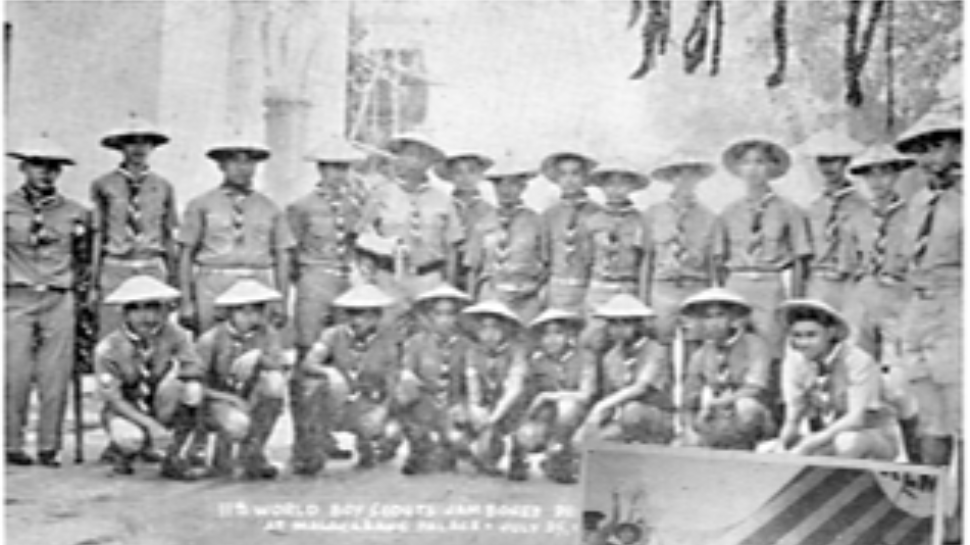
Once the national capital for a brief period of Philippine history, Quezon City has seen many era-defining events. From forging revolutions, launching entertainment stars, to housing the contemporary art scene, the city has been witness to many stories of triumph. But within its streets, hidden in plain sight, there is also a tale of tragedy. It involves the story of 24 boy scouts who died carrying the country’s name on their badges 60 years ago.
En route to Marathon, Greece, the scouts were flying to represent the Boy Scouts of the Philippines (BSP) in the 11th World Scout Jamboree, but their journey was abruptly cut short when their plane went down into the Arabian Sea.
The 24 Filipino Boy Scouts
The scouts who died in the plane crash were:
Air Scout Observer Ramon Valdes Albano, Air Scout Observer Gabriel Nicolas Borromeo, Senior Scout Pathfinder Henry Cabrera Chuatoco, Life Scout Jose Antonio Chuidian Delgado, First Class Scout (FCS) Felix Palma Fuentebella, FCS Pedro Hermano Gandia, Star Scout Wilfredo Mendoza Santiago, Star Scout Ascario Ampil Tuason (Manila Council); Senior Scout Pathfinder Patricio Dulay Bayoran and Senior Scout Pathfinder Paulo Cabrera Madriñan (Pasay Council); FCS Roberto Corpus Castor, Star Scout Romeo Rafael Rallos, and FCS Rogelio Celis Ybardolaza (Quezon City Council); FCS Victor Oteyza de Guia (Baguio Council); FCS Antonio Mariano Limbaga (Zamboanga Council); Rover Scout Roberto del Prado Lozano (Dagupan Council); FCS Jose Fermin G. Magbanua (Negros Oriental Council); Senior Scout Pathfinder Filamer Santos Reyes and Eagle Scout Antonio Rios Torillo (Cavite Council); and FCS Benecio Suarez Tobias (Tarlac Council).
Also Read:
Leonor Rivera: The Tragic Story of Jose Rizal's Most Significant Love and Heartbreak
Looking Back at the Gruesome Murder That Ended Mandatory ROTC in the First Place
The Unforeseen Tragedy
According to reports, there were four stopovers scheduled for the trip: first was Hong Kong, second was Bangkok, then Bombay (today Mumbai), followed by Bahrain, before flying to their final destination city of Cairo. On July 28, 1963, 21 boy scouts and three scoutmasters boarded the de Havilland Comet 4C of United Arab Airlines (now Egypt Air) flight 869—their transfer flight from Bangkok to Bombay. Joining them were 28 other passengers and the eight crew members of the plane.
No one could have predicted the tragedy waiting to happen.

At 1:50 AM that fateful night, as the plane was turning to prepare for landing at Bombay Santa Cruz Airport, the ill-fated flight encountered severe turbulence and heavy rain. This caused the plane to crash into the sea, nine nautical miles from Madh Island. During the investigations, fishermen who witnessed the catastrophe said that the airliner plunged into the water in one piece. But because no wreckage was found, only five bodies were positively identified in the Bay of Bombay.
Costas Veloudakis, a member of the Greek Organizing Committee, can even recall how he broke the news to people at the jamboree. In a letter submitted to the administrators of the 11th World Scout Jamboree commemoration website, he wrote:
“During the months before the Jamboree I was participating in the organizing committee; when a couple days before the opening there was an aircraft accident where a number of brother scouts from the Far East were involved. There was no way, at the time, to get word to the rest of the contingency in Marathon who had arrived the day before, as the telephone lines were still being tested. As I was the only person without duty at the time I was given a motorcycle and asked to drive to Marathon and advise the contingency; which I did. The 30 odd miles there were the most trying for me as I was the bearer of bad news. Those moments have been with me ever since. I wish all brother scouts all the best.
Costas Veloudakis.
Scout master in 1963.”
The Philippine contingent, however, showed exemplary spirit and dedication to their craft. Just a few days before the opening ceremony began, they sent three replacement scouts to join others who went ahead of the big group. The trio was originally supposed to have traveled on July 28 as well, but encountered complications that led to them missing the trip. What must have been a small inconvenience in the beginning ended up saving their lives. They wore black armbands throughout the duration of the jamboree as a sign of mourning.
To honor the memory of the victims, flags outside the Jamboree General Headquarters—the World Scout flag, the flag of the Scouts of Greece, and the Jamboree flag—along with the national flags of other participating nations, were flown at half-mast for the first few days of the event. The campsite intended for the Filipino delegates was also kept vacant as a sign of respect for the lost lives.

Remembering the Scouts
In an interview with Inquirer, Virginia Castor recounted the memory of accompanying her son, Roberto Castor, to Mount Makiling in Laguna province for a month-long training with the BSP. She recalled the amount of hard work the young scout poured into being a worthy Philippine contingent member for the 1963 international jamboree.
She said, “Parents like me were not allowed to get near the boys during their activities. I cried because I’m not used to that, especially when I saw him perspiring and sometimes getting mud all over.” This was among the last tender moments she would have had with him.
Given the cost of plane tickets, among other expenses, most of the Filipino delegates come from prominent families and private schools around the country. But the Castors were a modest family of 10, Roberto being one of the eight children. Money was hard to come by, but the family’s patriarch—a scout himself—was able to solicit enough funds to send his son to the prestigious event.
Before parting with his mother at the departure area, Roberto’s last words were that they should buy a house if their family ever came into some money. This will forever remain a bitter memory, being that the young boy’s wish only came true when the family received an insurance payout of P100,000 from the airline after his death.
Though taken from this world much too early, Roberto and his fellow scouts did not die in vain. They passed away fulfilling their Scout’s Promise and nobly representing the country. To date, the 24 scouts are fondly remembered as heroes by the scouting community and the families they left behind.
In 1964, The City Council of Quezon City renamed 24 streets in the Kamuning and Roxas districts after the 24 Jamboree contingents. Several years later, a monument was raised between the intersection of Timog and Tomas Morato Avenue to commemorate their legacy. The country also honors their service during Scout Memorial Day, held annually on July 28, the anniversary of their deaths.
