
It was Oscar Wilde, famed poet, playwright and novelist, who once said, ‘All art is quite useless.” Independent of context and meaning, the phrase is a rather jaded and dismissive take on something so present and universal. Pity that Wilde isn’t around to clarify his words. Instead, it still invites pointed and passionate discourse over a century since it was first uttered.
Today it’s Raco Ruiz’s turn to challenge Mr. Wilde. I half-expect him to take a moment to gather his thoughts and figure out a logical rebuttal. But, confident and articulate, words just flow out of him like a river meeting the sea.
“I'm sorry, Mr. Wilde, but I super have to disagree with that,” he says. “I'm sure most of the time, there's no practical use for art. You can't drive a painting to work or eat your paintings.
“But in a way, arguably, everything is art. So a car is art. Someone was creative enough to create that. But if we're going to stick to the traditional sense of art, like visual art or music, it has a purpose because that's what drives us.”
ALSO READ
Isabel Santos Is Caught Up in the Afterglow
Quiccs Doesn't Give a Damn About Your Rules
Art as life
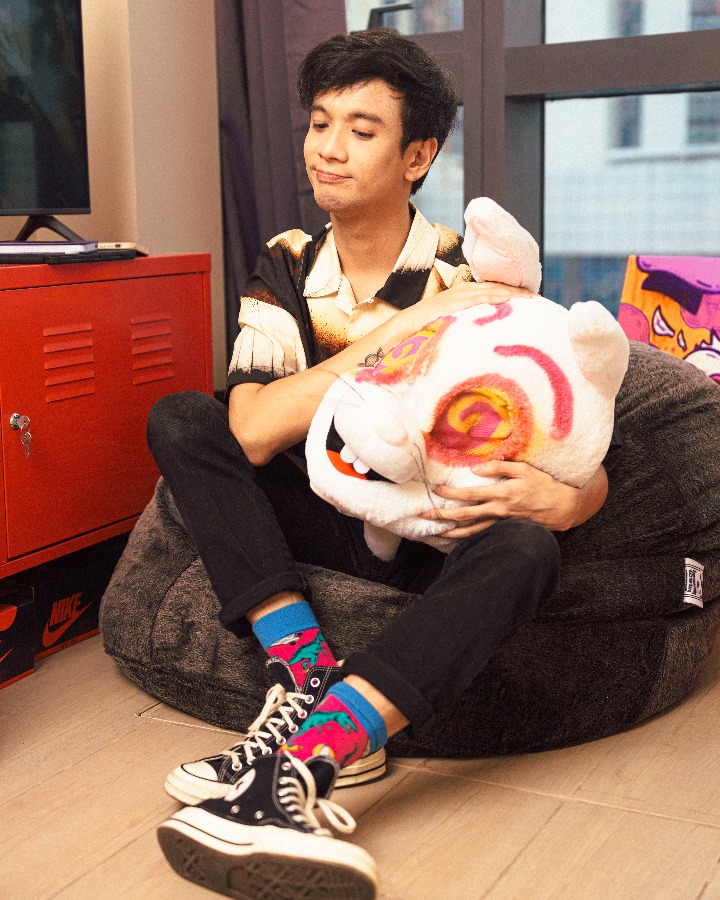
We’re in Ruiz’s condo unit somewhere in Quezon City, surrounded by art—his, in various stages of completion, and the work of others from which he, um, draws inspiration, so to speak. The twentysomething is one of those multi-hyphenates—artist, content creator, director, host, all-around Renaissance man, if the Renaissance happened in 21st century Manila.
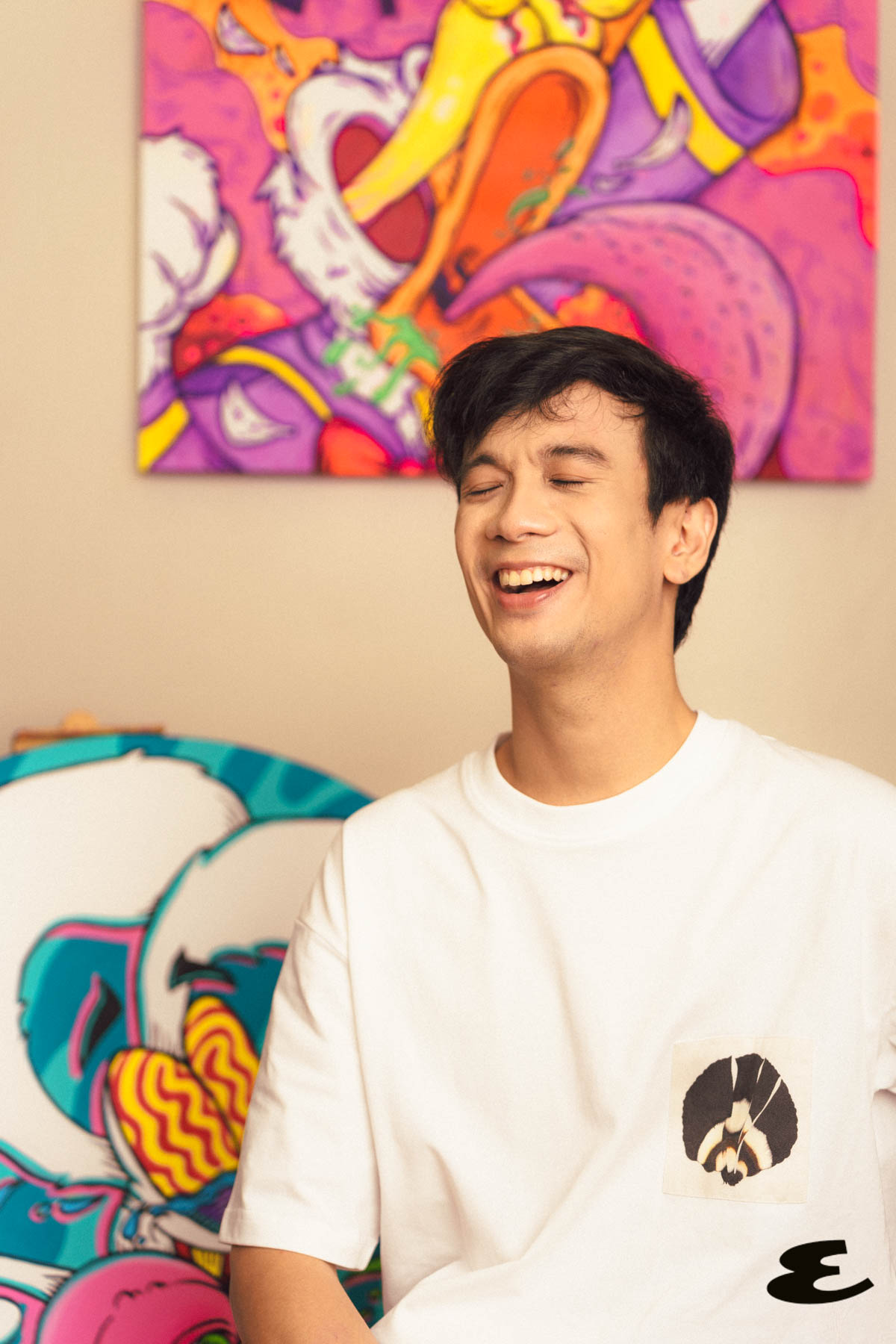
But ask him which of these honorifics or (job titles?) resonate with him the most, and he is quick to answer “artist.” It goes back to when he was a toddler and, armed with a crayon, he would go to town on his advertising professional father’s storyboard templates. If all kids either played outside with other kids or stayed indoors creating universes out of a blank sheet of paper, he’s squarely in #TeamBahay.
“I always thought everyone was like me,” he says. “I thought everyone just liked drawing. Pero I realized it was not that common.”
As a kid growing up in the 90s and early 2000s, Ruiz’s babysitter was the TV, and comic books, and the internet. Those years were a big, colorful blur of Spongebob Squarepants, Looney Tunes cartoons, and Ren & Stimpy. And that classic animated series Happy Tree Friends, in which cute woodland animals going about their business would suddenly meet gruesome and often violent deaths.
“I wasn’t even a teenager yet then, but I loved watching it,” he says about HTF. “I knew I wouldn't copy the behavior. It was just really entertaining for me; just the wacky aspect of turning violence into something funny. I was really attracted to that aspect.”
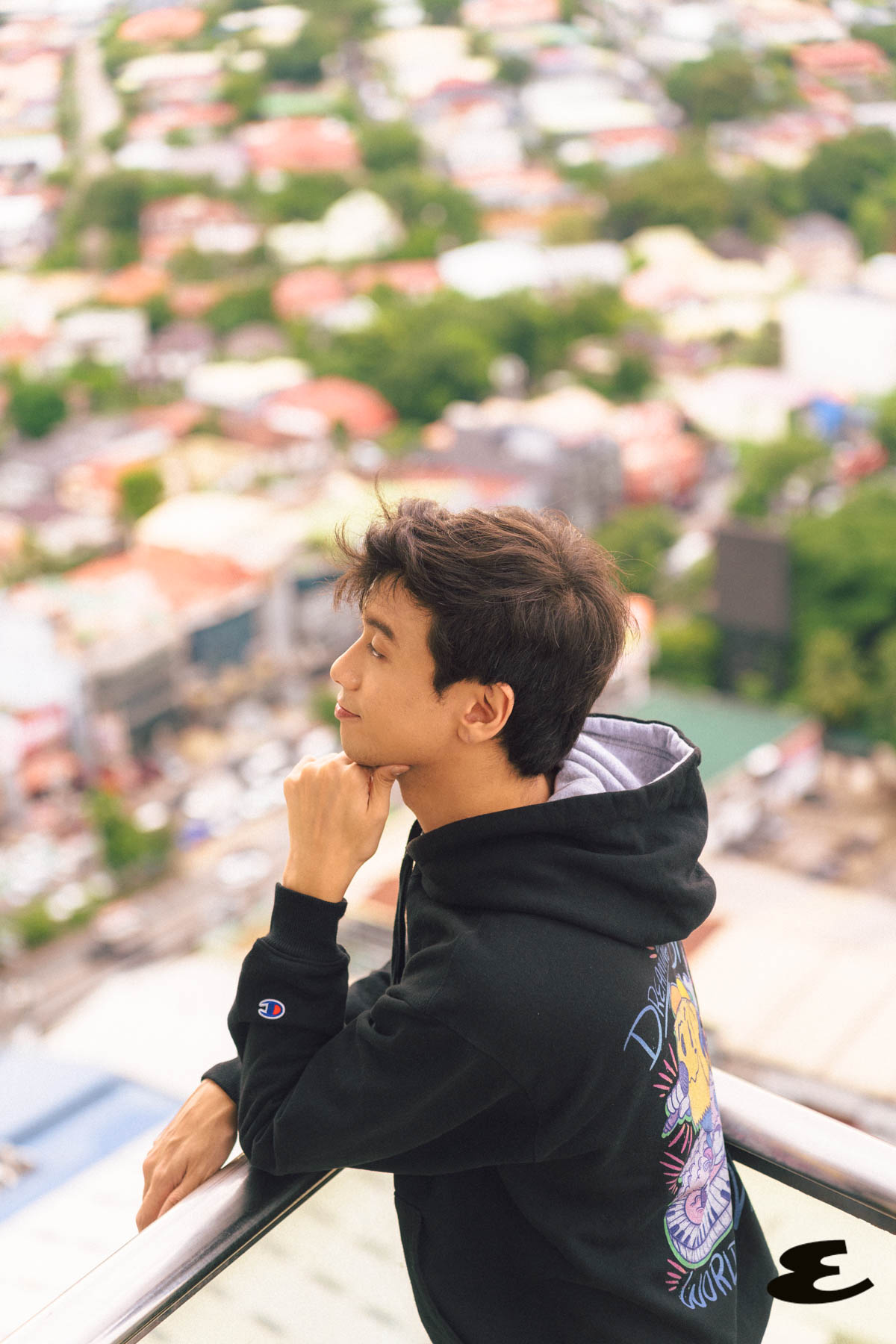
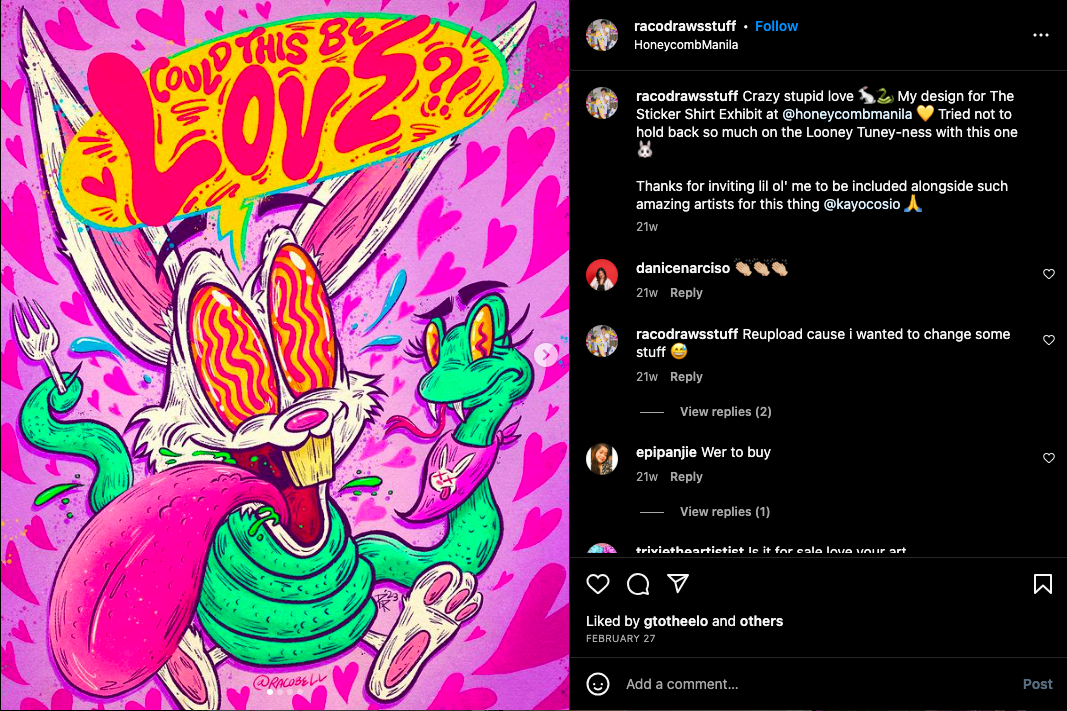
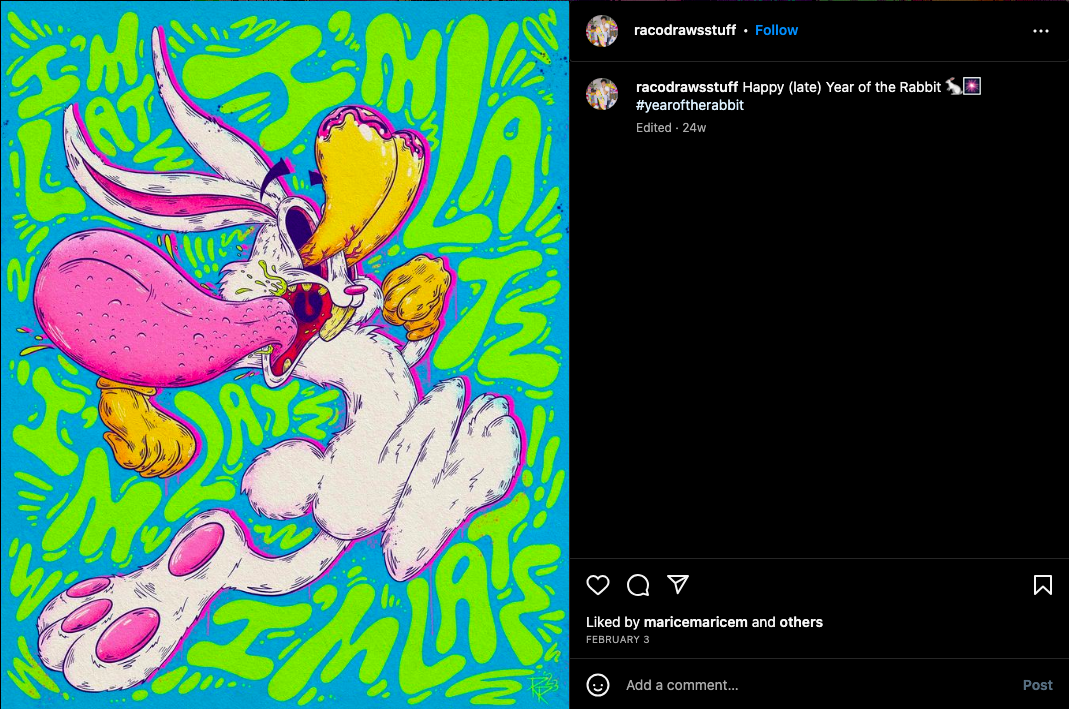
If you’re at all familiar with any of these pop culture references, you can already start to visualize Ruiz’s own art. Brash and bold with explosions of colors that often don’t exist in nature, his art possesses the lively, in-your-face sensibilities of pop art mixed with surrealist undertones that he no doubt absorbed from his uncle, acclaimed artist Jose Tence Ruiz.
The young artist remembers seeing his uncle paint, later on realizing the political nature of his art. It stuck with him how so much can be said by a single painting.
“This is what art can be,” he says of his uncle’s work. “It doesn't have to be pleasant.”
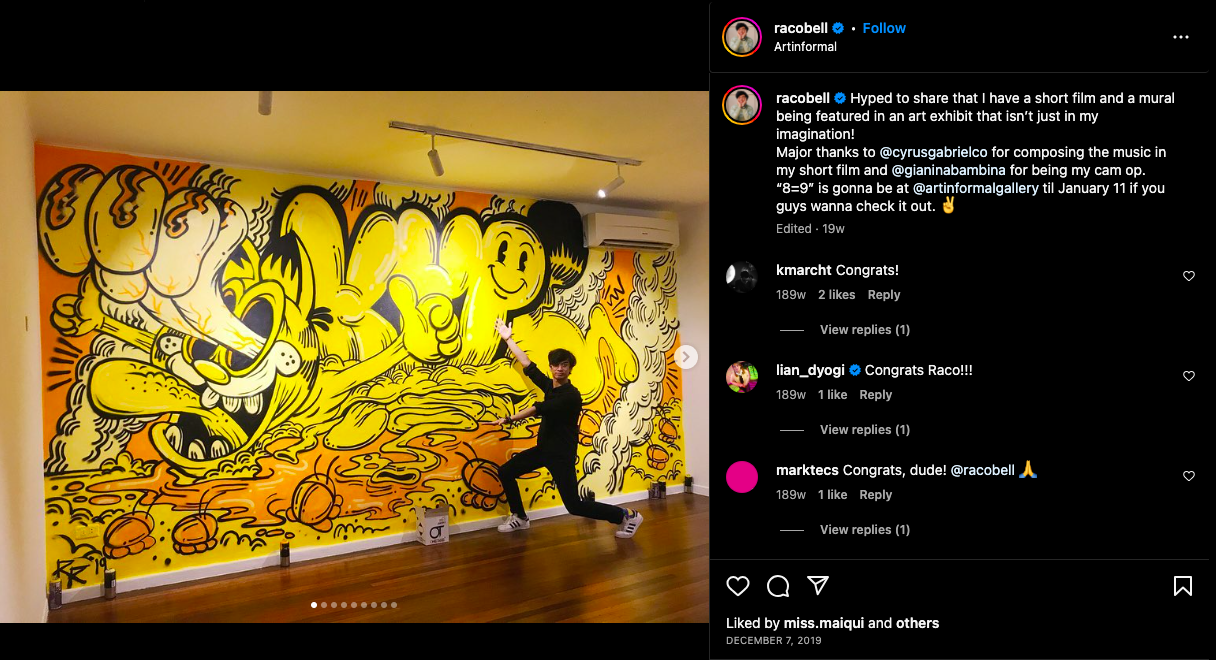
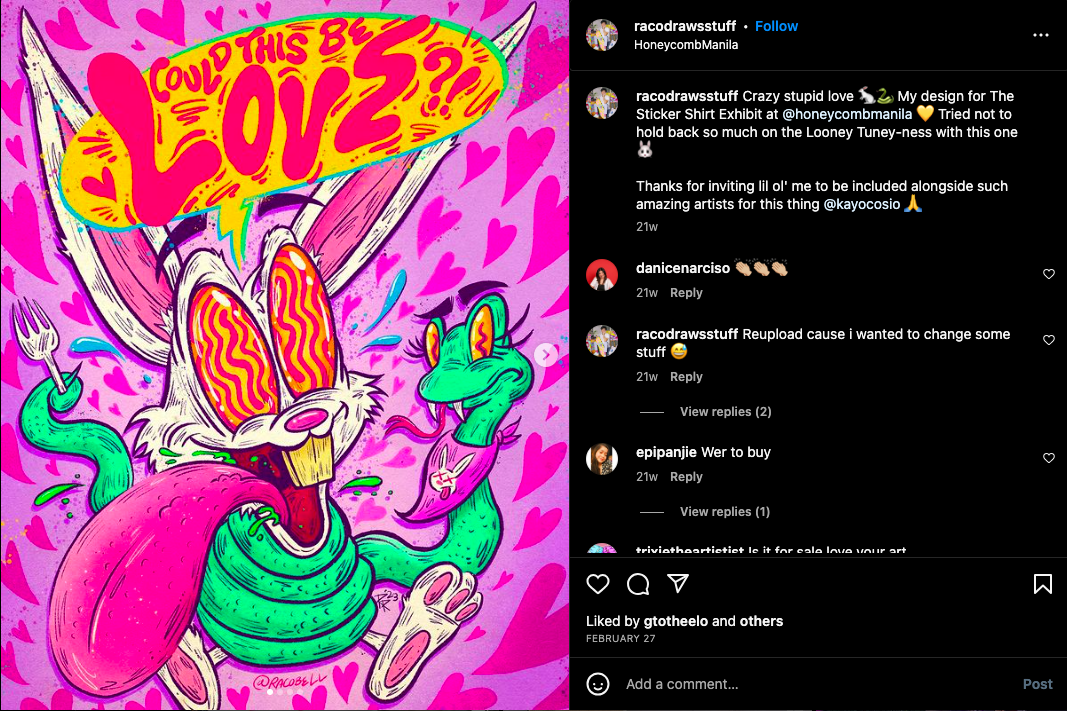
To be fair, Ruiz’s own art isn’t exactly unpleasant. Beyond the vivid colors and less-than-subtle nods to familiar visuals cribbed from the current pop culture zeitgeist, there is sincerity and thoughtfulness in his work. It’s aggressive, sure; a kind of visual assault that matches the high-strung, high-energy environment many of us living in urban environments are exposed to on a daily basis; but there’s also a sense of immediate understanding and awareness about what the visuals represent. It’s as if Ruiz channels his own comforts and anxieties—the things that excite him as well as those that inspire doubt—into his art. He insists on his preference for the artificial—nothing that already exists out in the world—and so we get a glimpse of a world inside his own head, and, in the process, establishing a kind of tenuous, but still solid, connection between viewers of his art and himself.
Internet famous
Connections are what Ruiz also tries to build in his other persona as a social media content creator. On various platforms, but mostly on Tiktok and Instagram, he produces and stars in short skits meant to elicit laughs. He dubs over clips of Spongebob Squarepants and pokes fun at so-called “coño culture.” The videos are objectively funny, and helped him gain a following outside of his work as a visual artist.
“At the peak of the pandemic, everyone was so serious,” he says about how he began his journey toward Tiktok celebrity. “I needed an outlet where I could just still be funny. And share my unhinged jokes. So TikTok was kind of like my…what do I call this? My coping mechanism for not being able to express all these things through my job. I guess other people were also looking for that relief and humor.”
In today’s hyper-sensitive world, that’s no mean feat. Writing jokes that don’t attract the attention of the woke police and that don’t get you immediately canceled is an accomplishment in and of itself, but it’s also to Ruiz’s credit that he’s managed to carve out a niche for his type of humor in the immense universe of content creators. Proof: over 233,000 followers on Tiktok and nearly 27,000 more on Instagram.
.png)
