
Sharks Once Roamed the Waters of Taal Lake. Where Are They Now?

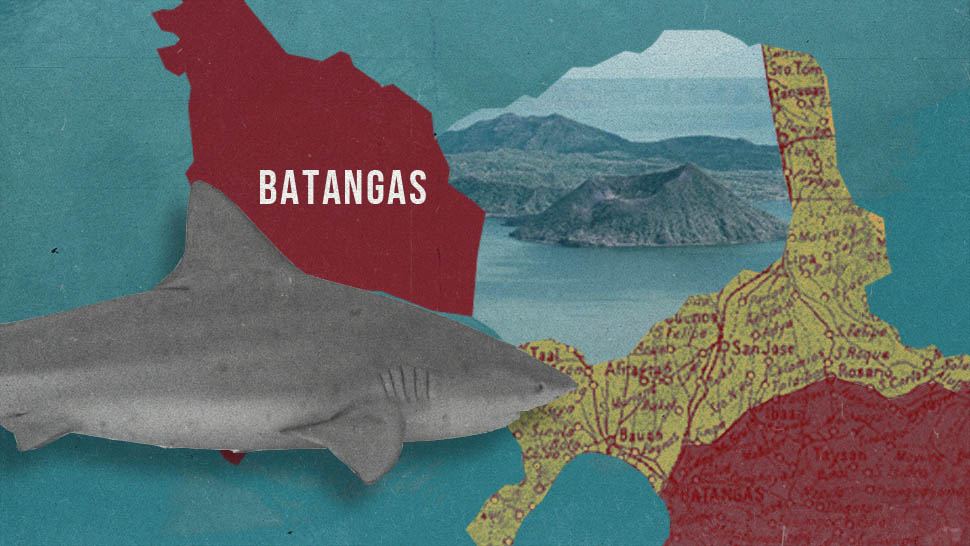
View this post on Instagram>pTaal Lake was once a sanctuary of marine species. At one point, it was home to over 80 species of fish. That was more than 30 years ago when researchers Aida Alzona and Eliadora Mercene published in 1990 in the Philippine Journal of Fisheries their survey on migratory fishes in Taal Lake and Pansipit River. >pBut it was the country’s late director of Fisheries, Deogracias V. Villadolid, who described the presence of bull sharks in Taal Lake in his paper published in the Philippine Journal of Science in 1934. >pBull Shark>h3
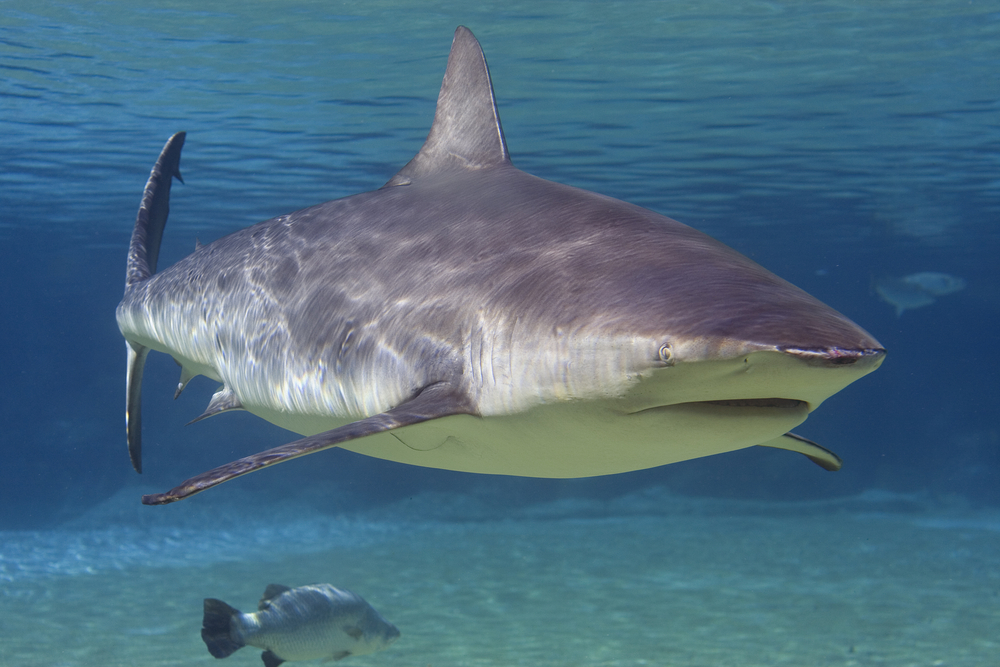 Photo by Ian Scott.
>pAccording to Villadolid, the bull sharks were the largest fish that swam in the lake. The sharks accessed the lake through the Pansipit River, which connected the lake to Balayan Bay adjacent to the West Philippine Sea. >pVilladolid’s 1934 study mentions that the fry of migratory fishes used the Pansipit River to migrate into friendlier waters where fewer fishes could prey on them. They reached Taal Lake where they grew into adults, then exited through the river again to breed in the estuary between the river and Balayan Bay. >p“Bull sharks are one of the few requiem sharks that can enter freshwater,” Gregg Yan, environmentalist, tells Esquire Philippines. >pNow, the lake is no longer connected to the sea because of changes in geography caused by Taal Volcano’s eruptions. >p“Before, Taal Lake was connected to the sea and it was fully marine, then brackish, then now after 300 plus years, fully freshwater,” Yan said. >pThe Last Sighting of Bull Sharks>h2Bull sharks are now extinct in Taal Lake and Pansipit River, and could never return because the lake is no longer connected to Balayan Bay. >p“According to the famed zoologist Dioscoro S. Rabor, bull sharks were abundant in Taal Lake but were exterminated by overfishing in the 1930s,” said Yan. >p“They were probably either hunted down to levels wherein it’s difficult to keep a breeding population stable, or their preys were affected which is why their own population also vanished. But it’s probably the former.”>pUnique Species in Taal Lake That Could Go the Same Way as the Bull Shark>h2Today, Taal Lake is no longer the pristine lake it used to be in the 1900s. Just like Lake Lanao, its population of endemic species is threatened by the introduction of invasive species of fish that prey on them. >pTawilis>h3
 Photo by Gregg Yan.
>pTawilis, the world’s only freshwater sardine, is in danger of disappearing forever, not only because of overfishing but also because of the presence of tilapia in the lake. >p“Owing to a combination of overfishing, pollution, and invasion from farmed African tilapia, Tawilis numbers have plummeted by as much as 50 percent in the last decade,” said Yan. >pMaliputo>h3
>pMaliputo, another endemic species, is also disappearing. It is so special, it is featured in the new P50 Philippine banknote. Sadly, catches are rare in rivers and lakes. >p“Maliputo has become increasingly rare but is still classified by the IUCN as a species of least concern. The government has instituted a system to breed them in captivity, as reported in 2006 by Agri-Info magazine, greatly enhancing their chances of survival. Maliputo is also featured on the nifty new line of fifty-peso bills,” says Yan. >pFreshwater Sea Snake>h3There are only two true freshwater sea snakes in the world, and one of them is found in Taal Lake. >pThe Lake Taal Snake (Hydrophis semperi) is a highly venomous banded serpent facing rapid extinction. Often harmless to humans, they are frequently killed by locals just because they are snakes. >p“The Lake Taal Snake is becoming rarer and has been classified by the IUCN as vulnerable. If you wish to see one, take a kayak or small boat, paddle around, and wait for one to pop up from the depths to take a breath. Don’t approach it—just observe from a distance and marvel at its Slytherin-like grace,” says Yan. >pTaal Lake in Danger of Becoming Like Lake Lanao>h2Taal Lake is in danger of becoming another tragedy like Mindanao's Lake Lanao, where 15 of its 17 unique species of Barbodes were declared extinct in 2020. >pThe introduction of invasive species such as tilapia and cream dory have devastating impact on the ecosystem.
"All these fishes are predators and they would of course try to eat tawilis given the chance," Yan tells Esquire Philippines. "They are threats to the biodiversity of Taal Lake, which has everything from freshwater sea snakes to pipefish.">pLocal owners of aquariums are also to blame because they release their pet fishes into the lake. >p"Jaguar Guapote, a colorful Central American aquarium fish released by pet owners and are now rapidly proliferating," says Yan. >pIf things continue, Taal Lake will lose not just the prized tawilis, but the entire endemic population still surviving in its waters, which will all be a forgotten relic just like the bull shark that once found refuge in its waters. >pSources: >h3Mercene, Eliadora C.; Aida R. Alzona (1990). “Survey on migratory fishes in Pansipit river and Taal Lake.” Manila: The Philippine Journal of Fisheries. 21: 89+.>pVilladolid, D. V. (1937). “The fisheries of Lake Taal, Pansipit River, and Balayan Bay, Batangas Province, Luzon.” Manila: Philippine Journal of Science. Manila. 63 (2): 191–229.>pYan, Gregg. (2019). “Mysteries of Taal Lake.” Animal Scene. Retrieved 01 September 2021 from https://animalscene.ph/2019/05/06/mysteries-of-taal-lake/.>p
>p
>p
>p
>p >p
