
Manila Gets Slight 'Discount' On Trump Tariffs: Does This Matter for Local Industries?

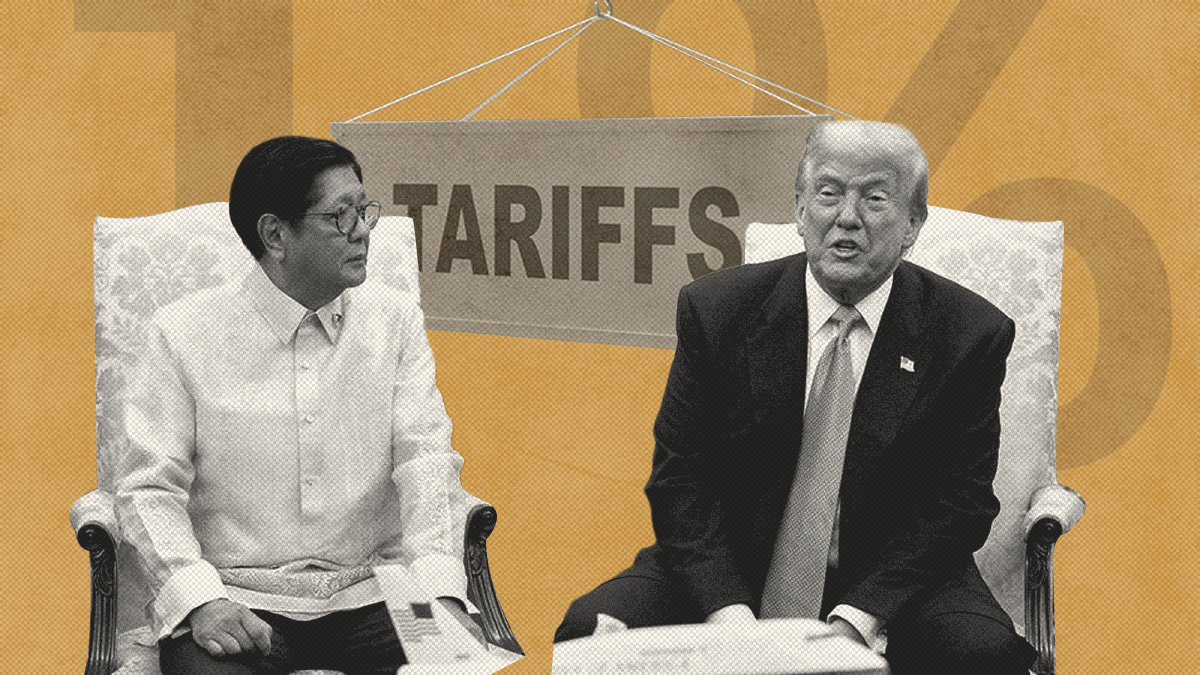
Philippine President Ferdinand “Bongbong” Marcos, Jr. wrapped up his meeting at the White House with US President Donald Trump, which has resulted in a 19-percent tariff rate on Manila’s exports from the previous 20 percent. This comes a week before Trump’s trade negotiation deadline.
“It was beautiful, and we concluded our Trade Deal, whereby the Philippines is going Open Market with the United States, and ZERO Tariffs. The Philippines will pay a 19 percent tariff,” the US President said on his Truth Social account following his televised meeting with his Phillippine counterpart. “In addition, we will work together militarily. It was a Great Honor to be with the President. He is highly respected in his country, as he should be.”
Trump described Marcos as a “very good, and tough negotiator” after tackling the duty scheme.
Earlier in July, Trump's government imposed a 20 percent tariff rate on Philippine products from the previously 17 percent in a new round of tariffs. The Philippines currently imposes a 24 percent duty rate on US goods. According to estimates made by US trade officials.
ALSO READ:
A Look At What Marcos Has Done So Far In His Washington Trip
Trump Slaps Higher Tariffs On Philippine Exports: What Does This Mean For Local Businesses?
“Now, one percent might seem like a very small concession. However when you put it in real terms, it is a significant achievement,” Marcos told a news briefing at the White House before returning to Manila.
Among Washington’s trading partners in Southeast Asia, the Philippines has the second-losest tariff rate in the region at 19 percent behind Singapore’s baseline 10 percent and its existing bilateral free trade agreement with the United States.
Marcos added that both countries had reached a trade deal that entails the Philippines removing tariffs on American car imports.
“Because we have a tariff on American automobiles, we will open that market and no longer charge tariffs on that,” he said, adding that his country aims to increase imports from the US for soy products, wheat, and pharmaceuticals. “This will make our medicine less expensive.”
How Will Philippine Industries Fare With The New Tariff Rate?
“The template of US tariffs on the Philippines at 19 percent and no Philippine tariffs on the US is grossly one-sided in favor of the most powerful economy in the world against a country that is still in the poorest one-third of the world,” Sonny Africa, executive director of the think tank IBON Foundation, told Esquire Philippines in an interview. “This is a bad deal and President Marcos Jr is coming home empty-handed. There are virtually no benefits for the Philippines and only costs.”
Africa added that zero tariffs on automobiles would mean revenue losses for the Philippines and preferential treatment of the US could lead to other exporters like Japan, Korea, China and the EU being called discriminatory.
Last year, the US experienced a trade deficit of nearly $5 billion with Manila on the trade of goods both ways worth about $23.5 billion.
But Washington was still Manila’s top trading partner that same year with bilateral trade reaching over $20 billion.
“From the Philippines’ standpoint, the one percent reduction in tariffs provides marginal relief, but the ongoing 19 percent rate remains a substantial burden on exporters,” John Paolo Rivera, a senior research fellow at the Philippine Institute for Development Studies, told Esquire Philippines. He noted that key sectors such as foods, garments, auto parts, and electronic components could continue to face expensive entry barriers into the US market.
“Even with partial exemptions for semiconductors under the Information Technology Agreement rules, the asymmetric arrangement effectively limits our exports while flooding the domestic market with cheaper US imports, reducing our trade leverage,” Rivera added.
The 19 percent rate for Manila is the same as Indonesia’s and is slightly lower than Vietnam’s 20 percent duty rate.
Philippine Ambassador to the US Jose Manuel “Babes” Romualdez said the trade deal with Manila’s western neighbor is “an evolving good deal for both countries that could be further improved over time.”
“American goods will be dumping their products in the Philippine market,” Leonardo Lanzona, who teaches economics at the Ateneo de Manila University, told Esquire Philippines in an interview. “Furthermore, we buy electronic inputs from the US which we process with our labor and export back to them as semiconductors. While we import these goods at greater volume, we end up losing our market because of their tariffs imposed on us.
He described the one percent decrease as a “backward step from where we started” as it could lead to the worsening of production for local industries.
After assuming office in January, the two-time US President announced his reciprocal tariff scheme that entails high duties and levies on Washington’s trade partners, but eventually decided to pause these after Wall Street panicked and investors sold off shares, tanking the stock market.
Brazil got slapped with the highest tariff rate among the countries in the group at 50 percent after Trump cited “grave injustices” such as alleged censorship and attacks on “free elections.”
Trump is giving his trading partners until August 1 to negotiate the new tariff round.
Based on the US Census Bureau data last year, the country has a trade imbalance of $4.9 billion with the Philippines, $2.6 billion with Sri Lanka, $1.4 billion with Algeria, $5.9 billion with Iraq, $900 million with Libya, and $111 million with Brunei
As of May, the United States was the Philippines' top export destination, with products exported amounting to $1.11 billion or 15.3 percent of total exports that month.
Manila’s top exports to Washington last year were electronic equipment, machinery, animal products, leather goods, and technical and medical apparatus among others.
The Philippines’ economic managers now expect the Philippine economy to grow by 5.5-6.5 percent, a cut from the previous target of six to eight percent due to “heightened global uncertainties.”
The economy grew by 5.4 percent in the first quarter of the year, which is lower than the 5.9 percent growth a year earlier.
“But things might even be worse and the public deserves to know all the economic, military and other commitments of President Marcos,” Africa said.
